
Composite Deck Builders in Richmond: Top Options for 2026
Find the best composite deck builders in Richmond, BC. Compare brands, costs ($50-85/sqft CAD installed), and get tips for building in Richmond's rainy climate.
Published
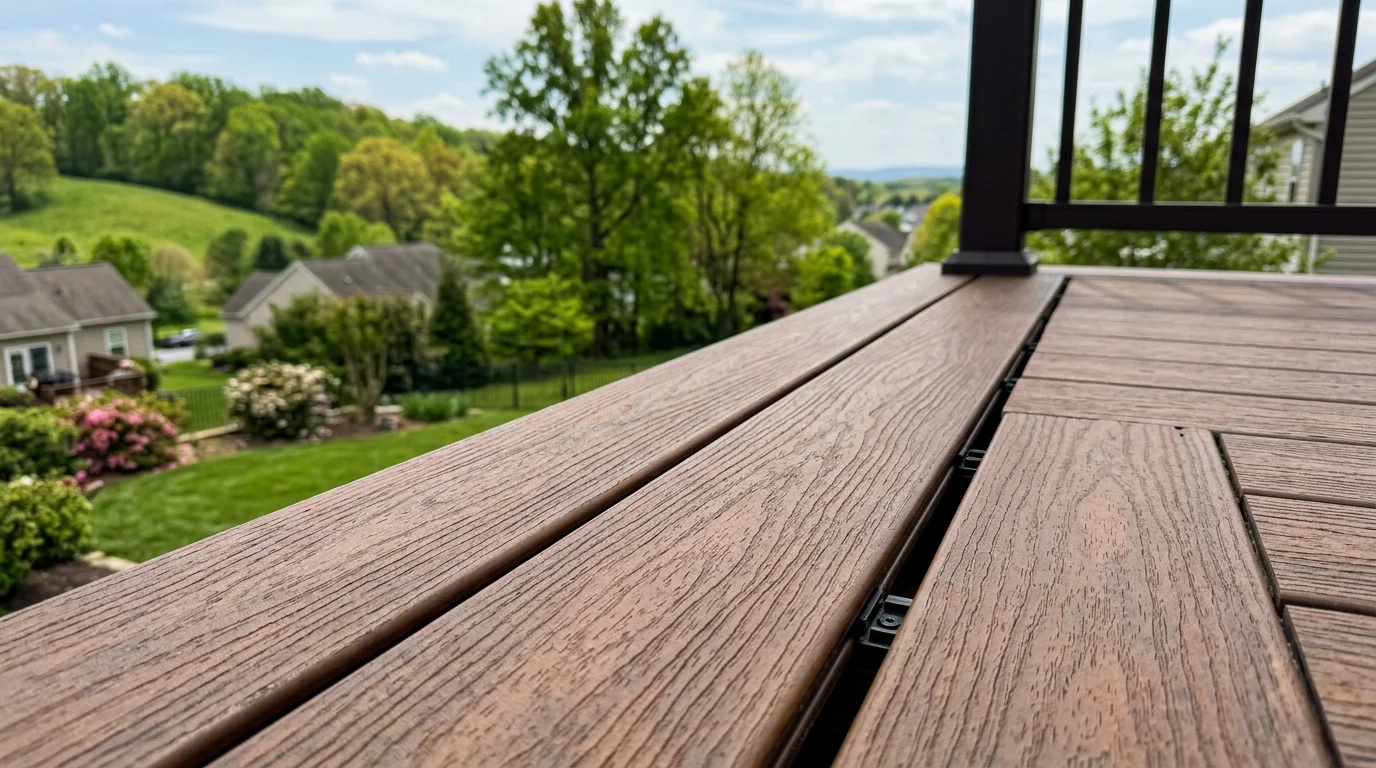
Richmond gets rain. A lot of it. If you've watched a pressure-treated deck turn green with algae after one winter on Lulu Island, you already know why composite decking makes sense here. The question isn't really *if* composite is the right call for Richmond's climate — it's which brand, which builder, and how much you'll actually pay.
Here's what Richmond homeowners need to know before committing to a composite deck build in 2026.
<!-- slot:after-intro -->
Why Composite Decking in Richmond
Richmond's Lower Mainland location means 150+ days of measurable rainfall per year and mild temperatures that rarely dip below freezing. That combination creates a perfect environment for mold, mildew, and algae — the three things that destroy wood decks fastest.
🏗️ Planning a deck project?
Get a free manual project review, or visualize your dream deck with AI before requesting quotes.
Composite decking handles this better than wood for a few specific reasons:
- Capped polymer shells prevent moisture absorption, so boards won't swell, warp, or rot
- Mold-resistant cores stop growth from the inside out — critical when your deck stays damp for weeks at a time
- No annual sealing or staining required, which means you're not spending every April weekend with a pressure washer and a can of stain
- Consistent appearance year after year, even through Richmond's wettest months
Wood decks in Richmond demand serious upkeep. Cedar needs re-sealing every 1-2 years. Pressure-treated lumber gets slippery with algae unless you clean it regularly. Composite eliminates most of that maintenance cycle.
There's a practical building consideration too. Richmond's best construction window runs June through September during the dry season. Rain delays are common outside that window and can add days or weeks to a project. Composite boards themselves aren't affected by rain during installation the way freshly cut wood is, but your substructure still needs dry conditions for proper footing and framing work.
Pro tip: Dry season bookings fill fast in Richmond. If you want a summer build, start getting quotes in January or February. Many builders are fully booked by March.
Top Composite Brands Available in Richmond
Not all composite decking is created equal. Here are the major brands Richmond builders commonly stock and install:
Trex
The most recognized name in composite decking. Trex offers three tiers:
- Trex Enhance — Entry-level, solid performance, limited colour options. Good budget choice.
- Trex Select — Mid-range with better fade and stain resistance
- Trex Transcend — Premium line with deep wood-grain textures and the best warranty coverage
Trex is widely available through Richmond lumber yards and most local builders carry it. For a deeper look at how composite brands stack up nationally, check out our guide on the best composite decking brands in Canada.
TimberTech / AZEK
TimberTech (owned by AZEK) offers two distinct product lines:
- TimberTech PRO — Composite core with a polymer cap. Strong mid-range option.
- TimberTech EDGE — Budget-friendly entry point
- AZEK Vintage — Full PVC (no wood fibres at all), which is the ultimate moisture resistance for Richmond's climate
AZEK's full-PVC boards are worth considering if your deck sits in a particularly shaded, damp area — think properties backing onto the Richmond Nature Park or along the dyke trails where air circulation is limited.
Fiberon
Less marketing presence than Trex, but solid products:
- Fiberon Good Life — Affordable entry composite
- Fiberon Sanctuary — Mid-tier with strong colour options
- Fiberon Paramount — PVC line competing directly with AZEK
Deckorators
Growing in popularity among BC builders. Their Voyage and Vault lines offer capped composite at competitive price points. Worth getting a quote on if Trex pricing feels steep.
Which Brand for Richmond Specifically?
For Richmond's climate, prioritize capped composites or full PVC. Uncapped composite (increasingly rare, but still out there) absorbs moisture and stains more easily. Any brand's premium or mid-tier capped line will handle Richmond rain well. Full PVC from AZEK or Fiberon Paramount is the top-tier choice for maximum moisture resistance, especially for ground-level decks with limited airflow.
Composite Deck Costs in Richmond
Here's what Richmond homeowners are paying in 2026 CAD, fully installed (materials + labour + basic railing):
| Decking Material | Installed Cost (per sq ft CAD) |
|---|---|
| Pressure-treated wood | $30–$55 |
| Cedar | $40–$65 |
| Mid-range composite | $50–$85 |
| Trex (mid to premium) | $55–$90 |
| Ipe (hardwood) | $70–$120 |
For a standard 300 sq ft composite deck in Richmond, expect to pay between $15,000 and $25,500 installed. A larger 400 sq ft deck pushes that to $20,000–$34,000.
What Drives Costs Up
Several factors push Richmond composite deck projects toward the higher end:
- Elevation changes — Richmond is flat, but if your home has a raised foundation or you need stairs, costs increase
- Multi-level designs with transitions between deck areas
- Premium railing systems (aluminum or glass vs. basic composite)
- Permit and engineering fees for larger or elevated structures
- Demolition of an existing deck before rebuilding
- Limited access to your backyard (common in Richmond's tighter lot layouts, especially in areas like Steveston or the newer townhome developments along Garden City Road)
Where You Can Save
- Choose a mid-tier brand like Fiberon Good Life or Deckorators Vault instead of Trex Transcend
- Keep the design simple — rectangular decks cost significantly less than curved or multi-level layouts
- Book during the off-season (October–March) when some builders offer 5–15% discounts to keep crews working
- Supply your own materials if you find a good deal, though confirm your builder's warranty requirements first
If you're comparing costs across different deck sizes, our cost breakdowns for standard deck dimensions give you a useful baseline to work from.
<!-- slot:mid-content -->
How to Find a Certified Composite Deck Installer in Richmond
Composite decking requires specific installation techniques that differ from wood. Hidden fastener systems, proper gapping for thermal expansion, and ventilation requirements all matter. Hiring a general handyman or a builder who primarily works with wood can lead to problems.
What to Look For
- Brand certification — Trex, TimberTech, and Fiberon all have certified installer programs. Using a certified installer often extends your warranty coverage from 25 years to the full limited lifetime warranty.
- BC contractor licence — Verify they hold a valid business licence in Richmond
- WCB coverage — Workers' Compensation Board coverage protects you if someone is injured on your property
- Liability insurance — Minimum $2 million is standard for deck builders in Metro Vancouver
- Portfolio of composite-specific work — Ask to see completed projects, not just wood deck photos
Where to Search
- Trex Find a Builder and TimberTech Contractor Locator tools on their websites
- Local.Click for vetted deck builder connections in Richmond
- Google Business Profile reviews — filter for "composite" in review text to find builders with relevant experience
- Referrals from neighbours, especially in established Richmond neighbourhoods like Broadmoor, Seafair, or Terra Nova
Red Flags
- No written contract or vague scope of work
- Unwillingness to pull permits (more on that below)
- Quoting significantly below the price ranges above — cheap composite installs often mean corners cut on substructure
- No warranty on labour (reputable builders offer 1–5 years on workmanship)
Composite vs Wood: The Richmond Climate Test
This comparison matters more in Richmond than in drier parts of Canada. Here's how the two stack up under frequent rain and mild temperatures year-round:
| Factor | Composite | Pressure-Treated Wood | Cedar |
|---|---|---|---|
| Moisture resistance | Excellent (capped) | Poor without sealing | Moderate, needs sealing |
| Algae/mold growth | Minimal, surface only | Common, penetrates grain | Moderate |
| Annual maintenance | Soap and water wash | Seal/stain every 1-2 years | Seal every 1-2 years |
| Lifespan | 25-50 years | 10-15 years | 15-20 years |
| Upfront cost (installed) | $50-85/sqft | $30-55/sqft | $40-65/sqft |
| 10-year total cost | ~$50-85/sqft | ~$45-75/sqft (with maintenance) | ~$55-85/sqft (with maintenance) |
| Slip resistance when wet | Good (textured boards) | Poor when algae builds | Moderate |
| Splinter risk | None | High as wood ages | Moderate |
The Real Cost Story
Wood looks cheaper upfront. Over 10 years in Richmond's climate, the gap narrows dramatically. Factor in annual sealing ($1.50–$3/sqft for materials and your time or $3–$5/sqft if you hire it out), plus the reality that pressure-treated decks in the Lower Mainland often need board replacements within 10-12 years, and composite frequently comes out ahead on total cost of ownership.
Cedar is the closest competitor, but it's not immune to Richmond's moisture. Without diligent maintenance, cedar turns grey and develops surface mold within 2-3 seasons here.
For a broader perspective on choosing the right decking material, our guide to composite decking in Canada covers national considerations alongside regional specifics.
Maintenance & Warranty
Maintaining Your Composite Deck in Richmond
One of the biggest selling points of composite decking is reduced maintenance. But "reduced" doesn't mean "zero" — especially in Richmond.
Seasonal cleaning schedule:
- Spring (March–April): Full deck wash with composite-safe cleaner. A soft-bristle brush and garden hose handles most buildup. Avoid pressure washers above 1,500 PSI.
- Summer: Enjoy it. Spot-clean spills as needed.
- Fall (October–November): Clear leaves and debris before the heavy rains. Leaf buildup traps moisture and promotes mold in board gaps.
- Winter: Brush off standing water if drainage is poor. Check that gaps between boards aren't clogged with debris.
Richmond-specific tip: The areas under potted plants and furniture are where mold shows up first on composite decks here. Move planters periodically and use pot feet for airflow.
Use PaperPlan to visualize different decking materials on your own home before committing — it helps you see how colour options look against your siding and landscaping before you lock in a choice.
Warranty Coverage
Most premium composite brands offer similar warranty structures:
- Structural warranty: 25–50 years (covers warping, cracking, splitting)
- Stain and fade warranty: 25–30 years (percentage-based — boards won't look brand new at year 25, but they won't be dramatically faded)
- Labour warranty (from installer): 1–5 years depending on the builder
Key warranty conditions:
- Boards must be installed per manufacturer specifications (proper gapping, ventilation, fasteners)
- Using a non-certified installer can void portions of the warranty
- Commercial use voids most residential warranties
- Improper cleaning (harsh chemicals, high-pressure washing) can void stain/fade coverage
Richmond Permits and Building Codes
In Richmond, BC, deck permits are typically required for structures over 24 inches above grade or over 100 square feet. Given that most useful decks exceed 100 sq ft, plan on pulling a permit.
What the permit process involves:
- Site plan showing deck location relative to property lines and setbacks
- Structural drawings (your builder typically handles this)
- Engineering stamp may be required for elevated or complex designs
- Inspection at footing/framing stage and final completion
- Frost line depth of 12–24 inches for footings in Richmond
Contact Richmond's Building Department directly for current fees and timelines. Permit processing in Richmond typically takes 2–4 weeks, so factor that into your project timeline.
For more on how permits work for different deck configurations, see our article on attached vs freestanding deck permits.
<!-- slot:before-faq -->
🎨 Not sure which material to pick?
Upload a photo of your backyard and see exactly how Trex, TimberTech, or cedar would look — free and instant.
Frequently Asked Questions
How long does a composite deck last in Richmond's climate?
A quality capped composite deck installed properly in Richmond should last 25–50 years. The mild temperatures are actually easier on composite than extreme heat or cold cycles. Moisture is the main concern, and capped composites handle it well. The substructure (typically pressure-treated wood or steel framing) is usually the limiting factor — steel or aluminum framing can extend the overall deck life significantly. If you're considering aluminum framing, our guide to aluminum deck framing covers the benefits.
Is composite decking slippery when wet?
Modern composite boards with textured or brushed surfaces perform well in wet conditions — significantly better than smooth wood that's developed algae. Look for brands that publish slip-resistance ratings (measured by ASTM testing). Trex Transcend and TimberTech PRO both score well. Smooth-finished composites can be slippery when wet, so stick with textured options for Richmond's rainy climate.
What's the best time to build a composite deck in Richmond?
June through September gives you the driest conditions and fewest rain delays. However, the trade-off is that this is peak season — builders are busiest and prices may be slightly higher. The sweet spot: book your builder in January or February for a June start. Some homeowners save money by booking builds in late spring (May) or early fall (October), accepting the risk of occasional rain delays.
Do I need a permit for a composite deck in Richmond, BC?
Most likely, yes. Richmond requires permits for decks over 24 inches above grade or exceeding 100 sq ft. The material (composite vs wood) doesn't affect permit requirements — it's the size and height that matter. Budget $200–$500 for permit fees and allow 2–4 weeks for processing. Your builder should handle the application, but confirm this upfront.
Can I install composite decking myself to save money?
Technically yes, but the savings may not be worth it. Composite material alone runs $8–$18 per sq ft CAD depending on the brand, so you'd save primarily on labour ($15–$30/sqft). The risks: improper gapping causes buckling in heat, incorrect fastening voids warranties, and substructure errors create safety issues. If you're experienced with deck construction, a DIY composite install is doable. If this is your first deck, hire a certified builder in your area — the warranty protection alone is worth it.
<!-- slot:end -->
Upload a backyard photo and preview real decking materials with AI — free, instant, no sign-up.
Permits, costs, material comparisons, and questions to ask before requesting quotes — delivered to your inbox.