
Deck Permits in Vancouver (2026)
Need a deck permit in Vancouver? Learn 2026 requirements, fees, setback rules, and how to apply. Avoid fines and build your deck the right way.
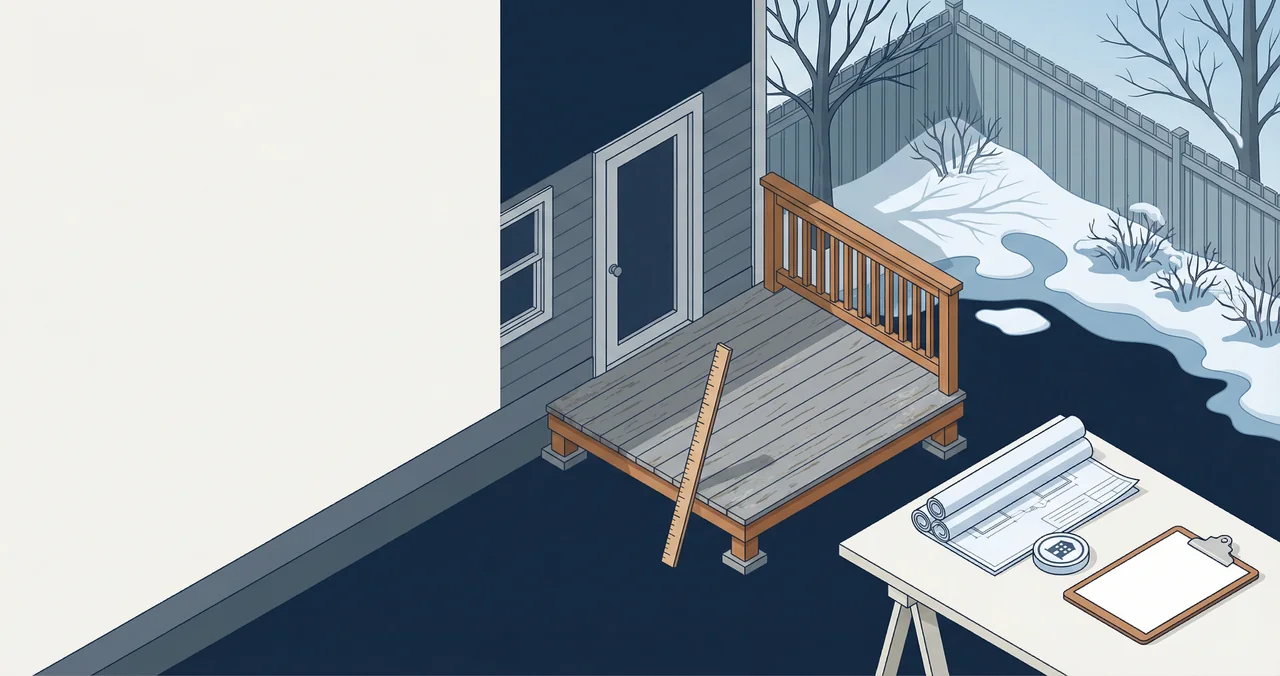
Building a deck in Vancouver without checking permit requirements first is one of the most expensive mistakes homeowners make. Fines, forced demolition, and problems at resale — all avoidable if you spend a few hours on paperwork before picking up a single board.
Here's exactly what Vancouver homeowners need to know about deck permits in 2026: when you need one, what it costs, how to apply, and what happens if you skip it.
📋 Tool Alert: Permit Checker
Do you really need a permit? Check the exact rules for your city or township.
Check Permits →Do You Need a Deck Permit in Vancouver?
Yes, most decks in Vancouver require a building permit. The City of Vancouver's Building By-law follows the BC Building Code, and the rules are straightforward but strict.
🏗️ Planning a deck project?
Get a free manual project review, or visualize your dream deck with AI before requesting quotes.
You do need a permit if your deck is:
- More than 24 inches (600 mm) above grade at any point
- Larger than 100 square feet (about 10 sq ft in metric terms — roughly a 10×10 space)
- Attached to your house (which affects the building envelope)
- Covering or enclosing any part of an exit route
- Including a roof, pergola, or other overhead structure
You might not need a permit if your deck is:
- 24 inches or less above grade at every point AND under 100 square feet
- A simple ground-level platform with no roof structure
- Not attached to the house
Even if your deck falls below the permit threshold, it still has to comply with Vancouver's zoning bylaws — setbacks, lot coverage, and height restrictions all apply regardless of permit requirements.
A critical Vancouver-specific note: The city tracks lot coverage carefully. Even a small permit-exempt deck counts toward your maximum site coverage. If your property is already close to the limit — common in neighborhoods like Kitsilano, Mount Pleasant, and the older parts of East Vancouver where lots are tight — you may need a zoning review even for a small platform deck.
When a Permit Is Required
The situations that trip up Vancouver homeowners most often:
Raised Decks (Over 24 Inches)
Most backyards in Vancouver have some slope. What looks like a ground-level deck at the back door can easily be 3 or 4 feet above grade at the far edge. That means a permit, engineered drawings, and proper footings below the frost line (12 to 24 inches in the Vancouver area).
Attached Decks
Any deck attached to your house penetrates the building envelope. Vancouver's building department takes this seriously because of the city's rain-heavy climate. Poor flashing and ledger board connections are a leading cause of moisture damage in Vancouver homes. The permit process ensures these connections are done right.
Multi-Level or Large Decks
Planning a two-tier deck or anything over 200 square feet? Expect the permit review to be more involved. You'll likely need stamped engineered drawings, especially if the deck includes stairs, railings at height, or spans over uneven terrain.
Decks with Roofs or Enclosures
Adding a pergola, awning, or roof over your deck? That's a separate structure and may require additional permits. In Vancouver's rainy climate, covered decks are popular — but they add complexity to the permit process.
Permit Fees & Processing Time
Vancouver's building permit fees are based on the estimated construction value of your project. Here's what to expect in 2026:
Fee Structure
| Project Value | Permit Fee (Approximate) |
|---|---|
| Under $5,000 CAD | $150–$250 |
| $5,000–$15,000 CAD | $250–$500 |
| $15,000–$50,000 CAD | $500–$1,200 |
| Over $50,000 CAD | $1,200+ (scaled to value) |
Additional fees may include:
- Plan review fee: Often included, but complex projects may incur extra charges
- Development permit fee: Required if your project triggers zoning variances ($500–$2,000+)
- Re-inspection fees: $150–$200 per visit if you fail an inspection and need a callback
Processing Times
- Simple deck permits: 2 to 4 weeks for straightforward residential decks
- Complex projects: 6 to 12 weeks if engineering review or zoning variances are involved
- Peak season delays: Applications submitted in March through May take longer because everyone's trying to build in summer
Pro tip: Submit your permit application in January or February. Vancouver's dry building season runs June through September, and contractors book up fast. Getting your permit approved by spring means you're first in line when the weather cooperates. For a deeper look at project costs, check out our guide on composite deck builders in Vancouver.
Building Codes & Setback Rules
Vancouver follows the BC Building Code with additional local bylaws. Here are the key requirements for residential decks:
Structural Requirements
- Footings: Must extend below the frost line — minimum 12 to 24 inches deep depending on soil conditions. Vancouver's clay-heavy soil in many neighborhoods (especially south of King Edward) requires careful footing design.
- Joist sizing: Typically 2×8 or 2×10 for most residential spans, but this depends on your specific design. Engineered drawings will specify exact requirements.
- Post spacing: Generally 6 to 8 feet maximum, depending on beam size and load calculations.
- Ledger board attachment: Must be properly flashed and bolted to the house framing — not just screwed into siding. This is the single most scrutinized detail in Vancouver deck inspections.
Setback Rules
- Side yard setback: Typically 1.2 metres (about 4 feet) from the property line, but this varies by zone
- Rear yard setback: Usually 7.6 metres (25 feet) from the rear property line for the main building, but decks may project into this setback — check your specific zone
- Height restrictions: Deck surface generally cannot exceed 1.2 metres above grade within required setback areas without triggering additional review
- Lot coverage: Your deck counts toward maximum site coverage, which ranges from 40% to 45% in most residential zones (RS-1, RS-5, RT zones)
Railing Requirements
- Required on any deck surface 30 inches (762 mm) or more above grade
- Minimum height: 42 inches (1,070 mm) — this is a BC Building Code requirement
- Baluster spacing: Maximum 4 inches (100 mm) between balusters — a child's head must not be able to pass through
- Load capacity: Railings must resist a minimum horizontal load of 0.75 kN/m applied at the top
Stair Requirements
- Rise: 125 mm to 200 mm (5 to 8 inches) per step
- Run: Minimum 235 mm (about 9.25 inches) tread depth
- Handrail: Required on stairs with 3 or more risers
- Width: Minimum 860 mm (34 inches) clear width
How to Apply for a Deck Permit in Vancouver
Step 1: Check Your Zoning
Before anything else, look up your property's zoning designation on the City of Vancouver's zoning map. This tells you your setbacks, lot coverage limits, and any special restrictions. You can find this through Vancouver's online property lookup tool or by calling 311.
Step 2: Prepare Your Drawings
For a standard deck, you'll need:
- Site plan showing your property boundaries, existing structures, and the proposed deck location with dimensions and setback measurements
- Construction drawings showing framing details, footing locations, beam spans, and joist layout
- Elevation drawings showing height above grade, railing details, and stair construction
- Material specifications listing decking, framing lumber, fasteners, and hardware
For decks over 600 square feet or with unusual designs, you'll likely need sealed engineered drawings from a registered structural engineer. Budget $500 to $2,000 CAD for engineering, depending on complexity.
Use PaperPlan to visualize different decking materials on your own home before committing — it helps you finalize your design before paying for engineering drawings.
Step 3: Submit Your Application
You can submit your permit application:
- Online through the City of Vancouver's permit portal
- In person at City Hall (453 West 12th Avenue)
Include all required drawings, a completed application form, and your permit fee payment. The city will assign a plan checker who reviews everything for code compliance.
Step 4: Respond to Review Comments
It's common to get feedback requesting changes or additional information. Respond promptly — delays in your response push you further back in the queue.
Step 5: Receive Your Permit and Schedule Inspections
Once approved, you'll receive your building permit. Post it visibly on site during construction. You'll need to schedule inspections at key stages:
- Footing inspection — before pouring concrete
- Framing inspection — after framing is complete but before decking is installed
- Final inspection — after everything is complete, including railings and stairs
Don't cover up work before it's been inspected. This is the most common reason homeowners have to tear out and redo work.
What Materials Work Best in Vancouver's Climate?
Vancouver's 1,200+ mm of annual rainfall makes material selection critical. Here's what to expect for pricing and performance in 2026:
| Material | Installed Cost (per sq ft, CAD) | Moisture Resistance | Maintenance Level |
|---|---|---|---|
| Pressure-treated | $30–$55 | Moderate | High — seal every 1–2 years |
| Cedar | $40–$65 | Good | Moderate — seal every 2–3 years |
| Composite | $50–$85 | Excellent | Low — occasional wash |
| Trex (composite) | $55–$90 | Excellent | Low |
| Ipe (hardwood) | $70–$120 | Excellent | Moderate — oil annually |
In Vancouver, composite and PVC decking outperform wood in the long run. The constant moisture promotes mold and algae growth on wood surfaces, meaning pressure-treated and cedar decks need frequent cleaning and sealing to prevent slippery surfaces and premature decay. If you're exploring material options, our post on best composite decking brands in Canada covers the top choices.
For the substructure, consider pressure-treated lumber rated for ground contact or aluminum deck framing, which won't rot and holds up indefinitely in wet conditions.
What Happens If You Build Without a Permit
Skipping the permit process might seem tempting — especially for a "simple" deck. Here's what actually happens when the city finds out:
During Construction
- Stop work order: A bylaw officer can shut down your project immediately
- Fines: The City of Vancouver can issue fines of $500 to $10,000 for unpermitted construction
- Forced removal: In serious cases, you may be ordered to demolish the deck entirely
At Resale
This is where it really hurts. When you sell your home:
- Your property disclosure statement requires you to declare any unpermitted work
- The buyer's home inspector will likely flag the deck
- Your buyer's lender may require the deck be permitted and inspected before approving the mortgage
- You could face $10,000 to $30,000+ in costs to retroactively permit, bring up to code, or demolish the deck
Insurance Issues
If someone is injured on an unpermitted deck, your homeowner's insurance may deny the claim. The insurer can argue the structure wasn't built to code, leaving you personally liable.
Getting a Retroactive Permit
If you already have an unpermitted deck, you can apply for a retroactive permit. The process typically involves:
- Submitting drawings of the existing structure
- Paying permit fees (sometimes with additional penalties)
- Having the deck inspected — which may require opening up sections of the deck for the inspector to verify framing, footings, and connections
- Making any required corrections to bring the deck up to current code
It's almost always cheaper to get the permit first than to fix problems after the fact. If you're weighing the costs of your project, our guide to deck costs in Vancouver breaks down realistic budgets.
Working with Vancouver Contractors
A few things specific to hiring deck builders in Vancouver:
- Verify they pull permits. A reputable contractor handles the permit process as part of the job. If a contractor suggests skipping the permit, walk away.
- Book early. The dry building season (June–September) is short. Most experienced deck builders in Vancouver are fully booked by April for summer projects.
- Get moisture detailing right. Ask specifically about ledger board flashing, joist tape, and drainage spacing between deck boards. These details matter more in Vancouver than almost anywhere else in Canada.
- Check licensing. Contractors in BC should be registered with BC Housing if doing work over $5,000 and carry a minimum of $2 million in liability insurance.
For homeowners in neighboring cities, permit requirements may differ — check our guides for deck builders in Burnaby and deck builders in Surrey for area-specific information.
🎨 Not sure which material to pick?
Upload a photo of your backyard and see exactly how Trex, TimberTech, or cedar would look — free and instant.
Frequently Asked Questions
How much does a deck permit cost in Vancouver in 2026?
Most residential deck permits in Vancouver cost between $150 and $500 CAD, depending on the estimated construction value of your project. Simple decks under $5,000 in value are at the lower end. Larger or more complex projects with higher construction values will pay more. Budget an additional $500 to $2,000 if you need stamped engineering drawings.
How long does it take to get a deck permit in Vancouver?
Plan for 2 to 4 weeks for a straightforward deck permit. Complex projects involving zoning variances or engineering review can take 6 to 12 weeks. Applications submitted during peak season (March–May) often take longer due to volume. Submit in winter to have your permit ready for summer construction.
Can I build a small deck without a permit in Vancouver?
Possibly. If your deck is 24 inches or less above grade at all points and under 100 square feet, it may be exempt from a building permit. However, it must still comply with all zoning bylaws, including setbacks and lot coverage limits. When in doubt, call Vancouver's Building Department at 311 — a quick phone call can save you thousands in potential fines.
Do I need an engineer for my deck permit?
Not always. Simple, standard-sized decks following prescriptive code requirements may not need engineered drawings. However, the City of Vancouver requires sealed engineered drawings for decks that are large (over 600 sq ft), unusually tall, have complex geometry, or use non-standard materials. Your plan checker will tell you if engineering is required during the review process.
What inspections are required for a deck in Vancouver?
Typically three inspections: footing inspection (before pouring concrete), framing inspection (after framing but before decking goes on), and final inspection (after all work including railings and stairs is complete). Don't proceed to the next stage until the previous inspection passes. Failed inspections mean re-inspection fees of $150 to $200 and project delays.
📋 Planning a deck project?
Get a free manual project review from our team — no obligation, no spam.
Get Free Project Review →Upload a backyard photo and preview real decking materials with AI — free, instant, no sign-up.
Permits, costs, material comparisons, and questions to ask before requesting quotes — delivered to your inbox.