
Deck Cost in Seattle (2026)
What does a deck cost in Seattle in 2026? Get real pricing per square foot for composite, wood, and Trex decks — plus tips to save in Seattle's wet climate.
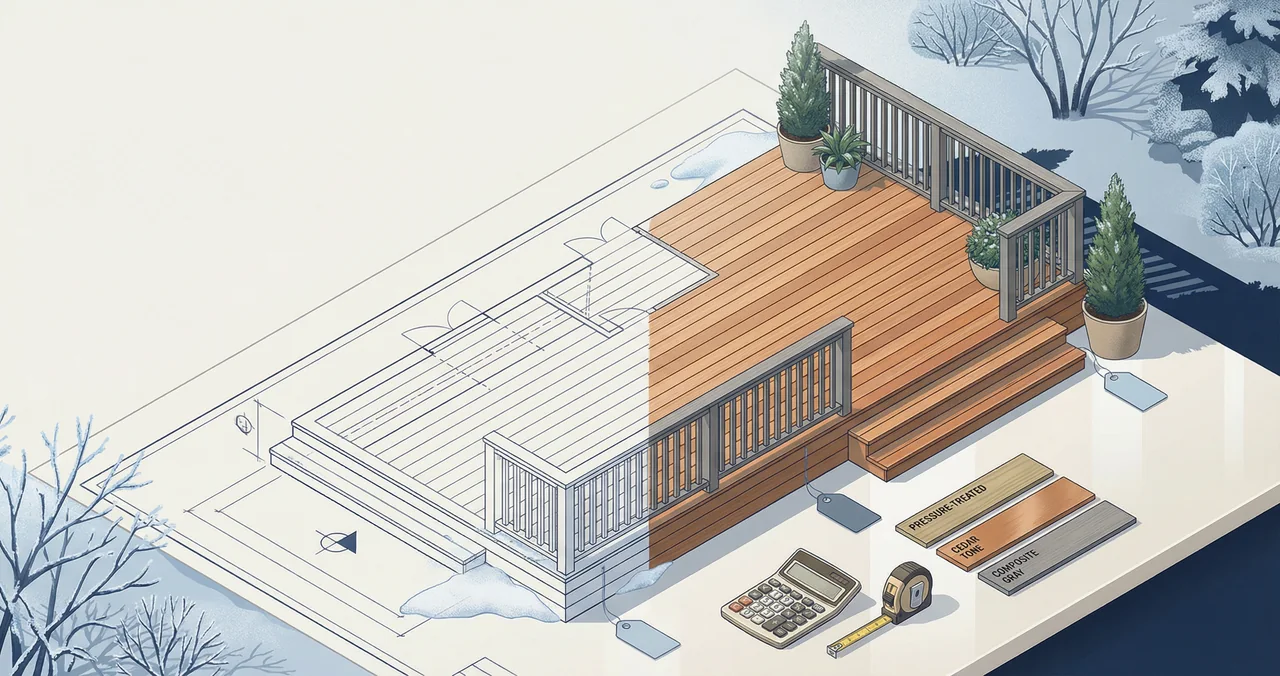
Deck Cost in Seattle: What Homeowners Are Paying in 2026
You're getting quotes. Maybe you've already gotten one that made you do a double-take. Before you commit to anything, you need to know what Seattle homeowners are actually paying for a new deck in 2026 — not national averages that ignore our rain-soaked reality.
🏗️ Planning a deck project?
Get a free manual project review, or visualize your dream deck with AI before requesting quotes.
🧮 Tool Alert: Deck Cost Calculator
Estimate your project costs in seconds based on local pricing bands for your area.
Calculate My Cost →The short answer: most Seattle decks cost between $12,000 and $35,000 installed, depending on size, materials, and complexity. A basic 12×16 pressure-treated deck might run $5,000–$8,600, while a 400-square-foot composite deck with railings and stairs can easily hit $30,000+.
But those numbers don't tell the full story. Seattle's constant moisture, permit requirements, and seasonal contractor demand all push costs in ways you won't see in generic pricing guides.
<!-- slot:after-intro -->
For a broader look at deck pricing across different materials and regions, see our deck cost guide. Timing your build right can also save thousands — check our guide on the best time to build a deck.
Average Deck Cost in Seattle by Material
Material choice is the single biggest cost driver. Here's what Seattle homeowners are paying in 2026 for a professionally installed deck, including framing, fasteners, and basic railings:
| Material | Installed Cost Per Sq Ft | 300 Sq Ft Deck Total |
|---|---|---|
| Pressure-Treated Wood | $25–$45 | $7,500–$13,500 |
| Cedar | $35–$55 | $10,500–$16,500 |
| Composite | $45–$75 | $13,500–$22,500 |
| Trex (mid-to-premium) | $50–$80 | $15,000–$24,000 |
| Ipe (Hardwood) | $60–$100 | $18,000–$30,000 |
Those ranges are wide for a reason. A ground-level deck on flat terrain costs far less than a second-story build in Queen Anne or a waterfront project on Alki Beach. Stairs, railings, built-in benches, and multi-level designs all add to the total.
Important for Seattle: pressure-treated wood sits at the low end of the price range, but it demands the most ongoing maintenance in our climate. Factor in the cost of annual cleaning and sealing every 1–2 years, and the gap between wood and composite narrows significantly over a 10-year span.
Cost Per Square Foot Breakdown
Understanding where your money goes helps you make smarter trade-offs. Here's a typical breakdown for a composite deck at $60/sqft installed in Seattle:
- Decking materials: $18–$28/sqft (boards, fascia, end caps)
- Framing and substructure: $8–$14/sqft (joists, beams, posts, hardware)
- Railings: $5–$12/sqft (varies dramatically by style — cable, glass, and aluminum cost more)
- Labor: $15–$22/sqft
- Permits and engineering: $1–$3/sqft (amortized across project)
- Footings: $2–$5/sqft (deeper footings cost more — see below)
Why Seattle Footings Cost More
Seattle's frost line sits at 12–24 inches, and the city requires footings to extend below frost depth. In neighborhoods with sloped lots — think Capitol Hill, Magnolia, or West Seattle — you may also need engineered footings or helical piers, which can add $500–$2,000+ to your project. Builders working on hillside properties regularly budget extra for site preparation and structural engineering.
Labor Costs in Seattle
Seattle is one of the pricier labor markets on the West Coast. Skilled deck builders here charge $15–$25 per square foot for labor, and experienced crews who specialize in composite and hardwood installation tend toward the higher end.
A few things drive labor costs up in Seattle specifically:
- Rain delays. Even during summer, an unexpected wet week can push your timeline. Most contractors build rain delays into their bids — you're paying for the scheduling uncertainty.
- Permit processing. Seattle's Department of Construction and Inspections (SDCI) requires permits for decks over 200 square feet or 30 inches above grade. Pulling permits, scheduling inspections, and making code-required adjustments all take labor hours.
- Seasonal demand. June through September is prime building season. Contractors who are booked solid during dry months may charge a premium. Booking your build in winter or early spring — even if construction happens later — often gets you better rates.
- Access difficulty. Older Seattle neighborhoods have tight lot lines, limited alley access, and mature trees. If a crew can't get materials into your backyard easily, expect to pay more for manual hauling.
Pro tip: Get quotes from at least three local builders. Pricing varies by 20–30% between contractors for the same scope of work. The cheapest bid isn't always the best — look for detailed line-item estimates and ask about their warranty on labor.
<!-- slot:mid-content -->
What Affects Your Total Price
Beyond materials and labor, these factors can swing your Seattle deck cost by thousands:
Deck Size and Shape
A simple rectangle is the most cost-effective shape. L-shapes, curves, and multi-level designs add 15–30% to your total because they require more cuts, waste more material, and take longer to build. If you're planning a larger build, check our guide on 20×20 deck costs for a sense of how pricing scales with size.
Height and Structure
A ground-level deck on a flat lot in Ballard is a fundamentally different project than a raised deck overlooking Puget Sound in Magnolia. Second-story decks require engineered beams, larger footings, and more railing — often adding $5,000–$15,000 compared to a ground-level build.
Railings and Stairs
Railings alone can account for 15–25% of your total deck cost. Basic wood railings run $20–$35 per linear foot, while glass or cable railing systems jump to $60–$150+ per linear foot. Seattle building code requires railings on any deck surface 30 inches or more above grade, with a minimum height of 36 inches (42 inches for commercial). For a deeper look at railing options, see our roundup of the best deck railing systems.
Permits and Inspections
In Seattle, you'll need a permit from SDCI for most deck projects. Permit fees typically run $300–$1,500 depending on project value. Decks attached to the house usually require a structural review. Freestanding decks under 200 square feet and under 30 inches may be exempt, but always confirm with SDCI before building — the risks of building without a permit aren't worth it.
Site Preparation
Sloped lots, tree root removal, old deck demolition, and grading all add costs. Demo of an existing deck runs $1,000–$3,000 for a typical Seattle lot. Drainage improvements — critical in a city that averages 37 inches of rain annually — can add another $500–$2,500.
Composite vs Wood: Cost Comparison for Seattle
This is the question every Seattle homeowner wrestles with. Here's the honest comparison:
| Factor | Pressure-Treated Wood | Composite (Mid-Range) |
|---|---|---|
| Upfront cost (300 sqft) | $7,500–$13,500 | $13,500–$22,500 |
| Annual maintenance | $200–$500 (cleaning, sealing) | $0–$100 (occasional wash) |
| Lifespan | 10–15 years | 25–30+ years |
| 10-year maintenance cost | $2,000–$5,000 | $0–$1,000 |
| 10-year total cost | $9,500–$18,500 | $13,500–$23,500 |
| Mold/algae resistance | Low — needs treatment | High — most brands resist growth |
| Warranty | None typical | 25–50 years (varies by brand) |
The Seattle verdict: Composite wins for most homeowners here. The math gets close over 10 years, and over 15–20 years, composite is almost always cheaper. More importantly, pressure-treated wood in Seattle's wet climate requires *relentless* maintenance. Skip a year of sealing and you'll see mold, algae, and early rot — especially on north-facing surfaces that never fully dry.
Cedar falls in the middle. It handles moisture better than pressure-treated lumber and looks beautiful, but still needs annual sealing in Seattle. At $35–$55/sqft installed, it's a reasonable middle ground if you prefer the look and feel of real wood and are willing to maintain it. Compare this against the best low-maintenance decking options if you're on the fence.
For those comparing specific composite brands, our guide to top composite decking brands breaks down the differences in price, warranty, and performance.
Use PaperPlan to visualize different decking materials on your own home before committing — it's especially useful for seeing how composite colors hold up against Seattle's grey skies and green surroundings.
How to Save Money on Your Seattle Deck
You don't have to sacrifice quality to bring costs down. These strategies actually work:
1. Book in the Off-Season
Seattle's dry season (June–September) is when every homeowner wants their deck built. Contractors are booked solid and have no reason to negotiate. Contact builders in October through February for summer installation. You'll often save 5–15% and get better scheduling flexibility.
2. Keep the Design Simple
A rectangular deck with a single level and standard railings costs dramatically less than a custom multi-level design. Every angle, curve, and built-in feature adds labor and material waste. Start simple — you can always add a pergola or built-in seating later.
3. Choose Your Material Strategically
You don't need the top-tier Trex Transcend line for every project. Mid-range composite like Trex Select or TimberTech Edge delivers solid performance at $45–$55/sqft installed versus $65–$80/sqft for premium lines. The difference over 300 square feet? Potentially $6,000–$7,500.
4. Do the Demo Yourself
If you're replacing an old deck, tearing out the existing structure yourself can save $1,000–$3,000. Just make sure you rent a dumpster and check with Seattle Public Utilities about disposal requirements for treated lumber — it can't go in regular waste.
5. Right-Size Your Deck
A 300-square-foot deck fits a dining table, a grill, and a couple of chairs comfortably. You might not need 400+ square feet. Dropping from 400 to 300 sqft at $60/sqft saves $6,000. Walk your yard, lay out furniture with tape, and figure out the minimum size that works. For help with sizing, see how costs break down for a 12×16 deck or a 16×20 deck.
6. Combine Permit Work
If you're also planning a fence, patio, or other backyard work, bundling permit applications and contractor work can reduce overhead costs. Some Seattle builders offer package discounts for combined projects.
<!-- slot:before-faq -->
🎨 Not sure which material to pick?
Upload a photo of your backyard and see exactly how Trex, TimberTech, or cedar would look — free and instant.
Frequently Asked Questions
How much does a 12×16 deck cost in Seattle?
A 12×16 deck (192 sqft) in Seattle runs approximately $4,800–$8,640 for pressure-treated wood and $8,640–$14,400 for composite, fully installed. Add $1,500–$4,000 for railings, stairs, and permits. Most homeowners end up in the $10,000–$18,000 range for a complete composite build with standard railings and one set of stairs.
Do I need a permit to build a deck in Seattle?
Yes, in most cases. Seattle requires a permit for decks that are over 200 square feet or more than 30 inches above grade. Attached decks typically require structural review. Permit fees range from $300–$1,500. Apply through Seattle's Department of Construction and Inspections (SDCI). Processing times vary, so apply at least 4–6 weeks before your planned build date.
What is the best decking material for Seattle's rainy climate?
Composite and PVC decking perform best in Seattle's wet conditions. They resist mold, algae, and moisture damage without the constant sealing that wood demands. Brands like Trex, TimberTech, and Fiberon all make composite lines designed for high-moisture environments. Cedar is a solid wood alternative but requires annual maintenance. Pressure-treated wood is the cheapest option upfront, but without consistent upkeep, it deteriorates quickly here.
When is the best time to build a deck in Seattle?
June through September offers the driest weather and most reliable building conditions. However, that's also peak season with the highest prices and longest wait times. The smartest approach: book your contractor in fall or winter for a summer build. You'll lock in better rates and secure a spot on the schedule before the rush.
How long does a deck last in Seattle?
It depends entirely on material and maintenance. Pressure-treated wood lasts 10–15 years with proper sealing and cleaning — less if neglected. Cedar can last 15–20 years with consistent care. Composite decking carries warranties of 25–50 years and typically outlasts wood by a wide margin in Seattle's climate, where constant moisture accelerates wood decay. The best deck sealers make a significant difference if you go the wood route.
<!-- slot:end -->
📋 Planning a deck project?
Get a free manual project review from our team — no obligation, no spam.
Get Free Project Review →Upload a backyard photo and preview real decking materials with AI — free, instant, no sign-up.
Permits, costs, material comparisons, and questions to ask before requesting quotes — delivered to your inbox.