
Deck Permits in Seattle (2026)
Need a deck permit in Seattle? Learn requirements, fees, building codes, setback rules, and how to apply for your Seattle deck permit in 2026.
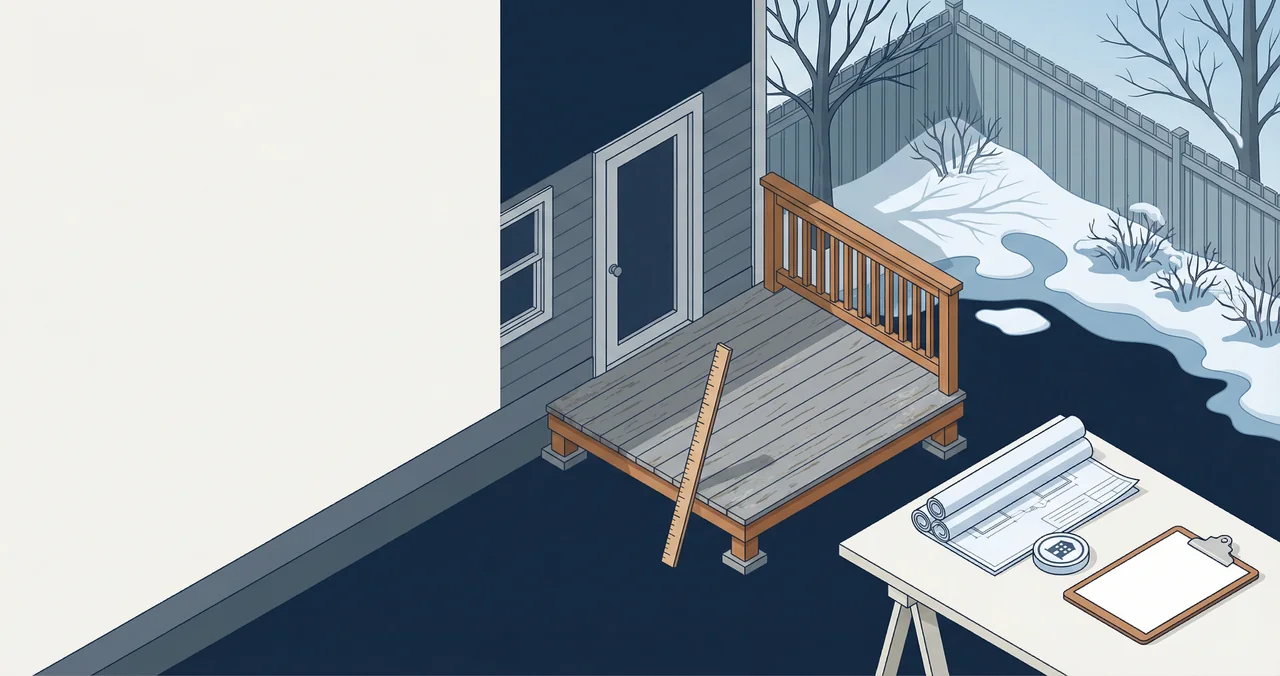
If you're planning to build a deck in Seattle, the permit question is probably one of the first things on your mind. Skip it, and you could face fines, forced demolition, or a nightmare when you try to sell your home. Get it right, and the process is more straightforward than most homeowners expect.
📋 Tool Alert: Permit Checker
Do you really need a permit? Check the exact rules for your city or township.
Check Permits →Here's everything you need to know about Seattle deck permits in 2026 — real costs, actual requirements, and step-by-step instructions to get approved.
Do You Need a Deck Permit in Seattle?
Short answer: probably yes.
🏗️ Planning a deck project?
Get a free manual project review, or visualize your dream deck with AI before requesting quotes.
In Seattle, the Seattle Department of Construction and Inspections (SDCI) requires a building permit for most deck projects. The general thresholds are:
- Decks over 200 square feet require a permit regardless of height
- Decks more than 30 inches above grade at any point require a permit regardless of size
- Any deck attached to your house typically requires a permit because it affects the building's structural envelope
A small, ground-level platform under 200 square feet that sits less than 30 inches off the ground and isn't attached to your house? That's about the only scenario where you might not need one. Even then, you still need to comply with zoning setback requirements and may need a separate zoning review.
Bottom line: If your deck is anything beyond a basic ground-level patio platform, budget for the permit. Most Seattle deck projects — especially raised decks off a back door, second-story decks in hilly neighborhoods like Queen Anne or Capitol Hill, or anything over a walkout basement — will require full permitting.
<!-- slot:after-intro -->
When a Permit Is Required
Let's get specific. SDCI requires a building permit when your deck project meets any of these conditions:
Structural Triggers
- The deck surface is more than 30 inches above the ground at any point
- The deck exceeds 200 square feet in total area
- The deck is attached to the house (ledger board connection)
- You're building over a slope or hillside (common in Magnolia, West Seattle, and Beacon Hill)
Additional Permit Triggers
- Electrical work — adding outlets, lighting circuits, or hot tub wiring requires a separate electrical permit
- Plumbing — running gas lines for a built-in grill or water for an outdoor kitchen requires a plumbing permit
- Demolition — removing an existing deck before building a new one may need a demolition permit
Zoning Considerations
Even permit-exempt decks must still follow Seattle's zoning code. That means:
- Respecting lot coverage limits (varies by zone — typically 35% in single-family zones)
- Maintaining required setbacks from property lines
- Not blocking required access or egress paths
- Complying with Environmentally Critical Areas (ECA) regulations if your lot is on a steep slope, near a creek, or in a landslide-prone zone
Seattle has a lot of properties in ECA zones. If you're in Magnolia, parts of West Seattle, Beacon Hill, or along any of the city's ravines, expect additional review requirements. SDCI may require a geotechnical report before approving your permit.
Permit Fees & Processing Time
What You'll Pay
Seattle deck permit fees are calculated based on the project valuation (total construction cost). Here's what to expect in 2026:
| Fee Type | Estimated Cost |
|----------|---------------|
| Building permit (base fee) | $150–$500+ depending on project value |
| Plan review fee | $100–$350 (typically 40-65% of permit fee) |
| Zoning review | Included with building permit |
| Electrical permit (if needed) | $75–$200 |
| ECA review (if applicable) | $500–$2,000+ |
| Expedited review surcharge | $200–$500 additional |
For a typical 12x16 raised composite deck in Seattle, expect total permit costs between $300 and $800. Larger projects, second-story decks, or properties in environmentally critical areas can push costs well above $1,000.
How Long Does It Take?
Standard SDCI processing times for residential deck permits in 2026:
- Simple deck projects (over-the-counter eligible): Same day to 1–2 weeks
- Standard plan review: 4–8 weeks
- Projects requiring ECA review: 8–16 weeks or longer
- Expedited review (if available): 2–4 weeks with additional fee
Pro tip: Seattle's building season runs June through September — the same window when SDCI sees the heaviest permit volume. Submit your application in January or February to get approval before the dry season starts. Contractors book up fast for summer builds, and having your permit in hand early gives you priority. For more on timing your project, check out guidance on best time to build a deck — the seasonal planning principles apply in Seattle too.
Building Codes & Setback Rules
Seattle follows the 2021 International Residential Code (IRC) as adopted and amended by the State of Washington and the City of Seattle. Key structural requirements include:
Structural Requirements
- Footings must extend below the frost line — in Seattle, that's 12 to 24 inches deep. Most inspectors want to see at least 18 inches in well-drained soil.
- Post sizes: Minimum 4x4 for decks under 4 feet high; 6x6 posts required for taller structures or longer spans
- Beam and joist sizing must match IRC span tables or an engineer's calculations
- Ledger board connections require lag bolts or through-bolts (not nails) with proper flashing to prevent water intrusion — critical in Seattle's rainy climate
- Guardrails required on any deck surface 30 inches or more above grade — minimum 36 inches high for residential
- Baluster spacing cannot exceed 4 inches (the "4-inch sphere rule")
- Stair requirements: Maximum 7¾-inch rise, minimum 10-inch tread depth, handrails on both sides for stairs wider than 44 inches
Setback Rules
Seattle's setback requirements depend on your zoning designation (SF 5000, SF 7200, LR1, etc.):
| Zone Type | Front Setback | Side Setback | Rear Setback |
|-----------|--------------|-------------|-------------|
| SF 5000 | 20 ft | 5 ft | 25 ft (typical) |
| SF 7200 | 20 ft | 5 ft | 25 ft (typical) |
| SF 9600 | 20 ft | 7.5 ft | 25 ft (typical) |
| LR Zones | Varies | Varies | Varies |
Important: Uncovered decks that are less than 18 inches above grade may be allowed to encroach into setback areas — but this varies by zone. Always confirm with SDCI before assuming your ground-level deck is exempt from setbacks.
Seattle-Specific Moisture Considerations
Seattle averages 37 inches of rain per year, with most falling between October and May. Your building inspector will pay close attention to:
- Ledger board flashing — improper flashing is the #1 cause of deck failures in the Pacific Northwest
- Proper drainage beneath the deck — standing water accelerates rot and attracts pests
- Joist tape or membrane — increasingly expected on all pressure-treated framing
- Adequate ventilation under the deck surface to prevent mold and algae growth
If you're choosing materials, composite and PVC decking resist Seattle's constant moisture far better than wood. Pressure-treated lumber works but demands annual cleaning and resealing — something many Seattle homeowners underestimate. Cedar holds up better than treated pine but still needs maintenance every 1–2 years.
<!-- slot:mid-content -->
How to Apply for a Deck Permit in Seattle
Step 1: Determine Your Project Scope
Before anything else, define exactly what you're building:
- Deck dimensions (length, width, height above grade)
- Attached or freestanding
- Materials (framing, decking, railing)
- Any electrical, plumbing, or gas work
- Whether your property is in an ECA zone (check SDCI's GIS maps)
Step 2: Prepare Your Plans
SDCI requires scaled drawings that include:
- Site plan showing the deck's location on your property, setbacks from all property lines, and existing structures
- Floor plan of the deck showing dimensions, beam locations, and post placement
- Elevation drawings showing height above grade, railing details, and stair layout
- Cross-section details showing footing depth, post connections, beam-to-post hardware, ledger attachment, and joist-to-beam connections
- Materials list specifying lumber species/grade, hardware, and fasteners
For a standard deck, you may not need a licensed architect or engineer — but if your deck is over a slope, more than 8 feet above grade, or has unusual structural elements, hire a structural engineer. The $500–$1,500 engineering fee is worth it to avoid plan review rejections and costly redesigns. Use PaperPlan to visualize different decking materials on your own home before committing — it helps you finalize your design before spending money on professional drawings.
Step 3: Submit Your Application
You have two options:
Online (Seattle Services Portal):
1. Create an account on the Seattle Services Portal
2. Select "Apply for a Permit" → Residential Building Permit
3. Upload your plans as PDFs
4. Pay the initial review fee
5. Track your application status online
In-Person (Applicant Services Center):
- Visit SDCI at 700 5th Avenue, Suite 2000, Seattle, WA 98104
- Simple decks may qualify for over-the-counter review — bring two sets of plans and you could walk out with a permit the same day
- Hours: Monday–Friday, 8 AM–4 PM (check SDCI website for current hours)
Step 4: Plan Review & Revisions
After submission:
1. SDCI reviews your plans for code compliance
2. You'll receive a correction notice if changes are needed (common — don't panic)
3. Respond to corrections and resubmit revised plans
4. Once approved, pay remaining fees and receive your permit
Step 5: Construction & Inspections
With permit in hand, you'll need to schedule inspections at key stages:
- Footing inspection — before pouring concrete (inspector checks depth, diameter, soil conditions)
- Framing inspection — after framing is complete but before decking is installed
- Final inspection — after everything is done, including railings, stairs, and electrical
Don't cover up work before it's inspected. If you pour footings before the footing inspection or install decking before the framing inspection, the inspector can require you to remove it.
If you're weighing whether to build your own deck or hire a contractor, keep in mind that handling the permit process and passing inspections is your responsibility either way as the homeowner.
What Happens If You Build Without a Permit
Building a deck without the required permit in Seattle is a gamble with serious consequences:
Immediate Risks
- Stop-work orders — SDCI can shut down your project mid-build
- Fines ranging from $150 to $500 per day the violation continues
- Double permit fees — if you apply after the fact, SDCI typically charges 2x the standard permit fee
Long-Term Problems
- Failed home inspection at sale — unpermitted structures are flagged by every competent home inspector, and buyers will demand resolution or price reductions
- Insurance denial — if someone is injured on an unpermitted deck, your homeowner's insurance may refuse the claim
- Forced removal — in worst cases, SDCI can require you to tear down the entire structure
- Neighbor complaints — Seattle neighbors can (and do) report unpermitted construction to SDCI
The "Legalize It" Option
Already have an unpermitted deck? You can apply for a permit after the fact, but expect:
- Higher fees (typically double)
- Possible requirement to expose structural elements for inspection (meaning partial demolition of the finished deck)
- Engineering reports if the structure doesn't clearly meet code
- No guarantee of approval — if the deck doesn't meet setback requirements, you may need to modify or remove it
It's always cheaper and easier to get the permit first. For a sobering look at what can go wrong, read about the risks of building without a permit — the consequences are similar across North America.
What Your Deck Will Cost in Seattle (2026)
Since you're already budgeting for permits, here's what the full project typically runs in the Seattle market:
| Material | Installed Cost per Sq Ft | 12x16 Deck (192 sq ft) |
|----------|------------------------|------------------------|
| Pressure-treated lumber | $25–$45 | $4,800–$8,640 |
| Cedar | $35–$55 | $6,720–$10,560 |
| Composite | $45–$75 | $8,640–$14,400 |
| Trex (mid-high range) | $50–$80 | $9,600–$15,360 |
| Ipe (hardwood) | $60–$100 | $11,520–$19,200 |
Seattle labor rates run higher than national averages due to demand and cost of living. Add $300–$800 for the permit and inspections on top of these numbers.
Given Seattle's relentless rain, many contractors here strongly recommend composite or low-maintenance decking. The higher upfront cost pays off when you're not spending every spring pressure-washing and resealing. If you're debating between specific materials, comparing the best composite decking brands can help narrow your choices.
<!-- slot:before-faq -->
🎨 Not sure which material to pick?
Upload a photo of your backyard and see exactly how Trex, TimberTech, or cedar would look — free and instant.
Frequently Asked Questions
How much does a deck permit cost in Seattle?
Most Seattle homeowners pay between $300 and $800 in total permit fees for a standard residential deck. This includes the building permit, plan review, and zoning review. Properties in Environmentally Critical Areas should budget $500–$2,000+ for additional review. If you apply after building without a permit, expect to pay double the standard fees.
Can I build a small deck without a permit in Seattle?
Yes, but only if your deck meets all of these conditions: under 200 square feet, less than 30 inches above grade at any point, and not attached to your house. Even then, you must comply with zoning setbacks and lot coverage limits. When in doubt, call SDCI at (206) 684-8850 — a quick phone call can save you thousands in fines.
How long does it take to get a deck permit approved in Seattle?
Simple projects eligible for over-the-counter review can be approved the same day. Standard plan review takes 4–8 weeks. Projects in ECA zones or requiring structural engineering review can take 8–16 weeks or longer. Submitting in winter (January–February) means shorter wait times and positions you to build during Seattle's dry season from June through September.
Do I need an engineer to draw my deck plans?
Not always. For a straightforward, code-compliant deck that follows standard IRC span tables, you can prepare your own plans or have your contractor draft them. However, SDCI will require a licensed structural engineer for decks that are elevated more than 8 feet, built on steep slopes, cantilevered, or have unusual structural configurations. Given Seattle's hilly terrain, this applies to more projects here than in flatter cities.
What inspections are required for a Seattle deck permit?
You'll typically need three inspections: a footing inspection (before pouring concrete), a framing inspection (after framing is complete but before decking goes on), and a final inspection (after everything is finished). Electrical work requires a separate electrical inspection. Schedule each inspection through SDCI — inspectors typically come within 1–3 business days of your request during non-peak times, longer in summer.
<!-- slot:end -->
📋 Planning a deck project?
Get a free manual project review from our team — no obligation, no spam.
Get Free Project Review →Upload a backyard photo and preview real decking materials with AI — free, instant, no sign-up.
Permits, costs, material comparisons, and questions to ask before requesting quotes — delivered to your inbox.