
Deck Maintenance in Illinois: A Season-by-Season Checklist
Keep your Illinois deck in top shape! This guide covers seasonal maintenance tasks, costs, materials, and permit requirements for your region.
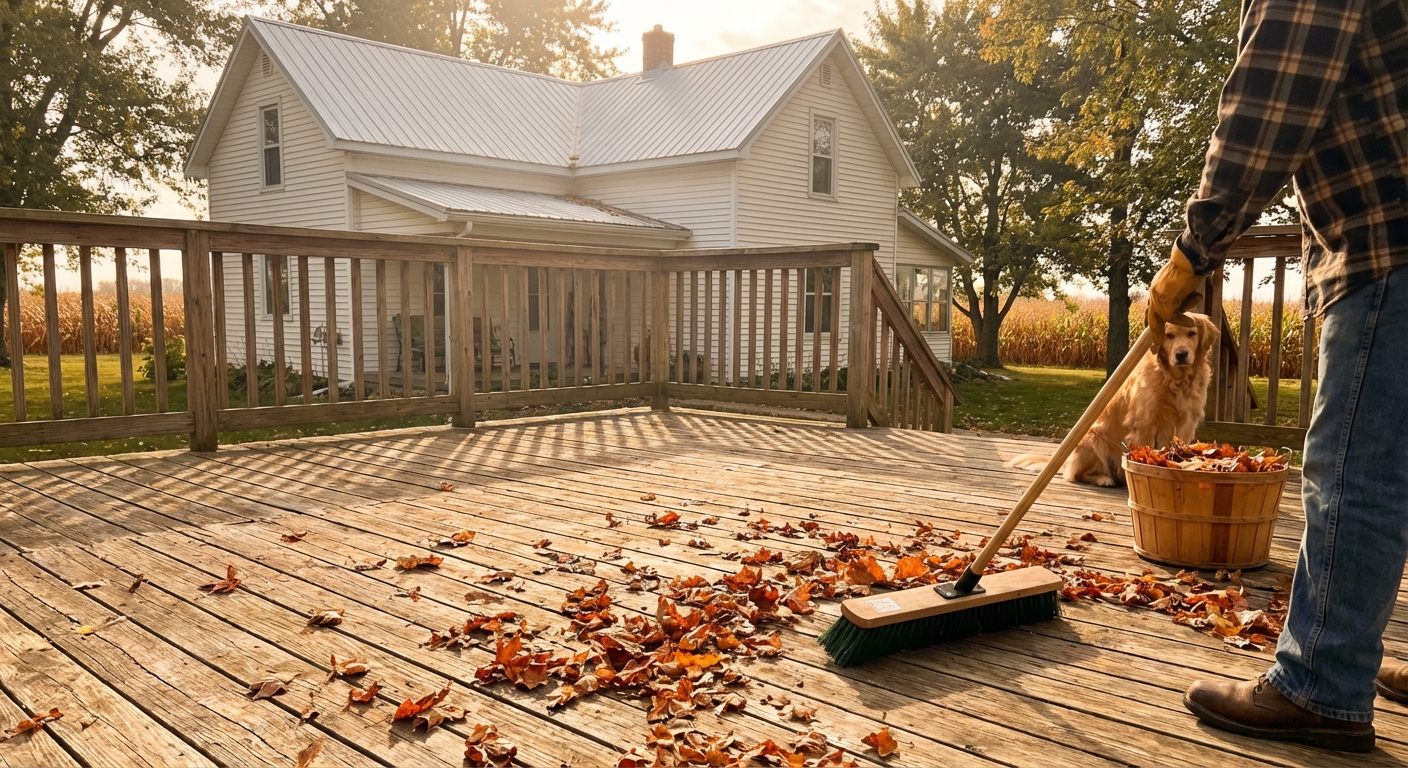
Is your deck ready to withstand Illinois' wild weather swings? From scorching summers to icy winters, your outdoor space takes a beating. This comprehensive guide provides a season-by-season checklist to help you maintain your deck, protect your investment, and keep it looking its best for years to come. We'll cover everything from cleaning and staining to repairs and winterization, with Illinois-specific details on costs, climate considerations, and permit requirements.
📅 Tool Alert: Maintenance Planner
Get a custom seasonal maintenance schedule to protect your investment for decades.
Plan Maintenance →Spring: Inspection, Cleaning, and Repair
Spring is the ideal time to assess winter damage and prepare your deck for the warmer months. Illinois winters can be brutal, with temperatures dropping as low as -10 to 20°F, causing wood to contract and expand, leading to cracks and splinters.
🏗️ Planning a deck project?
Get a free manual project review, or visualize your dream deck with AI before requesting quotes.
Inspect for Damage
Carefully examine your deck for:
- Loose or popped nails/screws: Replace or tighten them.
- Cracks and splinters: Address these promptly to prevent further damage.
- Rotting wood: Probe suspicious areas with a screwdriver. If the wood is soft and easily penetrated, it's likely rotting.
- Loose railings or stairs: Safety first! Tighten or replace any unstable components.
- Water stains or discoloration: These can indicate moisture damage and potential mold growth.
Deep Cleaning
Remove debris like leaves, dirt, and mold that accumulated over the winter.
1. Sweep thoroughly: Remove loose debris with a broom or leaf blower.
2. Apply deck cleaner: Use a cleaner specifically designed for your deck material (wood, composite, etc.). Follow the manufacturer's instructions.
3. Scrub the deck: Use a stiff-bristled brush to scrub the deck surface, paying attention to areas with mildew or stains.
4. Rinse thoroughly: Rinse the deck with a hose, using a nozzle with moderate pressure. Avoid using a pressure washer on wood decks, as it can damage the wood fibers.
5. Allow to dry completely: Let the deck dry for at least 24-48 hours before applying any sealant or stain.
Necessary Repairs
Address any issues identified during your inspection:
- Replace rotted boards: Cut out the damaged section and replace it with new lumber of the same type and dimensions.
- Repair cracks: Use wood filler or epoxy to fill cracks, then sand smooth.
- Tighten loose hardware: Replace any stripped screws or damaged nails.
- Repair or replace railings and stairs: Ensure all railings and stairs are sturdy and meet safety codes. Remember that decks over 30 inches above grade require permits in Illinois, so ensure any structural repairs are up to code.
<!-- slot:after-intro -->
Summer: Sealing, Staining, and Enjoying
Summer in Illinois brings hot and humid weather, with temperatures often reaching 85-95°F. This can be harsh on your deck, causing it to fade, crack, and warp. Sealing or staining your deck provides protection from the sun and moisture.
Sealing vs. Staining
- Sealer: A clear coating that protects the wood from water damage and UV rays. It doesn't change the color of the wood.
- Stain: Adds color to the wood while also providing protection. Stains come in various opacities, from transparent to solid.
Choosing the Right Product
- Wood type: Different wood types require different products. Consult with a local hardware store or deck professional for recommendations.
- Desired look: Consider the color and finish you want to achieve.
- Weather resistance: Choose a product that is designed for Illinois' climate, with good UV protection and water repellency.
Application
1. Prepare the surface: Ensure the deck is clean, dry, and free of debris. Lightly sand the surface to create a better bond for the sealant or stain.
2. Apply the product: Use a brush, roller, or sprayer to apply the sealant or stain, following the manufacturer's instructions.
3. Apply multiple coats: Apply two coats for optimal protection, allowing each coat to dry completely before applying the next.
Enjoying Your Deck
Once your deck is sealed or stained, it's time to enjoy it! Decorate with outdoor furniture, plants, and lighting to create a comfortable and inviting space. Consider adding a screened porch or deck combo to beat the bugs and weather – a popular choice in Illinois. Check out Screened Porch and Deck Combos in Illinois: Beat the Bugs & Weather for ideas.
Autumn: Preparing for Winter
Autumn is the time to prepare your deck for the upcoming winter. Remove debris, trim vegetation, and take steps to prevent ice damage.
Remove Debris
- Clear leaves and debris: Remove all leaves, twigs, and other debris from the deck surface and between deck boards. Decaying debris can trap moisture and promote mold growth.
- Clean gutters: Clean your gutters to ensure proper drainage and prevent water from overflowing onto your deck.
Trim Vegetation
- Cut back overgrown plants: Trim any trees, shrubs, or vines that are touching your deck. These can trap moisture and provide a pathway for pests.
Prevent Ice Damage
- Protect from ice dams: Ice dams can form on your roof and cause water to back up onto your deck. Consider installing heat cables to prevent ice dams from forming.
- Use ice melt sparingly: While you can use ice melt products to keep your deck clear of ice, be careful not to use too much, as it can damage the wood or composite. Choose a product that is specifically designed for decks.
Use PaperPlan (paperplan.app) to visualize your deck with PaperPlan design with different materials and layouts before committing to a contractor. This helps you plan for maintenance access and material choices that will withstand Illinois winters.
Winter: Snow Removal and Monitoring
Illinois winters bring snow, ice, and freezing temperatures. It's important to monitor your deck and take steps to prevent damage from the elements.
Snow Removal
- Shovel snow carefully: Use a plastic shovel to remove snow from your deck, being careful not to damage the surface. Avoid using metal shovels, as they can scratch or gouge the wood or composite.
- Remove ice carefully: If ice forms on your deck, use an ice scraper or ice melt product to remove it. Be careful not to damage the surface.
- Avoid using salt: Salt can damage wood and composite decking, so avoid using it to melt ice.
Monitoring
- Check for ice dams: Monitor your roof for ice dams and take steps to remove them if they form.
- Inspect for damage: After heavy snowfalls or ice storms, inspect your deck for any signs of damage, such as cracks, splinters, or loose railings.
<!-- slot:mid-content -->
Deck Material Considerations in Illinois
Choosing the right decking material is crucial for longevity in Illinois' climate. Here's a breakdown of common materials and their suitability:
| Material | Pros | Cons | Estimated Cost (Installed) |
| ------------------ | ------------------------------------------------------------------------------ | -------------------------------------------------------------------------------------------------- | --------------------------- |
| Pressure-Treated Wood | Affordable, readily available | Requires regular maintenance (staining/sealing), prone to warping and splintering | $25-$45/sqft |
| Composite | Low maintenance, durable, resists rot and insects | More expensive than pressure-treated wood, can get hot in direct sunlight | $45-$80/sqft |
| Cedar | Naturally rot-resistant, beautiful appearance | Requires regular sealing, softer than other woods, can be more expensive than pressure-treated wood | $35-$60/sqft |
| Trex | Very low maintenance, extremely durable, made from recycled materials | Most expensive option, can get hot in direct sunlight, limited color options compared to wood | $55-$85/sqft |
Pricing Note: These costs are estimates and can vary depending on the complexity of the project, the specific materials used, and the contractor you choose. Costs tend to be higher in Chicagoland and the collar counties compared to central and southern Illinois.
Permit Requirements in Illinois
Illinois has adopted the ICC International Building Code, but enforcement is handled at the local level. This means permit requirements can vary depending on your city or county.
- General Rule: Decks over 30 inches above grade or attached to the house require permits.
- Chicago: The Department of Buildings handles permits. Expect a slower process, and architect-stamped plans are often required for multi-level decks. Permit costs can range from $200-$800+. Wind loads are a significant consideration in Chicago, so ensure your design accounts for this. Small urban lots and rooftop decks are common, leading to compact designs.
- Suburbs (e.g., DuPage/Will County): Turnaround times are typically faster than in Chicago. Permit costs range from $75-$400. In Joliet, a rapidly growing suburb within Will County, expect a mix of new construction and established neighborhood considerations.
- Peoria: Contact the Peoria County permits department. Peoria, a central Illinois hub, offers moderate pricing and stunning Illinois River valley views.
- Springfield: Contact the Sangamon County permits department. Springfield, the capital city, generally offers lower costs than Chicagoland.
- Frost Line: The frost line in Illinois is generally 42 inches statewide, but it can be deeper near the Wisconsin border. This depth is important for foundation footings.
- Termites: Termite pressure is moderate in Illinois, so consider termite-resistant materials or treatments.
- Best Build Months: May-June and September-October offer the most favorable weather for deck construction in Illinois.
It's always best to check with your local building department to confirm the specific permit requirements for your project. Failure to obtain the necessary permits can result in fines and delays.
<!-- slot:before-faq -->
Tips for Illinois Homeowners
- Choose local contractors: Hire a deck builder familiar with Illinois' climate and building codes.
- Consider lake-effect snow: If you live near Lake Michigan, especially in the Chicago area, factor in the potential for heavy lake-effect snow when designing and maintaining your deck.
- Plan for drainage: Ensure your deck has proper drainage to prevent water from pooling and causing damage.
- Prioritize safety: Ensure your deck is structurally sound and meets all safety codes. This is especially important for decks with railings and stairs.
- Regular maintenance is key: A little maintenance goes a long way in extending the life of your deck.
For more inspiration, check out Deck Design Ideas for Illinois Homes: Styles That Work in Every Season and Small Deck Ideas for Illinois: Maximize Your Outdoor Space. You may also want to review How to Build a Deck in Illinois: Step-by-Step Guide for 2026 to understand the construction process. Finally, if you're considering staining, read How to Stain a Deck in Illinois: Timing, Products & Techniques.
🎨 Not sure which material to pick?
Upload a photo of your backyard and see exactly how Trex, TimberTech, or cedar would look — free and instant.
Frequently Asked Questions
How often should I seal or stain my deck in Illinois?
The frequency depends on the type of wood, the product used, and the amount of sun and rain exposure. Generally, you should seal or stain your deck every 1-3 years. Look for signs of wear, such as fading, water damage, or peeling, to determine when it's time to reapply.
What's the best way to remove mold and mildew from my deck?
Use a deck cleaner specifically designed to remove mold and mildew. Apply the cleaner according to the manufacturer's instructions, scrub the affected areas with a stiff-bristled brush, and rinse thoroughly. You can also use a solution of bleach and water (1 part bleach to 3 parts water), but be sure to protect yourself with gloves and eye protection and test the solution in an inconspicuous area first.
Can I use a pressure washer to clean my wood deck?
While pressure washing can be effective for cleaning decks, it can also damage the wood fibers if used improperly. Use a wide nozzle and low pressure, and avoid holding the nozzle too close to the wood surface. It's generally best to use a deck cleaner and a scrub brush instead.
What should I do if I find rotting wood on my deck?
If you find rotting wood, it's important to address it promptly to prevent further damage. Cut out the damaged section and replace it with new lumber of the same type and dimensions. Be sure to treat the surrounding wood with a wood preservative to prevent further rot. If the rot is extensive, you may need to consult with a deck professional.
How much does it cost to build a deck in Illinois?
The cost to build a deck in Illinois varies depending on the size, materials, and complexity of the project. Expect to pay anywhere from $25-$85 per square foot installed. Pressure-treated wood is the most affordable option, while composite and cedar are more expensive. Chicagoland typically sees higher labor and material costs compared to downstate.
<!-- slot:end -->
📋 Planning a deck project?
Get a free manual project review from our team — no obligation, no spam.
Get Free Project Review →Upload a backyard photo and preview real decking materials with AI — free, instant, no sign-up.
Permits, costs, material comparisons, and questions to ask before requesting quotes — delivered to your inbox.