
How to Stain a Deck in Illinois: Timing, Products & Techniques
Learn how to stain your deck in Illinois! Get expert tips on timing, choosing the right stain, prep work, and application techniques for lasting results.
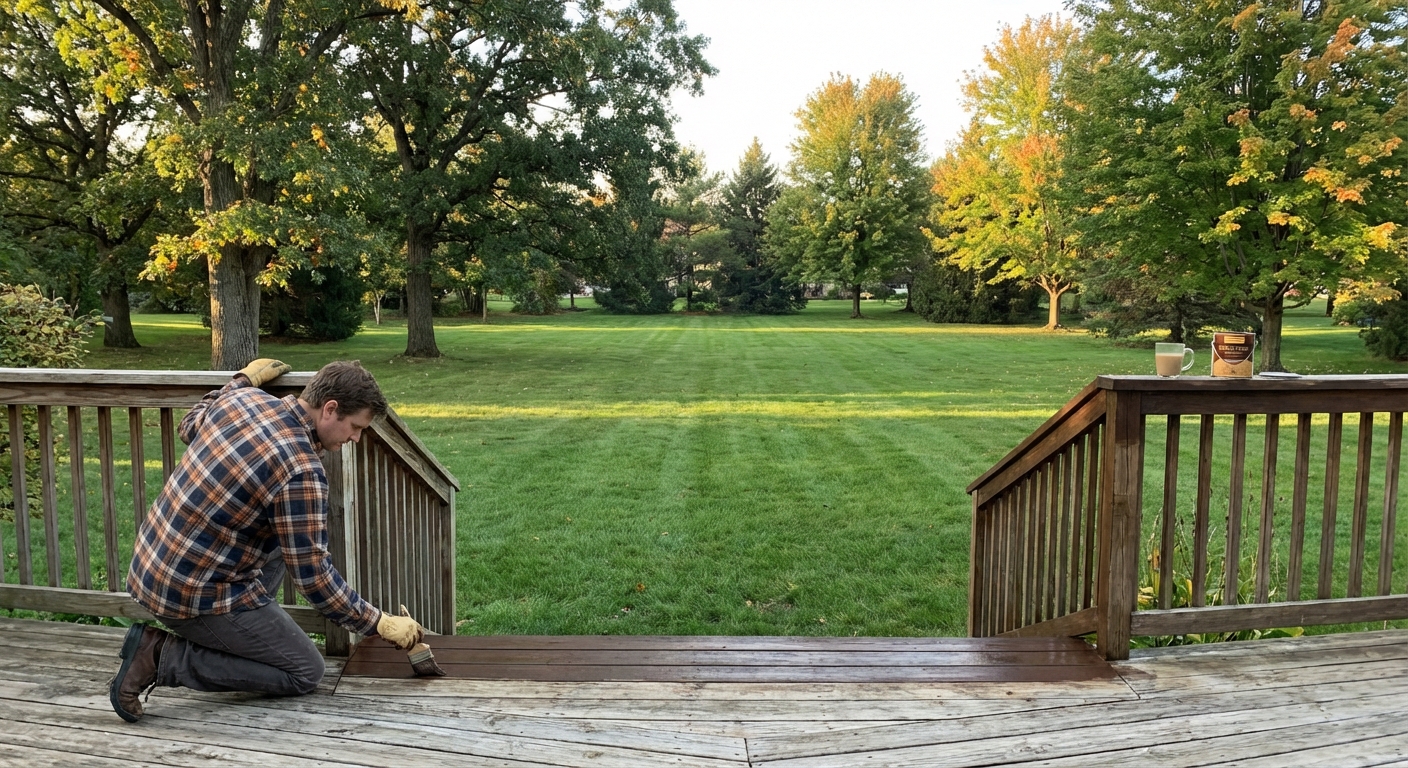
Are you tired of your deck looking faded and weathered? Staining is the answer. But in Illinois, with its distinct seasons, knowing *when* and *how* to stain your deck properly is crucial for long-lasting protection and beauty. This guide provides everything you need to successfully stain your deck, tailored for Illinois homeowners.
📐 Tool Alert: Deck Stair Calculator
Calculate rise, run, and stringer cuts while ensuring IRC/OBC code compliance.
Calculate Stairs →Choosing the Right Time to Stain Your Deck in Illinois
Illinois' climate, characterized by hot, humid summers (85-95°F) and harsh winters (-10 to 20°F), dictates the best times for staining. The ideal window is when temperatures are consistently between 50°F and 90°F and when there's no rain in the forecast for at least 24-48 hours after application.
🏗️ Planning a deck project?
Get a free manual project review, or visualize your dream deck with AI before requesting quotes.
- Spring (Late April - Early June): A popular choice, especially after giving your deck a thorough cleaning after winter. Be mindful of late frosts and frequent rain showers.
- Summer (Late June - August): Hot and humid conditions can make stain dry too quickly, leading to lap marks and uneven coverage. Stain in the early morning or late afternoon to avoid direct sunlight and extreme heat.
- Fall (September - October): Generally considered the *best* time to stain in Illinois. Temperatures are milder, rainfall is less frequent, and the deck has had time to dry out after the summer. You'll also want to ensure you winterize your deck before the really cold temperatures arrive; check out this guide on How to Winterize Your Deck in Illinois: Protect Against Harsh Winters.
Consider these regional differences within Illinois:
- Chicagoland: Lake-effect snow can linger later into spring and arrive earlier in fall. Pay close attention to the forecast.
- Central & Southern Illinois: Longer growing seasons generally mean a slightly extended window for staining.
<!-- slot:after-intro -->
Preparing Your Deck for Staining: The Key to Success
Proper preparation is essential for a long-lasting, beautiful stain job. Neglecting this step can lead to peeling, bubbling, and premature failure.
1. Cleaning Your Deck
Remove all furniture, planters, and debris. Sweep the deck thoroughly. Then, use a deck cleaner and a stiff-bristled brush to scrub away dirt, mildew, and algae. Pressure washing can be effective but use caution. Too much pressure can damage the wood, especially softer woods like cedar. If you do pressure wash, use a wide fan tip and keep the nozzle at least 12 inches from the surface.
2. Repairing Damaged Wood
Inspect your deck for damaged or rotting boards. Replace any that are beyond repair. Countersink any protruding nails or screws. Sand down rough spots and splinters. If you have a composite deck, follow the manufacturer's recommendations for cleaning and repair.
3. Sanding Your Deck (If Necessary)
Sanding is usually only necessary if the deck has an existing finish, is heavily weathered, or has been previously stained with a different type of product. Use a coarse-grit sandpaper (60-80 grit) to remove the old finish, then follow with a medium-grit sandpaper (100-120 grit) to smooth the surface. Always sand in the direction of the wood grain.
4. Allowing the Deck to Dry
After cleaning and sanding, allow the deck to dry completely. This can take 24-48 hours, depending on the weather. The wood should have a moisture content of 15% or less before staining. You can use a moisture meter to check this.
Choosing the Right Stain for Your Illinois Deck
The best stain for your deck depends on the type of wood, the desired look, and the level of protection you need. Here’s a breakdown of common stain types:
Types of Deck Stain
- Oil-Based Stains: Penetrate the wood deeply, providing excellent protection against moisture and UV damage. They tend to be more durable than water-based stains, especially in Illinois' harsh winters. However, they can be more difficult to clean up and may contain higher VOCs.
- Water-Based Stains: Easier to clean up, lower in VOCs, and dry faster than oil-based stains. They offer good protection and come in a wide range of colors. However, they may not be as durable as oil-based stains in high-traffic areas.
- Clear Sealers: Offer minimal color but provide water repellency and UV protection. Best for preserving the natural look of the wood.
- Toner/Semi-Transparent Stains: Enhance the natural wood grain while adding a hint of color. Offer moderate protection.
- Semi-Solid Stains: Provide more color than semi-transparent stains but still allow some of the wood grain to show through. Offer good protection.
- Solid Stains: Opaque and completely hide the wood grain. Offer the most protection but look more like paint.
Stain Color Considerations
Consider the surrounding environment and the overall style of your home. Lighter colors reflect heat, which can be beneficial in the summer, while darker colors absorb heat. However, darker colors can also fade more quickly in direct sunlight.
Also, think about maintenance. Lighter stains show dirt and mildew more easily, while darker stains can show scratches and scuffs.
Stain Recommendations by Wood Type
- Pressure-Treated Pine: A good choice for budget-conscious homeowners. Use an oil-based or water-based stain specifically designed for pressure-treated wood. Allow the wood to dry for at least 6 months after installation before staining.
- Cedar: Naturally resistant to rot and insects. Use a clear sealer or a semi-transparent stain to showcase its natural beauty.
- Redwood: Similar to cedar in its natural resistance. Use a clear sealer or a semi-transparent stain.
- Composite Decking (Trex, etc.): Requires special stains or sealers designed specifically for composite materials. Follow the manufacturer's recommendations.
Use PaperPlan (paperplan.app) to visualize your deck with PaperPlan design with different materials and layouts before committing to a contractor or stain. See how different stain colors will look on your deck before you even open a can!
<!-- slot:mid-content -->
Staining Your Deck: Step-by-Step Guide
Now that you've chosen your stain and prepared your deck, it's time to start staining.
1. Gather Your Supplies
- Stain
- Paintbrushes (natural bristle for oil-based stains, synthetic for water-based stains)
- Paint roller with extension pole (optional, for larger decks)
- Paint tray
- Drop cloths
- Painter's tape
- Stir sticks
- Safety glasses
- Gloves
- Rags
2. Protect Your Surroundings
Cover any plants, shrubs, or other surfaces that you don't want to get stained with drop cloths. Use painter's tape to mask off any areas that you want to protect.
3. Stir the Stain Thoroughly
Stir the stain well to ensure that the pigments are evenly distributed. Don't shake the can, as this can create air bubbles.
4. Apply the Stain
Start by staining the railings, posts, and other vertical surfaces. Use a brush to apply the stain evenly, following the direction of the wood grain. Avoid applying too much stain, as this can lead to drips and runs.
Next, stain the deck boards. Use a brush or roller to apply the stain evenly, working in small sections. Overlap each section slightly to ensure complete coverage. Again, avoid applying too much stain.
5. Wipe Off Excess Stain
After allowing the stain to penetrate the wood for a few minutes (check the manufacturer's instructions for the recommended time), wipe off any excess stain with a clean rag. This will prevent the stain from drying into a sticky or glossy finish.
6. Allow the Stain to Dry
Allow the stain to dry completely before walking on the deck or replacing furniture. This can take 24-48 hours, depending on the weather.
7. Apply a Second Coat (Optional)
For added protection, apply a second coat of stain. Follow the same steps as above.
Deck Costs in Illinois
Here's a general idea of deck building costs in Illinois. Keep in mind Chicagoland tends to be at the higher end of these ranges. These figures are for *installed* decks.
| Material | Cost per Square Foot |
|--------------------|-----------------------|
| Pressure-Treated | $25 - $45 |
| Composite | $45 - $80 |
| Cedar | $35 - $60 |
| Trex | $55 - $85 |
Remember that decks over 30 inches above grade or attached to your house require permits. In Chicago, expect a slower permit process through the Department of Buildings and architect-stamped plans might be required for multi-level decks. Permits can cost from $200 - $800+. Suburbs like those in DuPage and Will County generally have faster permit turnaround times and lower fees ($75-$400).
<!-- slot:before-faq -->
Additional Tips for Staining Your Deck in Illinois
- Work in the shade: Direct sunlight can cause the stain to dry too quickly, leading to uneven coverage.
- Don't stain on a windy day: Wind can blow debris onto the wet stain, creating a textured finish.
- Clean your brushes and rollers immediately after use: Use mineral spirits for oil-based stains and soap and water for water-based stains.
- Dispose of used rags properly: Oily rags can spontaneously combust. Lay them flat to dry completely before disposing of them.
- For more information on maintaining your deck, check out Deck Maintenance in Illinois: A Season-by-Season Checklist.
<!-- slot:end -->
🎨 Not sure which material to pick?
Upload a photo of your backyard and see exactly how Trex, TimberTech, or cedar would look — free and instant.
Frequently Asked Questions
How often should I stain my deck in Illinois?
The frequency depends on the type of stain, the amount of sun exposure, and the weather conditions. Generally, you should stain your deck every 2-3 years if you use a semi-transparent stain and every 3-5 years if you use a solid stain. Watch for signs of fading, weathering, or water damage.
What is the best time of day to stain my deck?
The best time of day to stain your deck is in the early morning or late afternoon, when the temperatures are cooler and the sun is not as intense. Avoid staining in direct sunlight, as this can cause the stain to dry too quickly.
Can I stain a wet deck?
No, you should never stain a wet deck. The wood needs to be completely dry for the stain to penetrate properly. Allow the deck to dry for at least 24-48 hours after cleaning or rain.
What do I do if I get stain on my skin?
Wash the affected area immediately with soap and water. If you used an oil-based stain, you may need to use mineral spirits to remove it. Always wear gloves when staining to protect your skin.
How do I choose a deck builder in Peoria, Springfield, or Joliet?
Research local deck builders online, read reviews, and get multiple quotes. For focused guidance, see Best Deck Builders in Peoria, IL: Central Illinois Guide, Best Deck Builders in Springfield, IL: Capital City Guide for 2026, and Best Deck Builders in Joliet, IL: Will County Guide.
📋 Planning a deck project?
Get a free manual project review from our team — no obligation, no spam.
Get Free Project Review →Upload a backyard photo and preview real decking materials with AI — free, instant, no sign-up.
Permits, costs, material comparisons, and questions to ask before requesting quotes — delivered to your inbox.