
How to Build a Deck in Illinois: Step-by-Step Guide for 2026
Building a deck in Illinois? This guide covers permits, costs, materials, and step-by-step instructions tailored for IL homeowners.
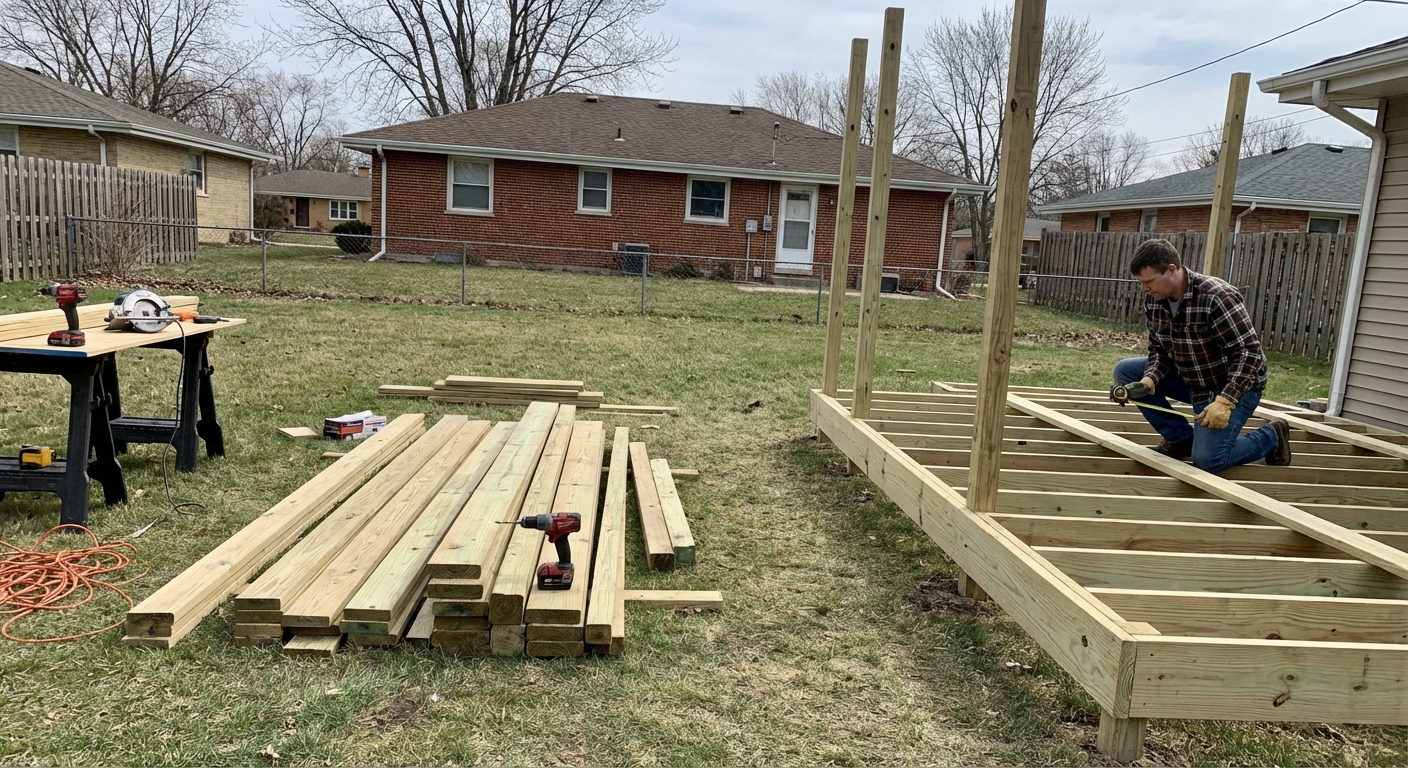
Are you dreaming of a new deck to enjoy Illinois' beautiful summers and crisp autumns? Building a deck yourself can be a rewarding project, but it's crucial to understand the specific requirements and challenges of building in Illinois. This guide provides a step-by-step walkthrough, covering everything from planning and permits to material selection and construction techniques, all tailored for Illinois homeowners like you.
📐 Tool Alert: Deck Stair Calculator
Calculate rise, run, and stringer cuts while ensuring IRC/OBC code compliance.
Calculate Stairs →Planning Your Illinois Deck Project
Before you even pick up a hammer, careful planning is essential. Consider these factors specific to Illinois:
🏗️ Planning a deck project?
Get a free manual project review, or visualize your dream deck with AI before requesting quotes.
- Climate: Illinois experiences hot, humid summers (often in the 85-95°F range) and harsh winters (with temperatures dipping to -10 to 20°F). This means your deck needs to withstand temperature extremes and significant moisture.
- Regional Differences: Costs are generally higher in Chicagoland and the collar counties compared to central and southern Illinois. Consider the size of your lot. In Chicago, small urban lots and rooftop decks are common, while downstate you might have more space to work with on rural properties.
- Building Codes: Illinois has adopted the ICC International Building Code, but enforcement varies by municipality. Decks over 30 inches above grade or attached to your house will require permits.
Defining Your Deck's Purpose and Design
Start by answering these questions:
- How will you primarily use the deck? (e.g., dining, relaxing, entertaining)
- What size and shape best suit your needs and yard?
- What style complements your home's architecture? Consider browsing Deck Design Ideas for Illinois Homes: Styles That Work in Every Season for inspiration.
- Do you need features like railings, stairs, or built-in seating?
- What's your budget?
Creating a Deck Plan
A detailed plan is crucial for obtaining permits and guiding construction. Your plan should include:
- Dimensions and layout of the deck
- Location of support posts, beams, and joists
- Type and size of materials to be used
- Details of railing and stair construction (if applicable)
- A site plan showing the deck's location relative to your house and property lines.
Use PaperPlan (paperplan.app) to visualize your deck with PaperPlan design with different materials and layouts before committing to a contractor or finalizing your DIY plans. Experiment with different sizes, shapes, and materials to find the perfect design for your Illinois home.
<!-- slot:after-intro -->
Budgeting for Your Deck
Deck costs vary significantly depending on the materials you choose and the complexity of the design. Here's a general cost breakdown for installed decks in Illinois:
| Material | Cost per Square Foot (Installed) |
| ---------------- | -------------------------------- |
| Pressure-Treated | $25-$45 |
| Composite | $45-$80 |
| Cedar | $35-$60 |
| Trex | $55-$85 |
Remember that these are just averages. Chicagoland tends to be on the higher end, while areas like Springfield might be more affordable. Don’t forget to factor in permit costs, which can range from $75-$400 in the suburbs (like DuPage or Will County) to $200-$800+ in Chicago, where architect-stamped plans may be required for multi-level decks.
Obtaining Permits in Illinois
Navigating the permit process is essential. Here's what to expect:
- Check with your local municipality: Each city and county in Illinois has its own building department and permitting requirements.
- Submit your plans: You'll need to submit your detailed deck plans for review.
- Allow ample time: The permit process can take several weeks, especially in larger cities like Chicago, where the Department of Buildings can be slow.
- Be prepared for inspections: You'll need to schedule inspections at various stages of construction to ensure your deck meets code.
Step-by-Step Deck Construction Guide
Once you have your permits and materials, you're ready to start building!
Step 1: Site Preparation and Layout
- Clear the area: Remove any grass, vegetation, or debris from the deck site.
- Mark the perimeter: Use stakes and string to outline the deck's footprint.
- Dig post holes: The depth of your post holes is critical. In Illinois, the frost line is typically 42 inches deep (though you might want to go deeper near the Wisconsin border). Consult your local building codes for specific requirements.
Step 2: Setting the Posts
- Pour concrete footings: Fill the bottom of each post hole with concrete to provide a solid base.
- Set the posts: Use pressure-treated lumber for the posts. Ensure they are plumb and properly spaced according to your plan.
- Brace the posts: Temporarily brace the posts to keep them in place while the concrete sets.
Step 3: Installing the Beam
- Attach the beam: Once the concrete has cured, attach the beam to the posts. The beam supports the joists and deck surface. Use appropriate hardware, such as bolts and washers. Make sure to account for wind loads, which are especially important in Chicago.
Step 4: Installing the Joists
- Attach the joists: Install the joists perpendicular to the beam. Use joist hangers to secure them to the beam and ledger board (if attaching the deck to your house). Proper spacing is crucial for structural integrity.
- Add blocking: Install blocking between the joists to prevent them from twisting and provide additional support.
<!-- slot:mid-content -->
Step 5: Laying the Decking
- Choose your decking material: Consider pressure-treated lumber, composite decking (like Trex), or cedar. Each material has its pros and cons in terms of cost, durability, and maintenance.
- Install the decking: Start at one edge and work your way across the deck. Use proper spacing between boards to allow for expansion and contraction.
- Fasten the decking: Use screws or hidden fasteners to attach the decking to the joists.
Step 6: Building Railings and Stairs (if applicable)
- Install railing posts: Securely attach railing posts to the deck frame.
- Attach railings: Install the top and bottom rails. Consider cable railings, wood railings, or composite railings.
- Build stairs: If your deck is elevated, you'll need to build stairs. Make sure the rise and run of the stairs meet code requirements.
Step 7: Finishing Touches
- Inspect your work: Double-check all connections and ensure everything is secure.
- Apply a finish: If you're using wood decking, apply a stain or sealant to protect it from the elements. See How to Stain a Deck in Illinois: Timing, Products & Techniques for best practices.
- Add landscaping: Enhance your deck with plants, furniture, and other accessories.
Material Considerations for Illinois Decks
Choosing the right materials is crucial for a long-lasting deck in Illinois' climate.
- Pressure-Treated Lumber: This is the most affordable option, but it requires regular maintenance. It's a good choice if you're on a budget.
- Composite Decking: Composite decking is more expensive but offers excellent durability and low maintenance. It's resistant to rot, insects, and fading.
- Cedar: Cedar is a naturally beautiful and durable wood that is resistant to rot and insects. However, it requires regular sealing to maintain its appearance.
Remember that Illinois has moderate termite pressure, so consider termite-resistant materials or treatments, especially if you live in southern Illinois.
Regional Building Considerations
- Chicago: Expect smaller urban lots and potentially rooftop deck designs. Permits often require architect-stamped plans, especially for multi-level decks.
- Peoria: As a central Illinois hub, Peoria offers moderate pricing. Consider the stunning views of the Illinois River valley when designing your deck. See if any of the Best Deck Builders in Peoria, IL: Central Illinois Guide inspire you.
- Springfield: The capital city offers lower costs than Chicagoland. Pay attention to the historic character of Springfield's neighborhoods when designing your deck. Explore Best Deck Builders in Springfield, IL: Capital City Guide for 2026 for local pros.
- Joliet: This rapidly growing Will County suburb has a mix of new construction and established neighborhoods. Pricing is moderate. See Best Deck Builders in Joliet, IL: Will County Guide.
Optimal Construction Timing
The best months to build a deck in Illinois are typically May-June and September-October, when the weather is milder and less prone to extreme heat or cold.
<!-- slot:before-faq -->
Don't forget to consider long-term maintenance. Check out Deck Maintenance in Illinois: A Season-by-Season Checklist to prepare for the future. Consider how to protect your deck during the harsh winter months with How to Winterize Your Deck in Illinois: Protect Against Harsh Winters.
<!-- slot:end -->
🎨 Not sure which material to pick?
Upload a photo of your backyard and see exactly how Trex, TimberTech, or cedar would look — free and instant.
Frequently Asked Questions
Do I need a permit to build a deck in Illinois?
Yes, in most cases. If your deck is more than 30 inches above grade or attached to your house, you'll likely need a permit. Always check with your local building department to confirm the requirements in your area.
How deep should the post holes be for a deck in Illinois?
The frost line in Illinois is typically 42 inches. Your post holes should extend below the frost line to prevent frost heave. Consult your local building codes for specific requirements.
What's the best material for a deck in Illinois?
The best material depends on your budget and preferences. Pressure-treated lumber is the most affordable, while composite decking offers superior durability and low maintenance. Cedar is a beautiful and naturally durable option.
How much does it cost to build a deck in Illinois?
The cost of building a deck in Illinois varies depending on the materials you choose and the size of the deck. Expect to pay between $25-$85 per square foot for an installed deck.
📋 Planning a deck project?
Get a free manual project review from our team — no obligation, no spam.
Get Free Project Review →Upload a backyard photo and preview real decking materials with AI — free, instant, no sign-up.
Permits, costs, material comparisons, and questions to ask before requesting quotes — delivered to your inbox.