
Deck Cost in Chicago (2026)
What does a deck cost in Chicago in 2026? Get real pricing per square foot by material, labor rates, and tips to save — plus Chicago-specific building advice.
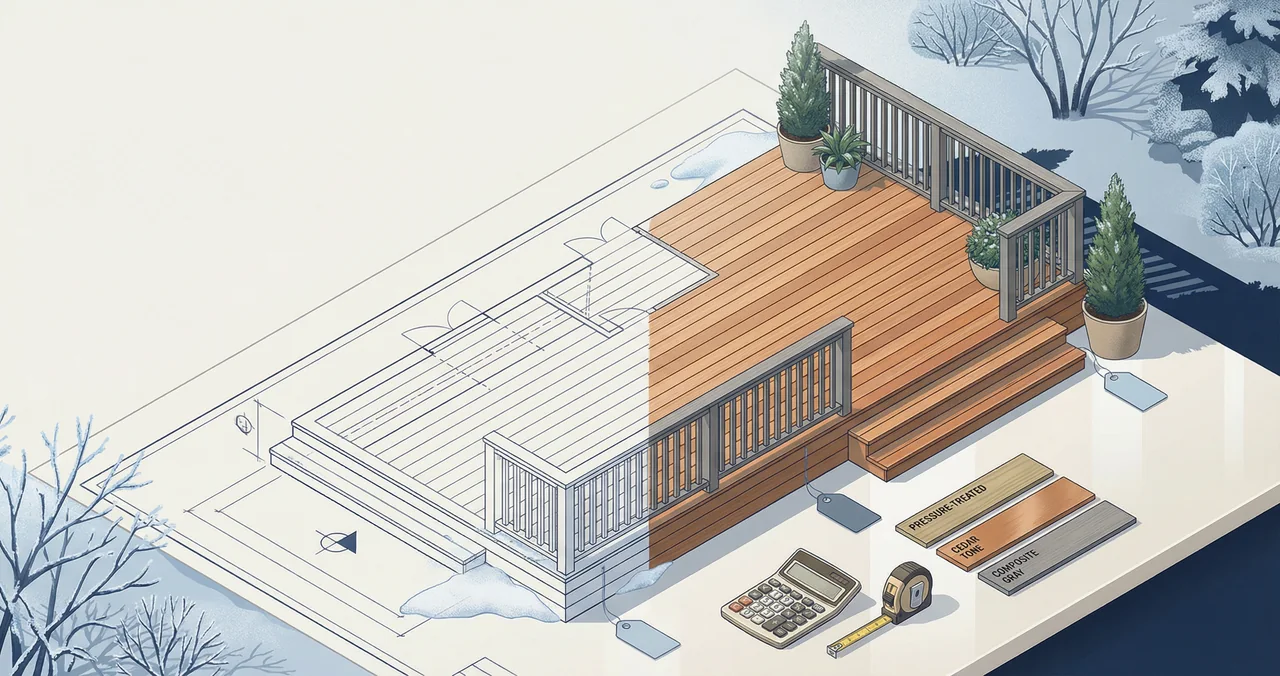
A new deck in Chicago runs $25 to $80 per square foot installed, depending on the material you choose and how complex the build is. For a standard 12×16 pressure-treated deck, that works out to roughly $4,800 to $8,640. Go composite or Trex, and you're looking at $8,640 to $15,360 for the same footprint.
🧮 Tool Alert: Deck Cost Calculator
Estimate your project costs in seconds based on local pricing bands for your area.
Calculate My Cost →Those are real numbers Chicago homeowners are paying right now — not national averages pulled from a database somewhere. Chicago's shorter building season, deep frost line requirements, and harsh winters all push costs higher than what you'll see quoted in milder climates.
Here's exactly what drives those numbers and how to make smart decisions with your budget.
<!-- slot:after-intro -->
For a broader look at deck pricing across different materials and regions, see our deck cost guide. Timing your build right can also save thousands — check our guide on the best time to build a deck.
Average Deck Cost in Chicago by Material
Material choice is the single biggest factor in your total cost. Here's what Chicago homeowners are paying in 2026, fully installed:
🏗️ Planning a deck project?
Get a free manual project review, or visualize your dream deck with AI before requesting quotes.
| Material | Cost Per Sq Ft (Installed) | 12×16 Deck (192 sq ft) | 16×20 Deck (320 sq ft) |
|---|---|---|---|
| Pressure-Treated Wood | $25–$45 | $4,800–$8,640 | $8,000–$14,400 |
| Cedar | $35–$55 | $6,720–$10,560 | $11,200–$17,600 |
| Composite | $45–$75 | $8,640–$14,400 | $14,400–$24,000 |
| Trex (brand-name composite) | $50–$80 | $9,600–$15,360 | $16,000–$25,600 |
| Ipe (tropical hardwood) | $60–$100 | $11,520–$19,200 | $19,200–$32,000 |
A few things to note. Pressure-treated is the cheapest upfront, but Chicago's freeze-thaw cycles and road salt exposure mean you'll be sealing it every single year. Skip a year, and you'll see cracking and warping by the following spring. Cedar holds up better naturally but still needs annual maintenance in this climate.
Composite and PVC are the most popular choices among Chicago homeowners who don't want to spend every May weekend with a brush and a can of sealer. The upfront cost is higher, but the 25-year lifecycle cost often comes out lower. If you're weighing your options, our guide to the best composite decking brands breaks down the top performers.
Cost Per Square Foot Breakdown
That installed price includes materials, labor, and basic structural work. But what does each piece actually cost on its own?
Materials Only (No Labor)
- Pressure-treated lumber: $8–$16/sq ft
- Cedar decking: $14–$24/sq ft
- Composite boards: $20–$35/sq ft
- Trex (Select, Enhance, Transcend lines): $22–$40/sq ft
- Ipe hardwood: $30–$50/sq ft
Structural Components
Your decking boards are only part of the material bill. You also need:
- Joists and beams (pressure-treated): $3–$6/sq ft
- Concrete footings: $150–$350 per footing (Chicago's deep frost line means more concrete)
- Hardware, fasteners, flashing: $2–$4/sq ft
- Railing systems: $30–$80 per linear foot depending on material
Chicago's frost line sits between 36 and 60 inches deep, depending on your specific location. That means your footings need to go deeper than in most US cities, and deeper footings cost more. A deck with six footings at 42 inches deep will run you roughly $1,200–$2,100 just for the foundation work — compared to $600–$900 in a city where footings only need to go 12 inches.
Labor Costs in Chicago
Labor typically accounts for 50–60% of your total deck cost in Chicago. Here's why it trends higher than the national average:
- General deck labor: $15–$30 per square foot
- Complex builds (multi-level, curves, built-in seating): $25–$40 per square foot
- Demolition of old deck: $3–$8 per square foot
- Permit pulling and inspection coordination: Often included, sometimes $200–$500 extra
Chicago's building season realistically runs May through October. That compressed window means every reputable contractor in the metro area — from Lincoln Park to Naperville, Oak Park to Orland Park — is booked solid by late spring. The best crews start filling their summer schedules in February and March.
Book by March if you want a summer build. Wait until May, and you'll either pay a premium for rush scheduling or wait until late September. Some homeowners have found success booking fall builds (September–October) when demand drops slightly and some contractors offer modest discounts to fill their schedule before winter.
If you're still looking for a contractor, our roundup of the best deck builders in Chicago is a good starting point.
What Affects Your Total Price
Beyond material and labor, several Chicago-specific factors can swing your final bill by thousands:
Deck Size and Layout
Simple math: bigger deck, bigger bill. But layout matters too. A straightforward rectangular deck is the most cost-effective shape. Add angles, curves, or multiple levels, and your labor costs jump 20–40% because of additional cutting, waste, and framing complexity.
Height and Access
A ground-level deck (under 30 inches) is the simplest build. Elevated decks need stairs, additional structural support, and often more complex railing — adding $1,500–$5,000 or more. If your yard slopes significantly (common in neighborhoods along the lake and river corridors), expect the foundation work to cost extra.
Permits and Code Compliance
In Chicago, deck permits are typically required for structures over 200 square feet or more than 30 inches above grade. Contact Chicago's Building/Development Services department before you start. Permit fees generally run $100–$500 depending on project scope.
Skipping the permit is a bad idea. It can cause problems when you sell your home, void your insurance coverage, and result in fines. For a deeper look at what happens when you skip this step, check out the risks of building without a permit.
Railings, Stairs, and Add-Ons
These "extras" add up fast:
- Wood railing: $30–$50 per linear foot
- Composite railing: $40–$60 per linear foot
- Glass or cable railing: $60–$120 per linear foot (our cable railing guide covers code requirements)
- Stairs: $75–$200 per step, depending on width and material
- Built-in benches: $200–$500 each
- Deck lighting: $500–$2,500 depending on scope
Chicago's Climate Tax
This one's invisible in most online cost calculators. Chicago's weather adds real cost:
- Deeper footings to get below frost line (36–60 inches vs. 12–24 in warmer states)
- Snow load engineering — your deck structure needs to support heavy wet snow accumulation
- Freeze-thaw resistant materials or aggressive maintenance schedules for wood
- Ice and water shield flashing at ledger board connections to prevent moisture intrusion
These requirements mean a Chicago deck often costs 10–20% more than an identical design built in a milder climate.
<!-- slot:mid-content -->
Composite vs Wood: Cost Comparison for Chicago
This is the decision most Chicago homeowners wrestle with. Here's an honest look at both options over time:
| Factor | Pressure-Treated Wood | Composite |
|---|---|---|
| Installed cost (per sq ft) | $25–$45 | $45–$75 |
| Annual maintenance | $300–$800 (seal/stain) | $0–$50 (occasional cleaning) |
| Expected lifespan | 10–15 years (with maintenance) | 25–30+ years |
| 10-year total cost (320 sq ft deck) | $11,000–$22,400 | $14,400–$24,000 |
| 20-year total cost (320 sq ft deck) | $17,000–$32,800 (includes one rebuild) | $14,400–$25,000 |
| Slip resistance when wet/icy | Low (unless textured) | Moderate to high |
| Fade/warp resistance | Low without maintenance | High |
The numbers tell the story. Wood is cheaper for the first five years. Composite wins over any timeframe beyond that — especially in Chicago, where wood takes a beating from November through March.
If you go the wood route, commit to sealing every spring without exception. Use a penetrating oil-based sealer rated for freeze-thaw conditions. The best deck sealers guide covers products that hold up in cold climates.
For composite, pay attention to the warranty. Top-tier brands like Trex Transcend and TimberTech offer 25-year fade and stain warranties. The cheaper composite lines (Trex Enhance Basic, off-brand options) use thinner cap layers that can show wear faster. You generally get what you pay for.
Use PaperPlan to visualize different decking materials on your own home before committing — it's much easier to compare how cedar vs. composite will look against your siding and trim when you can see it in context.
How to Save Money on Your Chicago Deck
You don't have to blow your budget. Here are strategies that actually work:
1. Build in the Shoulder Season
September and October builds can save you 5–15% on labor. Contractors are wrapping up their busy season and may offer better rates to keep crews working. The weather is still buildable, and concrete sets fine in fall temperatures.
2. Keep the Design Simple
A rectangular deck with standard railing is dramatically cheaper than a multi-level design with curves and built-ins. You can always add a pergola, benches, or lighting later. Start with a solid, well-built platform.
3. Mix Materials Strategically
Use composite for the decking surface (where you see and touch it daily) and pressure-treated wood for the substructure (joists, beams, posts). This is actually how most professional builders do it — the substructure doesn't need to be pretty, just strong.
4. Choose Mid-Range Composite
Trex Enhance and TimberTech Pro are 30–40% cheaper than the premium lines (Trex Transcend, TimberTech Legacy) and still carry strong warranties. Unless you specifically want exotic color patterns or premium textures, the mid-range products perform nearly identically in terms of durability.
5. Get Multiple Quotes — But Don't Just Chase the Lowest Price
Get at least three quotes from established Chicago-area contractors. Compare what's included: some quotes include permit fees, demolition, and railing; others price those separately. The lowest bid isn't always the best value if it skips critical details like proper footing depth or flashing.
6. Handle Demo Yourself
If you're replacing an old deck, tearing down the existing structure yourself can save $500–$2,500 depending on size. It's hard work but doesn't require special skills. Rent a dumpster, grab a pry bar, and set aside a weekend.
7. Consider a Freestanding Deck
A freestanding (non-attached) deck avoids the ledger board connection to your house, which eliminates a common source of moisture problems and can simplify permitting. In some cases, it also reduces cost because you skip the ledger flashing and structural tie-in work. The attached vs. freestanding permit guide covers the tradeoffs.
<!-- slot:before-faq -->
🎨 Not sure which material to pick?
Upload a photo of your backyard and see exactly how Trex, TimberTech, or cedar would look — free and instant.
Frequently Asked Questions
How much does a 12×16 deck cost in Chicago?
A 12×16 deck (192 sq ft) in Chicago costs between $4,800 and $15,360 installed, depending on material. Pressure-treated wood sits at the low end ($4,800–$8,640), composite lands in the middle ($8,640–$14,400), and Trex or premium brands hit the top ($9,600–$15,360). Add $1,500–$4,000 for railing, stairs, and permit fees.
Do I need a permit to build a deck in Chicago?
Yes, in most cases. Chicago typically requires a building permit for decks over 200 square feet or more than 30 inches above grade. Even smaller decks may need a permit depending on your specific lot and zoning. Contact Chicago's Building/Development Services department before starting your project. Budget $100–$500 for the permit itself, plus potential inspection fees.
What's the best decking material for Chicago's climate?
Composite or PVC decking handles Chicago's climate best. The freeze-thaw cycles, heavy snow, road salt, and moisture wreak havoc on untreated wood. Composite resists all of these without annual maintenance. If you prefer the look and feel of real wood, cedar is your best bet — but plan on sealing it every spring. For a deeper look at materials that handle freeze-thaw, see our best decking materials for freeze-thaw climates guide.
When is the best time to build a deck in Chicago?
The ideal building window is May through October, but the smart move is to start planning and booking your contractor by February or March. Chicago's compressed building season means demand peaks hard in spring — contractors who are available in June were booked months earlier. Fall builds (September–October) offer a secondary window with potentially better pricing and cooler, comfortable working conditions.
How long does a deck last in Chicago?
Lifespan depends entirely on material and maintenance. Pressure-treated wood lasts 10–15 years with diligent annual sealing — less if you skip maintenance. Cedar can go 15–20 years with proper care. Composite decking typically lasts 25–30+ years with minimal maintenance beyond occasional cleaning. Given Chicago's brutal winters, composite's durability advantage is more pronounced here than in milder climates.
<!-- slot:end -->
📋 Planning a deck project?
Get a free manual project review from our team — no obligation, no spam.
Get Free Project Review →Upload a backyard photo and preview real decking materials with AI — free, instant, no sign-up.
Permits, costs, material comparisons, and questions to ask before requesting quotes — delivered to your inbox.