
Deck Permits in Naperville (2026)
Need a deck permit in Naperville? Learn requirements, fees, setback rules, and how to apply through the City's Development Services department in 2026.
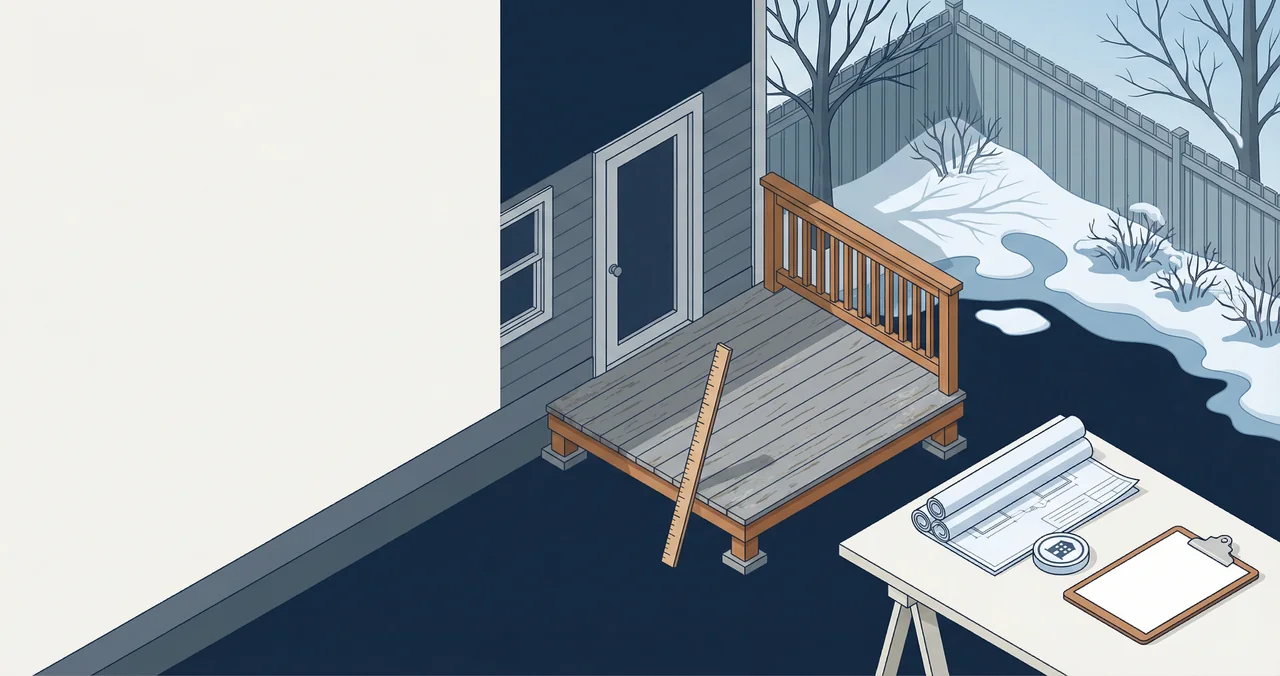
Deck Permits in Naperville: Requirements, Costs & How to Apply in 2026
Planning a new deck in Naperville? Before you pick out materials or call a contractor, there's one step you can't skip: the building permit. Naperville's Development Services department enforces specific rules about deck size, height, setbacks, and structural requirements — and ignoring them can cost you thousands in fines or force you to tear down what you just built.
🏗️ Planning a deck project?
Get a free manual project review, or visualize your dream deck with AI before requesting quotes.
📋 Tool Alert: Permit Checker
Do you really need a permit? Check the exact rules for your city or township.
Check Permits →Here's exactly what you need to know to get your deck permitted and built right in 2026.
<!-- slot:after-intro -->
Do You Need a Deck Permit in Naperville?
Yes, in most cases. The City of Naperville requires a building permit for any deck that meets either of these thresholds:
- Over 200 square feet in total area
- More than 30 inches above grade at any point
That second rule catches a lot of homeowners off guard. Even a relatively small deck needs a permit if your yard slopes and one side sits higher than 30 inches off the ground. This is common in Naperville neighborhoods like Cress Creek, Ashbury, and parts of the River Run subdivision where grading can vary significantly across a single lot.
When You Don't Need a Permit
A few situations *may* be exempt:
- Ground-level patios and platforms under 200 sq ft that sit less than 30 inches above grade
- Simple repairs that replace existing materials without altering the structure (swapping deck boards, for example — not replacing joists or posts)
Even if your project seems exempt, call Naperville's Development Services at (630) 420-6100 to confirm. A five-minute phone call beats a stop-work order.
When a Permit Is Required
Beyond the size and height triggers, you'll need a permit any time your deck project involves:
- Attaching to your house — ledger board connections require inspection to prevent water intrusion and structural failure
- Adding stairs or railings — the International Residential Code (IRC) requirements apply, and Naperville follows them closely
- Electrical work — built-in lighting, outlets, or hot tub wiring each require separate electrical permits
- Roofed or covered structures — pergolas and roof extensions over decks trigger additional requirements
- Multi-level or elevated decks — anything with significant structural complexity
If you're replacing an existing deck entirely — even with the same footprint — you still need a permit. The city wants to verify the new structure meets current code, which may have changed since your original deck was built.
Permit Fees & Processing Time
What You'll Pay
Naperville's building permit fees are based on project valuation. For a typical residential deck, expect:
| Project Type | Estimated Fee Range |
|---|---|
| Basic deck (under 400 sq ft) | $75–$200 |
| Larger deck (400–800 sq ft) | $150–$400 |
| Complex deck with electrical | $250–$500+ |
| Plan review fee | $50–$150 (often included) |
These are estimates for 2026. The city calculates fees based on total construction value, so a $15,000 pressure-treated deck and a $40,000 composite deck won't cost the same to permit. Budget roughly 1–2% of your total project cost for permit fees.
For reference, here's what deck installations typically run in the Naperville area:
| Material | Installed Cost per Sq Ft |
|---|---|
| Pressure-treated wood | $25–$45 |
| Cedar | $35–$55 |
| Composite | $45–$75 |
| Trex (premium composite) | $50–$80 |
| Ipe (hardwood) | $60–$100 |
A 12×16 pressure-treated deck runs roughly $4,800–$8,640 installed, while the same footprint in composite lands between $8,640–$14,400. Factor permits into your overall budget from the start. For a deeper breakdown, see our guide on how much decks cost in the Chicago area.
How Long Does Approval Take?
- Standard review: 10–15 business days
- Simple projects: Sometimes faster, especially if plans are clean and complete
- Projects requiring zoning review: Add another 5–10 business days
The busiest time at Naperville's permit office is March through May, when every homeowner and contractor in DuPage County is trying to line up summer projects. Submit your application in January or February if you want to break ground in May. Contractor schedules in the Naperville area fill up fast because the building season is short — most work happens between May and October before winter shuts things down.
<!-- slot:mid-content -->
Building Codes & Setback Rules
Naperville follows the International Residential Code (IRC) with local amendments. Here are the specific requirements that matter most for deck construction:
Structural Requirements
- Frost line depth: Footings must extend 42 inches below grade in Naperville (DuPage County). This is non-negotiable — Naperville's harsh winters with repeated freeze-thaw cycles will heave shallow footings right out of the ground.
- Post sizing: Minimum 6×6 posts for most residential decks; 4×4 posts are limited to specific low-height applications
- Beam and joist sizing: Must comply with IRC span tables based on lumber grade, species, and spacing
- Ledger board attachment: Must use lag screws or through-bolts with proper flashing — nails are not acceptable
- Snow load: Naperville decks must be designed for a ground snow load of 25 PSF (pounds per square foot), which affects joist sizing and spacing
Railing Requirements
- Required when deck is 30+ inches above grade
- Minimum height: 36 inches for residential decks
- Baluster spacing: No more than 4 inches between balusters (the "4-inch sphere rule")
- Graspable handrails required on stairs
Setback Rules
Naperville's zoning code dictates how close your deck can sit to property lines:
- Rear yard setback: Typically 25 feet from the rear property line (varies by zoning district)
- Side yard setback: Usually 5–10 feet depending on your lot's zoning classification
- Easements: Your deck cannot encroach on any utility or drainage easements — check your plat of survey before designing
Your specific setbacks depend on your zoning district (R1, R2, R3, R4, etc.). Look up your property's zoning on the City of Naperville's GIS map or ask Development Services directly. Setback violations are one of the most common reasons deck permits get denied.
Lot Coverage
Naperville limits how much of your lot can be covered by structures (house, garage, deck, shed, etc.). Most residential zones cap lot coverage at 30–40%. If your lot is already close to the limit, a large deck could push you over. Your contractor or architect should calculate this before submitting plans.
How to Apply for a Deck Permit in Naperville
Step 1: Gather Your Documents
Before you visit the permit office or apply online, you'll need:
- Site plan / plat of survey showing your property lines, existing structures, easements, and the proposed deck location with dimensions and setback measurements
- Construction drawings including a plan view (top-down), elevation views, and structural details (footing depth, post sizes, beam spans, joist spacing, ledger attachment method)
- Material specifications — what lumber, fasteners, and hardware you're using
- Proof of contractor licensing (if using a contractor) — Naperville requires contractors to be registered with the city
Use PaperPlan to visualize different decking materials on your own home before committing — it helps both with your own decision-making and with communicating your vision to contractors and permit reviewers.
Step 2: Submit Your Application
You can apply through:
- Online: Naperville uses an electronic permit system accessible through the city's website
- In person: Naperville Municipal Center, 400 S. Eagle Street, Naperville, IL 60540
- Development Services hours: Monday–Friday, 8:00 AM – 5:00 PM
The application itself asks for property address, project description, estimated cost, contractor information, and your signature as the property owner.
Step 3: Plan Review
A plan reviewer checks your submission against building codes and zoning requirements. If anything's missing or doesn't comply, they'll send back a correction notice. Common reasons for corrections:
- Incomplete structural details (missing joist span tables or footing specs)
- Setback violations
- Missing flashing details at the ledger board connection
- Insufficient footing depth (must hit 42 inches)
Respond to corrections promptly — each round of revisions adds days to your timeline.
Step 4: Receive Your Permit and Schedule Inspections
Once approved, you'll receive your permit. Post it visibly at the job site — inspectors need to see it.
Naperville typically requires these inspections:
1. Footing inspection — before pouring concrete (inspector verifies depth and diameter)
2. Framing inspection — after posts, beams, and joists are installed but before decking goes on
3. Final inspection — completed deck including railings, stairs, and any electrical work
Do not pour concrete before the footing inspection. This is the single biggest mistake homeowners and contractors make. If the inspector can't see the bottom of your holes, you'll be digging them again.
What Happens If You Build Without a Permit
Skipping the permit might seem tempting — especially for a "simple" deck. But the consequences in Naperville are real:
- Stop-work orders — the city can shut down your project mid-construction
- Fines — typically double the original permit fee, plus daily penalties until you comply
- Forced removal — in serious cases, the city can require you to tear down the unpermitted structure
- Problems selling your home — title searches and home inspections flag unpermitted work. Buyers walk away or demand steep discounts. This is increasingly common in Naperville's competitive real estate market.
- Insurance liability — your homeowner's insurance may deny claims for injuries or damage involving an unpermitted structure
- Neighbor complaints — Naperville takes code complaints seriously. One phone call from a neighbor can trigger an investigation.
Even if you built without a permit years ago, it's worth pursuing a retroactive permit (sometimes called an "after-the-fact" permit). You'll pay a penalty, but it's far cheaper than the alternatives. For a detailed look at the risks, check out what happens when you build a deck without a permit.
A Note on DIY Decks
Naperville does allow homeowners to pull their own permits and build their own decks. But you're held to the exact same code standards as a licensed contractor. If you're considering this route, read up on what's involved in building your own deck — the structural and code requirements are significant, especially in a climate where footings need to go over three feet deep and every connection needs to handle snow loads.
Climate Considerations for Naperville Decks
Naperville's climate is tough on outdoor structures. Your permit application should reflect materials and methods that handle:
- Freeze-thaw cycles: Dozens per winter. Water seeps into cracks, freezes, expands, and breaks things apart. This is why footing depth matters so much — shallow footings heave.
- Snow load: Accumulated snow adds serious weight. Joists and beams need to be sized accordingly.
- Moisture and salt: Road salt tracked onto decks accelerates corrosion and wood decay.
- Ice dam potential: Where a deck attaches to the house, improper flashing can lead to ice dams and water intrusion.
Material choice matters. Composite and PVC decking hold up best against Naperville winters — they won't split, warp, or rot the way wood can. Pressure-treated lumber works fine structurally but needs annual sealing to resist moisture damage. Cedar falls somewhere in between but still requires regular maintenance. See our guide on the best decking materials for freeze-thaw climates for a full comparison.
<!-- slot:before-faq -->
🎨 Not sure which material to pick?
Upload a photo of your backyard and see exactly how Trex, TimberTech, or cedar would look — free and instant.
Frequently Asked Questions
How much does a deck permit cost in Naperville?
Most residential deck permits in Naperville run between $75 and $400, depending on project size and complexity. The fee is calculated based on total construction value — a larger or more expensive deck means a higher permit fee. Budget 1–2% of your total project cost to be safe.
How long does it take to get a deck permit approved in Naperville?
Plan for 10–15 business days for standard plan review. Simple, well-documented applications sometimes move faster. If your project requires zoning board review or if you submit during the busy spring season (March–May), expect delays. Submit early — January or February — if you want to build in the spring.
Can I build a deck without a permit in Naperville?
Technically, decks under 200 sq ft that sit less than 30 inches above grade *may* be exempt. But for anything larger or higher, no — you need a permit. Building without one risks fines, forced removal, and serious problems when you sell your home. If you're close to the threshold, call Development Services at (630) 420-6100 to confirm.
Do I need a permit to replace my existing deck in Naperville?
Yes. Even if the new deck has the same footprint as the old one, a full replacement requires a permit. The city needs to verify the new structure meets current building codes, which may have been updated since the original deck was built.
How deep do deck footings need to be in Naperville?
Footings must extend at least 42 inches below grade in Naperville to get below the frost line. This prevents frost heave — a major concern with Illinois winters. The footing inspection happens before concrete is poured, so the inspector will physically check the depth of every hole. For more on how attached vs. freestanding decks affect permit requirements, see our detailed guide.
Can my neighbor complain about my new deck?
Yes. Naperville investigates code complaints, and neighbors can report unpermitted construction or setback violations. Getting your permit and following the rules is the best protection. We cover this topic in depth in our article on whether a neighbor can complain about your deck.
<!-- slot:end -->
📋 Planning a deck project?
Get a free manual project review from our team — no obligation, no spam.
Get Free Project Review →Upload a backyard photo and preview real decking materials with AI — free, instant, no sign-up.
Permits, costs, material comparisons, and questions to ask before requesting quotes — delivered to your inbox.