
Chicago Deck Permit: Dept of Buildings Requirements, Costs & How to Apply
Navigating Chicago's deck permit process? This guide breaks down Dept of Buildings requirements, costs, application steps, and local building codes for your project.
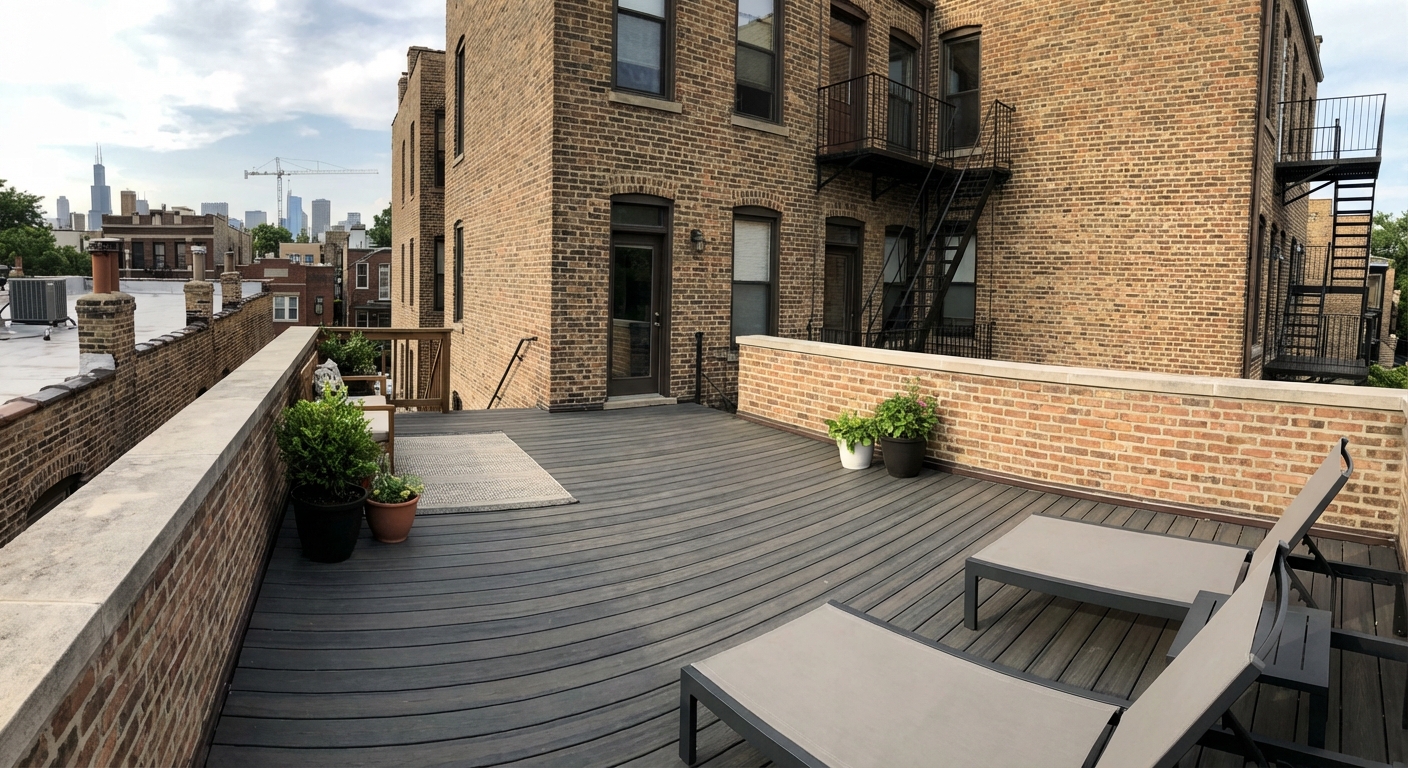
Building a deck in Chicago? Before you start hammering, you need a permit from the Chicago Department of Buildings (DOB). This guide will walk you through the requirements, costs, and application process so you can build your dream deck legally and safely. Ignoring permit requirements can lead to hefty fines and even forced demolition, so understanding the rules is crucial.
📋 Tool Alert: Permit Checker
Do you really need a permit? Check the exact rules for your city or township.
Check Permits →Do You Need a Deck Permit in Chicago?
Generally, if your deck is more than 30 inches above grade (ground level) or attached to your house, you'll need a permit in Chicago. This ensures your deck meets safety standards and building codes. In Chicago, the city enforces the International Building Code (IBC), specifically the version adopted by Illinois, but with local amendments.
🏗️ Planning a deck project?
Get a free manual project review, or visualize your dream deck with AI before requesting quotes.
Here’s a quick summary:
- Attached Decks: Almost always require a permit.
- Freestanding Decks (over 30 inches): Require a permit.
- Decks at Ground Level (under 30 inches): Typically do not require a permit, but always confirm with the DOB.
Even if your deck doesn't technically *require* a permit, it's always a good idea to check with the DOB. They can clarify any specific requirements based on your property and proposed design.
<!-- slot:after-intro -->
Chicago Deck Permit Requirements: What You'll Need
The Chicago DOB is known for its thoroughness, and the deck permit process can be lengthy. Be prepared to provide detailed information and potentially architectural drawings. Here's what you'll typically need:
- Application Form: Obtain the correct application form from the DOB website or in person.
- Site Plan: A detailed drawing of your property showing the location of the proposed deck, property lines, and any existing structures. Chicago lots are often small, so accuracy is crucial.
- Construction Drawings: Detailed plans showing the deck's dimensions, materials, and construction methods. For multi-level decks, these often require an architect's stamp.
- Structural Calculations: These calculations demonstrate that your deck can safely support the intended load.
- Plat of Survey: An official survey of your property.
- Proof of Insurance: Liability insurance is often required.
- Contractor Information: If you're using a contractor, you'll need their license and insurance information. Consider using Best Deck Builders in Chicago: How to Find the Right Contractor to find a qualified professional.
Important Note: The level of detail required depends on the complexity of your deck design. Simple, ground-level decks might require less documentation than complex, multi-level structures. Given Chicago's wind loads, ensure your structural plans account for wind resistance.
Chicago Deck Permit Costs: How Much Will It Cost?
Permit fees in Chicago vary depending on the scope and complexity of your project. Expect to pay anywhere from $200 to $800+ for a deck permit. This doesn't include the cost of architectural drawings, which can add several hundred to thousands of dollars to the total cost.
Here's a general cost breakdown:
| Expense | Estimated Cost | Notes |
| ---------------------------- | ------------------- | ------------------------------------------------------------------------------------------------------- |
| Permit Fee | $200 - $800+ | Depends on deck size and complexity. |
| Architectural Drawings | $500 - $2000+ | Often required for complex or multi-level decks. |
| Site Survey (if needed) | $300 - $600 | May be required if your existing survey is outdated. |
Keep in mind that these are just estimates. Contact the Chicago DOB directly for the most accurate fee information. Remember that deck material costs also vary significantly. You might pay $25-45/sqft for a pressure-treated deck, $45-80/sqft for composite, $35-60/sqft for cedar, or $55-85/sqft for Trex, *installed*.
How to Apply for a Chicago Deck Permit: Step-by-Step
1. Plan Your Deck: Before you do anything, carefully plan your deck design. Consider factors like size, materials, and location. Use PaperPlan (paperplan.app) to visualize your deck with PaperPlan design with different materials and layouts before committing to a contractor.
2. Gather Your Documents: Collect all the required documents, including the application form, site plan, construction drawings, and structural calculations.
3. Submit Your Application: You can submit your application online through the City of Chicago's e-Permitting system or in person at the Department of Buildings.
4. Review Process: The DOB will review your application to ensure it meets all building codes and regulations. This can take several weeks, so be patient.
5. Corrections (if needed): If the DOB finds any issues with your application, they will request corrections. Address these promptly and resubmit your application.
6. Permit Approval: Once your application is approved, you'll receive your permit.
7. Inspections: Schedule inspections with the DOB at various stages of construction to ensure compliance with the approved plans. Common inspection points include footing depth, framing, and final completion.
<!-- slot:mid-content -->
Navigating Chicago's Building Codes and Inspections
Chicago adheres to the ICC International Building Code, but it's crucial to understand local amendments. Some key areas to focus on include:
- Frost Line: The frost line in Illinois is 42 inches. Your deck footings must extend below this depth to prevent movement due to freezing and thawing.
- Wind Loads: Chicago experiences strong winds, especially near Lake Michigan. Ensure your deck's structural design can withstand these wind loads.
- Guardrails: Decks more than 30 inches above grade require guardrails that are at least 36 inches high.
- Stairways: Stairways must meet specific requirements for rise, run, and handrails.
- Termite Protection: While termite pressure in Illinois is moderate, it's still important to take precautions, especially if using wood framing.
- Drainage: Proper drainage is essential to prevent water damage.
The inspection process is critical. Schedule inspections at the required stages and be prepared to address any issues identified by the inspector. Failure to pass an inspection can result in delays and additional costs.
Chicago's Climate and Deck Building: Best Practices
Illinois has a continental climate with hot, humid summers and cold, snowy winters. Chicago, in particular, experiences lake-effect snow. This climate impacts deck construction in several ways:
- Material Selection: Choose materials that can withstand temperature extremes and moisture. Composite decking is a popular choice in affluent Chicago suburbs like Naperville because of its durability and low maintenance, despite its higher cost.
- Fasteners: Use corrosion-resistant fasteners to prevent rust and deterioration.
- Construction Timing: The best months for deck building in Chicago are typically May-June and September-October, when the weather is milder.
- Waterproofing: Proper waterproofing is essential to protect your deck from water damage.
Consider the typical lot size in your Chicago neighborhood when designing your deck. Many areas have small, urban lots, requiring compact deck designs. Rooftop decks are also a common option in some neighborhoods. In contrast, areas further from the city center, or downstate locations like Rockford, often have larger lots that allow for more expansive deck designs.
Chicago Suburbs: Permit Variations
While Chicago's DOB handles permits within the city limits, the surrounding suburbs have their own permitting processes. Here's a brief overview:
- DuPage County (e.g., Naperville): DuPage County departments generally have a faster turnaround time than Chicago. Expect permit fees in the $75-$400 range. Naperville also has strict HOA oversight, so check with your homeowner's association before starting any work.
- Will County: Similar to DuPage County, Will County offers a more streamlined permitting process.
- Kane County (e.g., Aurora): Aurora's permit process is handled by Kane County. Expect moderate pricing and a mix of older and newer building codes.
- Winnebago County (e.g., Rockford): Rockford, with its lower cost of living, generally has a more affordable permitting process.
<!-- slot:before-faq -->
Remember, each municipality has its own specific requirements, so always check with the local building department before starting your project. Also, the [Deck Cost Per Square Foot in Illinois: 2026 Pricing Breakdown](/decks/blog/deck-cost-per-square-foot-illinois) can help you estimate material expenses across different regions.
🎨 Not sure which material to pick?
Upload a photo of your backyard and see exactly how Trex, TimberTech, or cedar would look — free and instant.
Frequently Asked Questions
Do I need an architect for my deck permit in Chicago?
Generally, you'll need architect-stamped plans for complex or multi-level decks. Simple, ground-level decks may not require an architect. Check with the DOB to confirm.
How long does it take to get a deck permit in Chicago?
The review process can take several weeks, especially if corrections are required. Be prepared for a potentially lengthy process.
What happens if I build a deck without a permit in Chicago?
Building without a permit can result in fines, stop-work orders, and even forced demolition of your deck. It's always best to obtain the necessary permits before starting any construction.
Can I build my own deck in Chicago, or do I need a contractor?
You can build your own deck in Chicago, but you'll still need to obtain a permit and pass all inspections. If you're not experienced in construction, it's generally recommended to hire a licensed contractor.
What are the common reasons for deck permit rejection in Chicago?
Common reasons include incomplete applications, inaccurate drawings, failure to meet building codes, and inadequate structural calculations.
<!-- slot:end -->
📋 Planning a deck project?
Get a free manual project review from our team — no obligation, no spam.
Get Free Project Review →Upload a backyard photo and preview real decking materials with AI — free, instant, no sign-up.
Permits, costs, material comparisons, and questions to ask before requesting quotes — delivered to your inbox.