
Deck Permits in Cleveland (2026)
Need a deck permit in Cleveland? Learn requirements, fees, building codes, setback rules, and how to apply. Updated for 2026 with local costs and timelines.
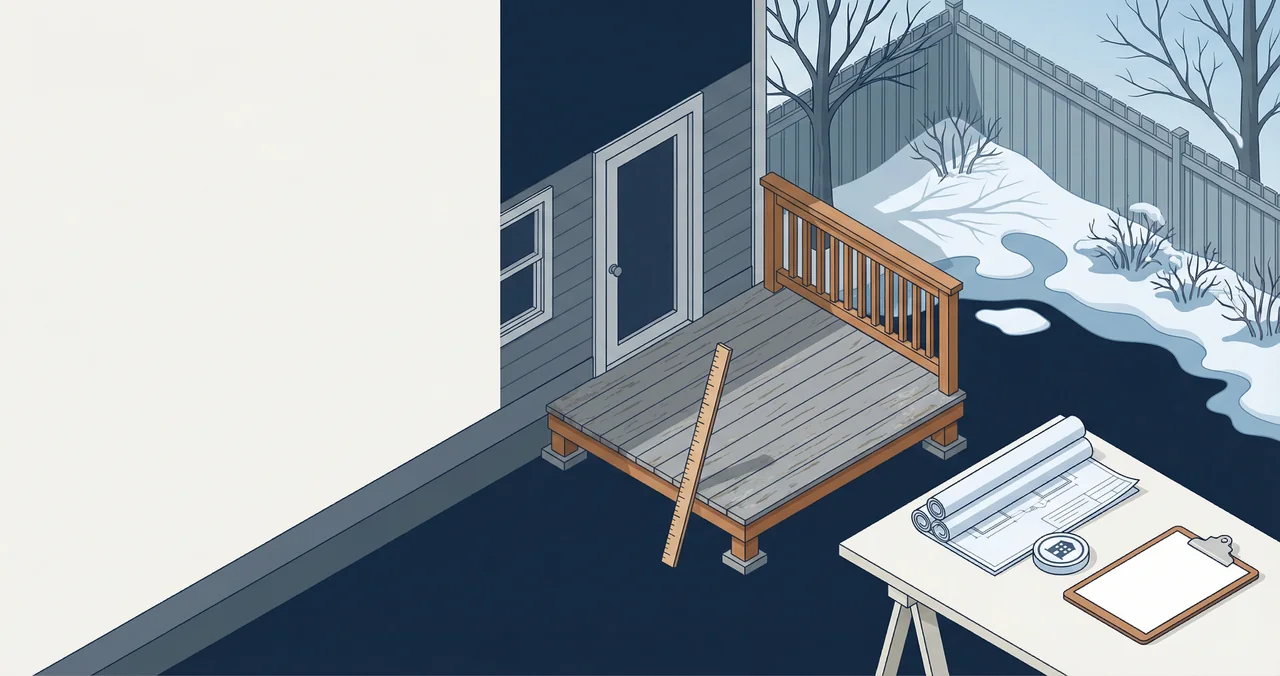
Do You Need a Deck Permit in Cleveland?
If you're planning to build a deck in Cleveland, the short answer is yes — you almost certainly need a permit. The City of Cleveland's Department of Building and Housing requires a building permit for any deck that is more than 200 square feet in area or more than 30 inches above grade. That 30-inch threshold catches most backyard decks, since even a modest step up from your yard often puts the deck surface above that line once you account for Cleveland's uneven terrain.
🏗️ Planning a deck project?
Get a free manual project review, or visualize your dream deck with AI before requesting quotes.
📋 Tool Alert: Permit Checker
Do you really need a permit? Check the exact rules for your city or township.
Check Permits →Looking for more regional information? Check out our Ohio State Decking Hub.
Even a ground-level patio deck can trigger permit requirements if the footprint exceeds 200 square feet. A standard 12×16 deck? That's 192 square feet — technically under the threshold, but add a single extra board row and you're over it. Most Cleveland homeowners building anything beyond a small landing will need to file.
The permit isn't just bureaucratic tape. Cleveland sits in a climate zone where freeze-thaw cycles, heavy snow loads, and frost heave can destroy an improperly built deck in just a few winters. The permit process ensures your footings go deep enough, your framing can handle the load, and your structure won't shift when the ground freezes and thaws 30+ times a season.
<!-- slot:after-intro -->
When a Permit Is Required
Cleveland follows the Ohio Residential Code (ORC), which aligns closely with the International Residential Code (IRC). Here's what triggers a permit:
You DO need a permit if:
- Your deck exceeds 200 square feet in total area
- Any part of the deck surface is more than 30 inches above finished grade
- The deck is attached to your house (ledger board connection)
- You're adding electrical wiring for lighting or outlets
- The project includes a roof or pergola structure over the deck
- You're building near or over a drainage easement or setback line
You may NOT need a permit if:
- The deck is under 200 square feet AND under 30 inches above grade
- You're building a freestanding platform at ground level with no roof
- You're replacing decking boards only (same footprint, no structural changes)
A critical note for Cleveland homeowners: even when a permit isn't technically required, your project still needs to comply with all applicable building codes. If a neighbor complains or you try to sell your home, an unpermitted structure that doesn't meet code creates real problems. The risks of building without a permit apply just as much in Ohio as anywhere else.
Attached vs. Freestanding Decks
An attached deck connects to your home's rim joist with a ledger board. Cleveland's building department pays extra attention to these because a failed ledger connection can pull away from the house — a serious structural and water-intrusion risk. Expect more detailed plan requirements for attached builds.
A freestanding deck sits on its own posts and footings, independent of the house. Some homeowners assume freestanding means no permit. That's wrong. Size and height thresholds still apply. What changes is the scope of the structural review. For a deeper comparison, see attached vs. freestanding deck permits.
Permit Fees & Processing Time
Cleveland's permit fees are based on the estimated project cost. Here's what to expect in 2026:
| Project Value | Approximate Permit Fee |
|---|---|
| Under $1,000 | $50–$75 |
| $1,000–$5,000 | $75–$150 |
| $5,000–$15,000 | $150–$300 |
| $15,000–$50,000 | $300–$500 |
| Over $50,000 | $500+ (percentage-based) |
These are approximate ranges — the Department of Building and Housing calculates exact fees based on your submitted valuation. Plan review fees may be additional.
Processing time varies by season:
- Winter/early spring (January–March): Typically 1–2 weeks. This is the best time to submit because volume is low.
- Spring/summer (April–July): Expect 2–4 weeks as permit applications surge ahead of building season.
- Late submissions (August+): Still 2–3 weeks, but you risk not completing your build before weather shuts things down in November.
Pro tip: Cleveland's building season runs roughly May through October. Contractor schedules fill up fast because of the compressed timeline. Submit your permit application by March so you're ready to break ground when the weather cooperates. Waiting until May to start the permit process could push your build into late summer or even the following year.
<!-- slot:mid-content -->
Building Codes & Setback Rules
Cleveland enforces the Ohio Residential Code with local amendments. Here are the specific requirements that matter for deck construction:
Footing Depth
This is where Cleveland's climate makes everything more expensive and more important. Footings must extend below the frost line, which in the Cleveland area is 42 inches minimum. Some inspectors require 48 inches depending on your specific lot conditions and soil type.
Why so deep? Cleveland experiences 40–60 freeze-thaw cycles per winter. Shallow footings heave — they literally push upward as the soil freezes, then settle unevenly as it thaws. Within two or three winters, a deck built on shallow footings will rack, twist, and potentially pull away from the house.
Helical piers are increasingly popular with Cleveland-area contractors as an alternative to traditional concrete footings. They screw below the frost line and provide excellent resistance to heave.
Structural Requirements
- Joists: Minimum 2×8 for most spans; 2×10 or 2×12 for longer spans
- Beam sizing: Must match span tables in the ORC; your plans need to show specific lumber grades and spans
- Post sizing: Minimum 6×6 for most load-bearing posts (4×4 posts are no longer code-compliant for structural deck posts under current Ohio code)
- Snow load: Cleveland's ground snow load is approximately 25 psf (pounds per square foot). Your deck must be designed to handle this plus live loads
- Ledger attachment: Lag bolts or through-bolts into the rim joist at specified spacing; flashing required between ledger and house
Railings and Guards
- Required on any deck surface 30 inches or more above grade
- Minimum railing height: 36 inches (residential)
- Baluster spacing: no more than 4 inches between balusters (the "4-inch sphere rule")
- Stair railings: Required on both sides for stairs with 4 or more risers
- Graspable handrail: Must be 1.25 to 2 inches in diameter
Setback Rules
Cleveland's zoning code establishes setback requirements that vary by neighborhood and zoning district. Common residential setbacks:
- Rear yard: Typically 25–30 feet from the rear property line, but decks may encroach into this with restrictions
- Side yard: Usually 3–5 feet minimum from the side property line
- Front yard: Decks are rarely permitted in front yard setback areas
- Lot coverage: Your deck counts toward maximum lot coverage ratios — typically 35–50% depending on your zoning district
Check your specific zoning district. Cleveland has dozens of residential zoning classifications, and setbacks vary significantly between neighborhoods like Tremont, Ohio City, West Park, and the eastern suburbs. Your lot survey (you'll need one) will show exact property lines and any easements.
Cleveland-Specific Climate Considerations
Cleveland's lakefront location creates unique challenges:
- Lake-effect snow can dump heavy, wet snow loads on deck structures — design for it
- Wind exposure is higher near the lakefront; railing and post connections need to be robust
- Salt air and road salt accelerate corrosion on metal fasteners and connectors. Use stainless steel or hot-dipped galvanized hardware
- Moisture and ice dams form where deck meets house; proper flashing and drainage detailing prevents costly water damage
For material selection, composite and PVC decking hold up best against Cleveland's conditions. Pressure-treated wood is more affordable but requires annual sealing to protect against moisture absorption and salt damage. Learn more about how different decking materials perform in freeze-thaw climates.
How to Apply for a Deck Permit in Cleveland
Step 1: Prepare Your Plans
Cleveland requires a site plan and construction drawings with your application. At minimum, you'll need:
- Site plan showing your property boundaries, house location, proposed deck location, and distances to property lines
- Deck plan showing dimensions, beam layout, joist spacing, and post locations
- Elevation drawings showing deck height, footing depth, railing height, and stair details
- Materials list specifying lumber species, grades, and sizes
- Footing detail showing depth below grade (minimum 42 inches in Cleveland)
Most contractors will prepare these drawings as part of their quote. If you're doing a DIY build, you may need to hire a draftsperson or use design software. Use PaperPlan to visualize different decking materials on your own home before committing — it helps you dial in the design before spending money on formal drawings.
Step 2: Submit Your Application
You can apply through the City of Cleveland Department of Building and Housing:
- In person: City Hall, 601 Lakeside Avenue, Room 514, Cleveland, OH 44114
- Online: Cleveland has been expanding online permit services — check their portal for current availability
- Required documents: Completed application form, two sets of construction drawings, site plan, and proof of property ownership or contractor authorization
Step 3: Plan Review
The building department reviews your plans for code compliance. They're checking:
- Footing depth meets frost line requirements
- Structural members are properly sized for spans and loads
- Railing and stair details meet code
- Setbacks are satisfied
- Ledger connections are properly detailed (if attached)
You may receive corrections or requests for additional information. Respond quickly — every round of revisions adds time.
Step 4: Pay Fees and Receive Permit
Once approved, pay the permit fee and post the permit card in a visible location at the job site. Work cannot begin until the permit is posted.
Step 5: Schedule Inspections
Cleveland typically requires two inspections for deck projects:
1. Footing inspection — before pouring concrete, the inspector verifies hole depth and diameter
2. Final inspection — after the deck is complete, the inspector checks all structural connections, railings, stairs, and overall code compliance
Some complex projects may require a framing inspection between footings and final. Your permit will specify which inspections are required.
Don't cover your footings before the footing inspection. If the inspector can't see the bottom of the hole, you'll be digging them up.
What Happens If You Build Without a Permit
Building without a permit in Cleveland is a gamble with bad odds. Here's what you're risking:
Immediate consequences:
- Stop-work order — the city can halt your project on the spot
- Fines — Cleveland can levy fines of $100–$500 per day for unpermitted construction
- Forced removal — in extreme cases, the city can require you to tear down the structure entirely
Long-term consequences:
- Home sale complications — buyers and their inspectors will flag unpermitted structures. Title companies may require resolution before closing. This can kill deals or force you to accept a steep price reduction.
- Insurance denial — if someone is injured on an unpermitted deck, your homeowner's insurance may deny the claim
- Property tax issues — unpermitted additions can create discrepancies that trigger tax assessments
- Neighbor complaints — in Cleveland's tighter residential lots (especially in neighborhoods like Tremont, Detroit Shoreway, and Slavic Village), neighbors notice construction. One call to the building department triggers an investigation.
Retroactive permits are sometimes possible but cost significantly more than getting it right the first time — often double or triple the original permit fee, plus potential penalties and mandatory code upgrades.
The permit fee on a typical Cleveland deck project is $150–$400. The cost of dealing with an unpermitted structure can run into thousands. It's not worth the risk.
What a Deck Costs in Cleveland (2026 Pricing)
Since you're already thinking about your permit, here's what Cleveland-area homeowners are paying for installed decks in 2026:
| Material | Installed Cost (per sq ft) |
|---|---|
| Pressure-treated wood | $25–$45 |
| Cedar | $35–$55 |
| Composite | $45–$75 |
| Trex (brand-specific composite) | $50–$80 |
| Ipe (hardwood) | $60–$100 |
These prices include materials, labor, footings, and basic railing. Complex designs, multi-level structures, or premium railings push costs higher. Cleveland's shorter building season means labor rates can be 10–15% above national averages during peak months.
For a standard 16×20 deck (320 sq ft) in composite, you're looking at roughly $14,400–$24,000 installed — before the permit fee. Factor that into your budget early.
Choosing the right material matters more in Cleveland than in milder climates. Check out our guide to the best low-maintenance decking options and top composite decking brands for detailed comparisons.
<!-- slot:before-faq -->
🎨 Not sure which material to pick?
Upload a photo of your backyard and see exactly how Trex, TimberTech, or cedar would look — free and instant.
Frequently Asked Questions
How much does a deck permit cost in Cleveland?
Permit fees range from $50 to $500+ depending on your project's estimated value. A typical backyard deck in the $10,000–$25,000 range will cost approximately $200–$400 for the permit. Plan review fees may add another $50–$100. Contact the Cleveland Department of Building and Housing at 601 Lakeside Avenue for an exact quote based on your project scope.
How long does it take to get a deck permit approved in Cleveland?
Plan on 1–4 weeks depending on when you submit. Winter applications (January–March) process fastest, usually within 1–2 weeks. Spring and summer applications take 2–4 weeks due to higher volume. If your plans require revisions, add another week per revision cycle. Submit by March to be ready for the May–October building season.
Can I build a small deck without a permit in Cleveland?
Potentially. Cleveland generally exempts decks that are under 200 square feet AND under 30 inches above finished grade from permit requirements. However, your deck must still comply with all building codes regardless of permit status. Ground-level platform decks and small landings sometimes qualify, but measure carefully — it's easy to underestimate both area and height. If you're close to either threshold, get the permit. It's cheap insurance.
What is the frost line depth in Cleveland for deck footings?
Cleveland's frost line is 42 inches minimum, though some areas and soil conditions may require footings as deep as 48–60 inches. Your inspector will verify footing depth before you pour concrete. Shallow footings are the number-one cause of deck failures in Northeast Ohio — frost heave pushes them upward, racking the entire structure. Don't cut corners here. Learn more about how cold-climate conditions affect deck builds in our guide to building in freeze-thaw climates.
Do I need a permit to replace deck boards in Cleveland?
If you're replacing decking surface boards only — same footprint, same height, no structural changes — you typically do not need a permit. But if you're replacing structural members (joists, beams, posts, ledger board) or changing the deck's size or height, that's a new permit. When in doubt, call Cleveland's Department of Building and Housing. A five-minute phone call can save you from a code enforcement headache.
<!-- slot:end -->
📋 Planning a deck project?
Get a free manual project review from our team — no obligation, no spam.
Get Free Project Review →Upload a backyard photo and preview real decking materials with AI — free, instant, no sign-up.
Permits, costs, material comparisons, and questions to ask before requesting quotes — delivered to your inbox.