
Deck Permits in Dayton (2026)
Need a deck permit in Dayton? Learn requirements, fees, building codes, setback rules, and how to apply through Dayton's Building Services department in 2026.
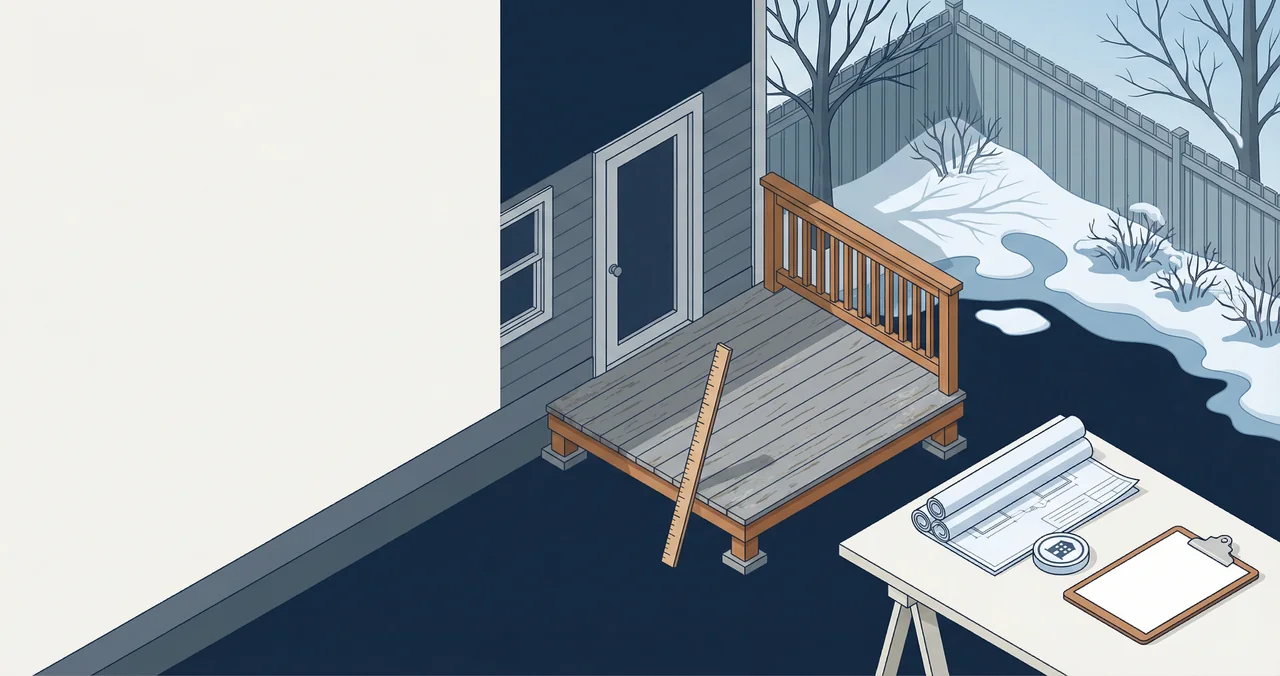
Deck Permits in Dayton: Requirements, Costs & How to Apply in 2026
If you're planning a deck in Dayton, the permit question comes up fast — and getting it wrong can cost you thousands in fines or force you to tear down what you just built. Here's exactly what Dayton requires, what it costs, and how to get through the process without delays.
🏗️ Planning a deck project?
Get a free manual project review, or visualize your dream deck with AI before requesting quotes.
📋 Tool Alert: Permit Checker
Do you really need a permit? Check the exact rules for your city or township.
Check Permits →Looking for more regional information? Check out our Ohio State Decking Hub.
Do You Need a Deck Permit in Dayton?
Yes, most deck projects in Dayton require a building permit. The City of Dayton's Building/Development Services department requires permits for decks that meet either of these thresholds:
- Over 200 square feet in total area
- More than 30 inches above grade at any point
That 30-inch rule catches more homeowners than you'd expect. If your yard slopes — common in neighborhoods like Belmont, Patterson Park, or the hills east of Oakwood — one corner of your deck might sit well above 30 inches even if the rest feels close to ground level.
Small decks under 200 square feet that sit below 30 inches may be exempt from a full building permit, but you should still verify with the city. Zoning setback requirements apply regardless of whether a building permit is needed.
A quick call to Dayton's Building Services at (937) 333-3888 can save you a major headache.
<!-- slot:after-intro -->
When a Permit Is Required
Here's a clear breakdown of what triggers the permit requirement in Dayton:
Projects That Need a Permit
- Any deck over 200 sq ft (roughly a 10×20 or 14×14 layout)
- Any deck more than 30 inches above grade
- Attached decks (connected to your house structure)
- Decks with roofs, pergola covers, or screened enclosures
- Electrical work for deck lighting or outlets
- Structural modifications to an existing deck
Projects That Typically Don't Need a Permit
- Ground-level patios and pavers (no structure)
- Small freestanding platforms under 200 sq ft and under 30 inches high
- Cosmetic repairs — replacing deck boards without changing the structure
- Restaining or resealing your existing deck
Important: Even exempt projects must comply with zoning and setback rules. Building a "permit-free" deck right on your property line will still get you in trouble.
Permit Fees & Processing Time
Dayton's permit fees are based on the estimated project cost. Here's what to budget:
| Project Value | Approximate Permit Fee |
|---|---|
| Under $5,000 | $75–$125 |
| $5,000–$15,000 | $125–$250 |
| $15,000–$30,000 | $250–$400 |
| Over $30,000 | $400+ (scaled to value) |
Additional fees may apply for:
- Plan review: $50–$100 on top of the base permit fee
- Re-inspection fees: $50–$75 if you fail an inspection and need a second visit
- Zoning review: Sometimes bundled, sometimes separate — ask when you apply
How Long Does It Take?
Standard residential deck permits in Dayton typically take 5 to 15 business days for review and approval. Straightforward projects on the simpler end, complex multi-level designs toward the longer end.
During peak building season (May through August), expect processing to slow down. If you're targeting a summer build, submit your application by late March or early April. Dayton's building season is short — roughly May through October — and best time to build a deck.
Building Codes & Setback Rules
Dayton follows the Ohio Residential Code (ORC), which aligns closely with the International Residential Code (IRC). Here are the specific requirements that matter for your deck:
Structural Requirements
- Footings must extend below the frost line. In the Dayton area, that means 36 inches minimum depth. Some inspectors require 42 inches depending on soil conditions. Dayton's freeze-thaw cycles are brutal — shallow footings heave and crack.
- Deck ledger boards must be properly flashed and lag-bolted to the house rim joist. This is the #1 point of failure inspectors flag.
- Joist spacing: Typically 16 inches on center for standard decking, 12 inches for diagonal patterns or heavier materials.
- Post sizes: Minimum 4×4 for decks under 6 feet tall; 6×6 posts required for taller structures or heavy loads.
Railing Requirements
- Railings are required on any deck surface 30 inches or more above grade
- Minimum railing height: 36 inches (42 inches for some commercial or elevated applications)
- Baluster spacing: No more than 4 inches apart — a 4-inch sphere cannot pass through
- Railings must withstand 200 pounds of force applied at the top
Setback Rules
Dayton's zoning code defines how close your deck can sit to property lines:
- Front yard setback: Decks generally cannot extend into the front yard setback (varies by zoning district, typically 25–30 feet)
- Side yard setback: Usually 5 feet minimum from the property line
- Rear yard setback: Typically 10–15 feet, depending on your zoning classification
- Easements: If your property has utility or drainage easements, your deck cannot encroach on them at all
Your exact setback distances depend on your zoning district — R-1, R-2, R-3, etc. You can look this up through the Montgomery County Auditor's site or ask the zoning desk at Dayton's Department of Planning.
Snow Load & Climate Considerations
Dayton gets an average of 25+ inches of snow per year, and the freeze-thaw cycle is relentless from November through March. Your deck design needs to account for:
- Snow load: The ORC requires structures to handle the local ground snow load (approximately 20–25 psf in the Dayton area)
- Frost heave: Footings below the frost line are non-negotiable. Frost heave can lift and crack improperly set footings in a single winter.
- Ice dams: Where a deck attaches to the house, proper flashing prevents ice dam damage to the ledger connection
- Material choice matters. Composite and PVC decking hold up significantly better in Dayton's climate than untreated wood. Pressure-treated lumber works but needs annual sealing to resist moisture and road salt tracked onto the surface. For a deeper dive, check out how different materials handle freeze-thaw conditions.
<!-- slot:mid-content -->
How to Apply for a Deck Permit in Dayton
Step 1: Gather Your Documents
Before you visit or apply online, you'll need:
- Site plan / plot survey showing your property boundaries, the house footprint, and proposed deck location with dimensions and distances to property lines
- Deck construction plans including framing layout, footing locations, post sizes, joist spacing, ledger attachment details, and railing design
- Elevation drawings showing the deck height above grade
- Material specifications — what you're building with and manufacturer load ratings
- Proof of property ownership (your deed or a recent tax record)
Plans don't have to be architect-drawn for a standard residential deck. Clear, detailed hand drawings with accurate dimensions are often accepted. But they must include all structural details.
Use PaperPlan to visualize different decking materials on your own home before committing — it helps you finalize your design before drafting permit drawings.
Step 2: Submit Your Application
You can apply through:
- In person: Dayton Building Services, 371 W. Second Street, Suite 100, Dayton, OH 45402
- Online: Check the City of Dayton's Development Services portal for electronic submission options
Bring two copies of all plans if applying in person. Pay the permit fee at the time of submission.
Step 3: Plan Review
The city reviews your plans for code compliance. For straightforward deck projects, expect 5–15 business days. You may receive comments or revision requests — address them promptly to avoid restarting the review clock.
Step 4: Receive Your Permit & Schedule Inspections
Once approved, you'll receive your building permit. Post it visibly at the job site — this is required.
You'll typically need inspections at these stages:
1. Footing inspection — after holes are dug, before pouring concrete
2. Framing inspection — after the structural frame is complete, before decking goes on
3. Final inspection — completed deck with railings, stairs, and all finishes
Schedule inspections at least 24–48 hours in advance. Failed inspections require corrections and a re-inspection (with potential additional fees).
Working With a Contractor
Most licensed deck builders in Dayton handle the permit process for you — it's standard practice. When getting quotes, ask specifically:
- "Does your price include pulling the permit?"
- "Who handles the inspection scheduling?"
- "Are re-inspection fees included if something needs adjustment?"
If a contractor tells you that you don't need a permit for a deck that clearly meets the thresholds, that's a red flag. Walk away. The liability falls on you as the homeowner.
What Happens If You Build Without a Permit
Skipping the permit might seem tempting — it saves a few hundred dollars and some paperwork. But the risks are real and expensive:
- Stop-work orders: The city can shut down your project mid-build
- Fines: Dayton can impose penalties, and you'll still need to get the permit (often at double the original fee)
- Forced removal: In worst-case scenarios, the city can require you to demolish non-compliant work
- Insurance problems: Your homeowner's insurance may deny claims for damage involving an unpermitted structure
- Sale complications: When you sell your home, an unpermitted deck shows up during inspections. Buyers walk away, or you end up paying to demolish or retroactively permit it
The consequences compound. Building without a permit creates problems that follow you for years — it's never worth the shortcut.
Can You Get a Retroactive Permit?
Sometimes. Dayton may allow you to apply for a permit after construction, but you'll likely face:
- Higher fees (penalty surcharges)
- Required inspections that may involve opening up finished work — cutting into the deck surface to inspect footings and framing
- Mandatory corrections for anything that doesn't meet code
It's always cheaper and easier to get the permit first.
What a Deck Actually Costs in Dayton (2026)
Understanding permit costs matters more when you see them in the context of your total project budget:
| Decking Material | Installed Cost (per sq ft) | Best For |
|---|---|---|
| Pressure-treated wood | $25–$45 | Budget builds, willing to maintain annually |
| Cedar | $35–$55 | Natural look, moderate durability |
| Composite | $45–$75 | Low maintenance, strong freeze-thaw performance |
| Trex (composite) | $50–$80 | Brand-name composite, strong warranty |
| Ipe (hardwood) | $60–$100 | Premium look, exceptional longevity |
For a typical 12×16 deck (192 sq ft) in Dayton, you're looking at roughly $4,800–$8,640 for pressure-treated or $8,640–$14,400 for composite, fully installed. The permit fee is a small fraction of that — typically under 3% of total project cost.
Given Dayton's harsh winters, composite and low-maintenance materials tend to deliver better long-term value. Wood decks need annual staining and sealing to survive the salt, snow, and moisture.
<!-- slot:before-faq -->
🎨 Not sure which material to pick?
Upload a photo of your backyard and see exactly how Trex, TimberTech, or cedar would look — free and instant.
Frequently Asked Questions
How much does a deck permit cost in Dayton?
Most residential deck permits in Dayton cost between $75 and $400, depending on your project's estimated value. A typical backyard deck in the $8,000–$15,000 range will run about $125–$250 for the permit. Additional fees for plan review or re-inspections may apply. Budget an extra $50–$100 for those just in case.
How long does it take to get a deck permit approved in Dayton?
Plan for 5 to 15 business days from submission to approval. Simple, well-documented applications move faster. If the city requests revisions to your plans, the clock resets. During peak season (April–June), processing can slow down. Submit early — ideally by late March if you want to build in May or June.
Can I build a small deck without a permit in Dayton?
Potentially. Decks under 200 square feet and under 30 inches above grade may be exempt from the building permit requirement. However, you still need to comply with all zoning setback rules. Verify with Dayton Building Services before starting — what qualifies as "exempt" can depend on specifics like whether the deck attaches to your house or sits freestanding.
Do I need a permit to replace my existing deck boards in Dayton?
Cosmetic replacements — swapping out deck boards without changing the structure — generally don't require a permit. But if you're replacing structural components (joists, beams, posts, footings) or changing the deck's footprint or height, you'll need one. When in doubt, call the city. A five-minute phone call beats a stop-work order.
What inspections are required for a deck permit in Dayton?
Dayton typically requires three inspections: a footing inspection (before pouring concrete), a framing inspection (after the structure is built but before decking is installed), and a final inspection (completed deck). Schedule each inspection 24–48 hours in advance. Your project isn't officially approved until the final inspection passes — don't make your last payment to the contractor until it does.
<!-- slot:end -->
📋 Planning a deck project?
Get a free manual project review from our team — no obligation, no spam.
Get Free Project Review →Upload a backyard photo and preview real decking materials with AI — free, instant, no sign-up.
Permits, costs, material comparisons, and questions to ask before requesting quotes — delivered to your inbox.