
Deck Permits in League City (2026)
Need a deck permit in League City? Learn requirements, fees, setback rules, and how to apply. Avoid fines and delays with this 2026 guide for homeowners.
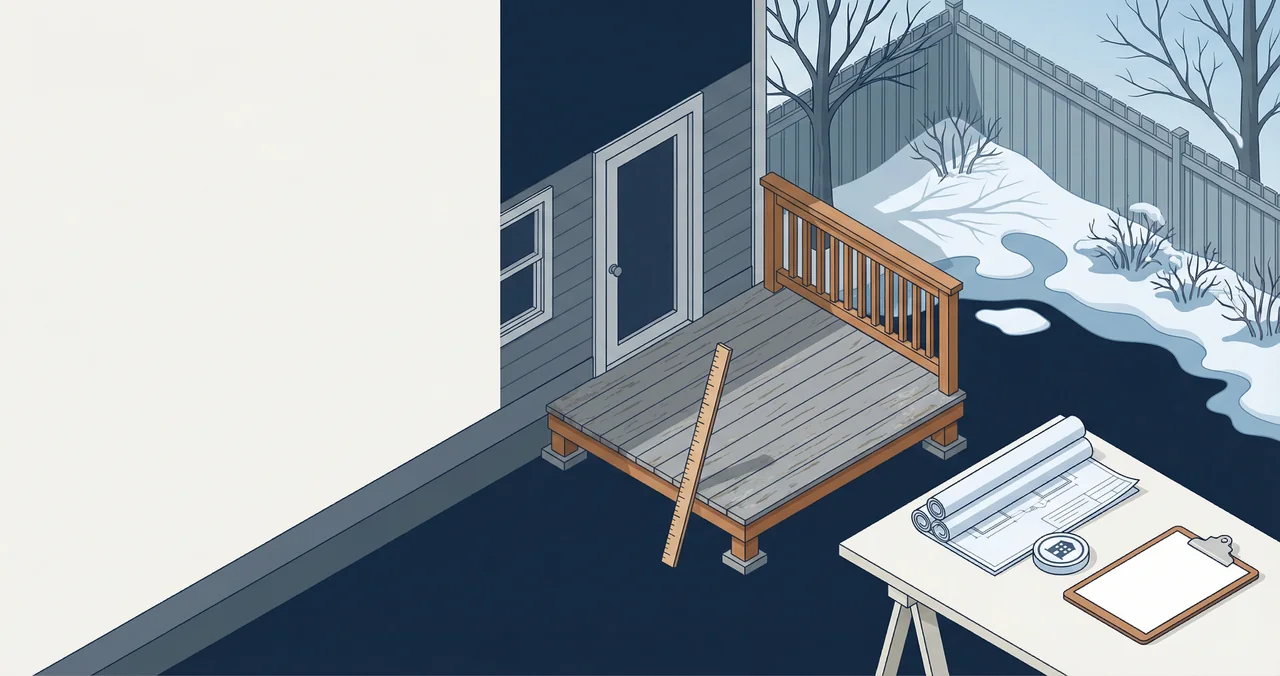
Deck Permits in League City: Requirements, Costs & How to Apply in 2026
Building a deck in League City without pulling the right permits can cost you thousands in fines — or force you to tear the whole thing down. Before you pick out decking materials or hire a contractor, you need to know exactly what League City's Building and Development Services department requires.
🏗️ Planning a deck project?
Get a free manual project review, or visualize your dream deck with AI before requesting quotes.
📋 Tool Alert: Permit Checker
Do you really need a permit? Check the exact rules for your city or township.
Check Permits →Looking for more regional information? Check out our Texas State Decking Hub.
Here's the straightforward breakdown of permit requirements, fees, codes, and the application process for residential deck construction in League City, Texas.
<!-- slot:after-intro -->
Do You Need a Permit in League City?
Short answer: probably yes.
In League City, a building permit is typically required for any deck that meets one or both of these conditions:
- Over 200 square feet in total area
- More than 30 inches above grade at any point
If your planned deck is a small, ground-level platform under 200 square feet — say, a simple 10×16 landing off your back door that sits just inches above the ground — you may not need a permit. But "may not" isn't "definitely not." League City's Development Services department recommends confirming with their office before starting any construction, even for smaller projects.
Attached decks almost always require a permit regardless of size. When you're bolting a ledger board to your house, you're modifying the structure itself, and the city wants to verify the connection meets the International Residential Code (IRC) standards that League City has adopted.
What About Freestanding Decks?
Freestanding (or "floating") decks that sit low to the ground and fall under the 200 sq ft / 30-inch thresholds can sometimes be built without a permit. But here's the catch — you still need to comply with setback requirements and HOA rules, which are separate from the permit process entirely. More on setbacks below.
If you're unsure whether your project needs a permit, call League City Development Services at (281) 554-1085 or visit their office at 500 West Walker Street. A five-minute phone call now saves months of headaches later.
When a Permit Is Required
Let's get specific. You need a deck permit in League City when:
- Your deck exceeds 200 square feet
- Any portion of the deck is more than 30 inches above the finished grade
- The deck is attached to your home (ledger-mounted)
- You're adding a roof or pergola cover over the deck
- The project includes electrical work (lighting, outlets) — this requires a separate electrical permit
- You're installing gas lines for a built-in grill or fire feature — separate plumbing/gas permit needed
You may not need a permit when:
- The deck is freestanding, under 200 sq ft, and under 30 inches above grade
- You're resurfacing or re-decking an existing permitted structure without altering the framing
- You're adding cosmetic features like planters or furniture
One thing League City homeowners often overlook: if your property is in a FEMA flood zone — and many properties near Clear Creek, Dickinson Bayou, or the bay-side areas are — additional floodplain development requirements apply. Your deck may need to be elevated above the Base Flood Elevation (BFE), and the permitting process involves extra review.
Permit Fees & Processing Time
League City's permit fees for residential deck construction are based on the project valuation (total cost of construction including materials and labor).
Here's what to expect in 2026:
| Project Valuation | Approximate Permit Fee |
|---|---|
| Under $5,000 | $75–$125 |
| $5,000–$15,000 | $125–$250 |
| $15,000–$50,000 | $250–$450 |
| Over $50,000 | $450+ (scaled by valuation) |
Additional fees may apply for:
- Plan review: $50–$100
- Re-inspection fees: $75+ per trip if you fail an inspection
- Electrical permit (if adding outlets or lighting): $50–$100
- Floodplain review (if applicable): $100–$200
How Long Does It Take?
For a straightforward residential deck, plan review in League City typically takes 5 to 10 business days. More complex projects — especially those involving floodplain review or structural engineering — can take 2 to 4 weeks.
During peak building season (spring), processing times tend to stretch. Filing in the late fall or winter months can mean faster turnaround, which aligns nicely with League City's ideal building weather anyway. October through April avoids the brutal summer heat that makes outdoor construction miserable for crews and can affect material installation.
<!-- slot:mid-content -->
Building Codes & Setback Rules
League City follows the International Residential Code (IRC) as adopted by the State of Texas, with local amendments. Here are the key code requirements for residential decks:
Structural Requirements
- Footings: Must extend below the frost line. In League City, the frost line is shallow — just 6 to 12 inches — but footings still need to rest on undisturbed soil and meet minimum size requirements (typically 12–16 inches in diameter for concrete piers)
- Ledger board connections: Must use approved lag bolts or through-bolts, properly flashed to prevent water intrusion. This is the #1 failure point inspectors flag in the Houston metro area
- Joists and beams: Sized per IRC span tables based on species, grade, and spacing
- Deck height over 30 inches: Requires guardrails at least 36 inches tall with balusters spaced no more than 4 inches apart
- Stairways: Required when the deck surface is more than 30 inches above grade, with proper rise/run dimensions and handrails
Setback Rules
Setbacks define how close your deck can be to property lines. In League City's standard residential zoning districts:
- Rear setback: Typically 10 feet from the rear property line
- Side setback: Typically 5 feet from side property lines
- Front setback: Varies by subdivision, usually 20–25 feet from the front property line
Important: These are general guidelines. Your specific setbacks depend on your zoning district and subdivision plat. Some League City neighborhoods — particularly master-planned communities like South Shore, Tuscan Lakes, and Victory Lakes — have additional HOA restrictions that may be more restrictive than city code.
Always check your property's survey plat and contact your HOA (if you have one) before designing your deck. A deck that complies with city code but violates HOA covenants can still result in forced removal.
Climate-Specific Code Considerations
League City sits in a coastal wind zone, and the Texas Gulf Coast is no stranger to hurricanes and tropical storms. This affects your deck build in real ways:
- Hurricane-rated fasteners and connectors: Simpson Strong-Tie or equivalent rated connectors are strongly recommended — and may be required depending on your proximity to the coast
- Uplift resistance: Decks in high-wind areas need adequate connections to resist uplift forces, not just gravity loads
- Moisture management: With League City's hot, humid summers, proper ventilation beneath the deck and adequate spacing between boards prevents moisture trapping that leads to mold, mildew, and structural rot
- Termite protection: Subterranean termites are aggressive in Southeast Texas. Pressure-treated lumber rated for ground contact and termite barriers at footings are essential
If you're choosing between decking materials for your League City project, keep the climate front and center. Composite decking resists moisture, insects, and UV damage — all major concerns here. Pressure-treated pine is budget-friendly at $25–$45/sq ft installed, but it demands regular sealing and staining to survive the humidity. Composite runs $45–$75/sq ft installed, and premium options like Trex ($50–$80/sq ft) or Ipe ($60–$100/sq ft) offer superior longevity.
Use PaperPlan to visualize different decking materials on your own home before committing — it's especially helpful when you're weighing the color and texture differences between composites and natural wood.
How to Apply for a Deck Permit in League City
Here's the step-by-step process:
Step 1: Gather Your Documents
Before submitting, you'll need:
- Site plan / survey: Showing your property lines, existing structures, easements, and the proposed deck location with dimensions and setback measurements
- Construction drawings: Plan view (top-down) and elevation views showing framing, footings, ledger attachment details, railing design, and stair layout
- Material specifications: What decking, framing lumber, fasteners, and concrete you're using
- Engineering calculations: Required for complex or elevated decks — some contractors include this, others charge extra
- HOA approval letter: If your property is in an HOA-governed community (most newer League City subdivisions are)
Step 2: Submit Your Application
League City offers both in-person and online permit submissions:
- Online: Through the city's permitting portal — search for "building permits" on their site
- In-person: Development Services, 500 West Walker Street, League City, TX 77573
Pay the application and plan review fees at the time of submission.
Step 3: Plan Review
The city reviews your plans for code compliance. For a standard deck, expect 5–10 business days. You may receive comments or revision requests — address them promptly to avoid delays.
Step 4: Permit Issued — Construction Begins
Once approved, your permit is valid for 180 days (6 months). Post the permit card in a visible location at the job site. Construction must begin within this window, or you'll need to renew.
Step 5: Inspections
Typical inspection stages for a deck project:
1. Footing inspection: After holes are dug, before pouring concrete
2. Framing inspection: After the structure is built, before decking boards go on
3. Final inspection: After everything is complete, including railings, stairs, and any electrical work
Schedule inspections at least 24 hours in advance through the city's inspection request system. Failed inspections require corrections and a re-inspection (which may carry additional fees).
Step 6: Certificate of Completion
Once the final inspection passes, you're done. The city records the permitted improvement on your property — which protects you when you eventually sell your home.
If your contractor handles the permit process for you (most reputable ones will), make sure the permit is pulled in the property owner's name, not just the contractor's. This is your protection if the contractor disappears mid-project.
What Happens If You Build Without a Permit
It's tempting to skip the permit process. Don't.
Here's what you're risking in League City:
- Stop-work orders: The city can shut down your project immediately upon discovering unpermitted work
- Fines: League City can impose daily fines for code violations, and they add up fast
- Forced removal: In worst-case scenarios, you may be ordered to demolish the unpermitted deck at your own expense
- Insurance problems: Your homeowner's insurance may deny claims related to an unpermitted structure. If someone gets injured on your deck, you're fully exposed
- Selling complications: When you sell your home, the buyer's inspector or title company will flag unpermitted work. You'll either have to retroactively permit it (which means bringing it up to current code — potentially expensive) or reduce your sale price
- Neighbor complaints: League City actively investigates complaints. If a neighbor reports your project, an inspector will show up
The permit fees are a tiny fraction of your total deck investment. On a $15,000 deck project, you're looking at roughly $200–$400 in permit costs — about 2% of the total budget. Compare that to thousands in potential fines or demolition costs, and the math is obvious.
For a deeper look at the risks of unpermitted construction, see our guide on building a deck without a permit and what can go wrong.
<!-- slot:before-faq -->
🎨 Not sure which material to pick?
Upload a photo of your backyard and see exactly how Trex, TimberTech, or cedar would look — free and instant.
Frequently Asked Questions
How much does a deck permit cost in League City?
Most residential deck permits in League City cost between $75 and $450, depending on the project's total valuation. A typical backyard deck in the $10,000–$20,000 range will run about $150–$300 in permit fees. Additional fees for plan review, electrical permits, or floodplain review may apply. Budget $200–$500 total for all permit-related costs to be safe.
How long does it take to get a deck permit in League City?
Standard plan review takes 5 to 10 business days. If your property is in a flood zone or your design requires structural engineering review, allow 2 to 4 weeks. You can speed things up by submitting complete, accurate drawings the first time — incomplete applications are the most common cause of delays.
Can I build a deck without a permit in League City?
Small, freestanding decks under 200 square feet and under 30 inches above grade may not require a permit. However, you still must comply with setback rules and HOA covenants. For any attached deck or anything above those thresholds, a permit is required. When in doubt, contact League City Development Services — confirming before you build is always the right move.
Do I need a separate permit for deck lighting or electrical outlets?
Yes. Any electrical work — including low-voltage landscape lighting that connects to your home's electrical panel, GFCI outlets, or ceiling fans on a covered deck — requires a separate electrical permit. This work must be performed by a licensed electrician or a contractor with proper electrical licensing. The electrical permit fee is typically $50–$100 on top of your deck permit.
What if my HOA says no but the city approves my permit?
A city permit only confirms your project meets building code and zoning requirements. It does not override your HOA's architectural review process. In League City communities like South Shore, Tuscan Lakes, or Harbour Point, the HOA may have stricter rules about deck size, materials, colors, or placement. Get HOA approval first, then apply for the city permit. Building with a city permit but without HOA approval can result in fines from your homeowners' association and forced modifications.
What's the best time of year to build a deck in League City?
October through April is ideal. League City summers are brutally hot and humid, which makes outdoor construction difficult and can affect material installation quality. Fall and winter offer mild temperatures, lower humidity, and often better contractor availability. Since Texas allows year-round building, you may also find more room to negotiate pricing during the cooler months. Check out our guide on best time to build a deck for more seasonal tips.
---
Planning a deck project in League City? Getting your permits squared away is the first real step. Gather your site plan, sketch out your design, and contact League City Development Services to confirm exactly what you need. If you're working with a local deck builder in the Houston area, they should handle the permit process as part of the job — ask about it before you sign any contract.
<!-- slot:end -->
📋 Planning a deck project?
Get a free manual project review from our team — no obligation, no spam.
Get Free Project Review →Upload a backyard photo and preview real decking materials with AI — free, instant, no sign-up.
Permits, costs, material comparisons, and questions to ask before requesting quotes — delivered to your inbox.