
Deck Staining Tips for Minnesota Weather: Timing & Products
Learn the best time to stain your deck in Minnesota, plus product recommendations to withstand harsh winters and humid summers. Protect your investment!
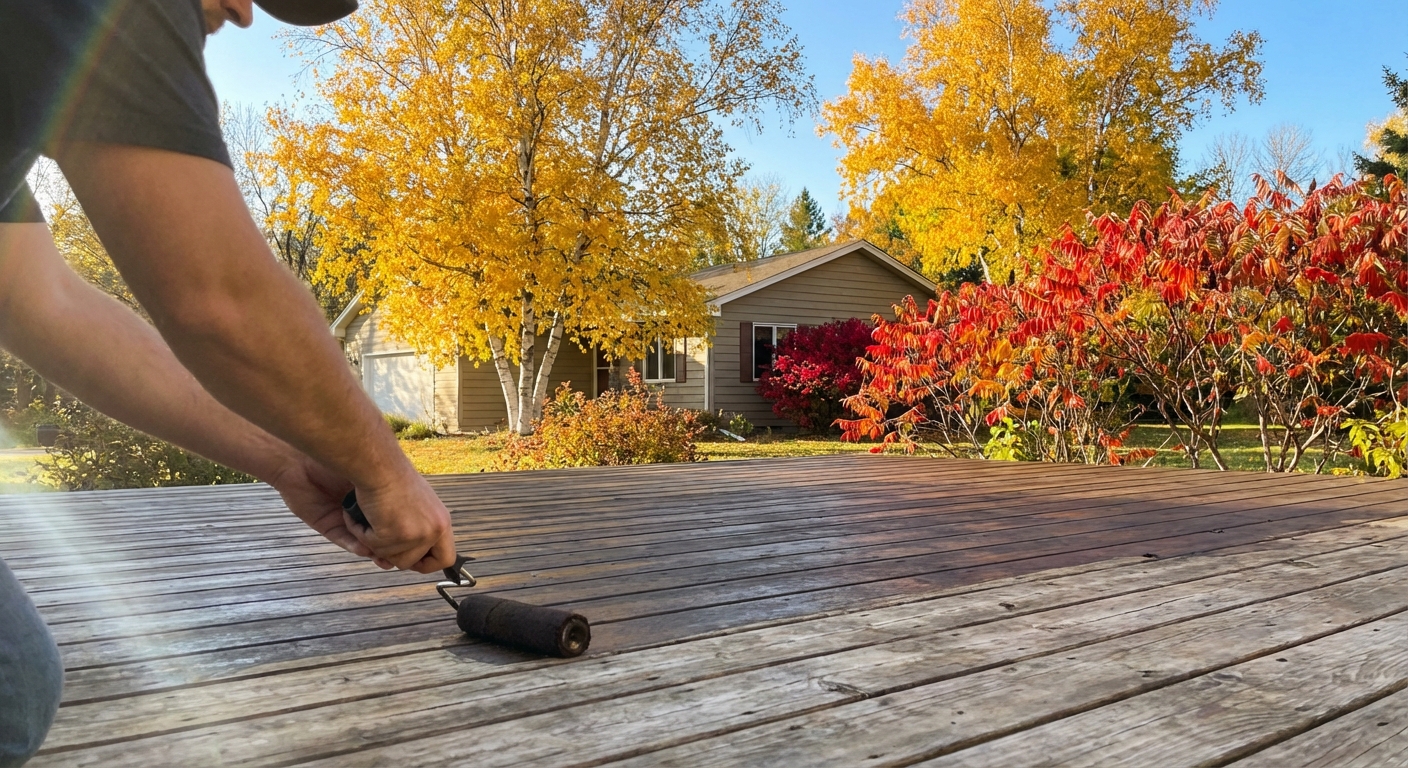
Are you ready to protect your Minnesota deck from the elements? Staining is crucial, but timing and product choice are everything in a state known for its extreme weather. This guide will help you choose the right stain and apply it at the optimal time to maximize its lifespan and keep your deck looking great.
📐 Tool Alert: Deck Stair Calculator
Calculate rise, run, and stringer cuts while ensuring IRC/OBC code compliance.
Calculate Stairs →Understanding Minnesota's Unique Climate
Minnesota's climate presents unique challenges for deck staining. Our decks endure:
🏗️ Planning a deck project?
Get a free manual project review, or visualize your dream deck with AI before requesting quotes.
- Extreme cold winters: Temperatures can plummet to -30°F or lower.
- Warm, humid summers: Expect temperatures in the 80-90°F range.
- Massive temperature swings: An annual temperature range of up to 130°F is common.
- Heavy snow loads: From 35-60 psf ground snow load, depending on your location (higher in northern MN).
- Freeze-thaw cycles: These cycles can wreak havoc on wood decks, causing cracking and warping.
These conditions make choosing the right stain and applying it correctly essential for protecting your investment, whether you're in the Twin Cities metro, Rochester, Duluth, St. Cloud, or Mankato. Composite decking is increasingly popular in Minnesota due to its resilience in these conditions. If you are considering a new deck, use PaperPlan (paperplan.app) to visualize your deck with PaperPlan design with different materials and layouts before committing to a contractor.
<!-- slot:after-intro -->
When to Stain Your Deck in Minnesota: Timing is Key
The best time to stain your deck in Minnesota is during the late spring or early summer, typically between May and June, or early fall (September/October). These periods offer the most favorable conditions:
- Stable Temperatures: Aim for daytime temperatures consistently between 50°F and 80°F. Avoid staining when temperatures are expected to drop below 40°F overnight.
- Low Humidity: High humidity can prevent the stain from properly adhering and drying. Look for days with humidity levels below 70%.
- Dry Weather: Avoid staining before or after rain. The wood needs to be completely dry for the stain to penetrate properly. Allow at least 2-3 days of dry weather before staining.
- Sunshine Considerations: While you need dry weather, avoid staining in direct sunlight. This can cause the stain to dry too quickly, leading to an uneven finish.
Regional Considerations:
- Southern Minnesota (Mankato, Rochester): You might have a slightly longer staining window due to milder temperatures compared to northern regions.
- Northern Minnesota (Duluth, North Shore): The staining season is shorter. Prioritize early summer for optimal results. Lake-effect weather near Duluth can impact humidity and drying times.
Preparing Your Deck for Staining: A Crucial Step
Proper preparation is just as important as choosing the right stain. Follow these steps:
1. Clean the Deck: Use a deck cleaner to remove dirt, mildew, and any existing coatings. Pressure washing can be effective, but be careful not to damage the wood. Consider using a specialized deck cleaner that is designed to remove old stain, like a deck stripper.
2. Repair Any Damage: Replace any damaged or rotten boards. Tighten loose screws or nails.
3. Sand the Deck: Sanding helps to create a smooth, even surface and allows the stain to penetrate better. Focus on areas where the old finish is peeling or flaking.
4. Let the Deck Dry: Allow the deck to dry completely for at least 24-48 hours after cleaning and sanding.
Choosing the Right Deck Stain for Minnesota Weather
With so many options available, selecting the right stain can feel overwhelming. Here's a breakdown to help you choose:
- Oil-Based Stains: Oil-based stains penetrate the wood deeply and provide excellent protection against moisture. They are a good choice for Minnesota's harsh winters and humid summers. They are also generally easier to apply than water-based stains.
- Water-Based Stains: Water-based stains are more environmentally friendly and offer good UV protection. They tend to dry faster than oil-based stains, but may not penetrate the wood as deeply. Look for high-quality water-based stains specifically formulated for exterior use.
- Transparent Stains: These stains offer minimal color and allow the natural beauty of the wood to shine through. They provide limited UV protection and require more frequent reapplication.
- Semi-Transparent Stains: Semi-transparent stains add a hint of color while still allowing some of the wood grain to be visible. They offer better UV protection than transparent stains.
- Solid Stains: Solid stains completely cover the wood grain and provide the most UV protection. They are a good choice for older decks with imperfections. Solid stains behave more like paint and can be prone to peeling if not applied correctly.
Product Recommendations:
While specific product recommendations can change, look for reputable brands like:
- Benjamin Moore: Arborcoat line is a popular choice.
- Sherwin-Williams: SuperDeck line offers various options.
- Thompson's WaterSeal: Available at most big box stores.
- Ready Seal: Known for easy application.
Always read and follow the manufacturer's instructions for the best results. Consider visiting your local paint store (like Hirshfield's) for expert advice.
Staining Your Deck: Step-by-Step Guide
1. Gather Your Supplies: You'll need stain, brushes, rollers, paint trays, drop cloths, painter's tape, and safety glasses.
2. Protect Surrounding Areas: Use drop cloths and painter's tape to protect your house, landscaping, and other surfaces from stain.
3. Apply the Stain: Apply the stain in thin, even coats, following the direction of the wood grain. Avoid applying too much stain, as this can lead to drips and runs.
4. Allow the Stain to Dry: Allow the stain to dry completely according to the manufacturer's instructions. This may take 24-48 hours, depending on the weather conditions.
5. Apply a Second Coat (Optional): For added protection, consider applying a second coat of stain.
<!-- slot:mid-content -->
Minnesota Deck Building Codes and Permits
Before you even think about staining, ensure your deck is up to code! In Minnesota, decks over 30 inches above grade or attached to a dwelling generally require permits. The Minnesota State Building Code (based on the International Residential Code with state amendments) is enforced by local building officials.
- Permit Costs: Expect to pay between $75 and $450 for a permit, depending on your municipality.
- Frost Line: Remember Minnesota's deep frost line (42 inches in southern MN, 60 inches in northern MN/Duluth). Your deck footings *must* extend below the frost line to prevent heaving.
- Snow Loads: Your deck's structural design must account for snow loads, which can range from 35-60 psf depending on your location.
- Ice Dam Prevention: Proper flashing where the deck attaches to your house is essential to prevent ice dams and water infiltration.
Failing to comply with building codes can result in fines and require you to redo your deck. Because construction costs are moderate in Minnesota, it's important to factor in the cost of permits and professional labor. Pressure-treated decks average $24-42/sqft, composite $42-75/sqft, cedar $32-52/sqft, and Trex $48-80/sqft installed. Also, many Homeowner's Associations in suburbs like Eden Prairie, Plymouth, and Maple Grove require approval for deck builds.
Maintaining Your Stained Deck
Regular maintenance is key to extending the life of your stained deck.
- Clean Your Deck Regularly: Sweep your deck regularly to remove dirt and debris. Wash it with a deck cleaner at least once a year.
- Reapply Stain as Needed: Depending on the type of stain you use, you may need to reapply it every 1-3 years. Watch for signs of fading, peeling, or water damage.
- Inspect Your Deck Regularly: Check for loose screws, damaged boards, and other signs of wear and tear. Address any problems promptly to prevent them from getting worse.
<!-- slot:before-faq -->
Protecting your deck in Minnesota is an ongoing process. By understanding our unique climate, choosing the right stain, and following these tips, you can keep your deck looking beautiful for years to come. Remember, the build season in Minnesota is short (May-October), so plan your staining project accordingly!
<!-- slot:end -->
🎨 Not sure which material to pick?
Upload a photo of your backyard and see exactly how Trex, TimberTech, or cedar would look — free and instant.
Frequently Asked Questions
How often should I stain my deck in Minnesota?
The frequency depends on the type of stain you use and the amount of exposure your deck receives. Transparent stains may need to be reapplied every year, while solid stains can last for several years. Semi-transparent stains typically last 2-3 years. Inspect your deck annually for signs of fading or wear and reapply stain as needed.
What is the best type of stain for a new deck?
For a new deck, an oil-based stain is often recommended. It penetrates the wood deeply and provides excellent protection against moisture, which is crucial for Minnesota's climate. Allow the wood to weather for a few months before staining to allow it to dry out and accept the stain better.
Can I stain my deck in the winter?
No, staining your deck in the winter is not recommended. Temperatures are too cold, and the wood is often damp. The stain will not adhere properly and may not dry correctly. Wait until the weather warms up in the spring or early summer.
What should I do if my deck stain is peeling?
If your deck stain is peeling, you will need to remove the old stain before applying a new coat. You can use a deck stripper or sand the deck to remove the peeling stain. Make sure the deck is clean and dry before applying the new stain.
Consider reading these related articles for more tips:
- Deck Design Ideas for Minnesota Homes: Inspiration for 2026
- Minnesota Deck Maintenance by Season: Year-Round Care Guide
- How to Build a Deck in Minnesota: DIY Guide with Local Rules
📋 Planning a deck project?
Get a free manual project review from our team — no obligation, no spam.
Get Free Project Review →Upload a backyard photo and preview real decking materials with AI — free, instant, no sign-up.
Permits, costs, material comparisons, and questions to ask before requesting quotes — delivered to your inbox.