
How to Build a Deck in Minnesota: DIY Guide with Local Rules
Learn how to build a deck in Minnesota! DIY guide covering permits, frost lines, costs, materials, and Minnesota-specific deck building tips.
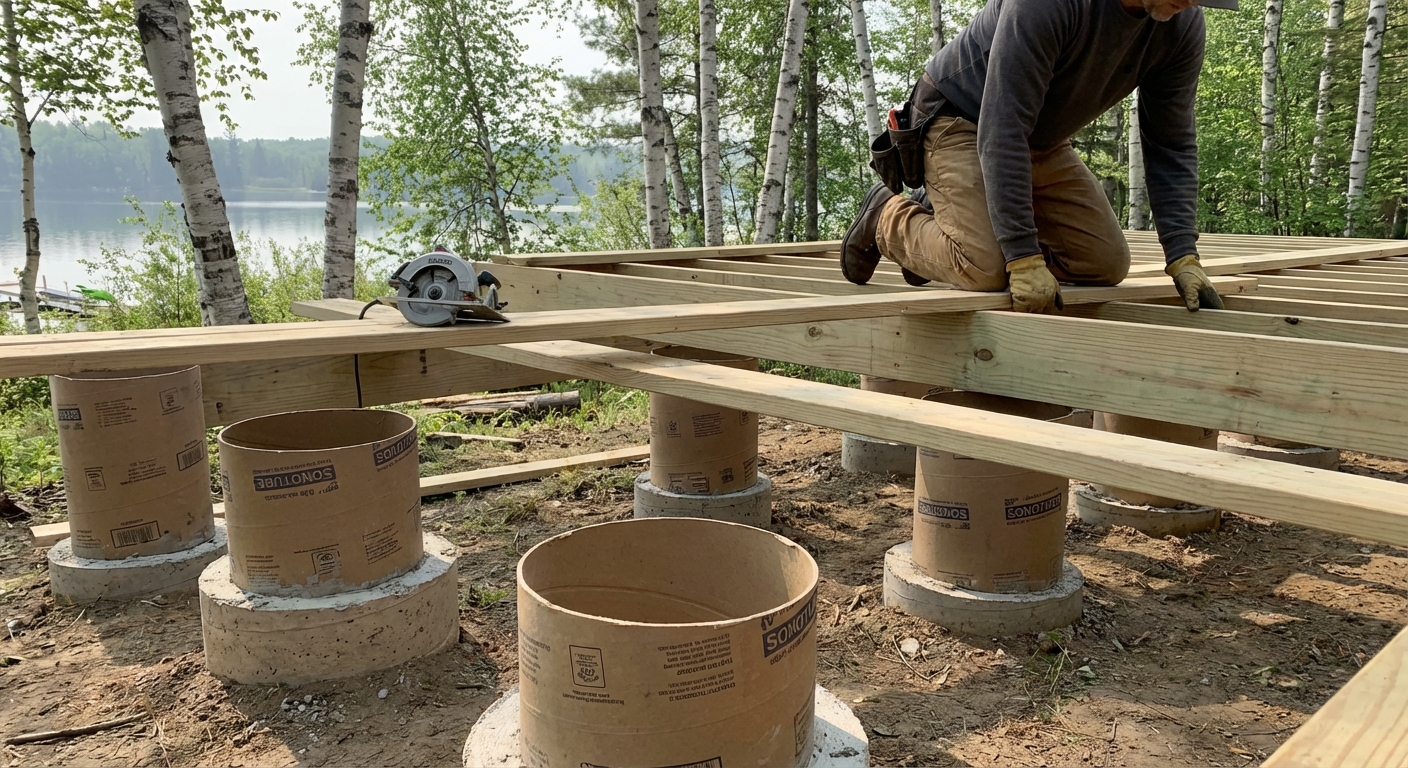
Building a deck in Minnesota offers incredible opportunities to enjoy the outdoors, but it comes with unique challenges. Our extreme temperature swings, deep frost lines, and heavy snow loads demand careful planning and execution. This guide walks you through the entire process, from initial design to final inspection, ensuring your deck stands strong against Minnesota's harsh weather.
📐 Tool Alert: Deck Stair Calculator
Calculate rise, run, and stringer cuts while ensuring IRC/OBC code compliance.
Calculate Stairs →Planning Your Minnesota Deck Project
Minnesota's climate presents unique hurdles for deck construction. Understanding these challenges upfront is key to a successful DIY project.
🏗️ Planning a deck project?
Get a free manual project review, or visualize your dream deck with AI before requesting quotes.
- Climate Considerations: With temperatures ranging from -30°F in the winter to 90°F in the summer (a potential 130°F annual swing!), your deck will face extreme expansion and contraction. This makes material selection and proper fastening techniques crucial.
- Build Season: Your build season is limited to roughly May-October. The ground is typically frozen solid from November to April, making digging footings impossible. Plan accordingly.
- Frost Line: Minnesota has some of the deepest frost lines in the lower 48 states, ranging from 42 inches in southern Minnesota to 60 inches in northern Minnesota (especially around Duluth). Your footings *must* extend below this depth to prevent frost heave.
- Snow Loads: Minnesota decks must be designed to withstand significant snow loads, ranging from 35-60 psf (pounds per square foot) depending on your location. This impacts framing size and spacing.
- Permits: Decks over 30 inches above grade or attached to a dwelling typically require a permit in most Minnesota cities. Check with your local building department (Minneapolis, St. Paul, Rochester, Duluth, St. Cloud, Mankato) for specific requirements.
<!-- slot:after-intro -->
Understanding Minnesota Deck Building Codes and Permits
Navigating Minnesota's building codes is essential to avoid costly setbacks. The Minnesota State Building Code, based on the International Residential Code (IRC) with state amendments, is enforced by local building officials.
Deck Permit Requirements
Most Minnesota cities require permits for decks that are:
- Attached to a house
- More than 30 inches above grade
Check with your local city or county building department to confirm specific requirements. Cities like Minneapolis and St. Paul have stringent building departments. Smaller cities and towns may have less complex permitting processes.
Permit Costs
Expect to pay between $75-$450 for a deck permit in Minnesota. Costs vary significantly depending on the municipality and the complexity of your project.
Key Code Considerations
- Footings: As mentioned earlier, footings *must* extend below the frost line (42-60 inches). Proper footing size is also crucial to support the deck's load.
- Railings: Decks more than 30 inches above grade require railings that are at least 36 inches high. Railings must also meet specific load requirements to ensure safety.
- Stairways: Stairways must have a minimum width of 36 inches and meet rise and run requirements for each step. Handrails are required for stairways with four or more risers.
- Ledger Board Attachment: If attaching your deck to your house, the ledger board must be properly flashed to prevent water infiltration and ice dam formation. This is especially critical in Minnesota's harsh winters.
- Snow Load: Design your deck to withstand the required snow load for your location. This will impact joist sizing and spacing.
Choosing the Right Decking Material for Minnesota
Material selection is critical for a long-lasting deck in Minnesota's extreme climate.
Pressure-Treated Lumber
- Pros: Most affordable option, readily available.
- Cons: Requires regular staining or sealing, prone to warping and cracking in Minnesota's freeze-thaw cycles.
- Cost: $24-42/sqft installed
Cedar
- Pros: Naturally rot-resistant, aesthetically pleasing.
- Cons: More expensive than pressure-treated lumber, still requires some maintenance, can be susceptible to insect damage.
- Cost: $32-52/sqft installed
Composite Decking
- Pros: Low-maintenance, durable, resists fading and staining. Highly recommended for Minnesota's climate.
- Cons: More expensive than wood, can get hot in direct sunlight.
- Cost: $42-75/sqft installed
Trex Decking
- Pros: A popular composite brand known for its durability and wide range of colors and styles.
- Cons: One of the most expensive decking options.
- Cost: $48-80/sqft installed
Here's a table summarizing the cost and considerations for each material:
| Material | Cost (Installed) | Pros | Cons | Best For |
|---------------------|-------------------|----------------------------------------------------------------------|--------------------------------------------------------------------------------|-----------------------------------------------------------------------------|
| Pressure-Treated | $24-42/sqft | Affordable, readily available | High maintenance, prone to warping and cracking | Budget-conscious homeowners willing to perform regular maintenance |
| Cedar | $32-52/sqft | Naturally rot-resistant, aesthetically pleasing | Requires some maintenance, susceptible to insect damage | Homeowners seeking a natural wood look with moderate maintenance |
| Composite | $42-75/sqft | Low-maintenance, durable, resists fading and staining | More expensive than wood, can get hot in direct sunlight | Homeowners prioritizing low-maintenance and longevity in Minnesota's climate |
| Trex | $48-80/sqft | Durable, wide range of colors and styles | Most expensive option | Homeowners seeking premium aesthetics and long-term performance |
Use PaperPlan (paperplan.app) to visualize your deck with PaperPlan design with different materials and layouts before committing to a contractor. This can help you make the best decision for your budget and aesthetic preferences.
Fasteners
Use high-quality, weather-resistant fasteners designed for exterior use. Stainless steel or coated screws and nails are recommended to prevent corrosion.
Step-by-Step Deck Building Guide for Minnesota
This guide provides a general overview. Always consult local building codes and manufacturer instructions for specific requirements.
1. Planning and Permitting
- Design: Create a detailed deck plan, including dimensions, materials, and footing locations. Consider factors like sun exposure, views, and traffic flow.
- Permit Application: Submit your plans to your local building department and obtain the necessary permits *before* starting construction.
2. Layout and Excavation
- Layout: Mark the location of your deck and footings according to your approved plans.
- Excavation: Dig holes for your footings, ensuring they extend below the frost line (42-60 inches). Use a post hole digger or rent an auger for larger projects.
3. Footings and Posts
- Footings: Pour concrete footings into the holes, ensuring they are level and properly sized to support the deck's load. Consider using precast concrete piers to simplify this process.
- Posts: Attach posts to the footings using approved connectors. Ensure the posts are plumb and properly braced.
4. Framing
- Beam Installation: Install the beams, which will support the joists. Ensure the beams are level and securely fastened to the posts.
- Joist Installation: Install the joists, which will support the decking. Use proper spacing and fastening techniques to ensure a strong and stable frame.
- Ledger Board (if applicable): Attach the ledger board to your house, ensuring it is properly flashed to prevent water damage and ice dams.
5. Decking Installation
- Decking: Install the decking according to the manufacturer's instructions. Use proper spacing between boards to allow for expansion and contraction.
6. Railings and Stairs
- Railings: Install the railings, ensuring they meet code requirements for height and strength.
- Stairs: Build and install the stairs, ensuring they meet code requirements for rise, run, and handrails.
7. Finishing Touches
- Trim: Install trim to cover any exposed edges and create a finished look.
- Sealing/Staining (if applicable): Apply sealant or stain to protect wood decks from the elements.
- Inspection: Schedule a final inspection with your local building department to ensure your deck meets all code requirements.
<!-- slot:mid-content -->
Minnesota-Specific Deck Building Tips
- Ice Dam Prevention: Proper flashing where the deck attaches to the house is absolutely crucial to prevent ice dams and water infiltration.
- Lakefront Decks: If you're building a deck on a lakefront property, consider erosion control measures to protect the shoreline. The "Land of 10,000 Lakes" presents unique challenges.
- Hillside Decks (Duluth): Duluth's steep hillside lots offer stunning views, but require specialized deck building techniques. Consider hiring a professional experienced in hillside construction.
- HOA Approval (Twin Cities Suburbs): If you live in a Twin Cities suburb like Eden Prairie, Plymouth, Maple Grove, Woodbury, or Eagan, be sure to obtain HOA approval *before* starting construction.
- Material Storage: Store your decking materials properly to protect them from the elements. Keep them covered and elevated off the ground.
- Winter Protection: Consider Winter-Ready Deck Ideas for Minnesota: Extreme Cold Solutions such as winter covers or snow removal plans to extend the life of your deck. Also see Protecting Your Minnesota Deck from Snow Loads & Ice Dams.
- Deck Staining: Deck Staining Tips for Minnesota Weather: Timing & Products are critical because the freeze thaw cycle can cause the stain to wear and crack.
Cost Considerations for Minnesota Decks
Minnesota has moderate construction costs compared to other parts of the country. Labor costs are generally higher in the Twin Cities metro area compared to Greater Minnesota.
Here's a breakdown of average deck costs in Minnesota:
- Pressure-Treated: $24-42/sqft installed
- Composite: $42-75/sqft installed
- Cedar: $32-52/sqft installed
- Trex: $48-80/sqft installed
These costs include materials, labor, and permit fees. DIY projects can save on labor costs, but require careful planning and execution.
Factors that can impact deck costs:
- Size: Larger decks will obviously cost more.
- Materials: As shown above, material choice significantly impacts cost.
- Complexity: Decks with multiple levels, curves, or custom features will be more expensive.
- Location: Decks in the Twin Cities metro area may have higher labor costs.
- Permit Fees: Permit fees vary depending on the municipality.
Deck Design Ideas for Minnesota Homes: Inspiration for 2026 can help with the planning stage so you can estimate material costs.
<!-- slot:before-faq -->
Building a deck in Minnesota is a challenging but rewarding project. By understanding the local codes, climate considerations, and material options, you can create a beautiful and durable outdoor space that you'll enjoy for years to come. Remember to prioritize safety, obtain the necessary permits, and don't hesitate to seek professional help when needed.
<!-- slot:end -->
🎨 Not sure which material to pick?
Upload a photo of your backyard and see exactly how Trex, TimberTech, or cedar would look — free and instant.
Frequently Asked Questions
What is the frost line in Minnesota?
The frost line in Minnesota ranges from 42 inches in southern Minnesota to 60 inches in northern Minnesota. Your deck footings must extend below this depth to prevent frost heave.
Do I need a permit to build a deck in Minnesota?
Most Minnesota cities require permits for decks that are attached to a house or more than 30 inches above grade. Check with your local building department to confirm.
What is the best decking material for Minnesota's climate?
Composite decking is generally considered the best option for Minnesota's climate due to its low-maintenance, durability, and resistance to fading and staining.
How much does it cost to build a deck in Minnesota?
The cost to build a deck in Minnesota ranges from $24-80/sqft installed, depending on the materials used. Pressure-treated lumber is the most affordable option, while composite and Trex decking are more expensive.
Can I build a deck myself in Minnesota?
Yes, you can build a deck yourself in Minnesota, but it's important to have the necessary skills and knowledge. Be sure to obtain the necessary permits and follow all local building codes. If you're not comfortable with any part of the process, consider hiring a professional deck builder. You can find some of the Best Deck Builders in Eden Prairie, MN: SW Suburb Guide for 2026 or other local contractors to help you complete the project.
📋 Planning a deck project?
Get a free manual project review from our team — no obligation, no spam.
Get Free Project Review →Upload a backyard photo and preview real decking materials with AI — free, instant, no sign-up.
Permits, costs, material comparisons, and questions to ask before requesting quotes — delivered to your inbox.