
How to Build a Deck in Maryland (2026)
DIY deck building in Maryland can be rewarding! Our step-by-step guide covers permits, materials, costs, and best practices for MD homeowners.
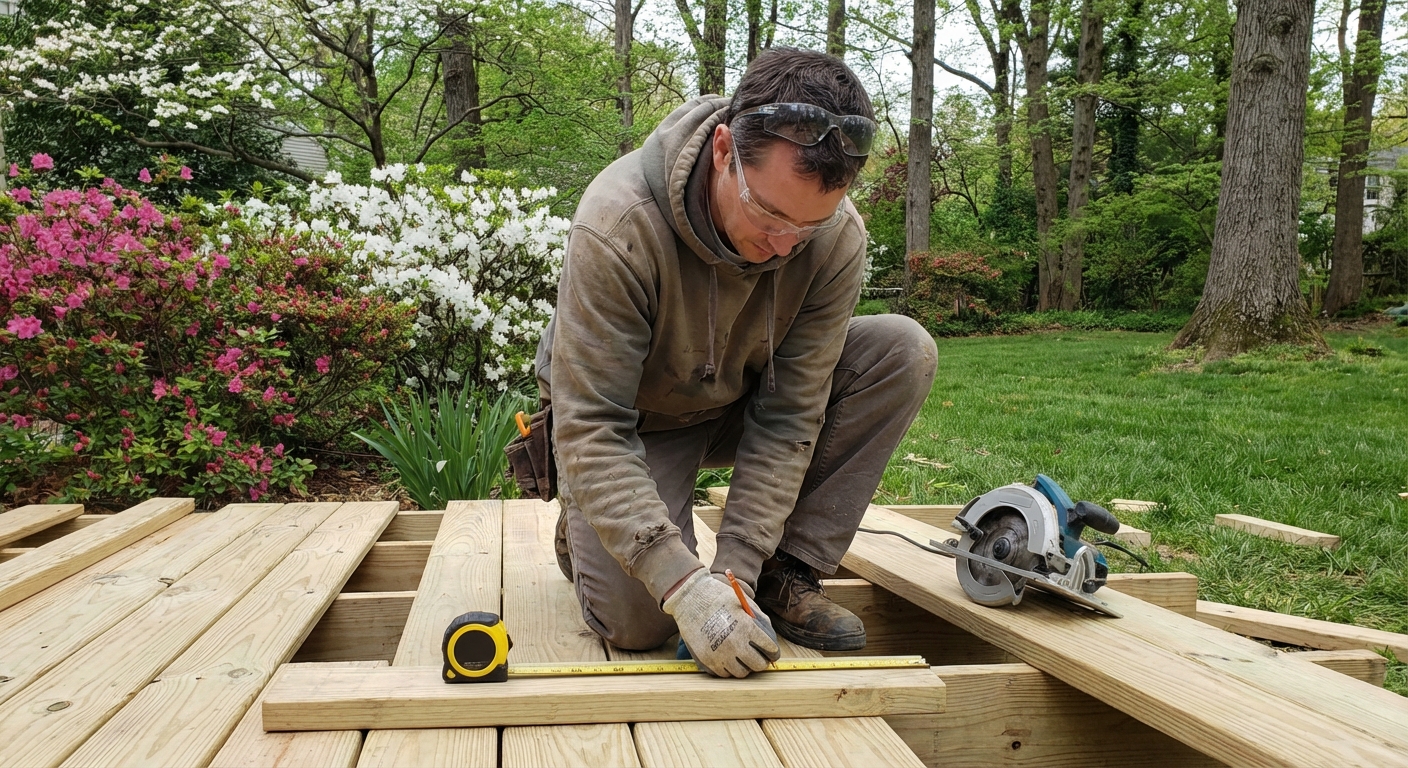
Building a deck yourself in Maryland can add significant value to your home, especially considering the state's high property values. You can expect a return on investment (ROI) of 70-80%. This guide provides a step-by-step approach tailored to Maryland's climate and regulations, helping you navigate permits, material selection, and construction.
📐 Tool Alert: Deck Stair Calculator
Calculate rise, run, and stringer cuts while ensuring IRC/OBC code compliance.
Calculate Stairs →Planning Your Maryland Deck Project
Before you even think about lumber, careful planning is crucial. Maryland has specific requirements you need to address upfront.
🏗️ Planning a deck project?
Get a free manual project review, or visualize your dream deck with AI before requesting quotes.
Deck Design and Size
Consider how you'll use your deck. Will it be for grilling and dining? Relaxing and entertaining? Do you envision a simple platform or a multi-level masterpiece? Common Maryland features include screened porches to combat humidity and mosquitoes, multi-level designs to maximize space on sloped lots, and builds tailored for waterfront properties near the Chesapeake Bay.
The size of your deck directly impacts cost and permitting. Remember that in Maryland, most counties require permits for any attached deck or decks larger than 200 sq ft.
Maryland Permit Requirements
Navigating Maryland's permitting process is essential. Regulations vary by county and even municipality. Here’s a breakdown for some key areas:
- Baltimore City: Permits are handled through the Baltimore City Department of Housing and Community Development (DHCD).
- Montgomery County (Bethesda, Silver Spring, Rockville): Expect strict review from the Department of Permitting Services (DPS).
- Anne Arundel County (Annapolis): Contact Inspections & Permits for specific requirements.
- Howard County (Columbia): The Department of Planning and Zoning (DPZ) handles permits.
- Frederick County: Has a separate permit process, generally more straightforward than more urban counties.
Don't forget Homeowners Association (HOA) approval! Many Maryland homes are governed by HOAs, which often require approval *before* you can even apply for a county permit.
Chesapeake Bay Critical Area Considerations
If your property is within 1,000 feet of tidal waters, you're in the Chesapeake Bay Critical Area. This area has specific regulations designed to protect the bay. Contact your local county planning department for details on restrictions.
Creating a Detailed Deck Plan
Your deck plan should include:
- Dimensions: Length, width, and height of the deck.
- Materials: Type of wood or composite decking, railing material, and framing lumber.
- Foundation: Details of the posts and footings, including depth and spacing.
- Railing: Height, style, and spacing of balusters.
- Stairs: If applicable, include rise and run of steps.
Use PaperPlan (paperplan.app) to visualize your deck with PaperPlan design with different materials and layouts before committing to a contractor or buying materials. This can save you time and money by helping you avoid costly mistakes.
<!-- slot:after-intro -->
Choosing the Right Materials for Maryland Weather
Maryland's climate, with its hot, humid summers (85-95°F) and cold, snowy winters, demands durable materials. High humidity and around 40-45 inches of rain annually also impact material choice. Termite pressure is moderate to high, so consider termite-resistant options.
Decking Material Options & Costs
Here's a breakdown of popular decking materials and their average installed costs in Maryland:
| Material | Average Installed Cost (per sq ft) | Pros | Cons |
| ----------------- | ------------------------------------ | ------------------------------------------------------------------------------------------------------------------------------------------------------------------------------------------------------------------------------------------------- | --------------------------------------------------------------------------------------------------------------------------------------------------------------------------------------------------------------------------- |
| Pressure-Treated | $25-45 | Most affordable, readily available, resists rot and insects. | Requires regular staining or sealing, prone to warping and cracking. |
| Composite | $45-75 | Low maintenance, resists fading and staining, long lifespan, made from recycled materials. | More expensive than pressure-treated, can get hot in direct sunlight, some early-generation composites are prone to mold/mildew. |
| Cedar | $35-55 | Naturally beautiful, resists rot and insects, dimensionally stable. | Requires regular sealing to maintain appearance, softer than some other woods, can be more expensive than pressure-treated. |
| Trex (Composite) | $50-80 | Premium composite, excellent durability, wide range of colors and styles, low maintenance. | Higher upfront cost, can still get hot in direct sunlight, some styles may have a more "plastic" look. |
Framing Lumber
Pressure-treated lumber is the standard for framing due to its resistance to rot and insects. Ensure it's properly rated for ground contact if used for posts.
Fasteners
Use corrosion-resistant screws and nails specifically designed for outdoor use. Stainless steel is a good choice, especially near the coast.
Step-by-Step Deck Building Guide
This guide assumes you have basic carpentry skills and tools. If you're not comfortable with any of these steps, consider hiring a professional deck builder.
1. Obtain Permits
Before starting any work, obtain all necessary permits from your local county or city government. This is non-negotiable in Maryland. Failing to do so can result in fines and even forced removal of your deck.
2. Layout and Excavation
Mark the perimeter of your deck according to your plan. Dig holes for the posts, ensuring they extend below the frost line. In Maryland, the frost line is typically between 24-30 inches. This is deeper than many other Mid-Atlantic states, so accurate digging is essential to prevent frost heave.
3. Install Footings and Posts
Pour concrete into the holes to create footings. Use pre-cast concrete piers or form your own. Set the posts into the concrete, ensuring they are plumb and properly spaced. Allow the concrete to cure completely before proceeding.
4. Build the Frame
Attach the ledger board to your house, ensuring it's level and securely fastened to the house's framing. Construct the beam and joist system according to your plan, using proper spacing and connectors. Consider using joist tape to protect the tops of the joists from moisture.
5. Install Decking
Lay the decking boards, leaving a small gap between them for expansion and contraction. Fasten the boards with screws or hidden fasteners. Stagger the seams for a more visually appealing look.
6. Build Railings and Stairs
Install railings and stairs according to your plan and local building codes. Ensure the railings are sturdy and meet height requirements. Stairs should have consistent rise and run for safety.
7. Finishing Touches
Add any finishing touches, such as trim, lighting, or built-in benches. Apply a sealant or stain to protect the wood from the elements. See our guide to Deck Staining Tips for Maryland: Best Products & Timing for the best results.
<!-- slot:mid-content -->
Cost Considerations for Your Maryland Deck
Budgeting is key. Here's a breakdown of factors influencing deck costs in Maryland:
- Size: Larger decks cost more.
- Materials: As shown in the table above, material choice significantly impacts price.
- Complexity: Multi-level decks, curved designs, and built-in features increase labor costs.
- Permits: Factor in permit fees, which can vary by county.
- Labor: If you hire a contractor, labor costs will be a significant portion of the total.
Example Cost Breakdown (16x20 Pressure-Treated Deck)
- Materials: $2,000 - $3,500
- Permits: $100 - $500
- Labor (if hiring a contractor): $2,000 - $4,000
- Total: $4,100 - $8,000
This is a rough estimate. Get multiple quotes from contractors if you're not doing the work yourself.
Maintaining Your Maryland Deck
Regular maintenance is crucial to prolong the life of your deck. See our guide to Maryland Deck Maintenance by Season: Year-Round Care Guide for detailed tips.
- Cleaning: Clean your deck regularly to remove dirt, debris, and mildew.
- Sealing/Staining: Reapply sealant or stain every 1-3 years, depending on the product and exposure to the elements.
- Inspecting: Inspect your deck annually for signs of rot, insect damage, or loose fasteners.
- Snow Removal: In winter, remove snow carefully to prevent damage.
<!-- slot:before-faq -->
Building a deck in Maryland requires careful planning, attention to detail, and adherence to local regulations. By following this guide, you can create a beautiful and functional outdoor space that adds value to your home for years to come. If you decide the project is too complex, consider exploring our guides to Best Deck Builders in Frederick, MD: Local Contractors Guide or Best Deck Builders in Columbia, MD: Finding Quality Contractors for professional assistance.
<!-- slot:end -->
🎨 Not sure which material to pick?
Upload a photo of your backyard and see exactly how Trex, TimberTech, or cedar would look — free and instant.
Frequently Asked Questions
Do I really need a permit to build a deck in Maryland?
Yes, in most cases. Maryland is heavily regulated, and most counties require permits for attached decks or decks larger than 200 sq ft. Failing to obtain a permit can result in fines and forced removal of the deck. Check with your local county or city government for specific requirements.
What's the best time of year to build a deck in Maryland?
The best months are typically April-June and September-October. These months offer milder temperatures and less rainfall, making construction more comfortable. Avoid building during the hottest and most humid periods of summer or the coldest months of winter.
How deep should my deck footings be in Maryland?
Footings should extend below the frost line, which is typically between 24-30 inches in Maryland. This depth prevents frost heave, which can damage the deck's structure.
What type of wood is best for a deck in Maryland's climate?
Pressure-treated lumber is a common and affordable option. Cedar is another good choice due to its natural resistance to rot and insects. Composite decking is a low-maintenance alternative that is resistant to fading, staining, and insect damage. Consider a screened porch deck by referencing our guide: Screened Porch Decks in Maryland: Design Guide & Cost Breakdown.
📋 Planning a deck project?
Get a free manual project review from our team — no obligation, no spam.
Get Free Project Review →Upload a backyard photo and preview real decking materials with AI — free, instant, no sign-up.
Permits, costs, material comparisons, and questions to ask before requesting quotes — delivered to your inbox.