
Best Decking Material for Maryland's Cl (2026)
Choosing the right decking material in Maryland's four-season climate? This guide covers the best options, costs, and considerations for your MD deck.
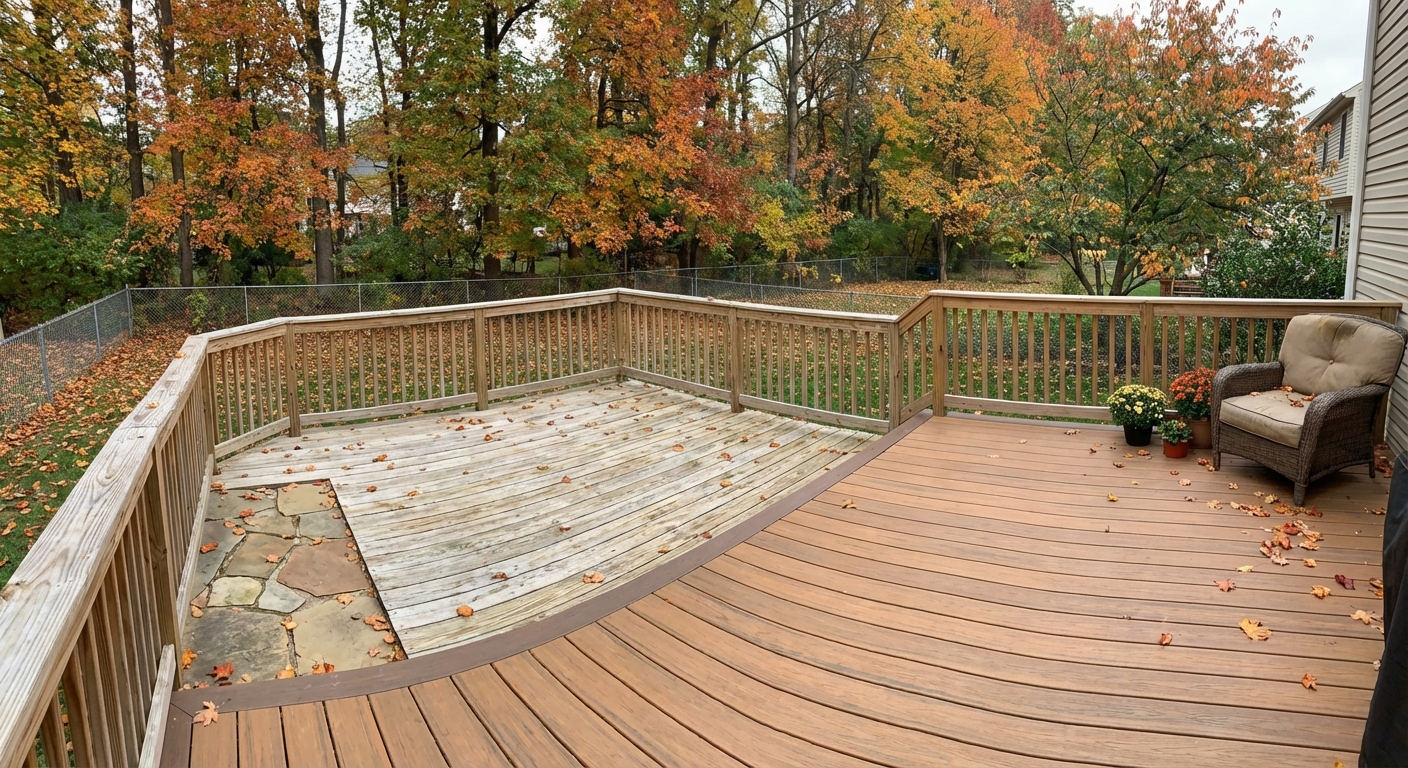
Are you a Maryland homeowner dreaming of a new deck, but overwhelmed by the material choices? You're right to be cautious – Maryland's weather, from sweltering summers to icy winters, demands a durable and resilient decking material. This guide breaks down the best options, considering cost, maintenance, and longevity in the face of Maryland's unique climate challenges.
🌳 Tool Alert: Material Comparison
PT vs Composite vs Cedar. Compare 25-year total cost of ownership including maintenance.
Compare Materials →Understanding Maryland's Decking Challenges
Maryland decks endure a lot. Think about it: hot, humid summers with temperatures reaching 85-95°F, followed by cold winters where temperatures can dip to 20-35°F. You also have significant rainfall and snowfall throughout the year.
🏗️ Planning a deck project?
Get a free manual project review, or visualize your dream deck with AI before requesting quotes.
The biggest threat? Freeze-thaw cycles. Water seeps into the deck material, freezes, expands, and then thaws, causing cracks and deterioration over time. This is especially crucial to consider when building in areas like Baltimore, Annapolis, and Columbia. Proper footings are essential – in most of Maryland, they need to extend below the frost line, which is typically around 30 inches.
If you live near the Chesapeake Bay, the increased moisture and humidity add another layer of complexity. Materials must be resistant to rot, mildew, and insect infestation. Termites are a particular concern in the southern Maryland counties.
<!-- slot:after-intro -->
Decking Material Options for Maryland: Pros, Cons & Costs
Let's explore the most popular decking materials in Maryland and how they stack up against the state's challenging climate:
1. Pressure-Treated (PT) Lumber
- Description: Wood that has been chemically treated to resist rot, decay, and insect infestation.
- Pros: Most affordable option, readily available, can be stained or painted.
- Cons: Prone to warping, cracking, and splintering over time, especially with Maryland's temperature swings. Requires regular maintenance (cleaning, staining, sealing). Not the most aesthetically pleasing option for high-end homes.
- Cost: $28-50 per square foot installed.
- Maryland Suitability: A budget-friendly choice, but requires diligent maintenance to survive Maryland's climate. Consider it a short-to-medium term solution.
2. Composite Decking
- Description: Made from a blend of wood fibers and recycled plastic.
- Pros: Low-maintenance, resists fading, staining, scratching, and insect damage. More durable than pressure-treated lumber. Available in a wide range of colors and styles.
- Cons: More expensive than pressure-treated lumber. Can get hot in direct sunlight. Some cheaper composites can be prone to mold or mildew.
- Cost: $50-80 per square foot installed.
- Maryland Suitability: A solid choice for Maryland homeowners seeking low-maintenance and durability. Look for brands with good warranties and moisture resistance. See our guide to the Best Composite Decking for Maryland Weather: Top Brands Compared.
3. Cedar
- Description: A naturally rot- and insect-resistant wood.
- Pros: Beautiful natural appearance, dimensionally stable (less prone to warping than PT lumber), naturally resistant to decay.
- Cons: Requires regular staining or sealing to maintain its appearance and prevent weathering. More expensive than pressure-treated lumber. Can be susceptible to scratches and dents.
- Cost: $40-60 per square foot installed.
- Maryland Suitability: A good choice for homeowners who appreciate the natural look of wood and are willing to invest in regular maintenance. The natural oils help resist moisture, but sealing is still recommended, especially near the Chesapeake Bay.
4. Trex Decking
- Description: A well-known brand of composite decking, often considered a premium option.
- Pros: Extremely durable, low-maintenance, resists fading, staining, scratching, and insect damage. Offers a wide range of colors, styles, and railing options. Excellent warranties.
- Cons: One of the most expensive composite decking options. Can get hot in direct sunlight.
- Cost: $55-85 per square foot installed.
- Maryland Suitability: A premium choice for Maryland homeowners who want the best in durability and longevity. Trex is well-suited to handle Maryland's weather extremes.
5. Ipe (Brazilian Walnut)
- Description: A very dense and durable hardwood from South America.
- Pros: Naturally resistant to rot, decay, and insect infestation. Extremely durable and long-lasting. Beautiful natural appearance.
- Cons: Very expensive. Difficult to work with (requires special tools and fasteners). Can be prone to fading if not properly oiled.
- Cost: $65-110 per square foot installed.
- Maryland Suitability: An excellent, albeit expensive, choice for Maryland homeowners seeking the ultimate in durability and longevity. Its natural resistance to moisture makes it well-suited for the Chesapeake Bay area.
Cost Comparison Table
| Material | Cost per Sq Ft (Installed) | Maintenance Level | Lifespan (Estimate) | Maryland Suitability |
| ------------------ | -------------------------- | ----------------- | ------------------- | --------------------- |
| Pressure-Treated | $28-50 | High | 10-15 years | Requires diligent care |
| Composite | $50-80 | Low | 25-30+ years | Very Good |
| Cedar | $40-60 | Medium | 15-20 years | Good (with sealing) |
| Trex | $55-85 | Low | 25-30+ years | Excellent |
| Ipe | $65-110 | Medium | 50+ years | Excellent |
Remember, these are average costs. Your actual cost will depend on the size and complexity of your deck, the specific material you choose, and the contractor you hire. Check out our guide on How Much Does a Deck Cost in Maryland? Complete 2026 Guide for a deeper dive into pricing.
Key Considerations for Maryland Deck Building
Beyond the material itself, several factors influence your deck project's success in Maryland:
- Permits: Most Maryland counties require permits for decks larger than 200 square feet or 30 inches above grade. Don't skip this! Baltimore County requires permits through Permits & Development Management, with fees ranging from $150-400. Montgomery County (Bethesda/Silver Spring) permits are handled by DPS and are known for strict requirements. Anne Arundel County (Annapolis) uses Inspections & Permits, while Howard County uses DPZ, which is generally more streamlined. See Do You Need a Deck Permit in Maryland? State & County Rules Explained and Baltimore County Deck Permit: Requirements, Costs & How to Apply for more information.
- HOA Restrictions: If you live in a planned community, Homeowners Association (HOA) rules can significantly impact your deck design and material choices. Always check with your HOA before starting any work. This is especially common in Maryland suburbs like Columbia, Bethesda, and Silver Spring.
- Design: Consider how you'll use your deck. Screened porches are popular in Maryland to combat mosquitoes! Multi-level decks and covered decks provide shelter from the rain.
- Contractor Selection: Choose a reputable and experienced deck builder familiar with Maryland's building codes and climate challenges. Get multiple quotes and check references.
- Best Time to Build: The best months for deck building in Maryland are typically April-June and September-November. Avoid the winter months when the ground can be frozen, making it difficult to pour footings.
<!-- slot:mid-content -->
Making the Right Choice for Your Maryland Home
Ultimately, the best decking material for your Maryland home depends on your budget, lifestyle, and aesthetic preferences.
- For budget-conscious homeowners: Pressure-treated lumber is the most affordable option, but be prepared for regular maintenance.
- For low-maintenance living: Composite decking, especially Trex, offers excellent durability and requires minimal upkeep.
- For natural beauty: Cedar provides a classic look, but requires regular staining and sealing.
- For ultimate longevity: Ipe is a premium choice that can last for decades with proper care.
Before making a final decision, consider these questions:
- How much time are you willing to spend on deck maintenance each year?
- What is your budget for the project?
- What style and aesthetic are you trying to achieve?
- Are there any HOA restrictions or local building codes that you need to consider?
Use PaperPlan (paperplan.app) to visualize your deck with PaperPlan design with different materials and layouts before committing to a contractor. This can help you see how different decking options will look with your home's existing architecture and landscaping.
<!-- slot:before-faq -->
Protecting Your Investment
Regardless of the material you choose, proper installation and maintenance are crucial for ensuring the longevity of your deck.
- Proper Footings: Ensure your contractor installs footings that extend below the frost line (30 inches in most of Maryland).
- Flashing: Proper flashing around ledger boards and posts is essential to prevent water damage to your home.
- Ventilation: Adequate ventilation under the deck helps prevent moisture buildup and rot.
- Regular Cleaning: Clean your deck regularly to remove dirt, debris, and mildew.
- Sealing/Staining: Apply a sealant or stain every 1-3 years to protect wood decks from the elements.
<!-- slot:end -->
Making the right choice now will ensure you enjoy your Maryland deck for years to come!
🎨 Not sure which material to pick?
Upload a photo of your backyard and see exactly how Trex, TimberTech, or cedar would look — free and instant.
Frequently Asked Questions
What is the most durable decking material for Maryland's climate?
Ipe (Brazilian Walnut) is generally considered the most durable decking material, followed closely by high-quality composite decking like Trex. Ipe's natural density and resistance to rot and insects make it incredibly long-lasting. Trex and similar composites offer excellent resistance to weathering and require minimal maintenance.
How often do I need to seal or stain a wood deck in Maryland?
The frequency of sealing or staining depends on the type of wood and the exposure to the elements. Generally, you should aim to seal or stain your wood deck every 1-3 years. Cedar may require more frequent attention, especially if it's exposed to direct sunlight and moisture.
Are composite decks really low-maintenance?
Yes, composite decks are significantly lower maintenance than wood decks. They don't require regular staining or sealing, and they resist fading, staining, and insect damage. However, you should still clean your composite deck regularly to remove dirt and debris.
What are some common deck features in Maryland?
Popular deck features in Maryland include screened porches (to keep out mosquitoes), multi-level decks (to create distinct living spaces), and covered decks (to provide shelter from the rain). Many homeowners also incorporate built-in seating, outdoor kitchens, and fire pits into their deck designs.
How do I find a reputable deck builder in Maryland?
Start by asking friends, family, and neighbors for recommendations. Check online reviews and ratings on sites like Yelp and Google. Get multiple quotes from different contractors and check their references. Ensure the contractor is licensed and insured. Consider using a platform like local.click to find qualified and vetted deck builders in your area.
Deck Cost in Baltimore: Local Pricing Guide for 2026
Maryland Deck Building Codes: Key Requirements for 2026
Best Deck Builders in Bethesda, MD: Local Guide for 2026
📋 Planning a deck project?
Get a free manual project review from our team — no obligation, no spam.
Get Free Project Review →Upload a backyard photo and preview real decking materials with AI — free, instant, no sign-up.
Permits, costs, material comparisons, and questions to ask before requesting quotes — delivered to your inbox.