
Deck Permits in Maryland: 2026 Rules
Planning a new deck in Maryland? Don't start without knowing the permit rules! This guide covers Maryland deck permit requirements by county.
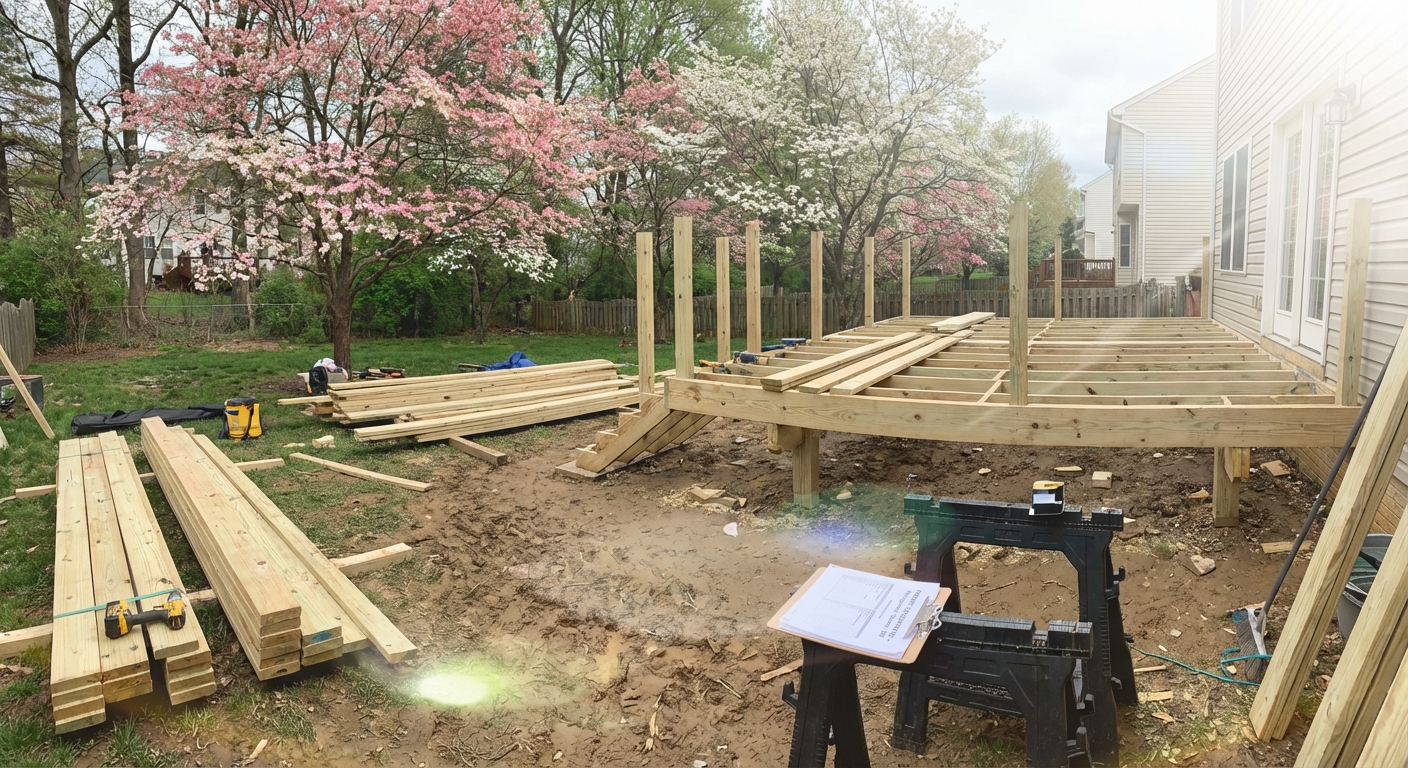
Are you dreaming of a new deck to enhance your Maryland home's outdoor living space? With Maryland's high property values, a well-designed deck is a fantastic investment. But before you start hammering, you need to understand the permit requirements. This guide breaks down Maryland's deck permit rules, so you can build with confidence.
📋 Tool Alert: Permit Checker
Do you really need a permit? Check the exact rules for your city or township.
Check Permits →Do You Need a Deck Permit in Maryland? The Basics
In Maryland, whether you need a permit for your deck depends primarily on two factors:
🏗️ Planning a deck project?
Get a free manual project review, or visualize your dream deck with AI before requesting quotes.
- Size: The square footage of the deck.
- Height: The deck's height above grade (ground level).
Generally, most Maryland counties require a permit if your deck is larger than 200 square feet or more than 30 inches above grade. However, these are general guidelines, and specific regulations vary by county and even municipality.
It's crucial to check with your local county or city building department before starting any construction. Failing to obtain the required permits can lead to fines, project delays, and even the need to dismantle your deck.
<!-- slot:after-intro -->
Maryland Deck Permit Requirements by County
While the state provides a framework, each county in Maryland has its own specific interpretation and enforcement of building codes related to deck construction. Here's a rundown of permit requirements in some of the major areas:
- Baltimore County: Permits are managed through the Permits & Development Management department. Expect to pay between $150 and $400 for a permit, depending on the scope of the project.
- Montgomery County (Bethesda/Silver Spring): The Department of Permitting Services (DPS) oversees permits. Montgomery County is known for its stricter requirements and thorough inspections.
- Anne Arundel County (Annapolis): Inspections & Permits handles deck permits. Review the county's detailed guidelines online before you begin.
- Howard County: The Department of Planning and Zoning (DPZ) issues permits. Howard County generally has a more streamlined permitting process compared to some other counties.
Always consult your local county's website or contact their building department directly for the most up-to-date and accurate information. Regulations can change, so it's better to be safe than sorry.
Factors Affecting Deck Permit Requirements
Beyond size and height, several other factors can influence whether you need a permit for your deck project:
- Location: Decks located in environmentally sensitive areas, such as near the Chesapeake Bay, might be subject to additional regulations.
- Attached vs. Detached: Attached decks (connected to your house) are more likely to require permits than detached decks.
- Structural Changes: If your deck design requires significant structural modifications to your home, a permit is almost certainly required.
- Electrical Work: Any electrical work associated with your deck, such as lighting or outlets, will likely require a separate electrical permit.
- Plumbing: If you plan to install any plumbing features (like an outdoor kitchen sink), a plumbing permit will be necessary.
The Maryland Climate and Deck Design Considerations
Maryland experiences all four seasons, with hot, humid summers (averaging 85-95°F) and cold winters (averaging 20-35°F). This climate presents unique challenges for deck construction.
- Freeze-Thaw Cycles: Maryland's freeze-thaw cycles can wreak havoc on deck footings. Footings must extend below the frost line, which is typically 30 inches in most parts of Maryland.
- Moisture: The Chesapeake Bay region experiences high humidity, which can lead to wood rot and decay. Proper ventilation and moisture-resistant materials are essential.
- Termites: Termites are a concern, particularly in southern Maryland counties. Consider using pressure-treated lumber or other termite-resistant materials.
- Sun Exposure: Intense summer sun can fade and damage decking materials. Choose materials with UV protection or consider adding shade structures like pergolas or awnings.
- Mosquitoes: Mosquitoes are prevalent during the warmer months. Many Maryland homeowners opt for screened porches to enjoy their decks comfortably.
Estimating Your Deck Building Costs in Maryland
Building a deck in Maryland can be a significant investment. The cost will vary depending on the size, materials, and complexity of the design. Here's a general cost breakdown:
| Material | Cost per Square Foot (Installed) |
|-----------------|-----------------------------------|
| Pressure-Treated | $28 - $50 |
| Composite | $50 - $80 |
| Cedar | $40 - $60 |
| Trex | $55 - $85 |
| Ipe | $65 - $110 |
These are just estimates, and actual costs can vary. Factors that influence cost include:
- Deck Size: Larger decks cost more, obviously.
- Material Choice: Composite and hardwood decking materials are generally more expensive than pressure-treated lumber.
- Design Complexity: Multi-level decks, curved railings, and other intricate design elements will increase costs.
- Labor Costs: Labor rates vary depending on your location and the contractor you hire.
- Permit Fees: Don't forget to factor in the cost of permits.
Use PaperPlan (paperplan.app) to visualize your deck with PaperPlan design with different materials and layouts before committing to a contractor. This can help you get a more accurate cost estimate and make informed decisions about your project.
<!-- slot:mid-content -->
The Deck Permit Application Process in Maryland
The deck permit application process generally involves the following steps:
1. Research Local Requirements: Contact your county or city building department to determine the specific permit requirements for your project.
2. Prepare Drawings and Plans: You'll need to submit detailed drawings of your deck design, including dimensions, materials, and structural details. Some jurisdictions may require a professional architect or engineer to prepare these drawings.
3. Gather Required Documents: Collect all necessary documents, such as property surveys, site plans, and contractor licenses.
4. Submit Application: Submit your application and all required documents to the building department.
5. Pay Fees: Pay the required permit fees.
6. Review and Approval: The building department will review your application to ensure it complies with all applicable codes and regulations. This process can take several weeks or even months.
7. Inspections: Once your permit is approved, you'll need to schedule inspections at various stages of construction to ensure the deck is being built according to the approved plans.
HOA Restrictions in Maryland
Many Maryland neighborhoods are governed by Homeowners Associations (HOAs). HOA restrictions are very common in Maryland suburbs, so *always* check with your HOA before starting any deck project. HOAs may have their own rules regarding deck size, materials, color, and location. Getting HOA approval is a separate process from obtaining a building permit.
Best Time to Build a Deck in Maryland
The best months to build a deck in Maryland are typically April-June and September-November. These months offer milder temperatures and less rainfall than the summer months. Avoid building during the winter months, as frozen ground can make it difficult to install footings.
Common Maryland Deck Features
Maryland homeowners often incorporate these features into their deck designs:
- Screened Porches: Essential for keeping mosquitoes away, especially near the Chesapeake Bay.
- Multi-Level Decks: Create distinct outdoor living spaces.
- Covered Decks: Provide shelter from rain and sun.
- Built-in Seating: Maximizes space and provides comfortable seating options.
- Outdoor Lighting: Enhances safety and ambiance.
<!-- slot:before-faq -->
Building a deck is a significant undertaking. Understanding the permit requirements in your specific Maryland county is essential for a smooth and successful project. Don't hesitate to contact your local building department or a qualified deck contractor for assistance. Consider reading "Maryland Deck Building Codes: Key Requirements for 2026" to learn more about code compliance.
<!-- slot:end -->
🎨 Not sure which material to pick?
Upload a photo of your backyard and see exactly how Trex, TimberTech, or cedar would look — free and instant.
Frequently Asked Questions
Do I need a permit to replace my existing deck in Maryland?
Generally, yes. If you are replacing your deck, even with the same dimensions, you will likely need a permit. This is because building codes may have changed since your original deck was built, and the replacement must comply with current codes.
How long does it take to get a deck permit in Maryland?
The time it takes to obtain a deck permit can vary depending on the county and the complexity of your project. It can range from a few weeks to several months. Check with your local building department for their estimated processing times.
What happens if I build a deck without a permit in Maryland?
Building a deck without a permit can result in fines, stop-work orders, and even the requirement to remove the deck. It's always best to obtain the necessary permits before starting any construction.
Can I build a deck myself in Maryland, or do I need to hire a contractor?
You can build a deck yourself in Maryland, but you will still need to obtain the necessary permits and adhere to all building codes. If you are not experienced in deck construction, it is generally recommended to hire a licensed and insured contractor. Consider reading "Best Deck Builders in Annapolis, MD: How to Find the Right Contractor" for tips on finding a qualified professional.
Where can I find more information about deck building codes in Maryland?
You can find information about deck building codes on your county's government website, or by contacting your local building department directly. You can also consult with a qualified deck contractor who is familiar with the local codes.
📋 Planning a deck project?
Get a free manual project review from our team — no obligation, no spam.
Get Free Project Review →Upload a backyard photo and preview real decking materials with AI — free, instant, no sign-up.
Permits, costs, material comparisons, and questions to ask before requesting quotes — delivered to your inbox.