
Composite Deck Cost in Utah (2026)
Planning a new composite deck in Utah for 2026? This guide breaks down costs, materials, labor, and permits to help you budget accurately.
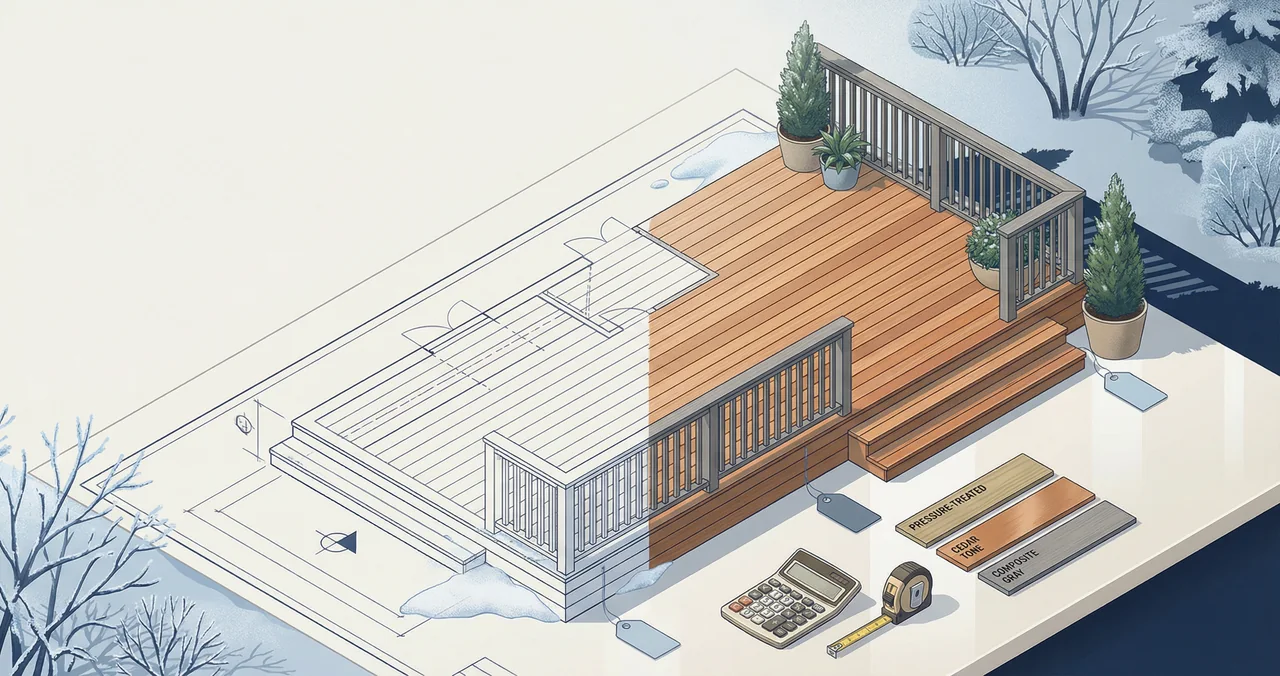
Composite Deck Cost in Utah: What to Budget in 2026
Building a new deck is a fantastic way to enhance your outdoor living space, especially in beautiful Utah. With the diverse climate, from snowy winters to hot summers, choosing the right material is crucial. Composite decking has become increasingly popular due to its durability and low-maintenance nature. This guide will provide a detailed breakdown of composite deck costs in Utah for 2026, helping you budget effectively for your project. We'll cover everything from material prices to labor costs and regional variations.
🏗️ Planning a deck project?
Get a free manual project review, or visualize your dream deck with AI before requesting quotes.
🧮 Tool Alert: Deck Cost Calculator
Estimate your project costs in seconds based on local pricing bands for your area.
Calculate My Cost →Looking for more regional information? Check out our Utah State Decking Hub.
Understanding the Appeal of Composite Decking in Utah
Before diving into the numbers, let's explore why composite decking is a preferred choice for many Utah homeowners. Unlike traditional wood decks, composite decking resists fading, staining, scratching, and mold growth. This is particularly important in Utah, where intense sunlight and significant temperature fluctuations can quickly degrade natural wood. Composite decking also eliminates the need for annual staining and sealing, saving you time and money in the long run. Plus, modern composite options offer a wide variety of colors and textures, mimicking the look of real wood without the maintenance. Consider exploring the Best Decking Material for Utah's Climate: Snow, Sun & Altitude to learn more about how different materials perform in our state.
Key Factors Affecting Composite Deck Costs in Utah
Several factors influence the overall cost of your composite deck project. Understanding these elements will empower you to make informed decisions and avoid unexpected expenses.
Deck Size and Complexity
The most significant cost driver is the size of your deck. A larger deck requires more materials and labor, directly increasing the price. Complexity also plays a role. Decks with multiple levels, curved designs, or built-in features like benches and railings will be more expensive to construct.
Composite Decking Material Type and Brand
Composite decking is available in various grades and brands, each with different price points. Entry-level composites are typically less expensive but may not offer the same level of durability or aesthetic appeal as premium options. Brands like Trex, TimberTech, and Deckorators are popular choices, known for their quality and warranties, but they come at a higher cost. Solid core composite decking tends to be more expensive than hollow core options.
Labor Costs for Deck Installation in Utah
Labor costs vary depending on the contractor's experience, the project's complexity, and your location within Utah. Generally, labor costs account for a significant portion of the overall deck cost, often 30% to 50%. Expect higher labor rates in areas like Salt Lake City and Park City compared to more rural locations. Finding the Best Deck Builders in Salt Lake City: How to Find the Right Contractor or your specific area is crucial to getting accurate quotes.
Permits and Inspections
Building permits are required for most deck projects in Utah. The cost of a permit varies depending on your city or county. Failure to obtain the necessary permits can result in fines and delays. Also, consider the costs associated with inspections that occur during and after the building process. See our guide on Do You Need a Deck Permit in Utah? State & County Rules for detailed information.
Site Preparation and Demolition
If you're replacing an existing deck, demolition and site preparation costs will need to be factored into your budget. Removing an old deck can be labor-intensive, and disposing of the materials can incur additional fees. If the ground is uneven or requires leveling, this will also add to the cost.
Railings, Stairs, and Other Features
The type of railings you choose significantly impacts the overall cost. Composite railings are more expensive than wood railings but offer better durability and require less maintenance. Stairs also add to the cost, especially if you need multiple sets or complex designs. Other features like built-in lighting, benches, or pergolas will further increase the project's price.
Average Composite Deck Costs in Utah for 2026
Now, let's look at some average cost estimates for composite decks in Utah in 2026. These are estimates only, and actual costs can vary significantly based on the factors mentioned above.
- Basic Composite Deck (Small, Simple Design): \$30 to \$45 per square foot installed. This typically includes entry-level composite decking, basic railings, and minimal site preparation.
- Mid-Range Composite Deck (Average Size, Standard Features): \$45 to \$65 per square foot installed. This includes mid-grade composite decking, composite railings, and standard stairs.
- High-End Composite Deck (Large, Complex Design, Premium Features): \$65 to \$90+ per square foot installed. This includes premium composite decking, custom railings, built-in lighting, and other luxury features.
Example:
A 200 square foot basic composite deck could cost between \$6,000 and \$9,000 installed. A 400 square foot mid-range composite deck could cost between \$18,000 and \$26,000 installed. A larger, more elaborate deck could easily exceed \$30,000.
Regional Cost Variations within Utah
Deck costs can vary depending on your location within Utah. Here's a general overview:
- Salt Lake City and Surrounding Areas: Expect higher labor costs and potentially higher material costs due to increased demand. Deck Cost in Salt Lake City: Local Pricing for 2026 will provide more detailed pricing information.
- Park City and Summit County: This area tends to have the highest deck costs due to the affluent market and complex terrain.
- Utah Valley (Provo, Orem): Costs are generally slightly lower than in Salt Lake City but still relatively high due to the growing population. Check out the Deck Cost in Provo & Orem: Utah Valley Pricing Guide for specific pricing.
- Rural Areas (e.g., Southern Utah): Labor costs may be lower, but material costs could be higher due to transportation fees.
Breaking Down the Costs: Materials vs. Labor
To give you a clearer picture, let's break down the typical costs for a mid-range composite deck:
- Materials (Composite Decking, Railings, Fasteners, Framing Lumber): 50% - 70% of the total cost. This can vary depending on the brand and quality of materials chosen.
- Labor (Installation, Site Preparation, Demolition): 30% - 50% of the total cost. This will depend on the contractor's rates and the complexity of the project.
- Permits and Inspections: Typically 1% - 3% of the total cost, but can vary significantly.
Tips for Saving Money on Your Composite Deck Project
- Get Multiple Quotes: Obtain quotes from at least three different contractors to compare prices and services.
- Choose a Simpler Design: Opting for a simpler rectangular deck instead of a multi-level or curved design can save you a significant amount of money.
- Consider Off-Season Installation: Deck builders may offer discounts during the off-season (typically late fall and winter) when demand is lower. However, weather conditions in Utah may delay the project.
- DIY Some of the Work: If you're comfortable with basic construction tasks, you could save money by handling site preparation or demolition yourself. However, ensure you have the necessary skills and tools.
- Shop Around for Materials: Compare prices from different suppliers to find the best deals on composite decking and other materials.
- Consider Financing Options: If you're unable to pay for the entire project upfront, explore financing options such as home equity loans or personal loans.
Planning Your Composite Deck Project Timeline
The timeline for building a composite deck can vary depending on the size and complexity of the project, as well as the contractor's availability and weather conditions. A small, simple deck could take a week or two to complete, while a larger, more complex deck could take several weeks or even months.
- Planning and Design: 1-2 weeks.
- Permitting: 2-6 weeks (depending on the city or county).
- Material Ordering and Delivery: 1-2 weeks.
- Construction: 1-4 weeks (depending on the size and complexity of the deck).
The Future of Composite Decking Costs in Utah
While it's difficult to predict the future with certainty, several factors are likely to influence composite decking costs in Utah in the coming years. Inflation, supply chain disruptions, and increased demand could all contribute to higher prices. However, advancements in manufacturing technology and increased competition among composite decking brands could help to mitigate these increases. Also consider the potential for new composite material blends, or even bio-degradable composite options, that may come to market and affect overall pricing.
🎨 Not sure which material to pick?
Upload a photo of your backyard and see exactly how Trex, TimberTech, or cedar would look — free and instant.
Frequently Asked Questions
What is the lifespan of a composite deck in Utah's climate?
A well-maintained composite deck can last 25-30 years or even longer in Utah. The extreme weather conditions can test the durability of any material, but composite decks are designed to withstand these challenges better than wood.
Does composite decking get hot in the Utah sun?
Yes, composite decking can get hot in direct sunlight, especially darker colors. However, some newer composite products are designed to reflect heat better. Consider lighter colors or composite materials with heat-reflective technology to minimize this issue.
How much does it cost to maintain a composite deck?
One of the biggest advantages of composite decking is its low maintenance. Typically, you'll only need to clean it with soap and water a few times a year to remove dirt and debris. Unlike wood decks, you won't need to stain, seal, or sand it, saving you significant time and money.
Are there any specific building code requirements for decks in Utah?
Yes, decks must meet certain building code requirements related to structural integrity, safety, and accessibility. These requirements vary depending on the city or county. Always check with your local building department to ensure your deck complies with all applicable codes.
Can I install a composite deck myself, or should I hire a professional?
While it's possible to install a composite deck yourself, it's generally recommended to hire a professional contractor. Deck construction involves specialized skills and knowledge, and improper installation can compromise the deck's structural integrity and safety. A professional contractor can also ensure that the deck complies with all building codes and regulations.
What are the environmental benefits of using composite decking?
Composite decking is often made from recycled materials, such as plastic bottles and wood fibers, making it a more environmentally friendly option than traditional wood decking. It also eliminates the need for harsh chemicals used to treat and maintain wood decks.
📋 Planning a deck project?
Get a free manual project review from our team — no obligation, no spam.
Get Free Project Review →Upload a backyard photo and preview real decking materials with AI — free, instant, no sign-up.
Permits, costs, material comparisons, and questions to ask before requesting quotes — delivered to your inbox.