
Deck Cost in Provo & Orem (2026)
Dreaming of a new deck in Provo or Orem? This guide breaks down Utah Valley deck costs, materials, permits, and finding the right contractor.
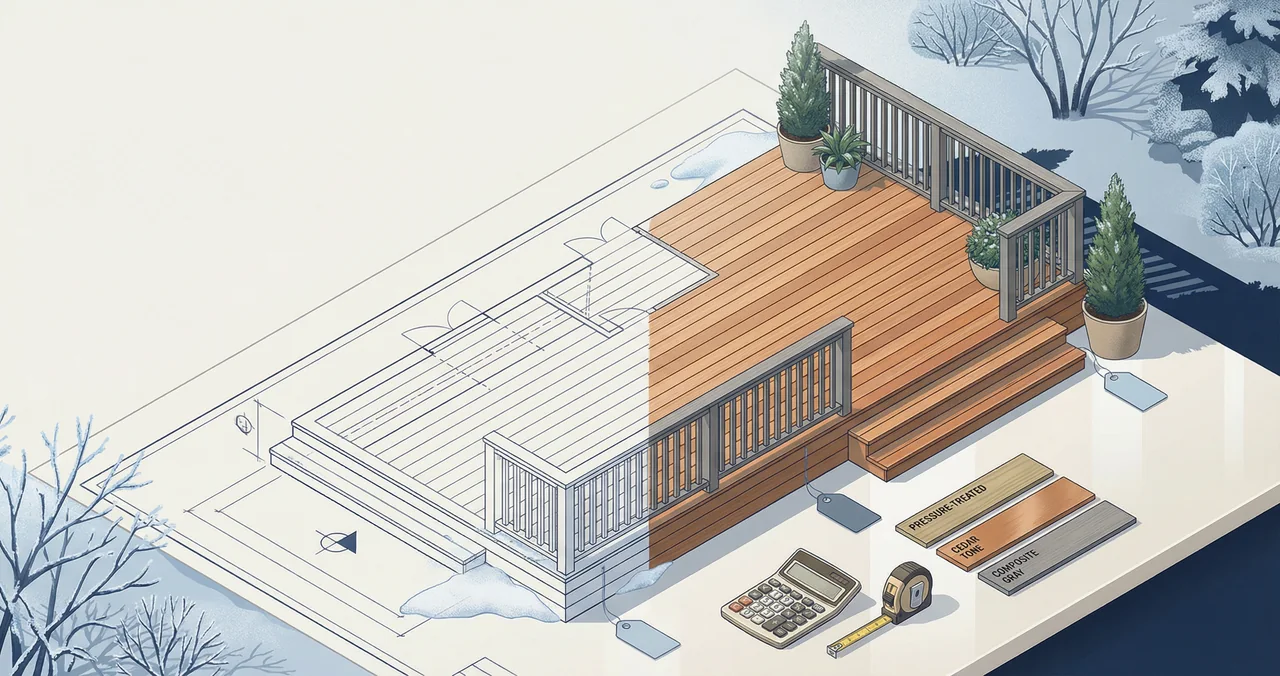
Deck Cost in Provo & Orem: Utah Valley Pricing Guide
Building a deck in Provo or Orem can dramatically improve your outdoor living space and increase your home's value. However, understanding the costs involved is crucial for planning your project. This comprehensive guide will walk you through everything you need to know about deck pricing in Utah Valley, considering local factors like climate, building codes, popular neighborhoods, and material choices. We'll equip you with the knowledge to confidently budget for your dream deck.
🏗️ Planning a deck project?
Get a free manual project review, or visualize your dream deck with AI before requesting quotes.
🧮 Tool Alert: Deck Cost Calculator
Estimate your project costs in seconds based on local pricing bands for your area.
Calculate My Cost →Looking for more regional information? Check out our Utah State Decking Hub.
Understanding the Factors Influencing Deck Cost in Utah Valley
Several factors contribute to the overall cost of building a deck in Provo and Orem. These include:
- Deck Size and Complexity: The larger and more complex the deck design, the higher the cost. Multi-level decks, curved designs, and intricate railing systems will naturally require more materials and labor.
- Decking Material: The choice of decking material significantly impacts the price. Pressure-treated lumber is the most affordable option, while composite decking and exotic hardwoods are considerably more expensive.
- Railing Material: Similar to decking, railing materials vary widely in cost. Wood railings are generally the least expensive, followed by aluminum, composite, and steel cable railings.
- Permits and Inspections: Obtaining the necessary permits from Provo or Orem city is essential and involves fees. Inspections throughout the construction process are also required. Do You Need a Deck Permit in Utah? State & County Rules can offer more insights on this subject.
- Labor Costs: Labor costs vary depending on the contractor's experience, expertise, and the complexity of the project.
- Site Preparation: If your yard requires significant leveling, grading, or tree removal, this will add to the overall cost.
- Features and Add-ons: Features like built-in seating, stairs, lighting, and pergolas will increase the project's price.
- Location: Even within Utah Valley, costs can vary slightly depending on the specific neighborhood due to factors like accessibility and contractor demand.
- Season: Building a deck during peak season (spring and summer) might mean slightly higher labor costs due to increased demand.
Average Deck Cost in Provo & Orem: A Breakdown
While pinpointing an exact cost is difficult without knowing the specifics of your project, here's a general breakdown of average deck costs in Provo and Orem:
- Pressure-Treated Lumber Deck: Expect to pay between $15 and $25 per square foot. This is the most economical option, suitable for homeowners on a budget. A 16' x 20' (320 sq ft) deck could cost between $4,800 and $8,000.
- Composite Deck: Composite decking typically ranges from $30 to $60 per square foot. While more expensive upfront, composite decking offers superior durability and requires less maintenance. The same 16' x 20' deck could cost between $9,600 and $19,200. For more details, review Composite Deck Cost in Utah: What to Budget in 2026.
- Hardwood Deck: Exotic hardwoods like Ipe or Tigerwood can cost $40 to $75+ per square foot. These decks offer a luxurious look and exceptional durability but require specialized installation and maintenance. That same 16' x 20' deck could cost between $12,800 and $24,000+.
These prices are estimates and can vary significantly based on the factors mentioned earlier. It's always best to obtain multiple quotes from reputable deck builders in the Provo and Orem area to get an accurate estimate for your specific project.
Decking Material Options and Their Impact on Cost
Choosing the right decking material is a critical decision that impacts both the cost and the longevity of your deck. Here’s a closer look at some popular options:
- Pressure-Treated Lumber:
* Pros: Most affordable option, readily available, easy to work with.
* Cons: Requires regular maintenance (staining or sealing), susceptible to rot and insect damage, can splinter and warp over time.
* Cost: $15 - $25 per square foot (installed)
- Cedar:
* Pros: Naturally resistant to rot and insects, aesthetically pleasing, less prone to warping than pressure-treated lumber.
* Cons: More expensive than pressure-treated lumber, requires regular staining or sealing to maintain its appearance.
* Cost: $20 - $35 per square foot (installed)
- Redwood:
* Pros: Beautiful natural color, naturally resistant to rot and insects, durable.
* Cons: More expensive than cedar, requires regular staining or sealing to maintain its appearance, supply can be limited.
* Cost: $25 - $40 per square foot (installed)
- Composite Decking (e.g., Trex, TimberTech):
* Pros: Low maintenance, highly durable, resistant to rot, insects, and fading, available in various colors and styles, often made from recycled materials.
* Cons: More expensive than wood, can get hot in direct sunlight, can look less natural than wood.
* Cost: $30 - $60 per square foot (installed)
- Exotic Hardwoods (e.g., Ipe, Tigerwood):
* Pros: Exceptionally durable, beautiful natural grain, resistant to rot and insects, long lifespan.
* Cons: Most expensive option, requires specialized installation, can be difficult to work with, may require oiling to maintain its appearance.
* Cost: $40 - $75+ per square foot (installed)
Consider Utah's climate when making your choice. Best Decking Material for Utah's Climate: Snow, Sun & Altitude offers valuable insights. Provo and Orem experience hot, dry summers and cold, snowy winters, so selecting a material that can withstand these conditions is crucial.
Navigating Provo & Orem Deck Building Codes and Permits
Before starting your deck project, it's essential to obtain the necessary permits from the City of Provo or the City of Orem, depending on your location. Building codes ensure that your deck is structurally sound and meets safety standards.
Here's a general overview of the permit process:
1. Application: Submit a permit application to the city's building department, including detailed plans of your deck design, including dimensions, materials, and foundation details.
2. Plan Review: The city's building department will review your plans to ensure they comply with local building codes.
3. Permit Issuance: Once your plans are approved, you'll receive a building permit.
4. Inspections: During construction, the city's building inspector will conduct inspections to ensure the deck is being built according to the approved plans and building codes. Inspections typically include foundation inspection, framing inspection, and final inspection.
Key code requirements to be aware of:
- Footings: Decks typically require concrete footings that extend below the frost line to prevent heaving due to freezing and thawing.
- Post Height & Spacing: Deck posts must be properly sized and spaced to support the deck's load.
- Railing Height & Spacing: Railings must be at least 36 inches high and have a maximum opening of 4 inches to prevent falls.
- Stair Requirements: Stairs must meet specific requirements for rise and run, and handrails are required.
- Guardrails: Guardrails are required for decks that are a certain height above the ground.
Failing to obtain the necessary permits or comply with building codes can result in fines, delays, and even the requirement to tear down and rebuild your deck.
Finding the Right Deck Builder in Provo & Orem
Choosing the right deck builder is crucial for a successful project. Here are some tips for finding a reputable contractor in Provo or Orem:
- Get Referrals: Ask friends, family, and neighbors for recommendations.
- Check Online Reviews: Read online reviews on sites like Google, Yelp, and Angie's List.
- Verify Licensing and Insurance: Ensure the contractor is licensed and insured in Utah. You can verify licenses through the Utah Division of Occupational and Professional Licensing (DOPL).
- Get Multiple Quotes: Obtain quotes from at least three different contractors.
- Review Portfolios: Ask to see examples of the contractor's previous work.
- Check References: Contact previous clients to ask about their experience with the contractor.
- Get a Written Contract: Ensure the contract clearly outlines the scope of work, materials, payment schedule, and warranty information.
- Trust Your Gut: Choose a contractor you feel comfortable communicating with and who you trust to deliver a high-quality product.
Remember, the lowest bid isn't always the best choice. Consider the contractor's experience, reputation, and quality of work when making your decision. You can find more advice on this topic at Best Deck Builders in Salt Lake City: How to Find the Right Contractor.
Deck Cost Considerations in Specific Provo & Orem Neighborhoods
While the general pricing guidelines above apply across Utah Valley, some neighborhood-specific factors can influence costs:
- Provo's Historic Districts (e.g., Downtown, Franklin): Homes in these areas may have unique architectural styles that require more custom deck designs, potentially increasing costs. Access can also be limited.
- Orem's Foothills (e.g., Northridge, Cascade): Properties on sloped lots may require more extensive site preparation and foundation work, adding to the overall cost.
- Newer Developments (e.g., Vineyard, Saratoga Springs): These areas often have more uniform lot sizes and building codes, potentially simplifying the permit process and construction. However, HOA regulations might impose restrictions on deck design and materials.
Climate Considerations for Deck Building in Utah Valley
Provo and Orem experience a semi-arid climate with distinct seasons. Here's how the climate impacts deck building:
- Hot Summers: Temperatures can reach well into the 90s, so choosing a decking material that doesn't get excessively hot underfoot is important.
- Cold Winters: Snowfall is common, so selecting a decking material that is resistant to moisture and freeze-thaw cycles is crucial.
- UV Exposure: Utah's high altitude means increased UV exposure, which can cause fading and degradation of decking materials over time. Choose materials with UV protection or plan to regularly stain or seal your deck.
🎨 Not sure which material to pick?
Upload a photo of your backyard and see exactly how Trex, TimberTech, or cedar would look — free and instant.
Frequently Asked Questions
How long does it take to build a deck in Provo or Orem?
The timeline depends on the deck's size and complexity. A simple, ground-level deck can typically be completed in 1-2 weeks, while a larger, multi-level deck with custom features can take 4-6 weeks or longer. Permitting can also add to the timeline.
What is the best time of year to build a deck in Utah Valley?
The best time to build a deck in Provo or Orem is typically during the spring or fall. The weather is mild, and contractors are generally less busy than in the summer. However, deck building can be done year-round, weather permitting.
Do I need to hire an architect or designer for my deck project?
For simple decks, you may not need an architect or designer. However, for complex designs, decks exceeding certain height restrictions, or decks requiring structural modifications to your home, hiring a professional is recommended.
How can I save money on my deck project?
Consider using pressure-treated lumber, opting for a simple design, and doing some of the work yourself (if you're comfortable and have the necessary skills). Get multiple quotes and compare prices. Also, plan your project during the off-season for potential discounts.
What type of maintenance is required for a deck in Utah?
Maintenance depends on the decking material. Pressure-treated lumber requires regular staining or sealing every 1-2 years. Composite decking requires less maintenance but should be cleaned periodically. Hardwood decks may require oiling to maintain their appearance. Always follow the manufacturer's recommendations for maintenance.
What happens if I build a deck without a permit in Provo/Orem?
Building a deck without a permit can result in fines, stop-work orders, and even the requirement to remove the deck. It's always best to obtain the necessary permits before starting any construction project.
📋 Planning a deck project?
Get a free manual project review from our team — no obligation, no spam.
Get Free Project Review →Upload a backyard photo and preview real decking materials with AI — free, instant, no sign-up.
Permits, costs, material comparisons, and questions to ask before requesting quotes — delivered to your inbox.