
Deck Cost in Utah: 2026 Price Guide
Planning a new deck in Utah? This 2026 guide covers deck costs, materials, permits, and finding the best local contractor.
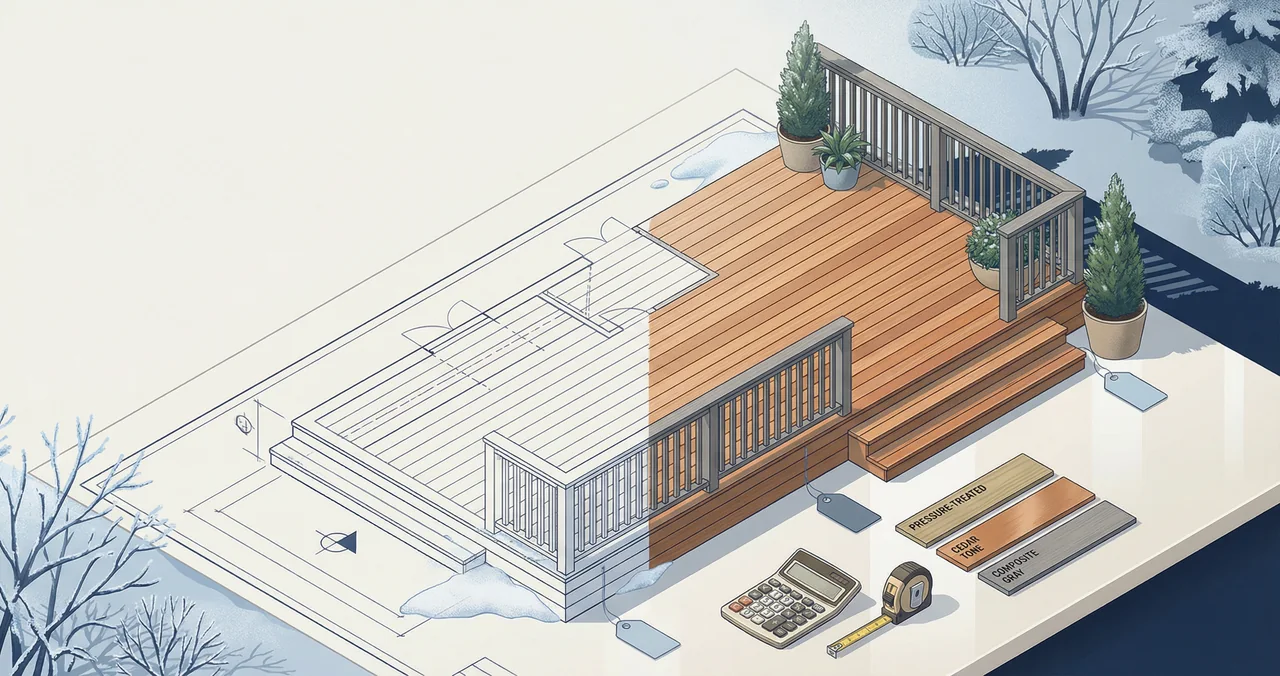
How Much Does a Deck Cost in Utah? Complete 2026 Guide
Building a new deck is a fantastic way to enhance your outdoor living space and boost your home's value. Whether you're envisioning summer barbecues, relaxing evenings under the stars, or simply a more functional backyard, a deck is a worthwhile investment. But one of the first questions homeowners ask is: "How much will it cost?"
🏗️ Planning a deck project?
Get a free manual project review, or visualize your dream deck with AI before requesting quotes.
🧮 Tool Alert: Deck Cost Calculator
Estimate your project costs in seconds based on local pricing bands for your area.
Calculate My Cost →Looking for more regional information? Check out our Utah State Decking Hub.
In this comprehensive guide, we'll break down the factors influencing deck costs in Utah for 2026, provide realistic price ranges, discuss material options suitable for Utah's climate, and offer tips for finding the right contractor for your project. We'll focus specifically on factors impacting costs in Utah, including climate considerations and local labor rates.
Understanding Deck Cost Factors in Utah
Several elements contribute to the overall cost of building a deck in Utah. Understanding these factors will help you create a realistic budget and make informed decisions throughout the process.
- Deck Size and Complexity: This is the most significant factor. A larger deck requires more materials and labor, directly impacting the price. Complex designs with multiple levels, curves, or built-in features like benches or planters will also increase costs. Think about the square footage carefully. A 12x12 deck (144 sq ft) will cost significantly less than a 20x20 deck (400 sq ft).
- Decking Material: The type of decking material you choose plays a crucial role. Options range from pressure-treated lumber (the most affordable) to composite decking (durable and low-maintenance) and exotic hardwoods (high-end aesthetic). The cost per square foot of each material varies considerably. Pressure treated lumber can range from $3-$5 per square foot for materials, while composite decking can range from $9-$15 per square foot, and exotic hardwoods can reach $15-$30+ per square foot.
- Framing Material: While the decking is what you see, the framing provides the structural support. Pressure-treated lumber is commonly used for framing, but steel framing is also an option, offering superior strength and longevity, especially in areas prone to moisture or seismic activity. Steel framing will add to the overall cost.
- Railing System: Railing costs depend on the material (wood, composite, metal, glass), design, and length required. Simple wood railings are the most economical, while intricate metal or glass railings add significant expense. Expect to budget $50 to $200+ per linear foot for railing, depending on the material and complexity.
- Permits and Inspections: Obtaining the necessary permits is essential for any deck project. Permit fees vary by city and county in Utah. Failing to secure permits can result in fines and the need to dismantle your deck. See Do You Need a Deck Permit in Utah? State & County Rules for detailed permit information. Expect to pay between $100 and $500 for permits, depending on the scope of the project and your location.
- Labor Costs: Labor rates vary depending on the contractor's experience, location, and the complexity of the project. Utah's labor costs are generally in line with the national average, but rates can be higher in areas like Park City or Salt Lake City due to increased demand. Expect to pay between $50 and $100 per hour for experienced deck builders in Utah.
- Site Conditions: Challenging site conditions, such as sloped terrain, rocky soil, or the need to remove existing structures, can increase labor costs and require specialized equipment. These factors can add hundreds or even thousands of dollars to the project.
- Additional Features: Built-in benches, stairs, lighting, pergolas, and other features will increase the overall cost. Consider these additions early in the planning process to ensure they fit within your budget.
- Demolition Costs: If you're replacing an existing deck, demolition and disposal costs will need to be factored in. This can range from a few hundred dollars for a small deck to over a thousand dollars for a large, complex structure.
Average Deck Costs in Utah for 2026: Material Breakdown
To give you a clearer idea of the costs involved, let's look at average deck costs in Utah for 2026 based on different decking materials:
- Pressure-Treated Lumber: This is the most affordable option. Expect to pay between $15 to $25 per square foot, including materials and labor. This is a good choice for budget-conscious homeowners, but requires regular maintenance like staining and sealing. The low initial investment makes it an attractive option for many Utah residents.
- Cedar: Cedar offers a natural look and is more resistant to rot and insects than pressure-treated lumber. Expect to pay between $25 to $35 per square foot, including materials and labor. While more expensive upfront, cedar requires less maintenance than pressure-treated lumber.
- Composite Decking: Composite decking is a popular choice for its durability, low maintenance, and resistance to fading, staining, and scratching. Expect to pay between $35 to $60 per square foot, including materials and labor. Brands like Trex, TimberTech, and Deckorators are common choices. Consider exploring Composite Deck Cost in Utah: What to Budget in 2026 for a more in-depth analysis.
- Exotic Hardwoods (Ipe, Mahogany): These hardwoods offer a luxurious look and exceptional durability. Expect to pay between $60 to $100+ per square foot, including materials and labor. Exotic hardwoods are a premium option for homeowners seeking the best in aesthetics and longevity.
Example Deck Cost Scenarios (Including materials and labor):
- 10x12 Pressure-Treated Lumber Deck: $1,800 - $3,000
- 12x16 Cedar Deck: $4,800 - $6,720
- 16x20 Composite Deck: $11,200 - $19,200
- 20x20 Exotic Hardwood Deck: $24,000 - $40,000+
These are just estimates, and the actual cost will vary depending on the specific factors mentioned earlier.
Utah-Specific Considerations Affecting Deck Costs
Utah's unique climate and terrain can influence deck costs. Here are some factors to keep in mind:
- Snow Load: Utah experiences significant snowfall, especially in the mountains. Decks must be designed to withstand heavy snow loads, which may require stronger framing and additional support. This can increase material costs. Discuss snow load requirements with your contractor.
- Altitude: Higher altitudes experience more intense UV radiation, which can accelerate the fading and degradation of some decking materials. Choose materials that are specifically designed for high-altitude environments or consider UV-resistant coatings.
- Extreme Temperature Fluctuations: Utah experiences hot summers and cold winters, which can cause expansion and contraction of decking materials. Choose materials that are resistant to warping and cracking due to temperature changes. Composite decking and certain hardwoods are generally more stable than pressure-treated lumber in these conditions.
- Soil Conditions: Rocky or unstable soil can make it more difficult to install deck footings, increasing labor costs. Soil testing may be necessary to determine the appropriate footing design.
- Wildfire Risk: In some areas of Utah, wildfire risk is a concern. Consider using fire-resistant decking materials and building practices to reduce the risk of fire damage.
Choosing the Best Decking Material for Utah's Climate: Snow, Sun & Altitude is vital for long-term durability.
Finding the Right Deck Builder in Utah
Selecting the right deck builder is crucial for a successful project. Here are some tips for finding a reputable and qualified contractor:
- Get Multiple Quotes: Obtain quotes from at least three different contractors to compare pricing and services. Don't just focus on the lowest price; consider the contractor's experience, reputation, and the quality of their work.
- Check References and Reviews: Ask for references from previous clients and check online reviews on sites like Yelp, Google, and the Better Business Bureau.
- Verify Licensing and Insurance: Ensure the contractor is licensed and insured to operate in Utah. This protects you from liability in case of accidents or damage during the project.
- Review the Contract Carefully: Before signing a contract, carefully review all terms and conditions, including the scope of work, payment schedule, warranty information, and cancellation policy.
- Ask Questions: Don't hesitate to ask the contractor questions about their experience, qualifications, and approach to the project. A good contractor will be happy to answer your questions and address your concerns.
- Local Expertise: Consider contractors familiar with Utah building codes and the specific challenges of building decks in the region. Check out resources to find the Best Deck Builders in Salt Lake City: How to Find the Right Contractor
Tips for Saving Money on Your Deck Project
- Keep it Simple: A basic rectangular deck will be less expensive than a complex design.
- Choose Affordable Materials: Pressure-treated lumber is the most budget-friendly option.
- DIY Some of the Work: If you're handy, you can save money by handling some of the tasks yourself, such as demolition or painting. However, leave the structural work to the professionals.
- Build During the Off-Season: Contractors may offer lower rates during the off-season (typically fall and winter) when demand is lower.
- Compare Material Prices: Shop around for the best prices on decking materials.
Budgeting for Your Deck Project
Create a detailed budget that includes all anticipated costs, such as materials, labor, permits, demolition, and any additional features. Add a contingency fund (10-15% of the total cost) to cover unexpected expenses. It's always better to overestimate than underestimate the cost of your deck project.
🎨 Not sure which material to pick?
Upload a photo of your backyard and see exactly how Trex, TimberTech, or cedar would look — free and instant.
Frequently Asked Questions
Do I need a permit to build a deck in Utah?
Yes, in most cases, you will need a permit to build a deck in Utah. The specific requirements vary by city and county, so it's essential to check with your local building department. Decks above a certain height (typically 30 inches) or exceeding a certain square footage usually require a permit.
How long does it take to build a deck?
The timeline for building a deck depends on the size, complexity, and weather conditions. A small, simple deck may take a week or two to build, while a larger, more complex deck can take several weeks or even months. Discuss the timeline with your contractor and factor in potential delays due to weather or material availability.
What is the best decking material for Utah's climate?
Composite decking is a popular choice for Utah's climate due to its durability, low maintenance, and resistance to fading and warping. Cedar is another good option for its natural look and resistance to rot and insects. Pressure-treated lumber is the most affordable option, but requires regular maintenance.
How do I maintain my deck?
The maintenance requirements depend on the decking material. Pressure-treated lumber requires regular cleaning, staining, and sealing. Cedar requires less maintenance, but may need to be treated with a preservative. Composite decking is virtually maintenance-free, but should be cleaned periodically to remove dirt and debris.
What are the benefits of building a deck?
A deck can enhance your outdoor living space, increase your home's value, and provide a space for entertaining, relaxing, and enjoying the outdoors.
Can I build a deck myself?
While it's possible to build a deck yourself, it's generally recommended to hire a professional contractor, especially for larger or more complex projects. Deck building requires specialized skills and knowledge, and improper construction can lead to structural problems and safety hazards. Hiring a professional ensures the deck is built to code and meets all safety requirements.
📋 Planning a deck project?
Get a free manual project review from our team — no obligation, no spam.
Get Free Project Review →Upload a backyard photo and preview real decking materials with AI — free, instant, no sign-up.
Permits, costs, material comparisons, and questions to ask before requesting quotes — delivered to your inbox.