
Deck Permits in Salt Lake City (2026)
Need a deck permit in Salt Lake City? Learn requirements, fees, building codes, setback rules, and how to apply. Updated for 2026 with local SLC details.
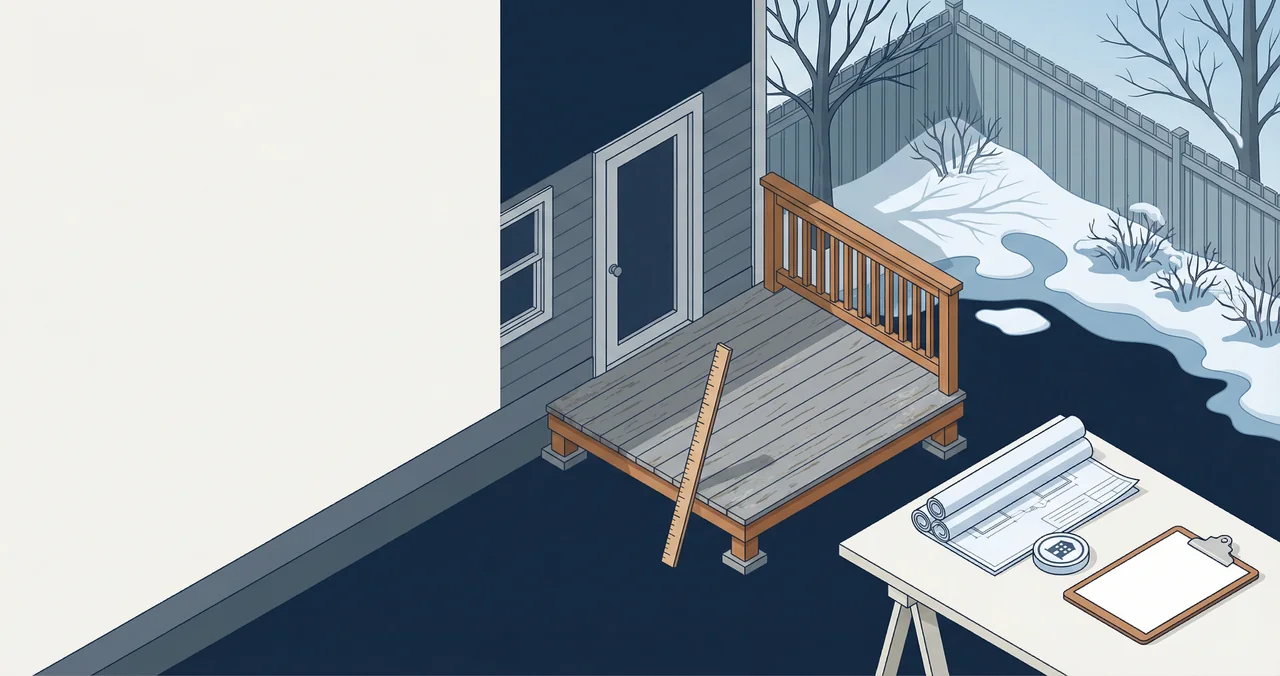
Deck Permits in Salt Lake City: Requirements, Costs & How to Apply in 2026
Building a deck in Salt Lake City without pulling the right permits can cost you thousands in fines — or worse, force you to tear the whole thing down. Before you break ground, here's exactly what Salt Lake City requires, what it costs, and how to navigate the process without delays.
🏗️ Planning a deck project?
Get a free manual project review, or visualize your dream deck with AI before requesting quotes.
📋 Tool Alert: Permit Checker
Do you really need a permit? Check the exact rules for your city or township.
Check Permits →Looking for more regional information? Check out our Utah State Decking Hub.
<!-- slot:after-intro -->
Do You Need a Permit in Salt Lake City?
Short answer: almost certainly yes.
Salt Lake City's Building Services division requires a building permit for any deck that is more than 30 inches above grade or exceeds 200 square feet, regardless of height. That covers the vast majority of backyard deck projects along the Wasatch Front.
Here's the breakdown:
- Deck over 30 inches above grade → permit required
- Deck over 200 sq ft (even at ground level) → permit required
- Attached to the house → permit required (ledger board connections affect structural integrity)
- Small ground-level platform under 200 sq ft and under 30 inches → may be exempt, but confirm with Building Services first
Even if your project seems small, call Salt Lake City's Building and Development Services at (801) 535-6000 before assuming you're exempt. Zoning overlays in neighborhoods like the Avenues, Sugar House, and Capitol Hill can add restrictions that don't apply citywide.
A freestanding deck under 200 square feet that sits close to the ground might not need a building permit, but you may still need to meet setback requirements. If you're unsure whether your project qualifies, understanding the differences between attached and freestanding decks can help clarify what triggers permit requirements.
When a Permit Is Required
Beyond the basic thresholds above, several project types in Salt Lake City trigger permit requirements that homeowners overlook:
Structural Changes
- Adding a roof or pergola cover over an existing deck
- Installing built-in seating, planters, or storage that alters the deck's footprint
- Converting a porch or balcony into a deck
Electrical & Plumbing
- Running electrical wiring for lighting or outlets (requires a separate electrical permit)
- Adding a hot tub to a deck (structural load plus electrical and sometimes plumbing permits)
- Installing gas lines for a built-in grill
Significant Repairs
- Replacing structural components like joists, beams, or posts on an existing deck
- Changing the footprint or height of a deck during renovation
Salt Lake City follows the International Residential Code (IRC) as adopted by the State of Utah, with local amendments. The 2021 IRC is the current adopted edition — don't rely on older code references you find online.
Permit Fees & Processing Time
Salt Lake City's permit fees are based on project valuation — the estimated cost of your deck build, including materials and labor.
Typical Fee Ranges
| Project Size | Estimated Cost | Permit Fee (approx.) |
|---|---|---|
| Small deck (under 200 sq ft) | $5,000–$9,000 | $150–$250 |
| Mid-size deck (200–400 sq ft) | $10,000–$25,000 | $250–$500 |
| Large deck (400+ sq ft) | $25,000–$60,000 | $500–$900+ |
Additional fees to budget for:
- Plan review fee: typically included in the building permit fee
- Electrical permit: $75–$150 if you're adding outlets or lighting
- Plumbing permit: $75–$150 if applicable (hot tub drainage, etc.)
- Re-inspection fee: $75–$100 per failed inspection
Processing Timeline
- Over-the-counter permits (simple projects): same day to 3–5 business days
- Plan review permits (most deck projects): 2–4 weeks
- Revised plans: add another 1–2 weeks if corrections are needed
Pro tip: Submit your application in January or February to have your permit in hand by the time building season starts in May. Salt Lake City's building department gets slammed from March through June as contractors and homeowners rush to beat the short construction window.
<!-- slot:mid-content -->
Building Codes & Setback Rules
Salt Lake City's building codes are strict — and for good reason. The combination of heavy snow loads, freeze-thaw cycles, and seismic activity along the Wasatch Fault means your deck needs to be built to handle serious stress.
Frost Line & Footing Requirements
This is where Salt Lake City's climate demands attention. The frost line in the Salt Lake Valley ranges from 36 to 60 inches depending on your specific elevation and location. Footings that don't extend below the frost line will heave, crack, and eventually compromise the entire structure.
- Concrete footings must extend below the frost line — typically 36 inches minimum in the valley floor, deeper at higher elevations near the benches
- Footing diameter: minimum 12 inches for most residential decks, though 16–20 inches is common for larger structures
- Concrete piers must be set on undisturbed soil or compacted fill
If your property sits on the east bench near Emigration Canyon or in the foothills above the University of Utah, expect deeper footing requirements. Your inspector will verify depth during the footing inspection.
Snow Load Requirements
Salt Lake City's ground snow load is 30–50 psf (pounds per square foot) depending on elevation, per Utah's snow load maps. Your deck's structural design — joist size, spacing, and beam spans — must account for this. If you're in a higher-elevation neighborhood like Upper Avenues or Federal Heights, loads can exceed 50 psf.
This affects material choices too. Understanding which decking materials hold up best in freeze-thaw climates applies directly to Salt Lake City's conditions — composite and PVC handle moisture cycling far better than untreated wood.
Setback Requirements
Salt Lake City setbacks vary by zoning district, but typical residential setbacks are:
- Rear yard: 20–25 feet from the property line (varies by zone)
- Side yard: 4–10 feet from the property line
- Front yard: decks are rarely permitted in front setback areas
- Easements: cannot build within utility or drainage easements — check your property survey for easement locations
Your specific setbacks depend on your zoning designation (R-1/5000, R-1/7000, R-2, etc.). Look up your property's zoning at Salt Lake City's online zoning map or contact the Planning Division at (801) 535-7700.
Railing & Stair Codes
- Guardrails required on any deck surface 30 inches or more above grade
- Minimum railing height: 36 inches (42 inches if the deck is more than 30 inches above grade in some jurisdictions — verify with your inspector)
- Baluster spacing: maximum 4 inches between balusters (the "4-inch sphere rule")
- Stair requirements: minimum 36-inch width, maximum 7¾-inch riser height, minimum 10-inch tread depth
- Handrail: required on stairs with 4 or more risers, graspable profile between 1¼ and 2 inches
Ledger Board Attachment
For decks attached to your home, the ledger board connection is one of the most scrutinized items during inspection. Salt Lake City inspectors look for:
- Lag screws or through-bolts into the rim joist (nails alone won't pass)
- Flashing installed correctly to prevent water intrusion behind the ledger
- Proper spacing of fasteners per the IRC span tables
Ledger failures are the number one cause of deck collapses nationally. Don't cut corners here.
How to Apply for a Deck Permit
Step 1: Prepare Your Plans
Salt Lake City requires a site plan and construction drawings for most deck permits. Your submission should include:
- Site plan showing the deck's location on your property, with dimensions to property lines, the house, and any structures
- Construction drawings showing framing plan, footing details, beam and joist sizes, railing details, and stair layout
- Elevation drawings showing the deck height relative to grade
- Material specifications — what decking, framing lumber, fasteners, and concrete you're using
Use PaperPlan to visualize different decking materials on your own home before committing — it helps both your planning process and communicating your vision to contractors and the building department.
Most licensed deck builders in Salt Lake City will prepare permit drawings as part of their contract. If you're going the DIY route, you'll need to create code-compliant drawings yourself or hire a drafter.
Step 2: Submit Your Application
You can submit your permit application:
- Online through Salt Lake City's Citizen Access portal
- In person at the Building Services counter, 349 South 200 East, Suite 100
Include your completed application form, two sets of plans, and payment. The online portal allows you to track your application status.
Step 3: Plan Review
A plans examiner will review your submission for code compliance. Common reasons for plan corrections:
- Footing sizes or depths that don't meet frost line requirements
- Beam or joist spans that exceed IRC tables
- Missing flashing details at the ledger connection
- Inadequate railing height or baluster spacing
If corrections are needed, you'll receive a comment letter. Respond promptly — every revision cycle adds 1–2 weeks.
Step 4: Receive Your Permit & Schedule Inspections
Once approved, you'll receive your building permit. Post it visibly at the job site — it's required.
Salt Lake City typically requires these inspections for a deck:
1. Footing inspection — before pouring concrete, after holes are dug to proper depth
2. Framing inspection — after all structural framing is complete, before decking is installed
3. Final inspection — completed deck with railings, stairs, and all finishes
Schedule inspections through the Building Services office or online portal. Give at least 24–48 hours notice.
What Happens If You Build Without a Permit
Building a deck without a permit in Salt Lake City is a gamble with serious consequences:
- Stop-work order: The city can halt your project immediately
- Fines: penalties start at $200–$500 and increase with continued violations
- Double permit fees: you'll pay the original permit fee plus a penalty, often 2x the standard fee
- Forced removal: in worst cases, the city can require you to demolish the deck entirely
- Title issues: unpermitted structures create problems when you sell your home — buyers' inspectors and lenders flag them
- Insurance denial: your homeowner's insurance may deny claims for injuries or damage related to an unpermitted deck
- Liability: if someone is injured on an unpermitted deck, your legal exposure increases significantly
The risks far outweigh the cost of a permit. A $250–$500 permit fee protects a $10,000–$50,000+ investment. For a deeper look at the risks involved, read about what happens when you build without a permit.
<!-- slot:before-faq -->
🎨 Not sure which material to pick?
Upload a photo of your backyard and see exactly how Trex, TimberTech, or cedar would look — free and instant.
Frequently Asked Questions
How much does a deck permit cost in Salt Lake City?
Most residential deck permits in Salt Lake City cost between $150 and $900, depending on the project's estimated valuation. A typical mid-size deck (300 sq ft) runs around $300–$500 for the building permit. Budget an additional $75–$150 each for electrical or plumbing permits if your project includes those components.
How long does it take to get a deck permit in Salt Lake City?
Simple projects may receive same-day or next-day approval. Most deck projects that require plan review take 2–4 weeks. If your plans need revisions, add another 1–2 weeks per review cycle. Submit early — ideally by February — so you're ready to build when the weather breaks in May.
Can I build a deck without a permit in Salt Lake City?
Only if your deck is under 200 square feet, under 30 inches above grade, and not attached to your home. Even then, setback and zoning rules still apply. For any deck that doesn't clearly meet all exemption criteria, pull the permit. The cost is minimal compared to the fines and headaches of an unpermitted structure.
What is the frost line depth in Salt Lake City?
The frost line in the Salt Lake Valley ranges from 36 to 60 inches depending on your elevation and specific location. All deck footings must extend below the frost line to prevent frost heave. Properties at higher elevations along the east bench require deeper footings — your building inspector will verify proper depth during the footing inspection.
When is the best time to build a deck in Salt Lake City?
The ideal building window is May through October, when temperatures are consistently above freezing and conditions are dry enough for concrete work and construction. However, Salt Lake City's short building season means best time to build a deck. Book your contractor by March at the latest to secure a spot for spring or early summer construction. Getting your permit application submitted in January or February puts you ahead of the rush.
How deep do deck footings need to be in Salt Lake City?
Footings must extend below the frost line — a minimum of 36 inches in the valley, potentially 48–60 inches at higher elevations. The exact depth depends on your property's location and soil conditions. Your inspector will check footing depth before you pour concrete, so there's no shortcut here. Undersized footings in Salt Lake City's freeze-thaw climate will heave and compromise your entire deck structure within a few seasons.
<!-- slot:end -->
📋 Planning a deck project?
Get a free manual project review from our team — no obligation, no spam.
Get Free Project Review →Upload a backyard photo and preview real decking materials with AI — free, instant, no sign-up.
Permits, costs, material comparisons, and questions to ask before requesting quotes — delivered to your inbox.