
Minnesota Deck Building Codes: Key Requirements for 2026
Planning a new deck in Minnesota? Understand the critical 2026 deck building codes, permits, frost lines, snow loads, and material choices to ensure a safe, lasting build.
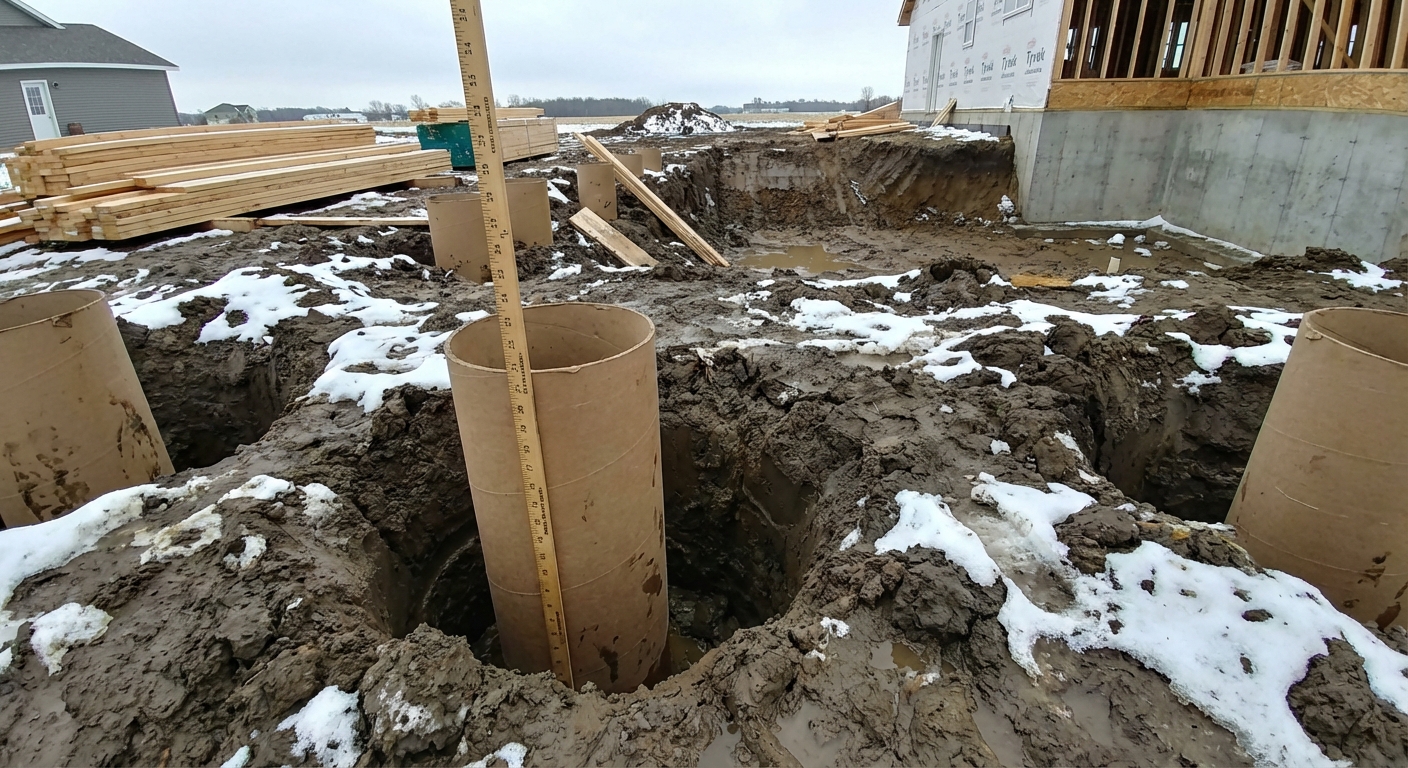
Building a deck in Minnesota? You need to understand the state's specific building codes to ensure your project is safe, legal, and built to withstand the harsh Minnesota climate. These codes are in place to protect you and your property. This guide covers the key requirements for 2026, focusing on what you need to know before you start planning your dream deck.
📋 Tool Alert: Permit Checker
Do you really need a permit? Check the exact rules for your city or township.
Check Permits →Understanding Minnesota's Deck Building Codes
Minnesota follows the Minnesota State Building Code, which is largely based on the International Residential Code (IRC) but includes specific state amendments. Local city and county building officials enforce these codes. This means your deck needs to meet minimum safety standards for structural integrity, fire resistance, and accessibility.
🏗️ Planning a deck project?
Get a free manual project review, or visualize your dream deck with AI before requesting quotes.
Key areas covered by the code include:
- Permits: When permits are required, and how to obtain them.
- Footings and Foundations: Critical for Minnesota's deep frost line.
- Structural Requirements: Load-bearing capacity, joist and beam sizing.
- Guardrails and Handrails: Height and spacing requirements for safety.
- Stairways: Rise, run, and width regulations for safe access.
- Attachment to the House: Proper flashing to prevent water damage and ice dams.
- Materials: Acceptable materials and their treatment.
- Electrical: Requirements for any electrical components on the deck (lighting, outlets).
<!-- slot:after-intro -->
Minnesota-Specific Challenges: Climate and Frost Line
Minnesota's extreme climate poses unique challenges for deck building. You're dealing with drastic temperature swings (up to 130°F annually), heavy snow loads, and a deep frost line. These factors significantly impact the design and construction of your deck.
The Frost Line: Your Deck's Foundation
The frost line is the depth to which the ground freezes in the winter. In Minnesota, this ranges from 42 inches in the southern part of the state to 60 inches in the northern regions around Duluth.
- Southern Minnesota (e.g., Mankato, Rochester): 42 inches
- Twin Cities Metro Area: 48 inches
- Central Minnesota (e.g., St. Cloud): 54 inches
- Northern Minnesota (e.g., Duluth, North Shore): 60 inches
Your deck's footings *must* extend below the frost line. If they don't, the freeze-thaw cycle will cause the ground to heave, potentially damaging your deck's structure. This is especially critical around Duluth, where the 60-inch frost line is among the deepest in the continental US.
Snow Loads: Designing for Winter
Minnesota decks must be designed to withstand heavy snow loads. The ground snow load varies across the state, ranging from 35 psf (pounds per square foot) to 60 psf. Northern Minnesota experiences the highest snow loads. Your deck's structural design must account for these loads to prevent collapse. Consult with a qualified structural engineer or experienced deck builder to ensure your design meets the required snow load for your specific location.
Material Choices: Combatting the Freeze-Thaw Cycle
The extreme freeze-thaw cycle can wreak havoc on decks. Wood decks are particularly susceptible to warping, cracking, and rot. While pressure-treated lumber is a common choice, many Minnesota homeowners are opting for composite decking.
Composite decking offers several advantages:
- Durability: Resistant to rot, insects, and moisture damage.
- Low Maintenance: No need for staining or sealing.
- Longevity: Can last for 25 years or more.
While composite decking has a higher upfront cost, its long-term durability and low maintenance can make it a worthwhile investment.
Use PaperPlan (paperplan.app) to visualize your deck with PaperPlan design with different materials and layouts before committing to a contractor. See how composite decking would look compared to cedar, and explore different railing options.
Permits: When Do You Need One?
In most Minnesota cities, you'll need a permit for any deck that is:
- More than 30 inches above grade (ground level).
- Attached to your house.
Even if your deck is below 30 inches, it's always best to check with your local building department. Some cities may have additional requirements or restrictions.
Typical Permit Costs
Permit costs vary depending on your city or county, but you can typically expect to pay between $75 and $450. Minneapolis, with its strong building department, tends to be on the higher end of that range.
Navigating the Permit Process
1. Contact your local building department: Find out the specific requirements for your city or county.
2. Prepare your plans: You'll need detailed plans showing the dimensions, materials, and construction methods of your deck.
3. Submit your application: Include all required documents and fees.
4. Schedule inspections: A building inspector will need to inspect your deck at various stages of construction to ensure it complies with the code.
For example, if you're building a deck in one of St. Paul's historic neighborhoods like Summit Avenue or Highland Park, be aware that there might be additional requirements related to aesthetics and historical preservation.
<!-- slot:mid-content -->
Key Deck Building Code Requirements
Here's a breakdown of some key code requirements you need to be aware of:
Footings and Foundations
- Depth: As mentioned earlier, footings must extend below the frost line (42-60 inches).
- Size: The size of the footing depends on the size and weight of your deck, as well as the soil conditions.
- Concrete: Use concrete that is appropriate for exterior use and resistant to freeze-thaw damage.
Structural Framing
- Joist Spacing: Joist spacing depends on the type of decking material you're using and the load requirements. Typical spacing ranges from 12 inches to 16 inches on center.
- Beam Size: Beam size depends on the span and the load it needs to support. Consult a span table or a qualified engineer to determine the appropriate beam size.
- Lumber: Use pressure-treated lumber that is appropriate for exterior use.
Guardrails and Handrails
- Height: Guardrails must be at least 36 inches tall.
- Spacing: The spacing between guardrail balusters must be no more than 4 inches. This prevents small children from falling through.
- Handrails: Handrails are required on stairways with four or more risers. They must be between 34 inches and 38 inches above the stair nosing.
Stairways
- Rise and Run: The rise (vertical height) of each step must be between 4 inches and 7 3/4 inches. The run (horizontal depth) of each step must be at least 10 inches.
- Width: Stairways must be at least 36 inches wide.
- Headroom: There must be at least 6 feet 8 inches of headroom above the stairway.
Attachment to the House
- Ledger Board: The ledger board is the board that attaches the deck to the house. It must be properly sized and securely fastened to the house's framing.
- Flashing: Proper flashing is essential to prevent water from entering the house where the deck attaches. This is especially important in Minnesota to prevent ice dams.
Deck Costs in Minnesota
Deck costs in Minnesota can vary significantly depending on the size, materials, and complexity of the project. Labor costs tend to be higher in the Twin Cities metro area compared to other parts of the state.
Here's a general idea of what you can expect to pay per square foot:
| Material | Cost per Square Foot (Installed) |
|-------------------|-----------------------------------|
| Pressure-Treated | $24 - $42 |
| Cedar | $32 - $52 |
| Composite | $42 - $75 |
| Trex | $48 - $80 |
These are just estimates. For a more accurate idea of the cost of *your* deck, get quotes from several experienced deck builders in your area. If you're planning a lakefront deck in the "Land of 10,000 Lakes", expect to pay a premium due to increased demand and potential access challenges.
Also, remember that many HOAs in Twin Cities suburbs like Eden Prairie, Plymouth, and Maple Grove require approval for deck projects. Factor in the time it takes to get HOA approval into your project timeline. The build season in Minnesota is relatively short (May-October) due to frozen ground, so plan accordingly.
<!-- slot:before-faq -->
Finding a Qualified Deck Builder
Building a deck that meets code and withstands the Minnesota climate requires expertise. It's crucial to hire a qualified and experienced deck builder.
Here are some tips for finding the right contractor:
- Get referrals: Ask friends, family, or neighbors for recommendations.
- Check online reviews: See what other homeowners have to say about their experiences.
- Verify licenses and insurance: Make sure the contractor is licensed and insured in Minnesota.
- Get multiple quotes: Compare bids from several contractors.
- Ask for references: Talk to previous clients to see their work firsthand.
Building a deck in Minnesota can be a rewarding experience, adding value and enjoyment to your home. By understanding the building codes and working with a qualified contractor, you can ensure your deck is safe, durable, and built to last.
<!-- slot:end -->
🎨 Not sure which material to pick?
Upload a photo of your backyard and see exactly how Trex, TimberTech, or cedar would look — free and instant.
Frequently Asked Questions
Do I need a permit to replace my existing deck in Minnesota?
Generally, yes, if the new deck is the same size and in the same location as the old deck *and* meets current code requirements. However, it's always best to check with your local building department to confirm. If you're changing the size, location, or design of the deck, a permit is almost certainly required.
How deep do my deck footings need to be in Duluth?
In Duluth, and generally across the North Shore of Minnesota, your deck footings need to extend at least 60 inches below grade to be below the frost line.
What type of lumber should I use for my deck framing in Minnesota?
You should use pressure-treated lumber that is specifically designed for exterior use. Look for lumber that is treated to resist rot, insects, and moisture damage. Common options include lumber treated with Alkaline Copper Quaternary (ACQ) or Copper Azole (CA).
Are composite decks allowed in Minnesota?
Yes, composite decking is allowed and often preferred in Minnesota due to its durability and resistance to the freeze-thaw cycle. Make sure the composite decking material meets the required load-bearing capacity and fire resistance standards.
What happens if I build a deck without a permit?
Building a deck without a required permit can result in fines, stop-work orders, and even the requirement to remove the deck. It's always best to obtain the necessary permits before starting construction.
Related Articles:
- How Much Does a Deck Cost in Minnesota? Complete 2026 Guide
- Do You Need a Deck Permit in Minnesota? City & County Rules
- Best Deck Builders in Minneapolis: Twin Cities Guide for 2026
📋 Planning a deck project?
Get a free manual project review from our team — no obligation, no spam.
Get Free Project Review →Upload a backyard photo and preview real decking materials with AI — free, instant, no sign-up.
Permits, costs, material comparisons, and questions to ask before requesting quotes — delivered to your inbox.