
Do You Need a Deck Permit in Minnesota? City & County Rules
Planning a new deck in Minnesota? Learn when you need a permit, cost, building codes, and how to avoid costly mistakes.
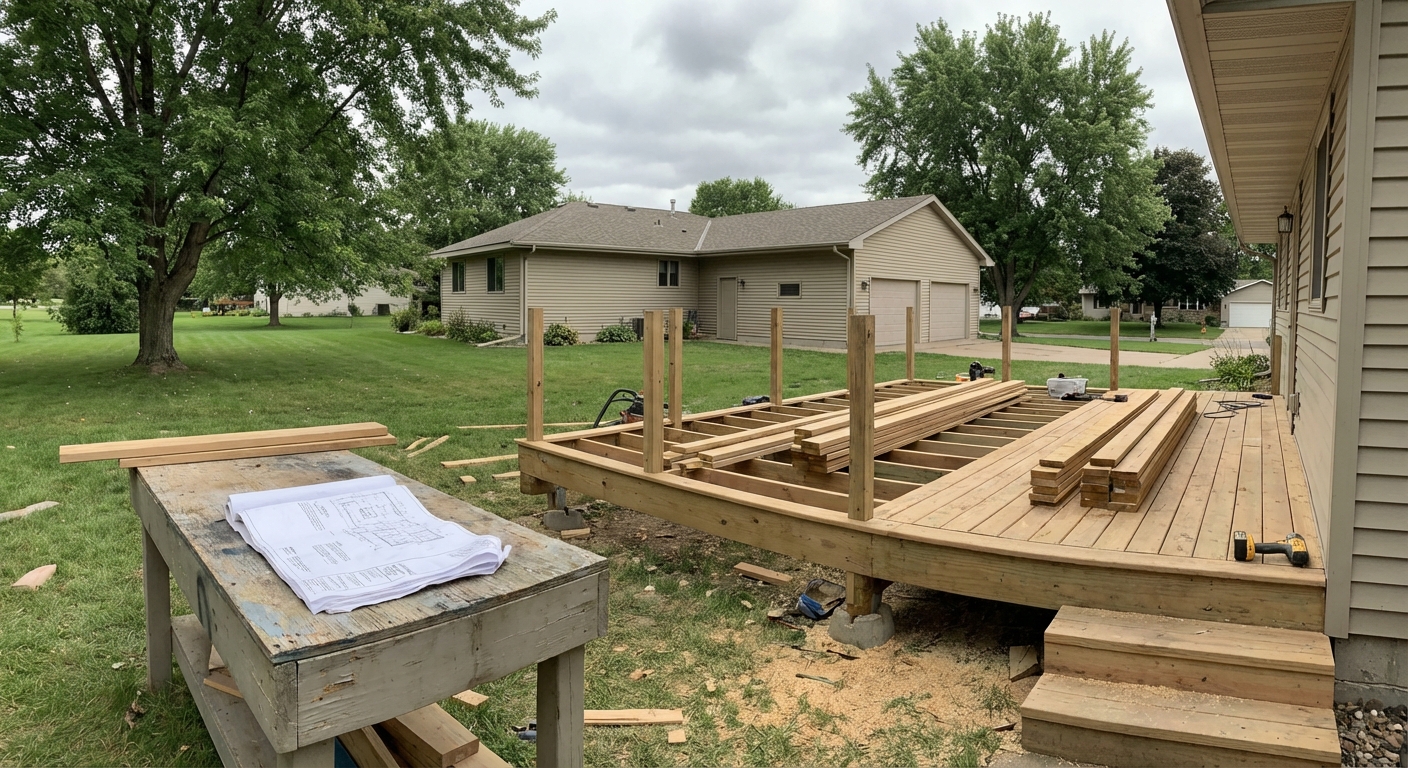
Building a deck in Minnesota? Before you start hammering, you need to know about deck permits. Most Minnesota cities require a permit for decks attached to a house or exceeding 30 inches above grade. Understanding the rules, costs, and required inspections will save you time, money, and potential headaches down the road.
📋 Tool Alert: Permit Checker
Do you really need a permit? Check the exact rules for your city or township.
Check Permits →When Do You Need a Deck Permit in Minnesota?
Generally, you'll need a deck permit in Minnesota if your deck meets either of these criteria:
🏗️ Planning a deck project?
Get a free manual project review, or visualize your dream deck with AI before requesting quotes.
- Attached to your house: Any deck structurally connected to your home almost always requires a permit. This is because the deck's stability impacts your home's structural integrity. Flashing details where the deck attaches to the house are critical to prevent ice dams, a common Minnesota issue due to extreme temperature fluctuations.
- Over 30 inches above grade: If any part of your deck's surface is more than 30 inches above the surrounding ground, a permit is usually required. This is primarily for safety reasons, including the need for proper railings and stairways.
Keep in mind that these are general guidelines. Specific rules vary from city to city and even county to county. For example, Minneapolis and St. Paul, the core of the Twin Cities metro, have robust building departments that strictly enforce the Minnesota State Building Code. Areas like Rochester in Southeast Minnesota, or St. Cloud in Central Minnesota, may have slightly different interpretations or supplemental requirements.
Always check with your local building department before starting any deck construction. They can provide the most accurate and up-to-date information for your specific location.
<!-- slot:after-intro -->
Minnesota Deck Permit Costs
Permit fees in Minnesota vary significantly depending on your location and the size/complexity of your deck. Expect to pay anywhere from $75 to $450 for a typical residential deck permit.
Here's a general idea of what you might encounter in different regions:
- Twin Cities Metro (Minneapolis, St. Paul, suburbs): Expect permit fees on the higher end of the range, typically $200 - $450. The larger cities and more affluent suburbs often have more stringent requirements and higher administrative costs.
- Rochester/Southeast Minnesota: Permit fees may be slightly lower, ranging from $100 - $350.
- Duluth/North Shore: Due to the challenging terrain and complex building requirements (frost line!), permit fees can be in the higher range, comparable to the Twin Cities.
- St. Cloud/Central Minnesota: Permit costs are generally moderate, in the $75-$300 range.
- Mankato/Southern Minnesota: Expect permit fees in the lower to middle range, typically $75 - $250.
Beyond the permit fee itself, remember to factor in the cost of inspections. Your deck will likely require multiple inspections throughout the building process (footing inspection, framing inspection, final inspection). These inspections are typically included in the overall permit fee, but confirm with your local building department.
Minnesota Deck Building Codes: Frost Depth is King
Minnesota's building codes are based on the International Residential Code (IRC) with state-specific amendments. The *Minnesota Residential Code* is enforced by local building officials. One of the most critical considerations for deck building in Minnesota is the frost line.
Minnesota has some of the deepest frost lines in the lower 48 states. The depth varies depending on your location:
- Southern Minnesota: 42 inches
- Northern Minnesota/Duluth area: 60 inches
Your deck's footings *must* extend below the frost line. If they don't, the freeze-thaw cycle will cause the ground to heave, lifting and damaging your deck. This is non-negotiable.
Here are other key code considerations for Minnesota decks:
- Snow Load: Minnesota experiences heavy snowfall. Deck designs must account for ground snow loads ranging from 35 to 60 psf (pounds per square foot), depending on your location. Northern Minnesota generally requires higher snow load ratings.
- Ledger Board Attachment: Proper attachment of the ledger board (the board that connects the deck to your house) is crucial. Use approved fasteners and flashing to prevent water damage and structural failure. Ice dam prevention is paramount.
- Railing Height: Decks exceeding 30 inches above grade require railings at least 36 inches high.
- Stairway Requirements: Stairways must meet specific requirements for rise, run, and headroom. Handrails are required for stairways with four or more risers.
- Material Requirements: Pressure-treated lumber must be properly rated for ground contact. Composite decking is strongly preferred in Minnesota due to the extreme freeze-thaw cycles.
Choosing Decking Materials for Minnesota's Climate
Minnesota's climate is tough on decks. The extreme temperature swings (up to 130°F annually!) and heavy snow loads demand durable materials. While wood decks are still built, composite decking is becoming increasingly popular due to its superior resistance to weathering and rot.
Here's a comparison of common decking materials and their typical installed costs in Minnesota:
| Material | Cost per Square Foot (Installed) | Pros | Cons |
| ---------------- | -------------------------------- | ------------------------------------------------------------------------------------------------------------------------------------------------------------------------------------------------ | ----------------------------------------------------------------------------------------------------------------------------------------------------------------------------------------------------------------------- |
| Pressure-Treated | $24 - $42 | Most affordable option, readily available | Requires regular maintenance (staining/sealing), prone to rot and warping, shorter lifespan |
| Composite | $42 - $75 | Low maintenance, durable, resists rot and insects, long lifespan, many color and style options | More expensive than pressure-treated, can get hot in direct sunlight |
| Cedar | $32 - $52 | Naturally beautiful, resists insects and rot, less prone to warping than pressure-treated | Requires regular maintenance (staining/sealing), more expensive than pressure-treated |
| Trex | $48 - $80 | Premium composite decking, extremely durable, fade-resistant, long lifespan, backed by a strong warranty | Most expensive option, can be slippery when wet |
Consider the long-term costs when choosing your decking material. While pressure-treated lumber is cheaper upfront, the maintenance and shorter lifespan may make composite a more cost-effective choice over time.
Use PaperPlan (paperplan.app) to visualize your deck with PaperPlan design with different materials and layouts before committing to a contractor. Seeing how different materials look on your property can help you make the right choice.
<!-- slot:mid-content -->
Navigating Minnesota's Unique Challenges
Building a deck in Minnesota presents some unique challenges:
- Short Build Season: The ground is typically frozen from November to April, leaving a short build season from May to October. Plan accordingly and book your contractor well in advance.
- Extreme Weather: Be prepared for unexpected delays due to rain, snow, or extreme temperatures.
- HOA Restrictions: Many homeowners associations (HOAs), especially in Twin Cities suburbs like Eden Prairie, Plymouth, Maple Grove, Woodbury, and Eagan, have strict rules about deck size, materials, and design. Obtain HOA approval before starting any work.
- Lakefront Properties: Building a deck on a lakefront property ("Land of 10,000 Lakes!") often involves additional regulations and permits related to shoreline protection and water quality. Contact the Minnesota Department of Natural Resources (DNR) for guidance.
- Steep Slopes: In areas like Duluth with steep hillsides, building a deck requires specialized engineering and construction techniques. Ensure your contractor has experience with these types of projects.
Finding a Qualified Deck Builder in Minnesota
Choosing the right deck builder is crucial for a successful project. Look for a contractor who is licensed, insured, and experienced in building decks in Minnesota's climate. Check their references and read online reviews. A good deck builder will be familiar with local building codes, permit requirements, and the best materials for Minnesota's weather.
Here are some key questions to ask potential deck builders:
- Are you licensed and insured?
- How long have you been building decks in Minnesota?
- Are you familiar with the local building codes and permit process?
- Can you provide references from previous clients?
- Do you offer a warranty on your work?
- What type of materials do you recommend for my deck, and why?
<!-- slot:before-faq -->
Building a deck in Minnesota can be a rewarding experience, adding value and enjoyment to your home. By understanding the permit requirements, building codes, and unique challenges of the region, you can ensure a smooth and successful project.
<!-- slot:end -->
🎨 Not sure which material to pick?
Upload a photo of your backyard and see exactly how Trex, TimberTech, or cedar would look — free and instant.
Frequently Asked Questions
Do I need a permit to replace the decking boards on my existing deck?
It depends. If you're only replacing the decking boards and not altering the structure of the deck (footings, framing, railings), you may not need a permit. However, if you're also replacing railings or making structural changes, a permit is likely required. Always check with your local building department to be sure.
How long does it take to get a deck permit in Minnesota?
The processing time for a deck permit varies depending on the municipality. It can take anywhere from a few days to several weeks. Complex projects or those requiring variances may take longer. Submit your application well in advance of your planned start date.
What happens if I build a deck without a permit?
Building a deck without a required permit can result in fines, stop-work orders, and even legal action. You may also be required to remove the deck or bring it up to code, which can be costly and time-consuming. It's always best to obtain the necessary permits before starting any construction.
What documents do I need to apply for a deck permit?
Typical documents required for a deck permit application include:
- Site plan showing the location of the deck on your property
- Construction drawings detailing the deck's dimensions, materials, and structural details
- Soil test results (in some cases)
- Homeowners association (HOA) approval (if applicable)
Where can I find my local building department?
You can usually find your local building department's contact information on your city or county government's website. Search for terms like "building permits," "inspections," or "planning and zoning."
How Much Does a Deck Cost in Minnesota? Complete 2026 Guide
Deck Cost Per Square Foot in Minnesota: 2026 Pricing Breakdown
Minnesota Deck Building Codes: Key Requirements for 2026
Best Deck Builders in Minneapolis: Twin Cities Guide for 2026
📋 Planning a deck project?
Get a free manual project review from our team — no obligation, no spam.
Get Free Project Review →Upload a backyard photo and preview real decking materials with AI — free, instant, no sign-up.
Permits, costs, material comparisons, and questions to ask before requesting quotes — delivered to your inbox.