
Deck Cost Per Square Foot in Minnesota: 2026 Pricing Breakdown
Understand 2026 deck cost per square foot in Minnesota. Pressure-treated, composite, cedar, Trex pricing, permits, and climate considerations.
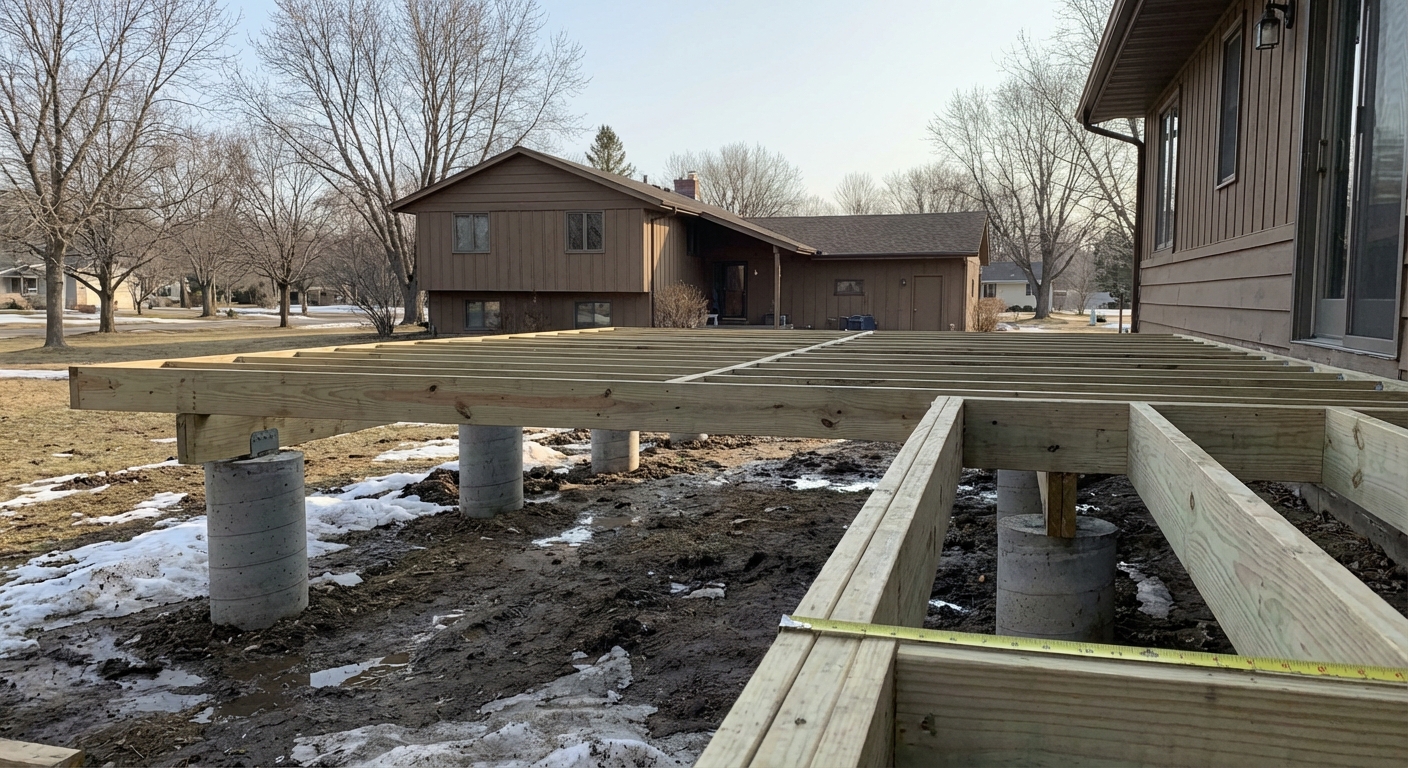
Are you a Minnesota homeowner dreaming of a new deck? Understanding the cost per square foot is crucial for budgeting. This guide breaks down deck pricing in Minnesota for 2026, covering materials, labor, permits, and regional variations.
🧮 Tool Alert: Deck Cost Calculator
Estimate your project costs in seconds based on local pricing bands for your area.
Calculate My Cost →Minnesota Deck Cost Factors: A Quick Look
Several factors influence the cost of your deck project. Minnesota presents unique challenges, including a short building season and extreme weather. Here’s a preview:
🏗️ Planning a deck project?
Get a free manual project review, or visualize your dream deck with AI before requesting quotes.
- Materials: Pressure-treated lumber, cedar, composite, and Trex have distinct price points.
- Labor: Expect higher labor costs in the Twin Cities metro area compared to rural regions.
- Permits: Decks over 30 inches above grade or attached to your house typically require permits. Costs range from $75-450.
- Frost Line: Minnesota's deep frost line (42-60 inches) necessitates robust footings.
- Snow Loads: Decks must be engineered to withstand Minnesota's heavy snow loads (35-60 psf).
<!-- slot:after-intro -->
Average Deck Cost Per Square Foot in Minnesota (2026)
Here's a breakdown of average deck costs per square foot in Minnesota, installed:
| Material | Cost per Square Foot (Installed) |
| ----------------- | -------------------------------- |
| Pressure-Treated | $24 - $42 |
| Cedar | $32 - $52 |
| Composite | $42 - $75 |
| Trex | $48 - $80 |
Keep in mind these are averages. Your actual cost will depend on the project's complexity, location, and specific material choices. For instance, a complex multi-level deck in Duluth overlooking Lake Superior will likely cost more than a simple ground-level deck in Mankato.
Pressure-Treated Lumber
Pressure-treated lumber is the most affordable option. However, it requires regular maintenance (staining or sealing) to withstand Minnesota's harsh climate. Expect to pay $24 - $42 per square foot, installed. This option is best if you are looking for a budget-friendly option and are willing to put in the time and effort to maintain it.
Cedar
Cedar offers natural beauty and resistance to decay. It's a mid-range option in terms of cost, averaging $32 - $52 per square foot, installed. Cedar is a popular choice with homeowners because it offers a nice aesthetic appeal without the high cost of composite.
Composite Decking
Composite decking is a low-maintenance alternative to wood. It resists fading, staining, and rotting, making it ideal for Minnesota's freeze-thaw cycles. Composite costs $42 - $75 per square foot, installed. While it is more expensive than wood, it will save you money in the long run from not having to replace or repair it as often.
Trex Decking
Trex is a leading brand of composite decking. It offers superior durability and a wide range of colors and styles. Expect to pay $48 - $80 per square foot, installed. It is also a low-maintenance option that is resistant to the elements.
Regional Cost Variations in Minnesota
Deck costs vary across Minnesota due to labor rates, material availability, and local regulations.
- Twin Cities Metro (Minneapolis, St. Paul, Suburbs): Higher labor costs and stricter building codes can increase prices. Expect to pay a premium, especially in areas like Uptown Minneapolis or Summit Avenue in St. Paul. Many HOAs in suburbs like Eden Prairie and Maple Grove have specific requirements that can add to the cost.
- Rochester/Southeast Minnesota: Slightly milder winters compared to the rest of the state might offer a slightly longer building season. Costs are generally lower than the Twin Cities.
- Duluth/North Shore: Challenging terrain (steep hillsides), extreme weather (lake-effect snow), and longer travel distances for contractors can drive up costs. However, the stunning lake views often justify the investment.
- St. Cloud/Central Minnesota: Costs are generally moderate, reflecting a balance between urban and rural factors.
- Mankato/Southern Minnesota: Typically, you will find lower labor costs compared to the Twin Cities.
Understanding the Minnesota Climate's Impact on Deck Costs
Minnesota's climate is a major driver of deck costs. The extreme temperature swings (up to 130°F annually) and heavy snow necessitate specific construction techniques and materials.
- Frost Footings: Minnesota's deep frost line (42-60 inches) requires deep footings to prevent deck heaving. This adds significantly to the labor and material costs. The further north you are, the deeper the footings need to be.
- Material Choice: Composite decking is often preferred over wood due to its resistance to moisture and freeze-thaw damage. While more expensive upfront, it can save you money on maintenance and repairs in the long run.
- Snow Load: Decks must be structurally sound to handle heavy snow loads (35-60 psf). This requires careful engineering and the use of robust framing materials.
- Ice Dam Prevention: Proper flashing where the deck attaches to the house is essential to prevent ice dams and water damage.
Permits and Building Codes in Minnesota
Navigating Minnesota's building codes and permit requirements is crucial.
- Permits: Decks over 30 inches above grade or attached to a dwelling typically require a permit. Check with your local building official (city or county) for specific requirements. Refer to the Minnesota Deck Building Codes: Key Requirements for 2026 for more information.
- Cost: Permit costs typically range from $75 - $450, depending on the municipality.
- Minnesota Residential Code: Minnesota enforces the Minnesota Residential Code, which is based on the International Residential Code (IRC) with state amendments.
- Enforcement: Local building officials enforce the code. Schedule inspections at various stages of construction to ensure compliance. In Minneapolis, the building department is known for its thoroughness. See Minneapolis Deck Permit: Requirements, Costs & How to Apply in 2026 for more details.
Labor Costs for Deck Installation in Minnesota
Labor costs typically account for 40-60% of the total deck cost. Rates vary depending on the contractor's experience, location, and the complexity of the project. Expect higher labor rates in the Twin Cities metro area. Be sure to get multiple quotes from different contractors to ensure you're getting a fair price. You can start your search with Best Deck Builders in Minneapolis: Twin Cities Guide for 2026 or Best Deck Builders in St. Paul, MN: Capital City Guide for 2026.
<!-- slot:mid-content -->
Tips for Saving Money on Your Minnesota Deck Project
- Design a simple deck: Complex designs with multiple levels, curves, and built-in features will increase costs.
- Choose pressure-treated lumber: If budget is a primary concern, pressure-treated lumber is the most affordable option, but remember the maintenance requirements.
- Obtain multiple quotes: Get at least three quotes from different contractors.
- Consider building in the off-season: Contractors may offer discounts during the slower winter months, although construction is limited. The building season is short, generally from May to October.
- DIY some of the work: If you're handy, you can save money by doing some of the demolition, site preparation, or painting yourself. However, ensure you have the necessary skills and knowledge to avoid costly mistakes.
- Use PaperPlan (paperplan.app) to visualize your deck with PaperPlan design with different materials and layouts before committing to a contractor. This can help you make informed decisions and avoid costly change orders later on.
Deck Maintenance Costs in Minnesota
Don't forget to factor in ongoing maintenance costs.
- Pressure-Treated Lumber: Requires regular staining or sealing every 1-3 years to protect against moisture and UV damage. Costs vary depending on the size of the deck and the type of stain used.
- Cedar: While naturally resistant to decay, cedar can benefit from staining or sealing to maintain its appearance and prolong its lifespan.
- Composite and Trex: Require minimal maintenance. Occasional cleaning with soap and water is usually sufficient.
Lakefront Deck Considerations in Minnesota
If you're building a deck on a lakefront property in Minnesota ("Land of 10,000 Lakes"), there are additional considerations.
- Permits: You may need permits from the Department of Natural Resources (DNR) in addition to local building permits.
- Environmental Regulations: Be aware of shoreline regulations and restrictions on construction near the water.
- Material Choice: Choose materials that are resistant to moisture and UV damage.
- Views: Maximize the views by carefully planning the deck's layout and orientation.
<!-- slot:before-faq -->
Finding a Reliable Deck Builder in Minnesota
Choosing the right contractor is crucial for a successful deck project.
- Get Recommendations: Ask friends, family, or neighbors for recommendations.
- Check References: Contact previous clients to assess the contractor's quality of work and reliability.
- Verify Licensing and Insurance: Ensure the contractor is licensed and insured.
- Review Online Reviews: Check online review sites like Google, Yelp, and the Better Business Bureau.
- Get a Detailed Contract: The contract should clearly outline the scope of work, materials, timeline, and payment schedule.
- Consider Location: Depending on where you are located, check out Best Deck Builders in Rochester, MN: Southeast Minnesota Guide for 2026 or Best Deck Builders in Duluth, MN: Lake Superior Guide for 2026
<!-- slot:end -->
🎨 Not sure which material to pick?
Upload a photo of your backyard and see exactly how Trex, TimberTech, or cedar would look — free and instant.
Frequently Asked Questions
What is the average lifespan of a deck in Minnesota?
A well-maintained pressure-treated lumber deck can last 15-20 years. Cedar decks can last 20-30 years. Composite and Trex decks can last 25-50 years or more.
How deep do deck footings need to be in Minnesota?
Deck footings in Minnesota must extend below the frost line, which ranges from 42 inches in southern Minnesota to 60 inches in northern Minnesota.
Do I need a permit to replace my existing deck in Minnesota?
In most cases, yes, you will need a permit to replace an existing deck if it's over 30 inches above grade or attached to your house. Check with your local building official. See Do You Need a Deck Permit in Minnesota? City & County Rules
What are the best materials for a low-maintenance deck in Minnesota?
Composite and Trex decking are the best options for low-maintenance decks in Minnesota due to their resistance to moisture, fading, and staining.
What happens if I build a deck without a permit in Minnesota?
Building a deck without a permit can result in fines, stop-work orders, and even the requirement to remove the deck. It's always best to obtain the necessary permits before starting construction.
📋 Planning a deck project?
Get a free manual project review from our team — no obligation, no spam.
Get Free Project Review →Upload a backyard photo and preview real decking materials with AI — free, instant, no sign-up.
Permits, costs, material comparisons, and questions to ask before requesting quotes — delivered to your inbox.