
Deck Cost in Denton: What Homeowners Are…
What does a deck cost in Denton, TX? Get 2026 pricing by material, labor rates, cost-saving tips, and local building advice for Denton homeowners.
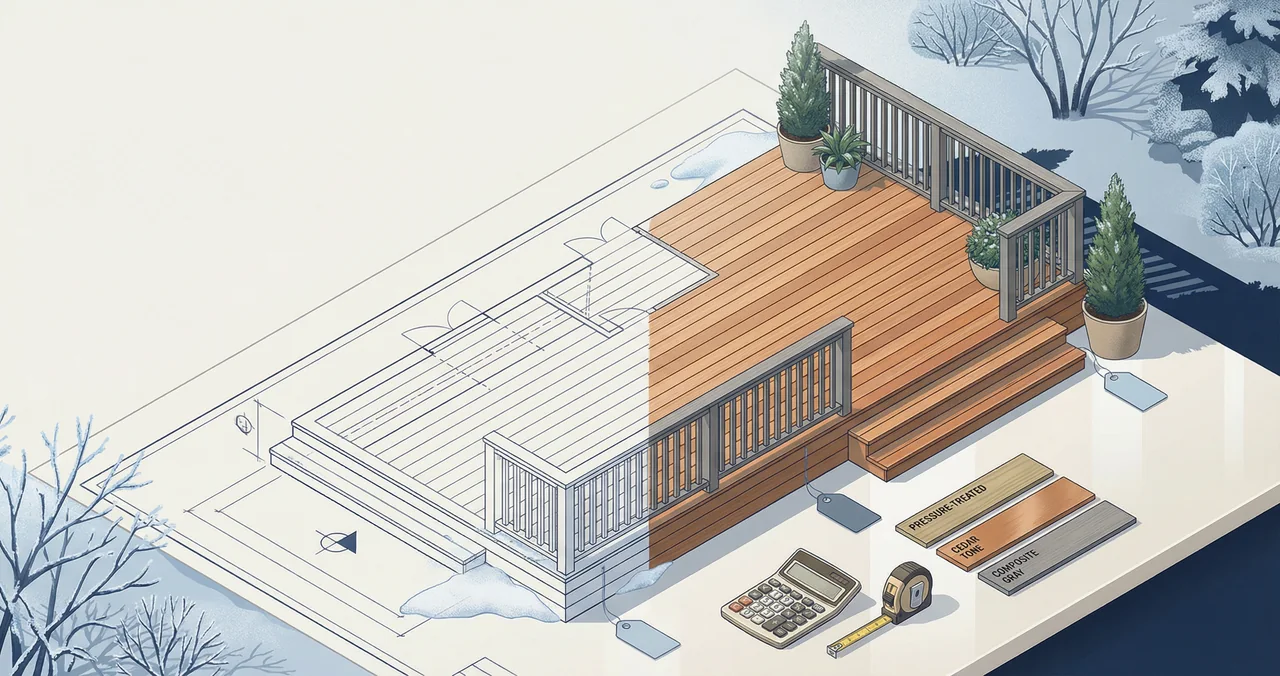
How Much Does a Deck Cost in Denton?
If you're pricing out a new deck in Denton, you're probably seeing numbers all over the map. A neighbor on Hickory Creek got a quote for $8,000. Your coworker near the Square paid $22,000. Both are real — and the gap comes down to material, size, and how much your contractor charges for labor.
🏗️ Planning a deck project?
Get a free manual project review, or visualize your dream deck with AI before requesting quotes.
🧮 Tool Alert: Deck Cost Calculator
Estimate your project costs in seconds based on local pricing bands for your area.
Calculate My Cost →Looking for more regional information? Check out our Texas State Decking Hub.
Here's the short answer: most Denton homeowners pay between $8,000 and $25,000 for a professionally installed deck in 2026. A basic 12×16 pressure-treated build runs toward the lower end. A 400-square-foot composite deck with built-in seating and railing pushes past $30,000.
The rest of this guide breaks down exactly where that money goes — material by material, line item by line item — so you can set a realistic budget before a single board gets cut.
<!-- slot:after-intro -->
For a broader look at deck pricing across different materials and regions, see our complete deck cost guide for Texas. Timing your build right can also save thousands — check our guide on the best time to build a deck.
Average Deck Cost in Denton by Material
Material is the single biggest variable. Here's what Denton contractors are charging in 2026, fully installed:
| Material | Installed Cost Per Sq Ft | 300 Sq Ft Deck | 400 Sq Ft Deck |
|---|---|---|---|
| Pressure-Treated Pine | $25–$45 | $7,500–$13,500 | $10,000–$18,000 |
| Cedar | $35–$55 | $10,500–$16,500 | $14,000–$22,000 |
| Composite (mid-range) | $45–$75 | $13,500–$22,500 | $18,000–$30,000 |
| Trex (premium lines) | $50–$80 | $15,000–$24,000 | $20,000–$32,000 |
| Ipe (hardwood) | $60–$100 | $18,000–$30,000 | $24,000–$40,000 |
A few things worth noting for Denton specifically. Pressure-treated pine remains the most popular choice across subdivisions like Robson Ranch, Savannah, and the older neighborhoods around UNT. It's cheap upfront, widely available from local lumber yards, and every contractor in Denton County knows how to work with it.
But Denton's heat changes the math. Summers regularly push past 100°F with brutal UV, and that pressure-treated deck you sealed last spring? It needs resealing again. Over 10 years, maintenance costs can close the gap between wood and composite decking.
Cost Per Square Foot Breakdown
Understanding per-square-foot pricing helps you compare quotes accurately. Here's how the costs typically split between materials and labor in Denton:
Materials Only (No Labor)
- Pressure-treated lumber: $8–$15/sq ft
- Cedar boards: $12–$22/sq ft
- Composite decking: $20–$35/sq ft
- Trex Select/Enhance: $22–$38/sq ft
- Ipe hardwood: $30–$50/sq ft
Installed (Materials + Labor)
Labor roughly doubles the materials-only price. When a Denton contractor quotes you $50/sq ft for composite, figure about $20–$30 is material and $20–$25 is labor, fasteners, framing, and overhead.
Watch out for lowball per-square-foot quotes. Some contractors quote decking surface only and then charge separately for framing, footings, railings, stairs, and permits. Always ask: *"Does your per-square-foot price include the complete substructure and railing?"*
Labor Costs in Denton
Denton sits in an interesting spot for labor pricing. You're close enough to the Dallas–Fort Worth metroplex to access that contractor pool, but far enough north that some DFW crews tack on a travel charge.
Typical labor rates in Denton (2026):
- General deck labor: $15–$25 per square foot
- Skilled carpenter / custom work: $20–$35 per square foot
- Demolition and removal of old deck: $3–$8 per square foot
- Staining/sealing (if separate): $2–$5 per square foot
What Drives Labor Costs Up
- Elevation changes. Denton's terrain varies — homes along Hickory Creek or in the Lantana area sometimes sit on slopes. Multi-level decks or builds requiring deeper footings cost more.
- Access issues. Tight lot lines in older Denton neighborhoods (think areas around Mack Park or the historic district) mean materials get carried by hand, not driven in. That adds labor hours.
- Peak scheduling. Spring is the busiest season for DFW-area contractors. Book for late fall or winter — Denton's mild winters make October through February ideal for building, and contractors often have more flexibility on pricing.
<!-- slot:mid-content -->
What Affects Your Total Price
Beyond materials and labor, several factors specific to Denton can push your project higher or lower.
Deck Size and Shape
This one's obvious, but the shape matters more than people realize. A simple rectangle is the cheapest to frame. Add angles, curves, or a wraparound design and you're adding 15–25% in labor compared to a straight build of the same square footage.
Height and Foundation
Denton's frost line sits at 6–12 inches, which is shallow compared to northern states. That's good news — your footings don't need to go deep. Ground-level decks on simple pier blocks can save you $1,000–$2,000 compared to raised decks requiring poured concrete footings.
Raised decks (30+ inches) also trigger additional railing requirements and typically need a permit from the city.
Permits in Denton
Denton requires a building permit for decks over 200 square feet or more than 30 inches above grade. Contact Denton's Building/Development Services department before starting. Permit fees typically run $150–$500 depending on project scope.
Your contractor should handle the permit application, but verify this upfront. Some budget-focused builders skip permits to keep costs down — a shortcut that can haunt you when you sell or if an inspector flags the unpermitted structure.
Railings, Stairs, and Add-Ons
These are where budgets quietly balloon:
- Railings: $20–$60 per linear foot installed (aluminum and cable systems cost more than wood)
- Stairs: $75–$200 per step, depending on material and width
- Built-in benches: $500–$2,000
- Pergola or shade structure: $2,000–$8,000
- Deck lighting: $500–$2,500
For a breakdown of railing options and pricing, we've compared the most common systems side by side.
Climate and Weather Considerations
Denton's climate is tough on outdoor structures. Here's what matters:
- Extreme UV exposure degrades wood finishes fast. Expect to restain or reseal a wood deck every 1–2 years, not the 3–5 years you'll see in product marketing.
- Humidity and rain promote mold and mildew growth on untreated surfaces. Composite boards with capped polymer shells handle this far better than bare wood.
- Termites are active throughout Denton County. Pressure-treated lumber is resistant but not immune. Ground contact points need extra attention.
- Summer heat means dark-colored composite decking gets hot underfoot. If your deck faces south or west with no shade, lighter-colored boards or a shade structure are worth the investment.
Composite vs Wood: Cost Comparison
This is the decision most Denton homeowners wrestle with. Here's an honest comparison over a 10-year span for a 320 sq ft deck:
| | Pressure-Treated Wood | Composite (Mid-Range) |
|---|---|---|
| Installed cost | $8,000–$14,400 | $14,400–$24,000 |
| Annual maintenance | $200–$400 (stain/seal) | $0–$50 (occasional cleaning) |
| 10-year maintenance total | $2,000–$4,000 | $0–$500 |
| Board replacement (estimated) | $500–$1,500 | $0–$300 |
| 10-year total cost | $10,500–$19,900 | $14,400–$24,800 |
| Lifespan | 10–15 years | 25–50 years |
The gap narrows fast. And in Denton's climate — where UV and moisture accelerate wood degradation — wood decks often hit the lower end of that lifespan range.
Composite makes financial sense if you plan to stay in your home 7+ years. The breakeven point is typically year 6–8, after which you're saving money every year on maintenance you're not doing.
If budget is tight right now, pressure-treated wood is still a solid choice. Just budget $300–$400 per year for upkeep, and factor that into your real cost. For help comparing low-maintenance decking options, we've tested the most popular brands.
Use PaperPlan to visualize different decking materials on your own home before committing — seeing composite versus cedar on your actual house helps more than any swatch card.
How to Save Money on Your Denton Deck
Build During the Off-Season
Denton's biggest advantage: you can build year-round. October through April is the sweet spot. Summer heat makes outdoor construction miserable (and slower), so most homeowners wait for spring. That means fall and winter builds often come with 5–15% lower labor costs and faster scheduling.
Keep the Design Simple
Every angle, level change, and custom feature adds cost. A clean rectangle with standard railing is your most budget-friendly option. You can always add a pergola or lighting later.
Get Three or More Quotes
Pricing varies wildly across Denton-area contractors. Get at least three written estimates for the exact same scope. Make sure each quote breaks down materials, labor, permits, and any allowances separately so you're comparing apples to apples.
Supply Your Own Materials
Some contractors will let you purchase lumber or composite boards directly — especially from local suppliers or big-box stores running seasonal sales. You can save 10–20% on materials this way, though not every builder will agree to it. Ask upfront.
Downsize Strategically
Before building a 400-square-foot deck, think about how you'll actually use it. A well-designed 250-square-foot deck with a good layout often functions better than a sprawling one. Smaller footprint means less material, less labor, and a lower permit threshold.
Choose Pressure-Treated for Low-Priority Areas
If you're building a main deck plus a secondary platform for your grill or hot tub, use composite where you spend the most time and pressure-treated wood for the utility areas. Mixing materials is common and practical.
<!-- slot:before-faq -->
🎨 Not sure which material to pick?
Upload a photo of your backyard and see exactly how Trex, TimberTech, or cedar would look — free and instant.
Frequently Asked Questions
How much does a 12x16 deck cost in Denton?
A 12×16 deck (192 sq ft) in Denton runs approximately $4,800–$8,640 in pressure-treated wood or $8,640–$14,400 in composite, fully installed. This size falls just under Denton's 200 sq ft permit threshold, which can save you permit fees and processing time. Add railing on three sides and you're looking at an additional $1,500–$4,000 depending on the material.
Do I need a permit to build a deck in Denton, TX?
Yes, in most cases. Denton requires a building permit for decks exceeding 200 square feet or standing more than 30 inches above grade. Even small decks attached to your home may require review. Contact Denton's Building/Development Services department at City Hall before starting construction. A reputable contractor will handle the permit process as part of their scope.
What is the best decking material for Denton's climate?
Capped composite is the top performer in Denton's heat and humidity. It resists UV fading, doesn't harbor mold the way bare wood does, and termites leave it alone. The tradeoff is higher upfront cost and surface heat on sunny days — lighter colors and adequate shade help. If your budget pushes you toward wood, pressure-treated pine with annual sealing is the practical choice. Cedar looks beautiful but demands even more maintenance in Denton's climate than it does in cooler regions.
When is the cheapest time to build a deck in Denton?
Late fall and winter — November through February. Denton's mild winters rarely stop outdoor construction, but homeowner demand drops significantly. Contractors are more available and more willing to negotiate. You'll also avoid the 100°F+ days that slow down summer builds and add heat-related delays. Book your project by September to lock in fall scheduling.
How long does it take to build a deck in Denton?
Most standard decks (200–400 sq ft) take 3–7 days of active construction once materials are on-site. Factor in 1–3 weeks for permit approval if required, plus a few days for scheduling. Complex multi-level builds, custom features, or projects requiring grading work can stretch to 2–3 weeks. Weather delays are rare in Denton compared to northern climates, but heavy spring storms can occasionally push timelines by a day or two.
<!-- slot:end -->
📋 Planning a deck project?
Get a free manual project review from our team — no obligation, no spam.
Get Free Project Review →Upload a backyard photo and preview real decking materials with AI — free, instant, no sign-up.
Permits, costs, material comparisons, and questions to ask before requesting quotes — delivered to your inbox.