
Deck Cost in North Charleston (2026)
What does a deck cost in North Charleston in 2026? Get real pricing by material, labor rates, and money-saving tips for SC Lowcountry homeowners.
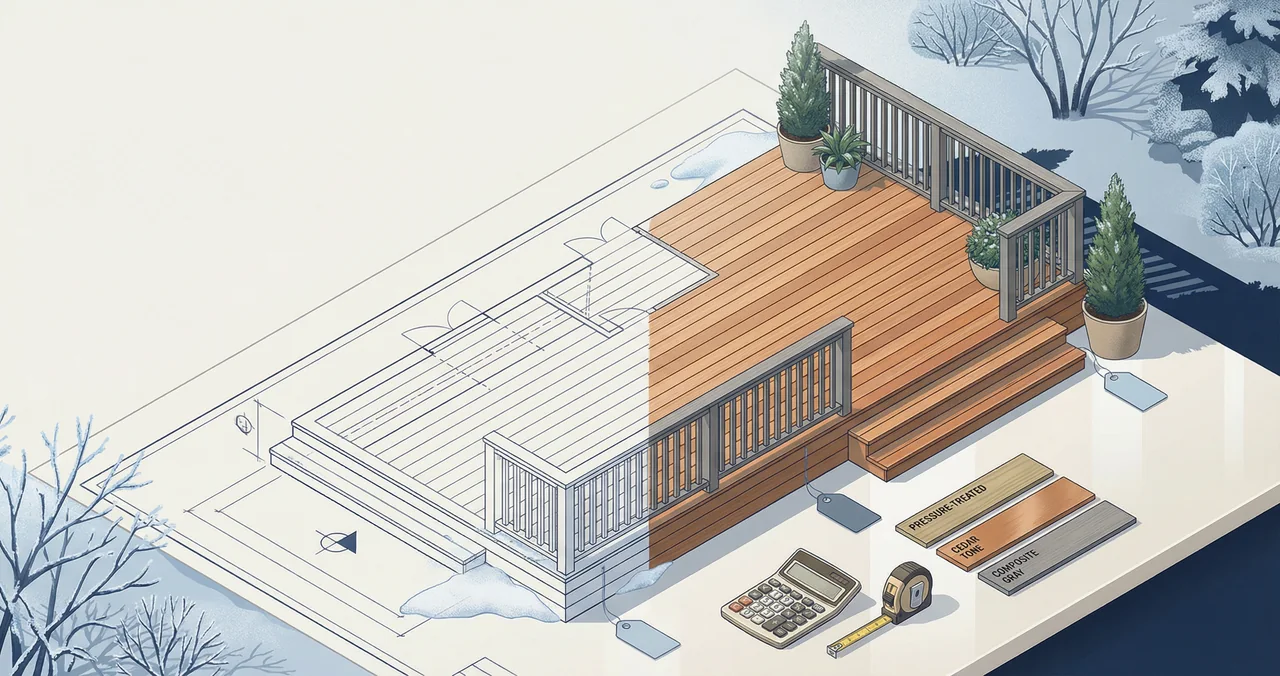
How Much Does a Deck Cost in North Charleston Right Now?
If you're pricing out a new deck in North Charleston, you're probably seeing numbers all over the map. One contractor quotes $8,000, another says $22,000 for what sounds like the same project. The gap usually comes down to three things: material choice, deck size, and how complex the build is.
🏗️ Planning a deck project?
Get a free manual project review, or visualize your dream deck with AI before requesting quotes.
🧮 Tool Alert: Deck Cost Calculator
Estimate your project costs in seconds based on local pricing bands for your area.
Calculate My Cost →Looking for more regional information? Check out our South Carolina State Decking Hub.
Here's the short answer. A standard 12x16 pressure-treated deck in North Charleston runs $4,800–$8,640 installed. A comparable composite deck costs $8,640–$14,400. Those are 2026 numbers based on local contractor pricing in the Charleston metro area.
But your deck isn't "standard." Maybe you want a multi-level design off the back of your Park Circle bungalow. Maybe you need hurricane-rated hardware because you're in a wind zone near the coast. The details matter, and they move the price significantly.
Below is a full breakdown of what North Charleston homeowners are actually paying — by material, by square foot, and by project type.
<!-- slot:after-intro -->
For a broader look at deck pricing across different materials and regions, see our deck cost guide. Timing your build right can also save thousands — check our guide on the best time to build a deck.
Average Deck Cost in North Charleston by Material
Material is the single biggest variable in your deck budget. Here's what each option costs fully installed in the North Charleston area in 2026:
| Material | Installed Cost (per sq ft) | 192 sq ft Deck (12x16) | 320 sq ft Deck (16x20) |
|---|---|---|---|
| Pressure-Treated Pine | $25–$45 | $4,800–$8,640 | $8,000–$14,400 |
| Cedar | $35–$55 | $6,720–$10,560 | $11,200–$17,600 |
| Composite | $45–$75 | $8,640–$14,400 | $14,400–$24,000 |
| Trex (brand-name composite) | $50–$80 | $9,600–$15,360 | $16,000–$25,600 |
| Ipe (Brazilian Hardwood) | $60–$100 | $11,520–$19,200 | $19,200–$32,000 |
Pressure-treated pine dominates the North Charleston market. It's affordable and readily available from local lumber suppliers. The catch? In this climate, you'll need to seal it within the first year and re-seal every 1–2 years. Skip that maintenance and you'll be dealing with warping, mold, and premature rot faster than homeowners in drier regions.
Composite decking is gaining ground fast in the Lowcountry, and for good reason. It handles humidity, resists termites, and won't splinter in the brutal summer heat. The upfront cost stings, but you eliminate the annual sealing ritual. Over 10 years, the total cost of ownership often comes out close to pressure-treated when you factor in maintenance. For a deeper comparison of composite options, check out the best composite decking brands available in 2026.
Cedar looks beautiful but struggles in North Charleston's humidity without consistent upkeep. It's naturally resistant to insects, which is a plus in termite country, but it still needs sealing to prevent moisture damage.
Ipe is the premium choice — incredibly dense, naturally resistant to everything the Lowcountry throws at it, and lasts 40+ years. But the price reflects that durability, and it's harder to work with, which increases labor costs.
Cost Per Square Foot Breakdown
That per-square-foot range gets more useful when you understand what's included:
Materials Only (No Labor)
- Pressure-treated lumber: $8–$15/sq ft
- Cedar boards: $12–$22/sq ft
- Composite decking: $18–$32/sq ft
- Trex Select/Enhance: $20–$35/sq ft
- Ipe decking: $25–$45/sq ft
Full Installation (Materials + Labor + Hardware)
The installed prices in the table above include:
- Decking boards and substructure (joists, beams, posts)
- Concrete footings (typically 6–12 inches deep in North Charleston — the frost line is shallow here, but code still requires proper footings)
- Standard railing system
- Fasteners and hardware (including hurricane-rated connectors if you're in a coastal wind zone)
- Basic stairs (one set)
Not typically included: built-in benches, pergolas, lighting, skirting, or multi-level transitions. Each of these adds $500–$3,000+ depending on complexity.
Labor Costs in North Charleston
Labor typically accounts for 50–60% of your total deck cost in the North Charleston area. Here's what that looks like:
- General deck labor rate: $15–$30 per square foot
- Simple, ground-level deck: Closer to $15–$20/sq ft for labor
- Elevated deck (second story or steep lot): $25–$35/sq ft for labor
- Complex builds (curves, multi-level, built-in features): $30–$40/sq ft
North Charleston has a real advantage here. Because the climate allows year-round building, you're not competing with the same seasonal crunch that drives prices up in northern markets. Contractors in the Charleston metro stay busy, but they don't have a compressed 5-month window like builders in colder states.
When Labor Rates Dip
October through April is your sweet spot. Summer in North Charleston isn't just uncomfortable for outdoor work — it's genuinely dangerous. Temperatures regularly hit the mid-90s with humidity that makes it feel well over 100°F. Smart contractors front-load projects in the cooler months, and you'll often find more flexibility on pricing and scheduling during late fall and winter.
That said, North Charleston's relatively low cost of living compared to cities like Charleston proper or Mount Pleasant means labor rates tend to run 5–15% lower than what you'd pay on the peninsula or in higher-end suburbs.
<!-- slot:mid-content -->
What Affects Your Total Price
Beyond material and labor, these factors push your deck cost up or down:
Deck Size and Shape
A simple rectangle is the most cost-effective shape. Every angle, curve, or notch adds cutting waste and labor time. A 320 sq ft rectangular deck costs less per square foot than a 200 sq ft L-shaped deck in most cases.
Height and Access
A ground-level deck on flat terrain is straightforward. Once you're building 30 inches or more above grade — common with raised ranch homes in neighborhoods like Deer Park or Oak Terrace — you need deeper footings, taller posts, more railing, and a proper staircase. That can add $2,000–$6,000 to the project.
Permits and Code Requirements
In North Charleston, deck permits are typically required for structures over 200 sq ft or 30 inches above grade. Permit fees generally run $75–$300 depending on project scope. Contact North Charleston's Building/Development Services department before breaking ground — they'll tell you exactly what's required for your specific property.
Skipping the permit is a costly gamble. If you ever sell your home, an unpermitted deck can derail the closing process or force you to tear it down. For more on why permits matter, read about the risks of building a deck without a permit.
Site Preparation
Does your yard slope? Are there tree roots or old concrete to remove? Is the access tight enough that materials need to be hand-carried rather than delivered by forklift? Each of these adds $500–$2,000 to prep costs.
Railings
Railings are required on any deck 30 inches or more above grade per South Carolina building code. Options range widely:
- Pressure-treated wood railing: $15–$25/linear ft
- Aluminum railing: $25–$45/linear ft
- Cable railing: $40–$70/linear ft
- Composite railing: $30–$60/linear ft
A 16x20 deck might need 50–60 linear feet of railing, so this line item alone can run $750–$4,200. Browse deck railing systems to see what's available.
Add-Ons That Increase Cost
- Built-in bench seating: $500–$1,500
- Deck lighting (recessed or post-cap): $300–$1,200
- Pergola or shade structure: $2,000–$8,000
- Under-deck ceiling system: $1,500–$4,000 (great for maximizing space under elevated decks)
Composite vs Wood: Cost Comparison
This is the decision most North Charleston homeowners wrestle with. Here's a direct comparison over time:
| Factor | Pressure-Treated Wood | Composite |
|---|---|---|
| Installed cost (16x20) | $8,000–$14,400 | $14,400–$24,000 |
| Annual maintenance cost | $200–$500 (sealing, staining) | $0–$50 (occasional cleaning) |
| 10-year total cost | $10,000–$19,400 | $14,400–$24,500 |
| Lifespan | 10–15 years (with maintenance) | 25–30+ years |
| Termite resistance | Moderate (treated, not immune) | High |
| Mold/mildew resistance | Low — needs annual treatment | High — most brands have cap stock |
| Heat retention | Lower — stays cooler underfoot | Higher — dark colors get hot in direct sun |
| Warranty | 1–5 years (structural) | 25–50 years (varies by brand) |
In North Charleston's climate, the composite advantage is magnified. The combination of intense UV exposure, high humidity, and aggressive termite populations means pressure-treated wood deteriorates faster here than the national average. You might get 15 good years out of a pressure-treated deck up north. In the Lowcountry, without religious maintenance, expect closer to 8–10.
One important composite caveat: dark-colored composite boards get scorching hot in direct summer sun. If your deck faces south or west with no shade, consider lighter colors or plan for a shade structure. Use PaperPlan to visualize different decking materials and colors on your own home before committing — it's much easier to change direction in the design phase than after the boards are down.
If you're leaning toward a low-maintenance build, this guide to the best low-maintenance decking covers what to look for.
How to Save Money on Your North Charleston Deck
You don't have to gut your budget to get a solid deck. Here's where North Charleston homeowners find real savings:
1. Build in the Off-Season
Schedule your build between November and March. Contractors have more openings, material suppliers sometimes run winter promotions, and you avoid the summer heat delays that stretch timelines (and budgets). Year-round building availability is one of North Charleston's biggest advantages.
2. Keep the Design Simple
A rectangular, single-level deck at ground height is the most affordable build. Every angle change, level change, and custom feature adds cost. If budget is tight, start with the platform and add features like benches or pergolas later.
3. Get Three Quotes Minimum
Pricing varies dramatically between North Charleston contractors. Get at least three detailed, written quotes. Make sure each one breaks out materials, labor, permits, and any prep work. Apples-to-apples comparisons save homeowners $1,000–$4,000 on average.
4. Choose Pressure-Treated for the Substructure
Even if you want composite decking on top, the joists, beams, and posts can all be pressure-treated lumber. This is standard practice and saves thousands compared to an all-composite build. The substructure is hidden and protected from direct UV anyway.
5. Do Your Own Demo
If you're replacing an old deck, tearing out the existing structure yourself can save $500–$1,500 in labor. It's hard work but doesn't require specialized skills — just a pry bar, a reciprocating saw, and a dumpster rental.
6. Consider a Smaller Footprint
A well-designed 12x14 deck with smart furniture placement can feel just as functional as a sprawling 16x20 and costs roughly 40% less. Work with your contractor to optimize the layout before defaulting to the biggest possible size.
7. Phase the Project
Build the deck now, add the lighting next year, and tackle the pergola the year after. Spreading the project across seasons keeps each payment manageable without compromising the final result.
<!-- slot:before-faq -->
🎨 Not sure which material to pick?
Upload a photo of your backyard and see exactly how Trex, TimberTech, or cedar would look — free and instant.
Frequently Asked Questions
How much does a 12x16 deck cost in North Charleston?
A 12x16 (192 sq ft) pressure-treated deck in North Charleston typically costs $4,800–$8,640 installed. The same size deck in composite runs $8,640–$14,400. These ranges cover standard builds with basic railing and one set of stairs. Elevated builds, complex layouts, or premium materials will push you toward the higher end.
Do I need a permit to build a deck in North Charleston?
Yes, in most cases. North Charleston requires permits for decks over 200 sq ft or 30 inches above grade. Even smaller decks may need a permit depending on your property's zoning and setback requirements. Contact North Charleston's Building/Development Services department at City Hall before starting. The permit process typically takes 1–3 weeks and costs $75–$300.
What is the best decking material for North Charleston's climate?
Composite decking is the best all-around choice for North Charleston's hot, humid climate. It resists moisture, mold, mildew, UV damage, and termites — all of which are major issues in the Lowcountry. Pressure-treated pine works well on a budget, but you'll need to commit to sealing it every 1–2 years. If you want the ultimate durability and don't mind the cost, Ipe hardwood outlasts everything.
When is the cheapest time to build a deck in North Charleston?
Late fall through early spring (November–March) offers the best pricing and availability. Contractors have more open slots, you avoid summer heat delays, and some material suppliers discount inventory during slower months. You'll also get a more comfortable build environment, which means fewer weather-related schedule interruptions.
How long does it take to build a deck in North Charleston?
A straightforward ground-level, 200–300 sq ft deck takes 3–7 days once materials are on-site. Add 1–3 weeks for permitting before that. Larger or elevated decks with custom features can take 2–4 weeks of active construction. Summer builds may run longer due to heat-related work stoppages and afternoon thunderstorms that are common from June through September.
<!-- slot:end -->
📋 Planning a deck project?
Get a free manual project review from our team — no obligation, no spam.
Get Free Project Review →Upload a backyard photo and preview real decking materials with AI — free, instant, no sign-up.
Permits, costs, material comparisons, and questions to ask before requesting quotes — delivered to your inbox.