
How Much Does a Deck Cost in Virginia? Complete 2026 Guide
Planning a new deck in Virginia? This 2026 guide covers average deck costs, materials, permits, and regional price variations across VA.
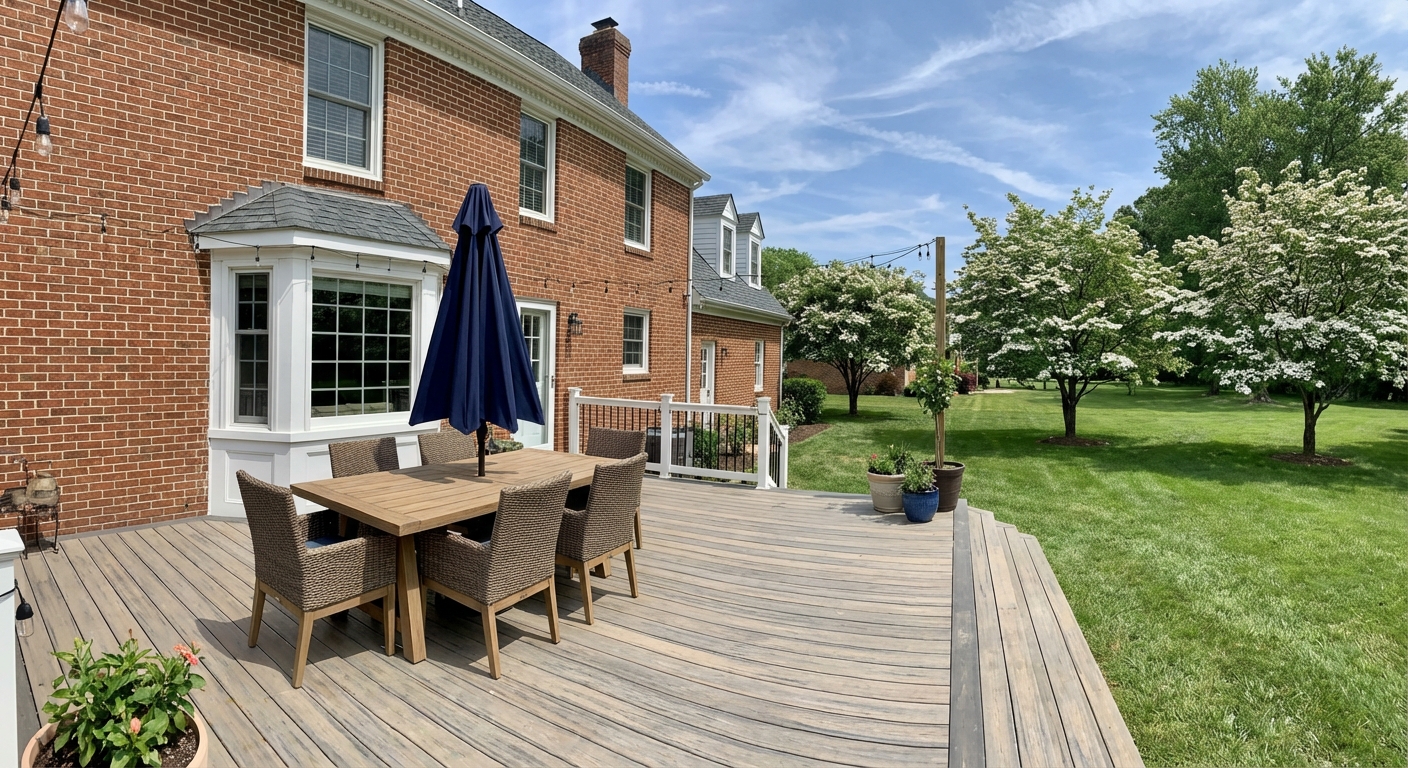
Wondering how much a new deck will cost you in Virginia? This guide breaks down the factors influencing deck prices across the state, from Northern Virginia to Hampton Roads, helping you budget accurately for your outdoor living space. Prices vary significantly based on materials, size, location, and required permits.
🧮 Tool Alert: Deck Cost Calculator
Estimate your project costs in seconds based on local pricing bands for your area.
Calculate My Cost →Understanding Virginia Deck Costs in 2026
Looking for more regional information? Check out our Virginia State Decking Hub.
🏗️ Planning a deck project?
Get a free manual project review, or visualize your dream deck with AI before requesting quotes.
The cost of building a deck in Virginia depends on several key variables:
- Material Choice: Pressure-treated wood, composite decking, cedar, and exotic hardwoods each have different price points.
- Deck Size and Complexity: Larger, multi-level decks with intricate designs will naturally cost more.
- Location: Labor and material costs fluctuate across Virginia, with higher prices in Northern Virginia (DC suburbs) and Hampton Roads.
- Permits and Regulations: Deck permits are required in most Virginia localities for decks over 30 inches above grade or attached to your home, adding to the overall expense.
- Labor Costs: Experienced deck builders charge more for their expertise, but can ensure a quality build that adheres to local building codes.
- Site Preparation: Removing existing structures, leveling the ground, or dealing with difficult terrain can increase costs.
<!-- slot:after-intro -->
Average Deck Costs in Virginia by Material
Here's a breakdown of average deck costs per square foot in Virginia, installed:
| Material | Average Cost Per Square Foot (Installed) |
|-------------------|----------------------------------------|
| Pressure-Treated | $25 - $45 |
| Cedar | $35 - $55 |
| Composite | $45 - $80 |
| Trex | $50 - $85 |
Keep in mind these are *average* figures. Your actual cost may vary.
Pressure-Treated Wood Decks
Pressure-treated lumber is the most affordable decking material. It's chemically treated to resist rot, insects, and fungal decay. Expect to pay between $25 and $45 per square foot, installed. While budget-friendly, pressure-treated wood requires regular maintenance (staining or sealing) to prevent warping and splitting.
Cedar Decks
Cedar offers a natural, beautiful look with good resistance to rot and insects. Cedar decks typically cost $35 to $55 per square foot, installed. It's a mid-range option that combines aesthetics with reasonable durability. Like pressure-treated lumber, cedar requires regular sealing to maintain its appearance.
Composite Decks
Composite decking is made from a blend of wood fibers and recycled plastic. It’s low-maintenance, resists fading and staining, and comes in a variety of colors and textures. Composite decks cost $45 to $80 per square foot, installed. While more expensive upfront, composite decking’s longevity and minimal upkeep can save you money over time. Use PaperPlan (paperplan.app) to visualize your deck with PaperPlan design with different materials and layouts before committing to a contractor.
Trex Decks
Trex is a popular brand of composite decking known for its durability and wide range of styles. Trex decks typically cost $50 to $85 per square foot, installed. Trex offers various product lines with different price points and warranties.
Regional Cost Variations Across Virginia
Deck building costs vary significantly depending on your location within Virginia:
- Northern Virginia (Arlington, Fairfax, Loudoun, Prince William): Expect to pay a premium due to higher labor costs and material prices. Costs can be 30-40% higher than the state average. Smaller lots and strict HOA regulations can also add to the complexity and expense.
- Hampton Roads (Virginia Beach, Norfolk, Chesapeake): Coastal areas often have higher labor costs and may require specialized hurricane-rated hardware, increasing the overall price. Salt air corrosion is a major concern, necessitating corrosion-resistant fasteners. Elevated builds are also common in flood zones.
- Richmond Metro Area: Deck costs are generally in line with the state average. However, historic neighborhoods like the Fan District may have stricter architectural guidelines that influence material choices and design complexity.
- Shenandoah Valley and Roanoke/Southwest Virginia: These regions typically have the most affordable deck building costs in the state due to lower labor rates and material prices.
Deck Permits and Building Codes in Virginia
Understanding Virginia's building codes and permit requirements is crucial for a successful deck project. The Virginia Uniform Statewide Building Code (USBC) is based on the International Residential Code (IRC) and the Virginia Residential Code (VRC). Enforcement is handled by local building officials.
Deck Permit Requirements
Most Virginia localities require a deck permit if your deck is:
- Attached to your house
- More than 30 inches above grade (ground level)
Check with your local building department for specific requirements and to obtain the necessary permits. <!-- slot:mid-content --> Ignoring permit requirements can lead to fines and even forced demolition of your deck.
Permit Costs
Expect to pay between $100 and $500 for a deck permit in Virginia, depending on the locality. Arlington and other Northern Virginia counties tend to have higher permit fees.
Virginia Contractor Licensing
The Virginia Department of Professional and Occupational Regulation (DPOR) requires contractors to be licensed. There are three classes of licenses:
- Class A: For projects valued at $70,000 or more.
- Class B: For projects valued between $10,000 and $70,000.
- Class C: For projects valued under $10,000.
Always verify that your chosen deck builder has the appropriate license for the scope of your project.
Hurricane-Rated Hardware
If you live in a coastal area like Virginia Beach, Norfolk, or Chesapeake, your deck must be built with hurricane-rated hardware. Simpson Strong-Tie hurricane ties are often mandatory to ensure your deck can withstand high winds.
Termite Considerations
Virginia has a high termite pressure, particularly in Tidewater and Piedmont regions. Using termite-resistant materials like pressure-treated lumber or composite decking is strongly recommended. Consider pre-treating the soil around your deck with a termiticide.
Other Cost Factors to Consider
Beyond materials and labor, several other factors can impact your deck's overall cost:
- Deck Design: Simple rectangular decks are less expensive than multi-level decks with curves, built-in seating, or custom features.
- Railing and Stairs: Railing material (wood, composite, metal) and the number of stairs will affect the price.
- Lighting and Electrical: Adding lighting, outlets, or ceiling fans requires electrical work, which adds to the cost.
- Under-Deck Drainage Systems: If you want to create a dry space under your deck, you'll need to install a drainage system.
- Demolition of Existing Deck: Removing an old deck can add to the overall cost.
- HOA Approval: Many HOAs, particularly in Northern Virginia (Fairfax, Loudoun, Prince William counties) and planned communities in Virginia Beach, require approval for deck designs. This can add time and potentially cost if revisions are needed.
Tips for Saving Money on Your Deck Project
- Get Multiple Quotes: Obtain quotes from at least three different deck builders to compare pricing and services.
- Choose Materials Wisely: Pressure-treated lumber is the most affordable option, but requires more maintenance.
- Consider a Smaller Deck: Reducing the size of your deck can significantly lower the cost.
- Build During the Off-Season: Deck builders may offer discounts during the slower winter months.
- Do Some of the Work Yourself (If Qualified): You can save money by handling tasks like demolition or staining, but leave structural work to the professionals.
- Plan Ahead: Careful planning can help you avoid costly changes or surprises during construction.
Best Time to Build a Deck in Virginia
The best time to build a deck in Virginia is during the spring (March-June) or fall (September-November). The weather is typically mild, and humidity is lower, making it more comfortable for outdoor construction. Avoid building during the peak summer months (July and August) due to high heat and humidity.
<!-- slot:before-faq -->
Remember to research local deck builders and review their portfolios. Read online reviews and ask for references to ensure you're hiring a reputable and qualified contractor. Consider reading Best Deck Builders in Virginia Beach: Coastal Build Specialists if you are in that region. For Northern Virginia, check out Best Deck Builders in Arlington, VA: Northern Virginia Guide for 2026. Also, see Do You Need a Deck Permit in Virginia? State & County Rules for detailed permit information.
🎨 Not sure which material to pick?
Upload a photo of your backyard and see exactly how Trex, TimberTech, or cedar would look — free and instant.
Frequently Asked Questions
How long does it take to build a deck in Virginia?
The construction time for a deck depends on its size and complexity. A simple, ground-level deck can typically be built in 1-2 weeks. Larger, multi-level decks may take 3-6 weeks or longer. Permitting can also add to the overall timeline.
What are the most common deck sizes in Virginia?
Common deck sizes in Virginia range from 12x12 (144 sq ft) for small patios to 16x20 (320 sq ft) or larger for entertaining spaces. The ideal size depends on your needs and the size of your yard.
Can I build a deck myself in Virginia?
Yes, you can build a deck yourself in Virginia, but you'll need to obtain the necessary permits and ensure your deck meets all building code requirements. If you're not experienced in construction, it's best to hire a licensed contractor.
How do I find a reputable deck builder in Virginia?
- Ask for Referrals: Get recommendations from friends, family, or neighbors.
- Check Online Reviews: Read reviews on sites like Google, Yelp, and the Better Business Bureau.
- Verify Licensing: Ensure the contractor has a valid Virginia DPOR license.
- Get Multiple Quotes: Compare bids from several contractors.
- Review Portfolios: Look at examples of their previous work.
- Check Insurance: Confirm the contractor has liability insurance and workers' compensation coverage.
What type of railing is best for a Virginia deck?
The best type of railing depends on your budget, aesthetic preferences, and maintenance requirements. Wood railings are classic and affordable, while composite railings are low-maintenance and durable. Metal railings offer a modern look and can be very strong. Also, consider the Chesapeake Bay influence and waterfront properties needing marine-grade fasteners for salt spray resistance.
<!-- slot:end -->
📋 Planning a deck project?
Get a free manual project review from our team — no obligation, no spam.
Get Free Project Review →Upload a backyard photo and preview real decking materials with AI — free, instant, no sign-up.
Permits, costs, material comparisons, and questions to ask before requesting quotes — delivered to your inbox.