
Do You Need a Deck Permit in Virginia? State & County Rules
Building a deck in Virginia? Learn about deck permit requirements, costs, and building codes to ensure your project is compliant. Get the facts before you build!
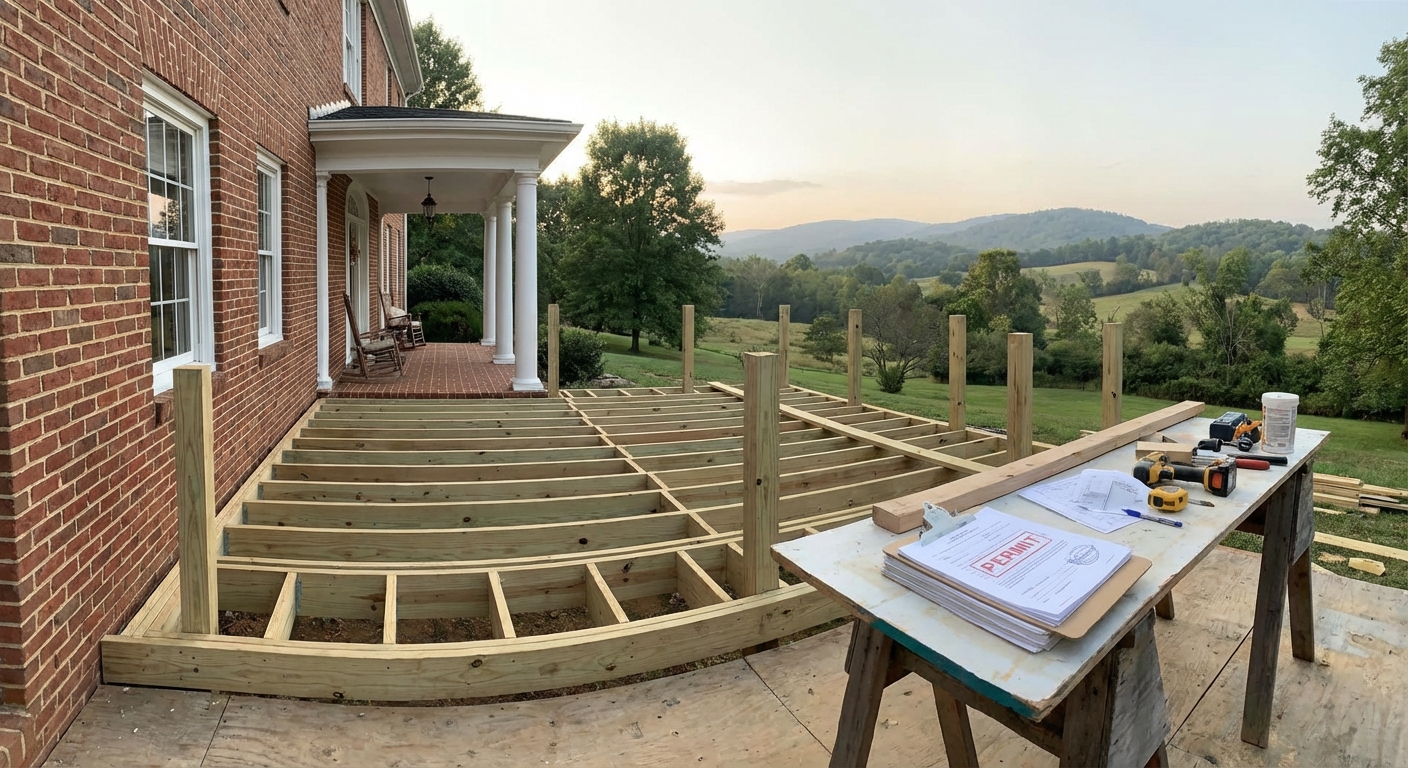
Wondering if you need a deck permit in Virginia? The answer is usually yes, especially if your deck is attached to your house or more than 30 inches above grade. This guide breaks down Virginia's deck permit requirements, costs, and building codes to help you navigate the process successfully. Keep reading to ensure your deck project stays on the right side of the law.
📋 Tool Alert: Permit Checker
Do you really need a permit? Check the exact rules for your city or township.
Check Permits →Virginia Deck Permit Basics
Looking for more regional information? Check out our Virginia State Decking Hub.
🏗️ Planning a deck project?
Get a free manual project review, or visualize your dream deck with AI before requesting quotes.
Virginia operates under the Virginia Uniform Statewide Building Code (USBC), which is based on the International Residential Code (IRC) and Virginia Residential Code (VRC). While the state provides the overarching framework, enforcement and specific interpretations fall to your local building officials. This means permit requirements and the application process vary by city, county, and even HOA.
Typically, a permit is required if:
- Your deck is attached to your house.
- Your deck is more than 30 inches above grade at any point.
- Your deck will have a roof or other covering.
Failure to obtain a necessary permit can result in fines, stop-work orders, and even forced removal of your deck. It's always best to check with your local building department *before* starting any construction.
<!-- slot:after-intro -->
Understanding Virginia's Building Code
The Virginia Uniform Statewide Building Code (USBC) ensures minimum safety standards for all construction projects, including decks. It covers aspects like:
- Footings: Depth and size requirements based on soil type and frost line (18 inches in Tidewater, 24 inches in mountain regions).
- Structural Integrity: Proper joist sizing, beam support, and railing strength.
- Guardrails and Handrails: Height and spacing requirements to prevent falls.
- Stairways: Rise, run, and headroom requirements for safe access.
- Egress: Ensuring a clear and safe exit route from your home.
Ignoring these codes can lead to safety hazards and permit rejection. Familiarize yourself with the code or work with a qualified contractor who understands the requirements. Virginia Deck Building Codes: Key Requirements for 2026
Cost Considerations
Building a deck in Virginia involves several costs, and permit fees are just one piece of the puzzle. Here's a look at typical costs to budget for:
- Permit Fees: Range from $100 to $500 depending on your location and the complexity of your project.
- Materials: Pressure-treated lumber ($25-$45 per square foot), composite decking ($45-$80 per square foot), cedar ($35-$55 per square foot), and Trex ($50-$85 per square foot).
- Labor: Varies depending on the contractor and project scope. Expect higher labor costs in Northern Virginia (DC metro) and Hampton Roads.
- Other Expenses: Include excavation, demolition (if applicable), railing systems, stairs, and landscaping.
Construction costs in Virginia tend to be moderate to high. Northern Virginia (DC metro) and Hampton Roads are generally more expensive, while the Shenandoah Valley and Southwest Virginia are more affordable.
Here's a comparison of typical deck material costs (installed):
| Material | Cost per Square Foot (Installed) |
|-------------------|------------------------------------|
| Pressure-Treated | $25 - $45 |
| Cedar | $35 - $55 |
| Composite | $45 - $80 |
| Trex | $50 - $85 |
Remember that these are just averages. Get multiple quotes from local contractors to get a more accurate estimate for your specific project. How Much Does a Deck Cost in Virginia? Complete 2026 Guide and Deck Cost Per Square Foot in Virginia: 2026 Pricing Breakdown offer further cost details.
Navigating the Permit Process
The permit application process generally involves these steps:
1. Contact Your Local Building Department: Find out the specific requirements for your area. Most localities have this information on their website.
2. Prepare Your Deck Plans: You'll need detailed drawings showing the dimensions, materials, and construction methods. Some jurisdictions require engineer-stamped plans for complex projects.
3. Submit Your Application: Include your plans, site plan, and any required fees.
4. Wait for Approval: The building department will review your application and may request revisions.
5. Schedule Inspections: Once approved, you'll need to schedule inspections at various stages of construction (footings, framing, final).
Be prepared to provide accurate information and follow the instructions carefully to avoid delays.
<!-- slot:mid-content -->
Location-Specific Considerations in Virginia
Virginia's diverse geography and climate influence deck building practices. Here's how different regions approach deck construction:
- Hampton Roads/Tidewater (Virginia Beach, Norfolk, Chesapeake): Coastal environment requires corrosion-resistant hardware (marine-grade fasteners, stainless steel). Hurricane-rated hardware (Simpson Strong-Tie) is often mandatory. Elevated decks are common in flood zones. Termite pressure is high, necessitating termite-resistant materials. Virginia Beach Deck Permit: Requirements, Costs & How to Apply in 2026
- Northern Virginia (Arlington, Fairfax, Loudoun, Prince William): Premium pricing due to proximity to Washington, D.C. Small lots and townhome decks are common. HOAs often have strict architectural guidelines and require approval.
- Richmond Metro: Historic districts (Fan, Museum District) have architectural guidelines. James River proximity requires consideration for waterfront properties. Diverse neighborhoods offer varying styles and challenges. Best Deck Builders in Richmond, VA: James River Metro Guide for 2026
- Shenandoah Valley: More affordable construction costs. Mountainous terrain may require specialized foundation work.
- Roanoke/Southwest Virginia: Similar to the Shenandoah Valley, with potentially challenging terrain.
Remember that the Chesapeake Bay influence extends beyond Hampton Roads, impacting material choices and construction techniques for waterfront properties throughout the region.
Hiring a Licensed Contractor
Virginia's Department of Professional and Occupational Regulation (DPOR) requires contractors to be licensed. There are three classes of licenses:
- Class A: For projects exceeding $70,000.
- Class B: For projects between $10,000 and $70,000.
- Class C: For projects under $10,000.
Hiring a licensed contractor ensures they have the necessary knowledge, skills, and insurance to complete your project safely and legally. Always verify their license status with DPOR before signing a contract.
Additional Tips for Your Virginia Deck Project
- Plan Ahead: Start planning your deck project well in advance, especially if you need HOA approval or have a complex design.
- Consider the Climate: Virginia's humid subtropical climate means hot summers and mild winters (except in the mountains). Choose materials that can withstand the elements. The best build months are March-June and September-November, avoiding peak summer humidity.
- Think About Maintenance: Different decking materials require different levels of maintenance. Choose one that fits your lifestyle and budget.
- Visualize Your Design: Use PaperPlan (paperplan.app) to visualize your deck with PaperPlan design with different materials and layouts before committing to a contractor. This can help you make informed decisions about materials, size, and features.
<!-- slot:before-faq -->
🎨 Not sure which material to pick?
Upload a photo of your backyard and see exactly how Trex, TimberTech, or cedar would look — free and instant.
Frequently Asked Questions
Do I need a permit to replace my existing deck?
Generally, yes, if you are replacing more than 25% of the deck or altering its size or configuration. Replacing decking boards without changing the structure might not require a permit, but always check with your local building department.
How long does it take to get a deck permit in Virginia?
The processing time varies depending on the locality and the complexity of your project. It can take anywhere from a few days to several weeks.
What happens if I build a deck without a permit?
You could face fines, stop-work orders, and even be required to remove the deck. It's always best to obtain the necessary permits before starting construction.
Can I build my own deck in Virginia?
Yes, you can build your own deck if you own the property. However, you'll still need to obtain the necessary permits and pass inspections. You'll be held to the same building code standards as a licensed contractor.
What are the typical deck inspection stages in Virginia?
Typical inspection stages include:
- Footing Inspection: Before pouring concrete for the footings.
- Framing Inspection: After the framing is complete but before decking is installed.
- Final Inspection: After the deck is fully completed.
<!-- slot:end -->
Building a deck in Virginia can enhance your outdoor living space and increase your property value. By understanding the permit requirements, building codes, and local considerations, you can ensure a successful and compliant project. Best Deck Builders in Norfolk, VA: Hampton Roads Guide for 2026 and Best Deck Builders in Arlington, VA: Northern Virginia Guide for 2026 can help you find qualified local professionals if you decide not to DIY.
📋 Planning a deck project?
Get a free manual project review from our team — no obligation, no spam.
Get Free Project Review →Upload a backyard photo and preview real decking materials with AI — free, instant, no sign-up.
Permits, costs, material comparisons, and questions to ask before requesting quotes — delivered to your inbox.