
Deck Cost Per Square Foot in Virginia: 2026 Pricing Breakdown
Wondering about deck costs in VA? Get a detailed 2026 breakdown of deck cost per square foot, materials, permits, and regional price differences.
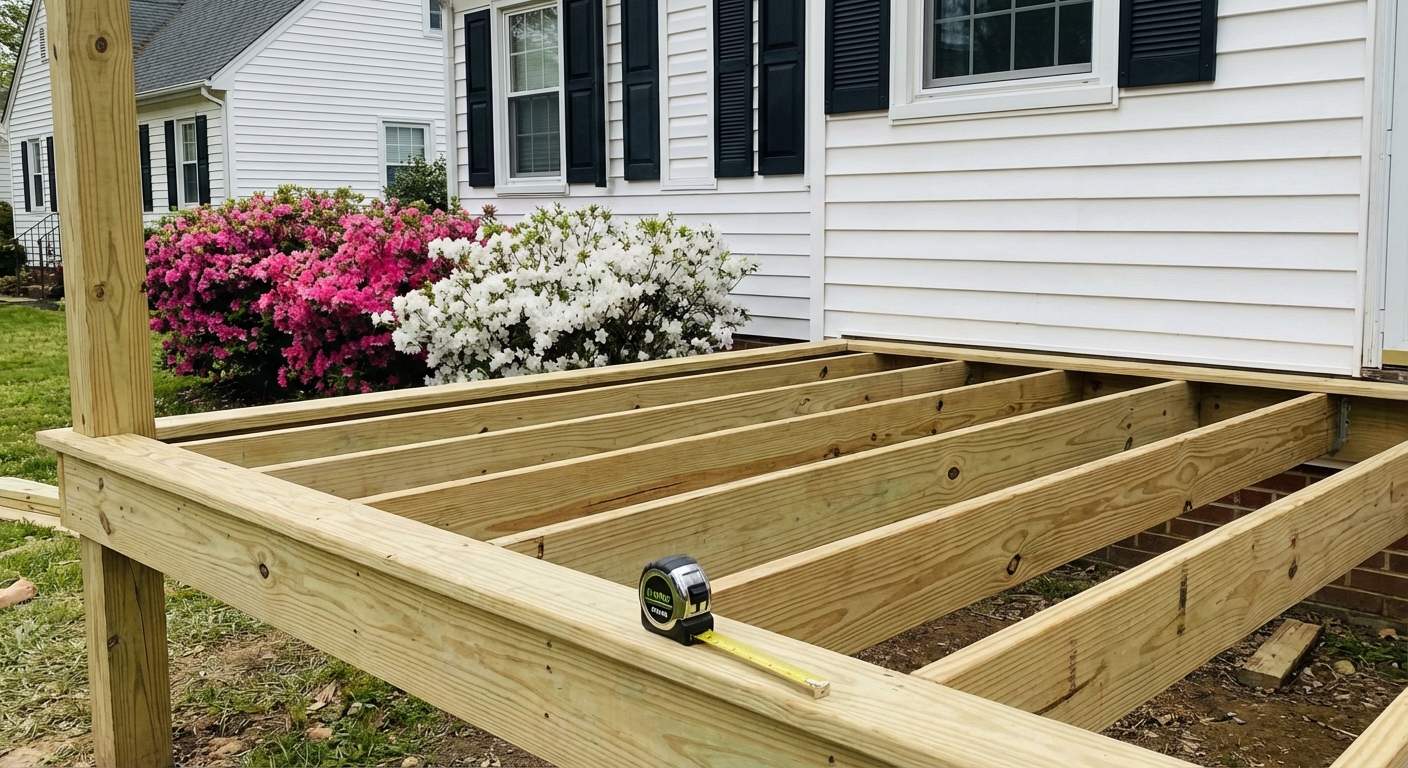
Building a deck in Virginia adds value and outdoor living space, but understanding the costs beforehand is crucial. This guide breaks down the deck cost per square foot in Virginia for 2026, covering materials, labor, permits, and regional variations to help you budget accurately.
🧮 Tool Alert: Deck Cost Calculator
Estimate your project costs in seconds based on local pricing bands for your area.
Calculate My Cost →Deck Material Costs Per Square Foot in Virginia (2026)
Looking for more regional information? Check out our Virginia State Decking Hub.
🏗️ Planning a deck project?
Get a free manual project review, or visualize your dream deck with AI before requesting quotes.
The primary cost driver is the decking material itself. Here's a breakdown of average installed costs per square foot for common decking materials in Virginia:
- Pressure-Treated Lumber: $25 - $45 per square foot. This is the most affordable option, but requires regular maintenance.
- Cedar: $35 - $55 per square foot. Offers natural beauty and insect resistance, but also needs maintenance.
- Composite: $45 - $80 per square foot. Low-maintenance and durable, available in various colors and textures.
- Trex (Composite): $50 - $85 per square foot. A popular brand of composite decking known for its quality and warranty.
These prices include both materials and labor for a standard deck installation. More complex designs or difficult site conditions will increase costs.
<!-- slot:after-intro -->
Regional Cost Differences in Virginia
Construction costs vary across Virginia. Expect to pay more in these areas:
- Northern Virginia (Arlington, Fairfax, Loudoun, Prince William): Prices can be 30-40% higher than the state average due to higher labor costs and material demand.
- Hampton Roads/Tidewater (Virginia Beach, Norfolk, Chesapeake): Costs are slightly above the state average.
- Richmond Metro: Costs are generally close to the state average.
- Shenandoah Valley & Roanoke/SW Virginia: Expect slightly lower costs compared to the state average.
Material Cost Comparison Table
| Material | Average Cost Per Sq Ft (Installed) | Pros | Cons |
| ------------------ | ----------------------------------- | -------------------------------------------------------------------- | --------------------------------------------------------------------- |
| Pressure-Treated | $25 - $45 | Affordable, readily available | Requires regular maintenance, prone to warping and splintering |
| Cedar | $35 - $55 | Natural beauty, insect-resistant | Requires maintenance, can be more expensive than pressure-treated |
| Composite | $45 - $80 | Low-maintenance, durable, wide range of colors and textures | Higher upfront cost, can get hot in direct sunlight |
| Trex | $50 - $85 | Premium composite, excellent warranty, fade and stain resistant | Most expensive option |
Other Factors Affecting Deck Cost
Beyond the decking material, several other factors influence the final cost of your deck project:
Size and Complexity
Larger decks naturally cost more due to increased material usage and labor hours. Complex designs with multiple levels, curves, or built-in features also increase costs.
Labor Costs
Labor costs are a significant portion of the total price. Rates vary depending on the contractor's experience, location, and the complexity of the project. Northern Virginia generally has the highest labor rates.
Permits and Inspections
In Virginia, decks over 30 inches above grade or attached to a dwelling typically require a permit. The Virginia Uniform Statewide Building Code (USBC) governs deck construction, and local building officials enforce it. Permit costs typically range from $100 to $500, depending on the locality. Neglecting permits can lead to fines and required demolition, so factor this into your budget. See Do You Need a Deck Permit in Virginia? State & County Rules for more details.
Railings and Stairs
Railing material and design significantly impact cost. Options include wood, composite, metal, and glass. Stairs also add to the overall expense, especially if you have multiple levels.
Foundation and Framing
The foundation and framing provide the structural support for your deck. Pressure-treated lumber is commonly used for framing. The frost line in Virginia ranges from 18 inches in Tidewater to 24 inches in mountain regions, influencing the depth of the footings required.
Site Preparation
Site preparation can include clearing vegetation, leveling the ground, and removing obstacles. If your site requires extensive preparation, it will add to the overall cost.
Add-ons and Upgrades
Consider these optional features that can increase your deck's functionality and value:
- Lighting: Adds ambiance and safety.
- Built-in Seating: Saves space and adds comfort.
- Pergolas or Gazebos: Provides shade and shelter.
- Outdoor Kitchens: Creates a complete outdoor living space.
Hurricane-Rated Hardware (Coastal Zones)
If you live in a coastal area like Hampton Roads, including Virginia Beach and Norfolk, you'll likely need hurricane-rated hardware, such as Simpson Strong-Tie hurricane ties. This adds to the material cost but is essential for safety and code compliance. Salt air also necessitates corrosion-resistant fasteners. For specific information on Virginia Beach, see Virginia Beach Deck Permit: Requirements, Costs & How to Apply in 2026.
<!-- slot:mid-content -->
Contractor Licensing in Virginia
The Virginia Department of Professional and Occupational Regulation (DPOR) requires contractors to be licensed. There are three classes of licenses:
- Class A: For projects valued at $70,000 or more.
- Class B: For projects valued between $10,000 and $70,000.
- Class C: For projects valued under $10,000.
Always verify that your contractor has the appropriate license for the size and scope of your project.
Tips for Saving Money on Your Deck Project
- Choose pressure-treated lumber: If budget is your primary concern, pressure-treated lumber is the most cost-effective option.
- Keep the design simple: Avoid complex shapes, multiple levels, and intricate railing designs.
- Get multiple quotes: Obtain bids from at least three different contractors to compare pricing.
- Consider off-season construction: You might find better deals during the off-season (late fall and winter), although weather can be a factor. The best build months in Virginia are generally March-June and September-November.
- Do some of the work yourself (if qualified): If you have the skills and time, you can save money by handling tasks like demolition or site preparation. However, leave the structural work to the professionals.
- Use PaperPlan: Use PaperPlan (paperplan.app) to visualize your deck with PaperPlan design with different materials and layouts before committing to a contractor. This helps you optimize your design and avoid costly changes later.
Virginia-Specific Considerations
- Termites: Virginia has high termite pressure, especially in the Tidewater and Piedmont regions. Use termite-resistant materials and consider professional termite treatment.
- HOA Approval: Many Homeowners Associations (HOAs), particularly in Northern Virginia (Fairfax, Loudoun, Prince William counties) and Virginia Beach planned communities, require approval for deck projects. Check your HOA guidelines before starting any work.
- Chesapeake Bay Influence: Properties near the Chesapeake Bay require marine-grade fasteners and materials resistant to salt spray.
- Flood Zones: In areas prone to flooding, especially along the coast, elevated deck designs are common and may be required by local regulations.
- Architectural Guidelines: Historic districts like the Fan District and Museum District in Richmond often have strict architectural guidelines that you must adhere to.
<!-- slot:before-faq -->
Finding a Reputable Deck Builder in Virginia
Choosing the right contractor is essential for a successful deck project. Look for contractors with:
- Proper licensing and insurance: Verify that the contractor is licensed with the VA DPOR and has adequate insurance coverage.
- Experience: Choose a contractor with a proven track record of building decks in your area. See Best Deck Builders in Virginia Beach: Coastal Build Specialists or Best Deck Builders in Richmond, VA: James River Metro Guide for 2026 for recommendations in specific cities.
- Positive reviews and references: Check online reviews and ask for references from previous clients.
- Clear communication: The contractor should be responsive, communicative, and willing to answer your questions.
- Detailed contract: Ensure that the contract clearly outlines the scope of work, materials, payment schedule, and warranty information.
<!-- slot:end -->
🎨 Not sure which material to pick?
Upload a photo of your backyard and see exactly how Trex, TimberTech, or cedar would look — free and instant.
Frequently Asked Questions
How much does it cost to remove an old deck in Virginia?
Demolishing and removing an existing deck typically costs between $5 and $10 per square foot. This includes labor, debris removal, and disposal fees.
What is the average lifespan of a wood deck in Virginia?
With proper maintenance, a pressure-treated wood deck can last 15-20 years. Cedar decks may last longer, up to 20-25 years, with regular staining and sealing.
How often should I stain or seal my wood deck in Virginia?
It's generally recommended to stain or seal your wood deck every 1-3 years, depending on the weather exposure and the type of sealant used.
Are composite decks worth the extra cost in Virginia?
Composite decks require minimal maintenance and can last 25-50 years or more. While they have a higher upfront cost, their longevity and low-maintenance nature can make them a worthwhile investment in the long run. Consider Composite Deck Cost in Virginia: What to Expect in 2026 for a deeper dive.
What are the Virginia deck building code requirements?
Virginia deck building codes are based on the International Residential Code (IRC) and the Virginia Residential Code (VRC). Key requirements include proper footing depth (influenced by the frost line), beam and joist sizing, railing height, and stair construction. Always consult with your local building department and see Virginia Deck Building Codes: Key Requirements for 2026 for more details.
📋 Planning a deck project?
Get a free manual project review from our team — no obligation, no spam.
Get Free Project Review →Upload a backyard photo and preview real decking materials with AI — free, instant, no sign-up.
Permits, costs, material comparisons, and questions to ask before requesting quotes — delivered to your inbox.