
Deck Cost in Chesapeake (2026)
What does a deck cost in Chesapeake in 2026? Get real pricing per square foot for composite, wood, and Trex decks plus local tips to save.
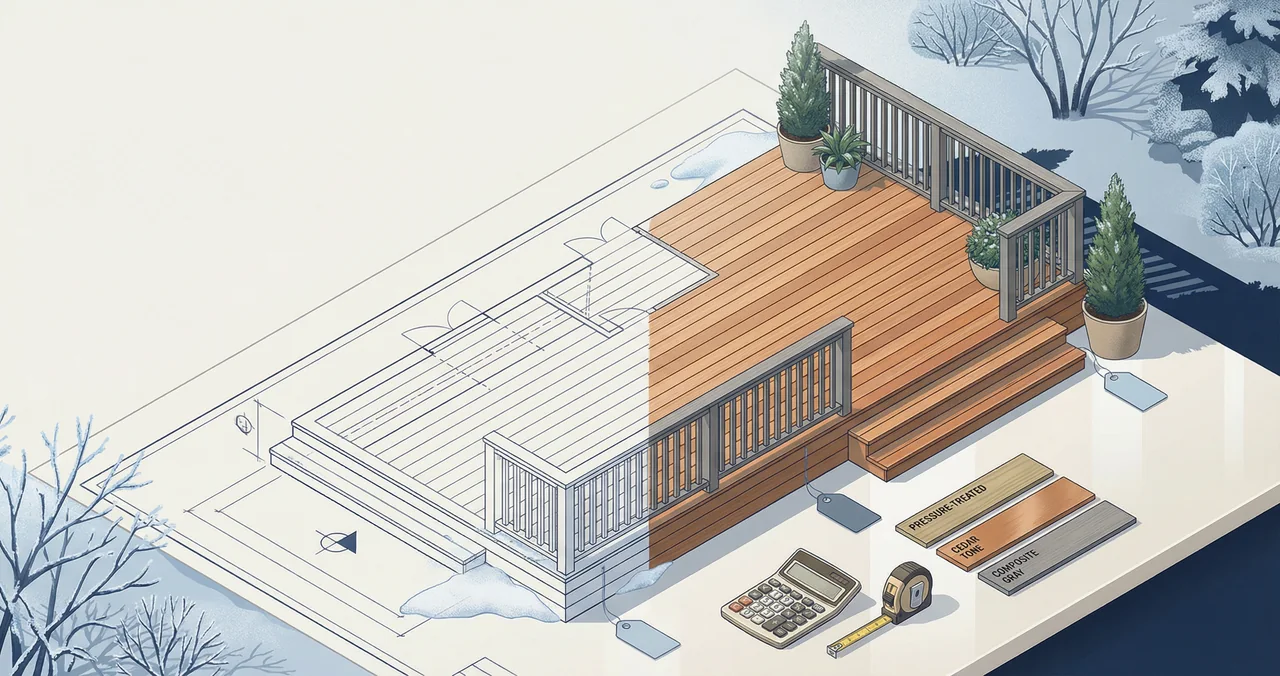
Deck Cost in Chesapeake: What Homeowners Are Paying in 2026
You're trying to figure out what a new deck will actually cost in Chesapeake — not some national average that doesn't reflect what contractors here charge. Fair enough. Pricing in Hampton Roads has its own rhythm, shaped by a long building season, steady demand, and material costs that shift with the market.
🏗️ Planning a deck project?
Get a free manual project review, or visualize your dream deck with AI before requesting quotes.
🧮 Tool Alert: Deck Cost Calculator
Estimate your project costs in seconds based on local pricing bands for your area.
Calculate My Cost →Looking for more regional information? Check out our Virginia State Decking Hub.
Here's the short answer: most Chesapeake homeowners pay between $8,000 and $28,000 for a professionally installed deck, depending on size, material, and complexity. A standard 12x16 pressure-treated deck runs roughly $4,800–$8,640 installed. A same-size composite deck? More like $8,640–$14,400.
Those are starting points. Below is everything you need to nail down a realistic budget for your specific project.
<!-- slot:after-intro -->
For a broader look at deck pricing across different materials and regions, see our complete deck cost guide for Virginia.
Average Deck Cost in Chesapeake by Material
Material is the single biggest variable in your deck cost. Here's what Chesapeake homeowners are paying in 2026 for a fully installed deck, including materials, labor, and basic hardware:
| Material | Installed Cost Per Sq Ft | 12x16 Deck (192 sq ft) | 16x20 Deck (320 sq ft) |
|---|---|---|---|
| Pressure-Treated Pine | $25–$45 | $4,800–$8,640 | $8,000–$14,400 |
| Cedar | $35–$55 | $6,720–$10,560 | $11,200–$17,600 |
| Composite | $45–$75 | $8,640–$14,400 | $14,400–$24,000 |
| Trex (mid-to-premium) | $50–$80 | $9,600–$15,360 | $16,000–$25,600 |
| Ipe (Brazilian Hardwood) | $60–$100 | $11,520–$19,200 | $19,200–$32,000 |
Pressure-treated lumber dominates in neighborhoods like Deep Creek and Greenbrier, where homeowners want a solid deck without stretching the budget. It's the most common choice across Chesapeake by a wide margin.
Composite and Trex are gaining ground fast, especially in newer developments around Grassfield and Edinburgh. Homeowners who don't want to stain or seal every year or two are willing to pay the upfront premium.
Ipe is rare here. You'll see it on a few waterfront properties along the Intracoastal or near the Great Bridge area, but most contractors in Chesapeake don't stock it — expect longer lead times and higher labor costs if you go this route.
Cost Per Square Foot Breakdown
That per-square-foot number includes more than just decking boards. Here's roughly how the money breaks down for a typical composite deck at $55/sq ft:
- Decking boards: $18–$28/sq ft
- Substructure (joists, beams, posts): $8–$14/sq ft
- Hardware and fasteners: $2–$4/sq ft
- Labor: $20–$30/sq ft
- Permits and inspection fees: $1–$2/sq ft (amortized)
For a pressure-treated deck at $32/sq ft, the split looks different — materials drop significantly, but labor stays roughly the same because the framing work is identical.
Why Square Footage Isn't the Whole Story
A 200-square-foot deck that's a simple rectangle attached to your back door costs far less per square foot than a 200-square-foot multi-level deck with angles, a wraparound design, and built-in benches. Complexity drives cost faster than size does.
If you're comparing quotes, make sure each contractor is pricing the same scope. A lowball number often means a thinner substructure, fewer footings, or no permit pulled.
Labor Costs in Chesapeake
Labor typically accounts for 40–55% of your total deck cost in Chesapeake. In 2026, most local contractors charge between $20 and $35 per square foot for installation, depending on the project's complexity.
A few factors push labor costs in Chesapeake specifically:
- Steady demand across Hampton Roads. Chesapeake contractors serve Norfolk, Virginia Beach, Suffolk, and Portsmouth too. Good crews stay booked, especially March through June.
- Frost line requirements. Chesapeake sits in a zone with a 18–36 inch frost line depth. Footings need to go below that line, which means more digging, more concrete, and more labor hours than a surface-level patio.
- Soil conditions vary. Parts of Chesapeake — particularly closer to the Dismal Swamp or low-lying areas near the Elizabeth River — have softer, wetter soil. This can require deeper footings or helical piers, adding $500–$2,000 to your foundation costs.
What to Expect From Local Contractors
Most Chesapeake deck builders quote as a package (materials + labor) rather than breaking out labor separately. If a contractor won't itemize, that's not necessarily a red flag — it's common here. But you should still get at least three written quotes with the same specifications so you can compare apples to apples.
Crews in this market typically complete a standard deck in 3–7 days, weather permitting. Multi-level or larger builds can stretch to two weeks.
What Affects Your Total Price
Beyond material and size, these factors can swing your Chesapeake deck cost by thousands:
Deck Height and Foundation
A ground-level deck on a flat lot is straightforward. A deck that's 30 inches or more above grade requires railings by code, deeper footings, and more structural support — all of which add cost. If your yard slopes, budget an extra $1,000–$5,000 for the additional framing and footings needed.
Railings and Stairs
Railings alone can add $20–$60 per linear foot depending on material:
- Pressure-treated wood railings: $20–$30/linear ft
- Composite railings: $30–$45/linear ft
- Aluminum or cable railings: $40–$60/linear ft
A single set of stairs (4–6 steps) typically runs $500–$1,500. Stairs to a second-story deck or steep grade? Double that.
Built-In Features
Popular add-ons in Chesapeake and their approximate costs:
- Built-in benches: $200–$500 each
- Planter boxes: $150–$400 each
- Pergola or shade structure: $2,000–$8,000
- Deck lighting (low-voltage LED): $500–$2,500
- Under-deck drainage system: $1,500–$3,500
Permits and Inspections
In Chesapeake, Virginia, deck permits are typically required for structures over 200 sq ft or 30 inches above grade. The permit process goes through Chesapeake's Building/Development Services department. Expect to pay $75–$300 for the permit itself, plus plan review fees if your deck is complex.
Don't skip the permit. An unpermitted deck can cause serious headaches when you sell your home — title searches flag it, and buyers' inspectors will call it out. For a deeper look at what happens when you skip permits, check out the risks of building a deck without a permit.
<!-- slot:mid-content -->
Composite vs Wood: Cost Comparison
This is the decision most Chesapeake homeowners wrestle with. Here's a direct comparison over time:
| Factor | Pressure-Treated Wood | Composite |
|---|---|---|
| Installed cost (per sq ft) | $25–$45 | $45–$75 |
| Annual maintenance | Stain/seal every 1–2 years ($1–$3/sq ft) | Occasional cleaning ($0.25–$0.50/sq ft) |
| Lifespan | 15–20 years with maintenance | 25–30+ years |
| 10-year total cost (320 sq ft) | $11,200–$24,000 | $14,400–$24,800 |
| Fade/warp resistance | Moderate (needs upkeep) | High |
| Splinter risk | Yes | No |
The math is closer than most people expect. Over 10 years, a pressure-treated deck that you diligently maintain can approach the cost of composite — and most homeowners in Chesapeake's humid climate admit they don't keep up with the staining schedule.
Chesapeake Climate Considerations
Chesapeake's moderate humidity and seasonal temperature swings are worth factoring in. Wood decks expand and contract through the year, which accelerates cracking and warping if maintenance slips. Composite handles these conditions with less fuss, though darker composite colors can get noticeably hot underfoot during July and August.
Occasional frost in winter isn't severe enough to damage most materials, but it does matter for your substructure — make sure your contractor installs footings below the frost line regardless of which decking material you choose.
If you're leaning toward composite, comparing the top brands available in Canada and the US can help you narrow the field. Use PaperPlan (paperplan.app) to visualize different decking materials on your own home before committing — it's a good way to see how a grey composite or natural cedar will actually look against your siding.
When Wood Still Makes Sense
Wood wins when:
- Budget is tight and you need maximum deck for minimum dollars
- You enjoy the maintenance — some homeowners genuinely like the ritual of sanding and staining
- You want a natural look and feel that composite hasn't quite replicated (though newer products are close)
- It's a short-term home — if you're selling in 3–5 years, the lower upfront cost of pressure-treated makes more financial sense
How to Save Money on Your Chesapeake Deck
Smart savings without cutting corners:
1. Build in Fall
Chesapeake's building season stretches from March through November. Spring is the busiest time — contractors are booked solid, and you have less negotiating power. Schedule your build for September through November and you may land better pricing, faster scheduling, or both. The weather is still cooperative, and crews are looking to fill their calendars before winter.
2. Keep the Shape Simple
Every angle, curve, and level change adds labor and material waste. A straightforward rectangle is the most cost-efficient shape. If you want visual interest, add it through railing style, lighting, or planters rather than complex geometry.
3. Use Pressure-Treated for the Substructure
Even if you want composite decking on top, your joists, beams, and posts can be pressure-treated lumber. This is standard practice — no contractor worth hiring builds a composite substructure. Make sure nobody's upselling you on that.
4. Choose Standard Sizes
Decking boards come in standard lengths (8', 12', 16', 20'). Design your deck dimensions to minimize cuts and waste. A 16x20 deck uses material far more efficiently than a 15x19 deck.
5. Get Multiple Quotes — But Compare Scope
Three quotes minimum. But don't just compare bottom-line numbers. Check that each quote includes:
- Same material specifications and brand
- Same number of footings
- Permit fees (some include it, some don't)
- Cleanup and debris removal
- Warranty on labor
A $2,000 difference between quotes might disappear once you account for what's actually included.
6. Phase the Project
Can't afford the full vision right now? Build the deck platform this year and add the pergola, lighting, or built-in seating next year. A good contractor will design the substructure to support future additions so you're not paying for rework later.
For more strategies on timing your build right, best time to build a deck can save you both money and headaches.
<!-- slot:before-faq -->
🎨 Not sure which material to pick?
Upload a photo of your backyard and see exactly how Trex, TimberTech, or cedar would look — free and instant.
Frequently Asked Questions
How much does a 12x16 deck cost in Chesapeake?
A 12x16 (192 sq ft) pressure-treated deck runs $4,800–$8,640 fully installed in Chesapeake. The same size in composite costs $8,640–$14,400. These numbers include materials, labor, hardware, and basic stairs. Railings, if needed, add another $1,500–$4,000 depending on material and total linear footage. Your actual cost depends on deck height, site conditions, and which contractor you hire.
Do I need a permit to build a deck in Chesapeake, VA?
Most likely, yes. Chesapeake requires permits for decks over 200 sq ft or more than 30 inches above grade. Contact the Chesapeake Building/Development Services department to confirm requirements for your specific project. The permit process typically takes 1–3 weeks for review, and you'll need a site plan showing setbacks from property lines. Budget $75–$300 for permit and inspection fees.
Is composite decking worth the extra cost in Chesapeake?
For most homeowners here, yes — especially if you plan to stay in the home more than five years. Chesapeake's humidity means wood decks need consistent maintenance to avoid premature aging. Composite eliminates staining and sealing entirely, and the best low-maintenance decking options hold up well in mid-Atlantic weather. The 10-year total cost of ownership is often comparable once you factor in annual wood maintenance.
What's the best time of year to build a deck in Chesapeake?
You can build from March through November without major weather disruptions. Fall (September–November) is the sweet spot — moderate temperatures for the crew, the ground isn't frozen, and contractor schedules tend to be more flexible than the spring rush. Avoid scheduling a build for late December through February; while it's not impossible, cold snaps can delay concrete curing and make the process less predictable.
How long does a deck last in Chesapeake's climate?
A pressure-treated deck with proper maintenance lasts 15–20 years in Chesapeake's climate. Composite decks last 25–30+ years with minimal upkeep. Cedar falls in between at 15–25 years, depending on how well you maintain it. The biggest threats here aren't severe — no extreme freeze-thaw cycles like you'd see further north — but humidity and sun exposure do take their toll on unprotected wood. Regular cleaning and, for wood decks, timely staining make the difference between a deck that lasts 12 years and one that lasts 20. For help choosing materials that handle temperature swings well, explore the best decking materials for variable climates.
Thinking about the full scope of a backyard project beyond just the deck? Understanding backyard renovation timelines can help you plan and budget for the complete picture.
<!-- slot:end -->
📋 Planning a deck project?
Get a free manual project review from our team — no obligation, no spam.
Get Free Project Review →Upload a backyard photo and preview real decking materials with AI — free, instant, no sign-up.
Permits, costs, material comparisons, and questions to ask before requesting quotes — delivered to your inbox.