
Composite Deck Cost in Virginia: What to Expect in 2026
Planning a composite deck in Virginia? Discover 2026 costs, factors affecting price, permits, and expert tips for your project.
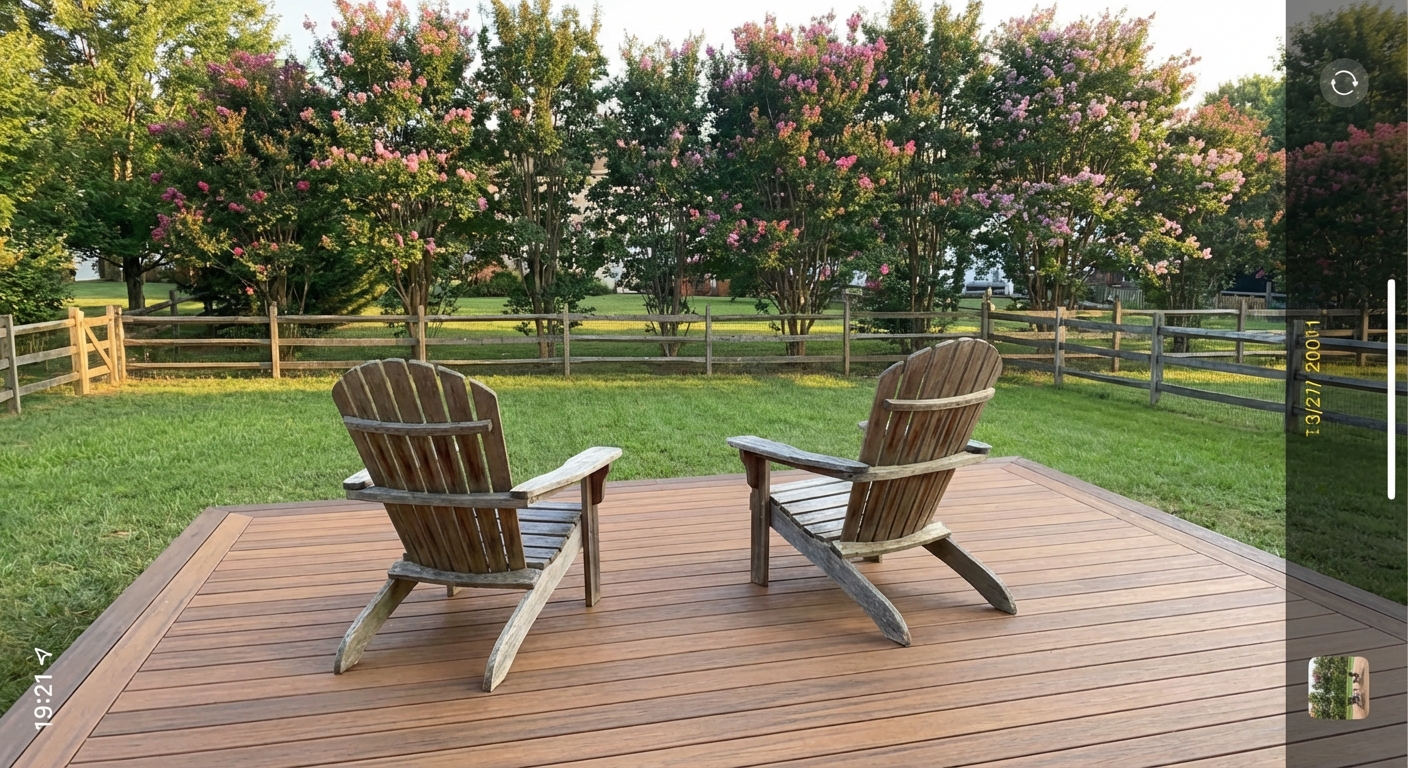
Are you considering a composite deck for your Virginia home and want to understand the costs involved in 2026? This guide breaks down the pricing factors, regional differences, permit requirements, and other essential information to help you budget effectively and make informed decisions.
🧮 Tool Alert: Deck Cost Calculator
Estimate your project costs in seconds based on local pricing bands for your area.
Calculate My Cost →What’s the Average Cost of a Composite Deck in Virginia?
Looking for more regional information? Check out our Virginia State Decking Hub.
🏗️ Planning a deck project?
Get a free manual project review, or visualize your dream deck with AI before requesting quotes.
In Virginia, you can generally expect to pay between $45 and $80 per square foot for a professionally installed composite deck in 2026. This price range encompasses the cost of materials, labor, permits, and other associated expenses.
Here's a quick comparison of common decking material costs in Virginia:
| Material | Cost per Square Foot (Installed) |
|-------------------|-----------------------------------|
| Pressure-Treated | $25 - $45 |
| Composite | $45 - $80 |
| Cedar | $35 - $55 |
| Trex | $50 - $85 |
Keep in mind that these are average figures. Your actual cost will depend on several factors, which we'll explore in detail below.
<!-- slot:after-intro -->
Factors Influencing Composite Deck Costs in Virginia
Several elements can significantly impact the overall cost of your composite deck project in Virginia.
1. Size and Complexity
The larger and more intricate your deck design, the higher the price will be. Multi-level decks, custom railings, curved borders, and built-in features like benches or planters all add to the labor and material costs. Use PaperPlan (paperplan.app) to visualize your deck with PaperPlan design with different materials and layouts before committing to a contractor.
2. Material Choice and Quality
Different composite decking brands and product lines offer varying levels of durability, aesthetics, and price. Premium brands like Trex often come with higher price tags but also offer enhanced warranties and superior performance.
3. Labor Costs
Labor rates vary across Virginia. You'll find that labor costs are generally higher in Northern Virginia (due to its proximity to Washington, D.C.) and Hampton Roads compared to areas like the Shenandoah Valley or Roanoke. The complexity of the project also influences labor costs.
4. Site Conditions and Accessibility
If your property has challenging terrain, requires extensive site preparation, or has limited access for equipment and materials, your contractor may charge more to compensate for the added difficulty.
5. Permits and Inspections
In most Virginia localities, you'll need a permit for a deck that is over 30 inches above grade or attached to your house. Permit costs typically range from $100 to $500, depending on the locality. Factor in time for inspections as well. Review Do You Need a Deck Permit in Virginia? State & County Rules for specific details.
6. Railing and Features
Railing materials (composite, metal, or wood), staircase design, lighting, and other features significantly contribute to the overall cost. Expect to pay more for custom or high-end options.
7. Location within Virginia
As mentioned earlier, location plays a significant role. Expect to pay a premium in Northern Virginia (Arlington, Fairfax, Loudoun, Prince William counties), where demand and cost of living are higher. Coastal areas like Virginia Beach and Norfolk require corrosion-resistant materials, adding to the expense.
Composite Decking Material Costs Breakdown
While the installed cost gives you a general idea, here’s a more detailed breakdown of the material costs:
| Composite Brand/Type | Cost per Square Foot (Materials Only) | Notes |
|-----------------------|---------------------------------------|--------------------------------------------------------------------------------------------------------|
| Entry-Level Composite | $8 - $12 | More affordable, may have less realistic wood grain, shorter warranty. |
| Mid-Range Composite | $12 - $18 | Good balance of price and quality, decent durability and aesthetics. |
| Premium Composite | $18 - $25+ | High-end aesthetics, superior durability, longer warranties (e.g., Trex Transcend, TimberTech Azek). |
These figures are approximate and can vary based on the specific product line and supplier.
Regional Cost Differences in Virginia
Virginia has distinct regions with varying construction costs and building requirements:
- Northern Virginia (Arlington, Fairfax, Loudoun, Prince William): Expect to pay a premium of 30-40% above the state average due to higher labor costs, stricter regulations, and smaller lot sizes. Townhome decks are common here. Consult Best Deck Builders in Arlington, VA: Northern Virginia Guide for 2026.
- Hampton Roads/Tidewater (Virginia Beach, Norfolk, Chesapeake): Coastal environment necessitates corrosion-resistant hardware. Hurricane-rated hardware is mandatory in coastal zones. Flood zone considerations may require elevated builds, increasing costs. Salt air exposure demands marine-grade fasteners. See Best Deck Builders in Virginia Beach: Coastal Build Specialists and Best Deck Builders in Norfolk, VA: Hampton Roads Guide for 2026.
- Richmond Metro: Diverse neighborhoods with varying architectural styles. The historic Fan District and Museum District have strict guidelines. Riverfront properties along the James River may require specialized construction techniques. Find pros in Best Deck Builders in Richmond, VA: James River Metro Guide for 2026.
- Shenandoah Valley and Roanoke/SW Virginia: Generally more affordable than Northern Virginia or Hampton Roads. Labor costs are lower, and material prices may be slightly less expensive.
Virginia Building Codes and Permit Requirements
Your deck project must comply with the Virginia Uniform Statewide Building Code (USBC), which is based on the International Residential Code (IRC) and the Virginia Residential Code (VRC). Local building officials enforce these codes.
Key requirements include:
- Footings: Must extend below the frost line (typically 18-24 inches deep, depending on the region).
- Support Posts: Properly sized and spaced to support the deck load.
- Beams and Joists: Adequate size and spacing based on span and load requirements.
- Railing Height: Minimum 36 inches for residential decks.
- Stair Stringers and Treads: Meeting specific dimensional requirements for safety.
- Fasteners: Corrosion-resistant and appropriate for the materials used. In coastal areas, hurricane ties (Simpson Strong-Tie) are often required.
Decks exceeding 30 inches above grade or attached to a dwelling typically require a permit. Check with your local building department for specific requirements and fees.
<!-- slot:mid-content -->
Choosing the Right Composite Decking Contractor in Virginia
Hiring a qualified and licensed contractor is crucial for a successful deck project. In Virginia, the Department of Professional and Occupational Regulation (DPOR) requires contractors to be licensed.
There are three classes of contractor licenses:
- Class A: For projects valued at $70,000 or more.
- Class B: For projects valued between $10,000 and $70,000.
- Class C: For projects valued at less than $10,000.
Verify that your contractor has the appropriate license for the size and scope of your project. Also, check their insurance coverage (general liability and workers' compensation) and references from previous clients.
Tips for Saving Money on Your Composite Deck Project
- Get multiple quotes: Obtain bids from at least three different contractors to compare pricing and services.
- Consider off-season construction: You may be able to negotiate better prices during the off-season (winter months), although weather can be a factor.
- Simplify the design: Opting for a simpler rectangular deck design can reduce labor costs and material waste.
- Choose cost-effective materials: Explore different composite decking brands and product lines to find the best balance of price and performance.
- Handle some tasks yourself (if qualified): You might save money by handling tasks like demolition of an existing deck or site cleanup, but only if you have the necessary skills and experience.
Additional Considerations for Virginia Homeowners
- Termite Protection: Virginia has a high termite pressure, especially in Tidewater and Piedmont. Use termite-resistant materials and consider professional termite treatment.
- Homeowners Association (HOA) Approval: Many HOAs, particularly in Northern Virginia and Virginia Beach planned communities, require approval for deck projects. Check your HOA guidelines before starting any work.
- Best Time to Build: The best months for deck construction in Virginia are typically March-June and September-November, avoiding the peak summer humidity.
<!-- slot:before-faq -->
Estimating the Cost of Your Deck
To get a more accurate estimate for your composite deck project, follow these steps:
1. Determine the desired size and shape of your deck.
2. Choose your preferred composite decking material.
3. Contact several local contractors for quotes. Provide them with detailed information about your project requirements.
4. Review the quotes carefully, comparing the scope of work, materials, and labor costs.
5. Factor in permit fees and other potential expenses.
<!-- slot:end -->
🎨 Not sure which material to pick?
Upload a photo of your backyard and see exactly how Trex, TimberTech, or cedar would look — free and instant.
Frequently Asked Questions
How long will a composite deck last in Virginia?
A well-maintained composite deck can last for 25-30 years or even longer in Virginia. The lifespan depends on the quality of the materials, the installation workmanship, and the level of maintenance. Proper cleaning and protection from moisture and sunlight can extend the life of your deck.
Is composite decking worth the investment in Virginia?
Composite decking generally requires less maintenance than wood decking, resisting rot, insect damage, and splintering. While the initial cost is higher, the long-term savings on maintenance and repairs can make it a worthwhile investment, especially in Virginia's humid climate. Also, consider Deck Cost Per Square Foot in Virginia: 2026 Pricing Breakdown for more details.
What are the pros and cons of composite decking in Virginia's climate?
Pros:
- Resistant to moisture, rot, and insect damage (important in Virginia's humid climate and high termite pressure).
- Low maintenance.
- Splinter-free.
- Available in various colors and styles.
Cons:
- Higher initial cost compared to wood.
- Can get hotter than wood in direct sunlight.
- May be susceptible to staining from spills or mold growth if not properly cleaned.
How do I find a reputable deck builder in Virginia?
- Ask for referrals: Get recommendations from friends, family, or neighbors who have had deck work done.
- Check online reviews: Look for contractors with positive reviews on platforms like Google, Yelp, and Angie's List.
- Verify licenses and insurance: Ensure the contractor is properly licensed with the Virginia DPOR and has adequate insurance coverage.
- Get multiple quotes: Compare bids from several contractors before making a decision.
- Review their portfolio: Ask to see examples of their previous work to assess their quality and craftsmanship.
What type of fasteners should I use for a composite deck in Virginia Beach?
In Virginia Beach, due to the coastal environment and salt air, it's essential to use marine-grade stainless steel fasteners. These fasteners are highly resistant to corrosion and will help prevent premature deterioration of your deck. Hurricane-rated fasteners are also required in many coastal areas. Be sure to check local building codes before you start your project. Look into Virginia Beach Deck Permit: Requirements, Costs & How to Apply in 2026 and Virginia Deck Building Codes: Key Requirements for 2026.
📋 Planning a deck project?
Get a free manual project review from our team — no obligation, no spam.
Get Free Project Review →Upload a backyard photo and preview real decking materials with AI — free, instant, no sign-up.
Permits, costs, material comparisons, and questions to ask before requesting quotes — delivered to your inbox.