
Texas Deck Design Ideas (2026)
Dreaming of a new deck? Explore Texas deck design ideas, material options, and pricing to create your perfect outdoor oasis, no matter your budget.
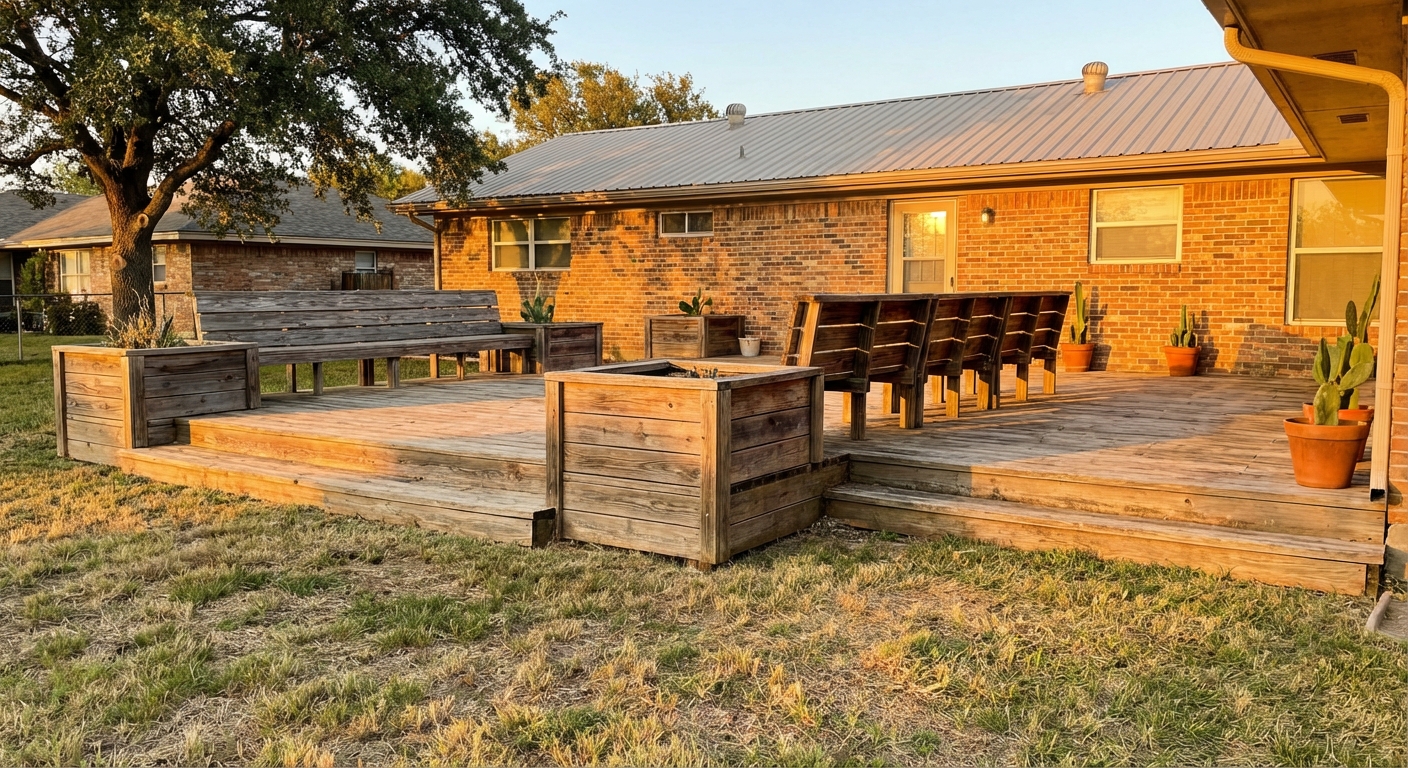
Are you a Texas homeowner ready to transform your backyard with a beautiful and functional deck? The Texas sun, while glorious, can be brutal, and the sheer variety of design options can feel overwhelming. This guide provides inspiration and practical advice to help you design the perfect deck for your Texas lifestyle, considering everything from material costs to local permit requirements. With no state income tax in Texas, many homeowners choose to invest those extra funds into home improvements like a new deck!
Finding Your Perfect Texas Deck Design
Looking for more regional information? Check out our Texas State Decking Hub.
🏗️ Planning a deck project?
Get a free manual project review, or visualize your dream deck with AI before requesting quotes.
Your dream deck should reflect your personal style and cater to your specific needs. Consider how you plan to use the space. Will it be primarily for entertaining, relaxing, cooking, or a combination of all three?
- Entertaining: Opt for a larger deck area with built-in seating, an outdoor kitchen, or a designated dining space.
- Relaxing: Think about comfortable lounge furniture, shade structures like pergolas or covered patios, and perhaps a water feature.
- Pool Decks: If you have a pool, a deck creates a seamless transition between your indoor and outdoor living spaces. Choose slip-resistant materials and consider adding features like a wet bar or outdoor shower.
Popular Deck Styles in Texas
Here are a few popular deck styles that work well in the Texas climate:
- Covered Decks: Essential for protection from the intense Texas sun and unexpected rain showers. A covered deck allows you to enjoy your outdoor space year-round.
- Multi-Level Decks: Great for properties with uneven terrain or for creating distinct zones within your outdoor living area.
- Wraparound Decks: Extend your living space and provide access to different parts of your yard.
- Pool Decks: Designed specifically to complement your pool area, providing a safe and stylish space for lounging and entertaining.
- Outdoor Kitchen Decks: Incorporate a grill, sink, countertop space, and storage for the ultimate outdoor cooking experience.
Visualize Your Dream Deck
Before contacting contractors, it's helpful to visualize your ideas. Use PaperPlan (paperplan.app) to visualize your deck with PaperPlan design with different materials and layouts. Experiment with various deck sizes, shapes, and features to find the perfect fit for your home and budget.
<!-- slot:after-intro -->
Wondering what your design will cost? Our complete deck cost guide for Texas covers pricing for every material and style. Most covered and elevated decks require permits — see our guide on deck permit guide.
Choosing the Right Decking Material for Texas Weather
The Texas climate presents unique challenges when it comes to decking materials. Intense heat, high UV exposure, and humidity (especially along the Gulf Coast) can take a toll on your deck. Selecting the right material is crucial for longevity and aesthetics.
Here's a breakdown of popular decking materials and their suitability for Texas:
- Pressure-Treated Wood: The most affordable option, pressure-treated lumber is readily available and relatively easy to work with. However, it requires regular maintenance (staining or sealing) to prevent warping, cracking, and insect damage, especially termites prevalent in Gulf Coast regions. Expect to pay around $25-45 per square foot installed.
- Cedar: A naturally beautiful and durable wood that is resistant to rot and insects. Cedar requires less maintenance than pressure-treated lumber but is more expensive. Plan for costs of about $35-55 per square foot installed.
- Composite Decking: Made from a blend of wood fibers and recycled plastic, composite decking is low-maintenance, durable, and resistant to fading, staining, and scratching. However, it can get very hot in direct sunlight, with surface temperatures reaching 150°F+ in the Texas summer. Expect to pay $45-75 per square foot installed.
- Trex Decking: A popular brand of composite decking known for its durability and wide range of colors and styles. Trex offers excellent resistance to the elements but comes at a premium price. Expect to pay $50-80 per square foot installed. You can find more detailed pricing information in this guide: Trex Deck Cost in Texas: Pricing, Options & Real Examples
- Ipe: A dense and durable hardwood that is naturally resistant to rot, insects, and fire. Ipe is a beautiful and long-lasting option but also the most expensive. Expect to pay $60-100 per square foot installed.
Here's a cost comparison table to help you visualize the price differences:
| Material | Cost per Square Foot (Installed) | Pros | Cons |
| -------------------- | ---------------------------------- | ---------------------------------------------------------------------- | ------------------------------------------------------------------------ |
| Pressure-Treated | $25-45 | Affordable, readily available | Requires regular maintenance, susceptible to warping and insects |
| Cedar | $35-55 | Naturally durable, beautiful, less maintenance than pressure-treated | More expensive than pressure-treated |
| Composite | $45-75 | Low-maintenance, durable, resistant to fading and staining | Can get very hot in direct sunlight, more expensive than wood |
| Trex | $50-80 | Durable, wide range of colors and styles | Premium price, can get hot in direct sunlight |
| Ipe | $60-100 | Extremely durable, naturally resistant to rot, insects, and fire | Most expensive option |
Consider the long-term costs and maintenance requirements when making your decision. While pressure-treated lumber may be cheaper upfront, the cost of staining and repairs over time can add up. Composite decking, while more expensive initially, may save you money in the long run due to its low-maintenance nature.
Sun and Heat Considerations
Given the intense Texas sun, consider lighter-colored decking materials to minimize heat absorption. Lighter colors will stay cooler underfoot and make your deck more comfortable to use during the hottest months. For example, lighter-colored composite decking will reflect more sunlight.
Essential Deck Features for Texas Homes
Beyond the basic structure, several features can enhance the functionality and enjoyment of your Texas deck:
- Shade Structures: Pergolas, pavilions, and covered patios provide essential protection from the sun. Consider adding retractable awnings or shade sails for adjustable coverage.
- Outdoor Kitchens: A built-in grill, countertop space, sink, and refrigerator can transform your deck into a true outdoor living and entertaining space.
- Built-In Seating: Benches and planters integrated into the deck design create a comfortable and inviting atmosphere.
- Fire Features: A fire pit or outdoor fireplace can extend the use of your deck into the cooler months.
- Lighting: Strategically placed lighting can enhance the ambiance of your deck and improve safety. Consider string lights, recessed lighting, and pathway lighting.
Deck Stairs and Railings
Don't overlook the importance of stairs and railings. Ensure that your stairs are wide and have adequate lighting for safety. Railings should be sturdy and meet local building codes. Consider the aesthetic appeal of your railings and choose a style that complements your deck design. You can learn more about deck height regulations and railing requirements here: Deck Height Regulations in Texas: When Permits & Railings Are Required
<!-- slot:mid-content -->
Texas Deck Building Codes and Permits
Before you start building, it's crucial to understand the local building codes and permit requirements. Most Texas cities require permits for decks over 200 square feet or 30 inches above grade.
Here's a brief overview of permit requirements in some major Texas cities:
- Houston: No zoning but requires permits from the City of Houston Permitting Center.
- Dallas: Permits are obtained through Dallas Development Services, and fees typically range from $200-500.
- Austin: Permits are issued by Austin Development Services. Be aware that the permitting process in Austin is notoriously slow, often taking 8-12 weeks.
- San Antonio: Permits are obtained through the Development Services Department, and the process is generally faster than in Austin.
It's always best to check with your local building department to confirm the specific requirements for your project. Failing to obtain the necessary permits can result in fines and delays. You can also learn more about deck permits in Texas here: Do You Need a Deck Permit in Texas? State & City Rules Explained
Frost Line Considerations
While northern states have deep frost lines requiring substantial footings, Texas has a relatively shallow frost line, typically only 6-12 inches in most areas. This means you can use shallower and less expensive footings for your deck. This can save you significant money on the foundation of your deck.
Cost Considerations for Your Texas Deck
The cost of your deck will depend on several factors, including the size, materials, and features you choose. As mentioned earlier, pressure-treated lumber is generally the most affordable option, while Ipe is the most expensive.
Here's a general idea of deck costs in Texas:
- Pressure-Treated: $25-45 per square foot installed
- Composite: $45-75 per square foot installed
- Cedar: $35-55 per square foot installed
- Trex: $50-80 per square foot installed
- Ipe: $60-100 per square foot installed
These are just estimates, and the actual cost may vary depending on the complexity of your project and the contractor you choose. Always get multiple quotes from different contractors to ensure you're getting a fair price. For a more detailed cost breakdown, refer to this guide: How Much Does a Deck Cost in Texas? Complete 2026 Guide
Best Time to Build Your Deck
The best time to build a deck in Texas is during the cooler months, from October to April. Avoid building during the peak summer heat, as working outdoors can be challenging and materials can become excessively hot.
<!-- slot:before-faq -->
Finding a Reputable Deck Builder in Texas
Choosing the right contractor is crucial for a successful deck-building project. Look for a contractor with experience building decks in Texas and a solid reputation for quality workmanship.
Here are some tips for finding a reputable deck builder:
- Get Referrals: Ask friends, family, and neighbors for recommendations.
- Check Online Reviews: Read online reviews on sites like Google, Yelp, and the Better Business Bureau.
- Verify Licensing and Insurance: Ensure that the contractor is licensed and insured.
- Get Multiple Quotes: Obtain quotes from at least three different contractors.
- Review the Contract Carefully: Before signing a contract, review it carefully to ensure that it includes all the details of the project, including the scope of work, materials, timeline, and payment schedule.
By carefully considering these factors, you can design and build a beautiful and functional deck that you'll enjoy for years to come.
<!-- slot:end -->
🎨 Not sure which material to pick?
Upload a photo of your backyard and see exactly how Trex, TimberTech, or cedar would look — free and instant.
Frequently Asked Questions
What is the best decking material for the Texas sun?
Composite decking is a popular choice due to its durability and low maintenance. However, it can get very hot. Consider lighter colors to mitigate heat absorption. Cedar is another good option as it is naturally durable and resists rot and insects.
How much does it cost to build a deck in Texas?
The cost varies widely depending on the material. Expect to pay anywhere from $25 per square foot for pressure-treated to $100 per square foot or more for Ipe.
Do I need a permit to build a deck in Texas?
Most cities require permits for decks over 200 square feet or 30 inches above grade. Always check with your local building department to confirm the specific requirements in your area.
How long does it take to build a deck?
The timeline depends on the size and complexity of the project. A simple deck can be completed in a few days, while a larger, more complex deck with features like an outdoor kitchen could take several weeks.
📋 Planning a deck project?
Get a free manual project review from our team — no obligation, no spam.
Get Free Project Review →Upload a backyard photo and preview real decking materials with AI — free, instant, no sign-up.
Permits, costs, material comparisons, and questions to ask before requesting quotes — delivered to your inbox.