
Freeze-Thaw Damage on Michigan Decks: Prevention & Repair Guide
Michigan decks face brutal freeze-thaw cycles. Learn how to prevent & repair damage, choose the right materials, and find local deck builders.
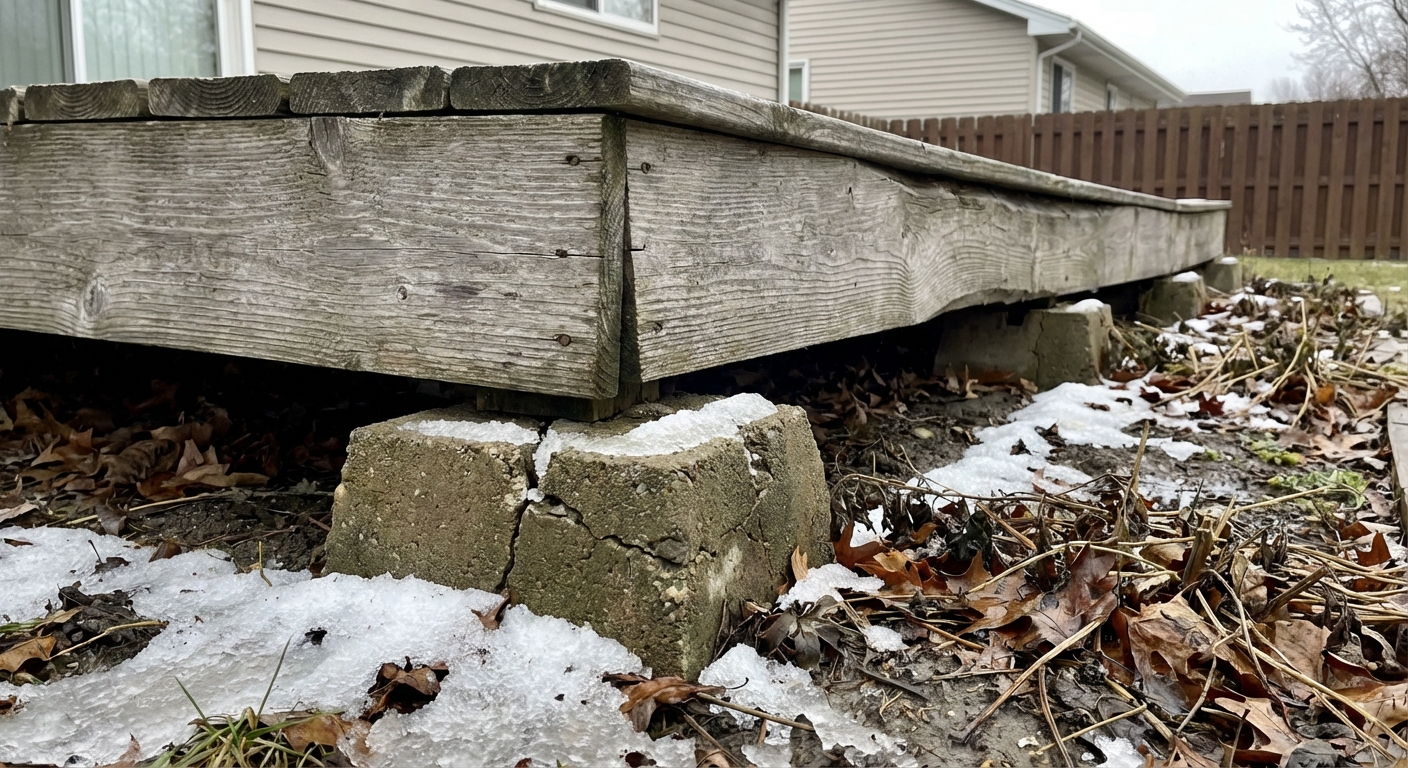
Are you noticing cracks, splinters, or loose boards on your Michigan deck? The culprit is likely freeze-thaw damage, a common problem thanks to our state's harsh winters and humid summers. This guide will help you understand how Michigan's climate impacts your deck, how to prevent damage, and how to repair it effectively.
📅 Tool Alert: Maintenance Planner
Get a custom seasonal maintenance schedule to protect your investment for decades.
Plan Maintenance →Understanding Michigan's Freeze-Thaw Cycle & Your Deck
Michigan's weather puts decks through a lot. We experience warm, humid summers with temperatures frequently in the 80-90°F range, followed by brutal winters with heavy snowfall, especially in Northern Michigan and the Upper Peninsula, where you can see over 120 inches of snow annually. Lake-effect snow also impacts areas like Grand Rapids, Muskegon, and Traverse City, increasing snow load.
🏗️ Planning a deck project?
Get a free manual project review, or visualize your dream deck with AI before requesting quotes.
This extreme temperature variation, combined with moisture, creates a powerful freeze-thaw cycle. Water seeps into the wood (or even some composite materials), freezes, expands, and then thaws. This repeated process weakens the deck's structure over time, leading to:
- Cracking and splitting of deck boards
- Loose or popped nails and screws
- Warping and cupping of boards
- Rot and decay
- Foundation issues
<!-- slot:after-intro -->
Regional Considerations
- Metro Detroit & Ann Arbor: Expect higher construction costs compared to the state average. Salt damage from road salt is also a significant concern here.
- West Michigan (Grand Rapids, Muskegon, Traverse City): Lake-effect snow increases the risk of snow load damage, especially for covered decks and pergolas.
- Northern Michigan & Upper Peninsula: The most extreme winter conditions require extra attention to waterproofing and structural integrity.
- Mid-Michigan: A balance of factors, but still subject to significant freeze-thaw cycles.
Choosing the Right Deck Materials for Michigan's Climate
Selecting the right materials is crucial for a long-lasting deck in Michigan. Here's a breakdown of common options and their suitability:
| Material | Cost (Installed $/sqft) | Pros | Cons | Freeze-Thaw Resistance |
| ----------------- | ----------------------- | ----------------------------------------------------------------------- | ------------------------------------------------------------------------------------------------------------------------------------------------------------------------------------------------------------------- | ---------------------- |
| Pressure-Treated | $22-40 | Affordable, readily available, resists rot and insects (when treated) | Prone to warping and cracking, requires regular staining/sealing, can leach chemicals | Moderate |
| Composite | $40-70 | Low maintenance, resists rot and insects, available in various colors | More expensive than pressure-treated, can get hot in direct sunlight, some cheaper composites are prone to staining and fading, can still expand and contract | High |
| Cedar | $30-50 | Naturally beautiful, resists rot and insects, less prone to warping than pressure-treated | More expensive than pressure-treated, requires regular sealing to maintain color, softer wood can be prone to dents and scratches | Moderate to High |
| Trex (Composite) | $45-75 | Premium composite, excellent durability, wide range of colors and styles | More expensive than other composites, can still get hot, requires proper installation to prevent moisture buildup | Very High |
Moisture is your enemy. Composite decking handles Michigan's high humidity and freeze-thaw cycles better than wood because it absorbs less water. However, even composite decks need proper installation to allow for expansion and contraction.
Before you settle on a material, use PaperPlan (paperplan.app) to visualize your deck with PaperPlan design with different materials and layouts before committing to a contractor. This can help you make the best choice for your budget and aesthetic preferences.
Preventing Freeze-Thaw Damage on Your Michigan Deck
Prevention is key to minimizing damage and extending the life of your deck. Here are some essential steps:
- Seal and Stain Regularly: Apply a high-quality sealant or stain every 1-2 years to protect wood decks from moisture penetration. Choose products specifically designed for exterior use and our climate. The Best Time to Stain a Deck in Michigan + Top Product Picks blog has more details.
- Clear Debris Regularly: Remove leaves, snow, and other debris that can trap moisture on the deck surface. Pay special attention to the spaces between boards.
- Ensure Proper Drainage: Make sure water can drain freely from your deck. Check for clogged gutters, downspouts, and drainage areas. Consider adding additional drainage if necessary.
- Use Ice Melt Sparingly: While ice melt can help prevent slips, excessive use can damage your deck, especially if it contains harsh chemicals. Opt for pet- and plant-friendly options and use them sparingly. Avoid rock salt, which can accelerate corrosion.
- Check Flashing: Ensure proper flashing is installed where the deck attaches to your house to prevent water from seeping into the structure. This is especially important for covered decks and can prevent ice dam issues.
- Inspect Annually: Conduct a thorough inspection of your deck each spring to identify any signs of damage early on. Look for cracks, splinters, loose boards, and signs of rot.
- Proper Footings: Ensure your deck footings extend below the frost line (42 inches in Southern Michigan, 48+ inches in Northern Michigan and the UP). This prevents the deck from shifting during freeze-thaw cycles. Decks over 30 inches above grade require permits in most jurisdictions, so be sure to check with your local building department.
- Consider a Covered Deck or Pergola: While lake-effect snow can be a concern, a well-designed covered deck or pergola can provide some protection from the elements and extend the life of your deck.
Repairing Freeze-Thaw Damage on Your Michigan Deck
If your deck has already suffered freeze-thaw damage, prompt repairs are essential to prevent further deterioration. Here are some common repairs:
- Replacing Damaged Boards: Remove and replace any cracked, split, or rotten boards. Use the same type of wood or composite material as the existing deck.
- Tightening Loose Fasteners: Tighten any loose nails or screws. If the holes are stripped, use larger screws or fill the holes with wood glue and wood dowels before re-inserting the screws.
- Repairing Cracks: Fill small cracks with exterior-grade wood filler. For larger cracks, you may need to replace the entire board.
- Treating Rot: Remove any rotted wood and treat the area with a wood preservative. Fill the void with epoxy wood filler.
- Leveling the Deck: If the deck is uneven, you may need to adjust the footings or replace damaged support posts. This is a more complex repair that may require professional assistance.
Michigan Residential Code (MRC) governs deck construction. If you're doing significant repairs, check with your local building department to see if you need a permit. Permit costs typically range from $75-400 depending on the municipality.
<!-- slot:mid-content -->
Addressing Specific Issues
- Salt Damage: If you live in an area where road salt is used, regularly rinse your deck with fresh water to remove salt buildup. Consider using a salt-resistant sealant.
- Insect Damage: Carpenter ants and termites are present in Southern Michigan. Ground-contact lumber needs to be treated to prevent infestations. Regularly inspect your deck for signs of insect damage.
- Lakefront Properties: Many Michigan lakefront properties have additional setback requirements and environmental regulations enforced by the DEQ/EGLE. Lakefront Deck Ideas for Michigan Homes: Design & Regulations has more information.
When to Hire a Professional Deck Builder in Michigan
While some deck repairs can be done DIY, more complex projects, such as replacing multiple boards, leveling the deck, or building a new deck, are best left to professionals. A qualified deck builder can ensure that the job is done correctly and that your deck meets all local building codes.
Michigan's short build season (May-October) means contractors book up quickly. Schedule your project by February for summer construction.
Cost Considerations
Keep in mind that construction costs in Michigan are moderate to low compared to coastal states, but Metro Detroit and Ann Arbor are typically more expensive. Here's a quick recap of average installed deck costs:
- Pressure-Treated: $22-40/sqft
- Composite: $40-70/sqft
- Cedar: $30-50/sqft
- Trex: $45-75/sqft
Best Deck Builders in Lansing, MI: Capital Region Guide, Best Deck Builders in Kalamazoo, MI: Southwest Michigan Guide, and Best Deck Builders in Sterling Heights, MI: Macomb County Guide can help you find reputable contractors in your area.
<!-- slot:before-faq -->
🎨 Not sure which material to pick?
Upload a photo of your backyard and see exactly how Trex, TimberTech, or cedar would look — free and instant.
Frequently Asked Questions
How often should I seal my wood deck in Michigan?
You should seal your wood deck every 1-2 years, depending on the product you use and the amount of exposure it gets to the elements. Look for signs of water absorption, such as darkening or beading water, as an indicator that it's time to reseal.
Can I build a deck myself in Michigan?
Yes, you can build a deck yourself in Michigan, but you'll need to obtain the necessary permits and follow all local building codes. Decks over 30 inches require permits in most areas. How to Build a Deck in Michigan: DIY Guide for 2026 offers a comprehensive guide.
What are the best materials for a low-maintenance deck in Michigan?
Composite decking is the best option for a low-maintenance deck in Michigan. It resists rot, insects, and fading, and requires minimal upkeep compared to wood.
How do I prevent ice dams from forming on my covered deck?
Ensure proper flashing is installed where the deck attaches to your house to prevent water from seeping into the structure and freezing. Regularly clear snow from the deck surface to reduce the risk of ice dam formation.
What are some deck design ideas suitable for Michigan's climate?
Consider incorporating features such as a covered area for protection from the sun and rain, a fire pit for enjoying the outdoors in cooler months, and durable, weather-resistant furniture. Michigan Deck Design Ideas: Inspiration for Every Season provides numerous ideas.
<!-- slot:end -->
📋 Planning a deck project?
Get a free manual project review from our team — no obligation, no spam.
Get Free Project Review →Upload a backyard photo and preview real decking materials with AI — free, instant, no sign-up.
Permits, costs, material comparisons, and questions to ask before requesting quotes — delivered to your inbox.