
How to Build a Deck in Michigan: DIY Guide for 2026
Build your dream deck in Michigan! This comprehensive DIY guide covers permits, costs, materials, and MI-specific building codes for 2026.
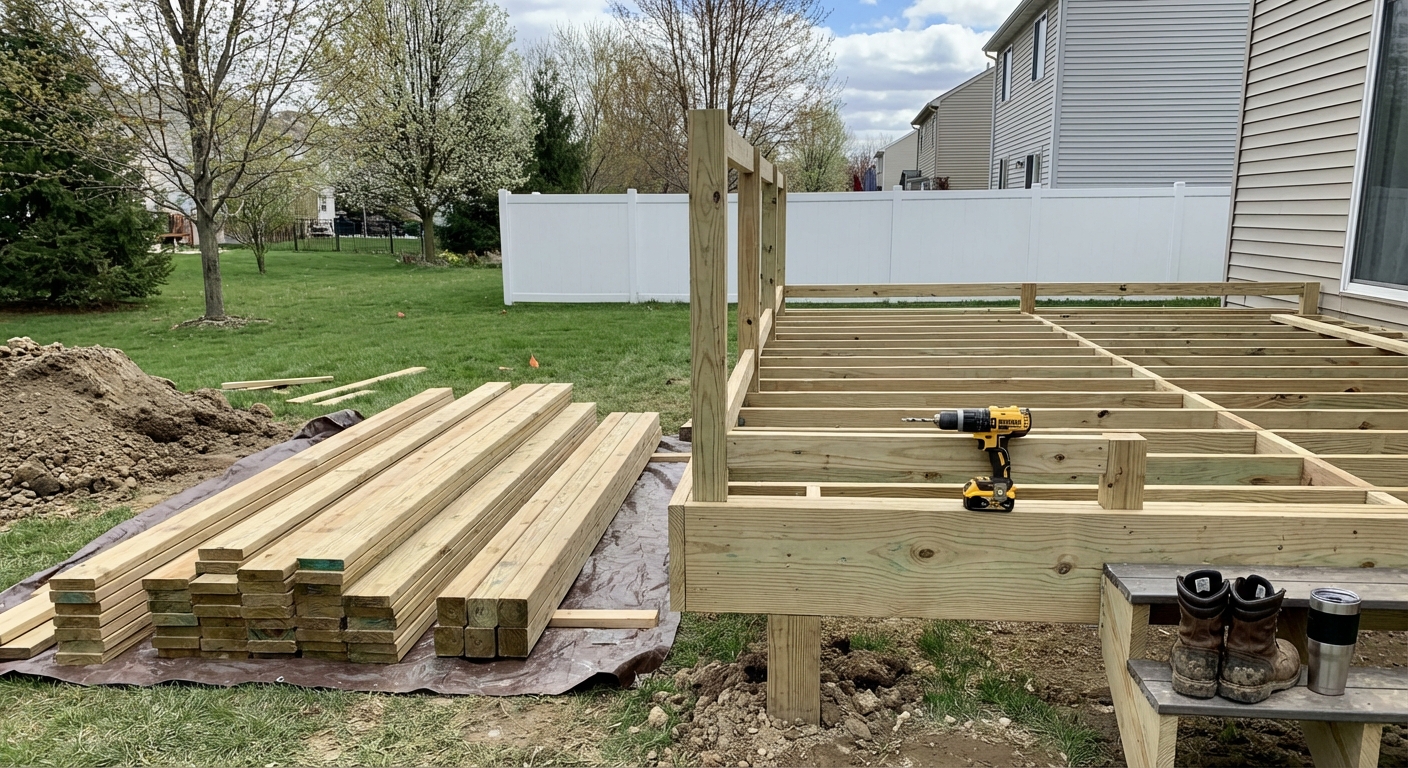
Are you a Michigan homeowner ready to build a deck and enjoy those long summer evenings? Building a deck yourself can be a rewarding project, but it's crucial to understand Michigan's unique climate, building codes, and potential challenges. This guide provides a comprehensive overview to help you plan and execute your deck build successfully.
📐 Tool Alert: Deck Stair Calculator
Calculate rise, run, and stringer cuts while ensuring IRC/OBC code compliance.
Calculate Stairs →Planning Your Michigan Deck Project
Before you even pick up a hammer, meticulous planning is essential. This includes design, material selection, budgeting, and understanding local regulations.
🏗️ Planning a deck project?
Get a free manual project review, or visualize your dream deck with AI before requesting quotes.
Deck Design and Size
Consider how you'll use your deck. Will it be for grilling and dining, lounging, or entertaining large groups? Your intended use will dictate the size and layout. Think about factors like:
- Traffic flow: Ensure easy access from your house and yard.
- Furniture placement: Plan for adequate space for tables, chairs, and other furniture.
- Sun exposure: Consider the direction of the sun and whether you want shaded areas.
- Privacy: Think about adding privacy screens or landscaping. Use PaperPlan (paperplan.app) to visualize your deck with PaperPlan design with different materials and layouts before committing to a contractor, or even before finalizing your material list for a DIY build.
Material Selection: Wood vs. Composite
Choosing the right materials is crucial for durability and aesthetics. Here's a breakdown of popular options in Michigan:
- Pressure-Treated Lumber: This is the most affordable option, offering decent resistance to rot and insects. However, it requires regular maintenance (cleaning, staining, sealing) to prevent warping and cracking.
- Cedar: A naturally beautiful and durable wood, cedar is more resistant to rot and insects than pressure-treated lumber. It also requires regular maintenance but less frequently than pressure-treated wood. Expect to pay more upfront.
- Composite Decking (Trex, etc.): Made from recycled plastic and wood fibers, composite decking is low-maintenance, highly durable, and resistant to rot, insects, and fading. It's the most expensive option upfront but can save you money in the long run due to its longevity. It also handles Michigan's freeze-thaw cycles much better than wood.
Here's a cost comparison table (installed prices) for different decking materials in Michigan:
| Material | Average Cost per Square Foot | Pros | Cons |
| ----------------- | ---------------------------- | ----------------------------------------------------------------------- | ---------------------------------------------------------------------- |
| Pressure-Treated | $22 - $40 | Most affordable, readily available | Requires frequent maintenance, prone to warping and cracking |
| Cedar | $30 - $50 | Naturally beautiful, more durable than pressure-treated, insect resistant | Requires maintenance, more expensive than pressure-treated |
| Composite (Trex) | $45 - $75 | Low-maintenance, highly durable, resistant to rot and insects | Most expensive upfront, can get hot in direct sunlight, may look less natural |
Permitting and Building Codes
In Michigan, decks over 30 inches above grade or attached to the house typically require a building permit. Contact your local municipality's building department to confirm specific requirements and obtain the necessary permits. Failing to do so can result in fines and delays. Typical permit costs in Michigan range from $75 to $400, depending on the municipality.
Michigan Residential Code (MRC) governs deck construction. Key aspects include:
- Footing Depth: Michigan's frost line ranges from 42 inches in southern Michigan to 48+ inches in northern Michigan and the Upper Peninsula. Footings must extend below the frost line to prevent movement due to freezing and thawing.
- Post Size and Spacing: Follow MRC guidelines for post size and spacing based on deck size and load.
- Beam Size and Span: Use appropriate beam sizes based on the span between posts.
- Joist Size and Spacing: Use appropriate joist sizes based on the span between beams.
- Railing Height and Spacing: Railings must be at least 36 inches high and have openings no wider than 4 inches.
- Stair Construction: Stairs must meet specific requirements for rise, run, and handrails.
<!-- slot:after-intro -->
Step-by-Step Deck Building Guide
Once you have your plans, materials, and permits, you're ready to start building. Here's a step-by-step guide:
1. Layout and Excavation
- Mark the perimeter of your deck according to your plans.
- Excavate holes for the footings, ensuring they extend below the frost line. Use a post hole digger or rent an auger for larger projects.
2. Pouring Footings
- Pour concrete into the excavated holes, ensuring the tops are level and at the correct height.
- Embed post anchors into the wet concrete to secure the posts.
3. Installing Posts
- Attach the posts to the post anchors using appropriate hardware.
- Ensure the posts are plumb (perfectly vertical) before securing them.
4. Attaching the Ledger Board (For Attached Decks)
- If your deck is attached to your house, attach a ledger board to the house using lag screws or bolts. Proper flashing is *critical* to prevent water damage and ice dams, especially in Michigan's climate.
- Ensure the ledger board is level and properly secured.
5. Building the Frame (Beams and Joists)
- Attach the beams to the posts using appropriate hardware.
- Install the joists between the beams, ensuring they are properly spaced and secured.
- Use joist hangers to attach the joists to the ledger board (for attached decks) and beams.
6. Installing Decking
- Start installing the decking boards, leaving a small gap between each board for expansion and contraction. Michigan's high humidity and freeze-thaw cycles mean deck boards will expand and contract *significantly*.
- Use screws or hidden fasteners to secure the decking boards.
7. Building Railings and Stairs
- Install the railing posts, ensuring they are securely attached to the deck frame.
- Attach the railing sections to the posts.
- Build the stairs, ensuring they meet all code requirements for rise, run, and handrails.
8. Finishing Touches
- Install any trim or fascia boards to cover exposed framing.
- Apply a sealant or stain to protect the wood (if using wood decking). This is especially important in Michigan to combat moisture.
- Clean the deck and enjoy!
Michigan-Specific Considerations
Building a deck in Michigan requires attention to specific regional factors:
- Climate: Michigan's warm, humid summers and harsh winters with heavy snow present unique challenges. Choose materials that can withstand these conditions and ensure proper drainage. Lake-effect snow zones (Grand Rapids, Muskegon, Traverse City) require extra snow load considerations, especially for covered decks.
- Frost Line: As mentioned earlier, the frost line varies across the state. Ensure your footings extend below the frost line to prevent movement.
- Insects: Carpenter ants and termites are present in southern Michigan. Use pressure-treated lumber for ground contact and consider professional pest control.
- Lakefront Properties: Many Michigan lakefront properties have additional setback requirements and environmental regulations (DEQ/EGLE). Contact your local authorities before starting your project. See also: Lakefront Deck Ideas for Michigan Homes: Design & Regulations.
- Salt Damage: In suburban areas, especially around Metro Detroit, salt tracked onto decks from roads can cause damage. Choose salt-resistant materials or regularly clean your deck.
- Short Build Season: Michigan's prime deck-building season is from May to October. Contractors book up quickly, so schedule your project early (by February) if you're hiring a professional.
<!-- slot:mid-content -->
Budgeting for Your Michigan Deck
Deck costs in Michigan are moderate compared to coastal states, but costs vary by material and location. Metro Detroit and Ann Arbor tend to have higher labor costs. Here's a general cost breakdown:
- Materials: This will be the biggest expense. Factor in the cost of lumber, decking, fasteners, railings, and concrete.
- Permits: As mentioned, expect to pay $75 - $400 for permits.
- Tools: You may need to purchase or rent tools such as a saw, drill, level, and post hole digger.
- Labor (if hiring a contractor): Labor costs will vary depending on the complexity of the project and the contractor's rates.
To save money, consider building your deck during the off-season (late fall or early spring) when contractors may offer lower rates. Consider also that Best Time to Stain a Deck in Michigan + Top Product Picks will be in the warmer months, so schedule that accordingly.
Maintaining Your Michigan Deck
Regular maintenance is essential to prolong the life of your deck. Here are some tips:
- Clean your deck regularly: Use a deck cleaner and scrub brush to remove dirt, debris, and mildew.
- Apply a sealant or stain: Seal or stain your deck every 1-3 years to protect it from the elements.
- Inspect for damage: Regularly inspect your deck for signs of rot, insect damage, or loose fasteners.
- Remove snow and ice: Clear snow and ice from your deck to prevent damage and reduce the risk of falls. See also: Michigan Deck Winter Care: Protect Your Deck from Snow & Ice and Freeze-Thaw Damage on Michigan Decks: Prevention & Repair Guide.
<!-- slot:before-faq -->
Building a deck in Michigan requires careful planning and attention to detail. By following this guide and considering the specific challenges of the Michigan climate, you can build a beautiful and durable deck that you'll enjoy for years to come. If you're unsure about any aspect of the project, it's always best to consult with a qualified deck builder in your area. See also: Best Deck Builders in Lansing, MI: Capital Region Guide, Best Deck Builders in Kalamazoo, MI: Southwest Michigan Guide, and Best Deck Builders in Sterling Heights, MI: Macomb County Guide.
<!-- slot:end -->
🎨 Not sure which material to pick?
Upload a photo of your backyard and see exactly how Trex, TimberTech, or cedar would look — free and instant.
Frequently Asked Questions
How deep do I need to dig for deck footings in Michigan?
In southern Michigan, you need to dig down at least 42 inches. In northern Michigan and the Upper Peninsula, the frost line can be deeper, requiring footings of 48 inches or more. Always check with your local building department for specific requirements.
What type of wood is best for a deck in Michigan?
Pressure-treated lumber is the most affordable option, but cedar and composite decking are more durable and require less maintenance. Composite decking handles Michigan's freeze-thaw cycles best.
Do I need a permit to build a deck in Michigan?
Generally, yes, if your deck is over 30 inches above grade or attached to your house. Contact your local municipality's building department to confirm.
How often should I stain or seal my wood deck in Michigan?
You should stain or seal your wood deck every 1-3 years, depending on the type of wood and the severity of the weather. Regular cleaning and inspection can help extend the life of your deck.
📋 Planning a deck project?
Get a free manual project review from our team — no obligation, no spam.
Get Free Project Review →Upload a backyard photo and preview real decking materials with AI — free, instant, no sign-up.
Permits, costs, material comparisons, and questions to ask before requesting quotes — delivered to your inbox.