
Deck Permits in Boston (2026)
Need a deck permit in Boston? Learn requirements, fees, building codes, setback rules, and how to apply. Updated for 2026 with local costs and timelines.
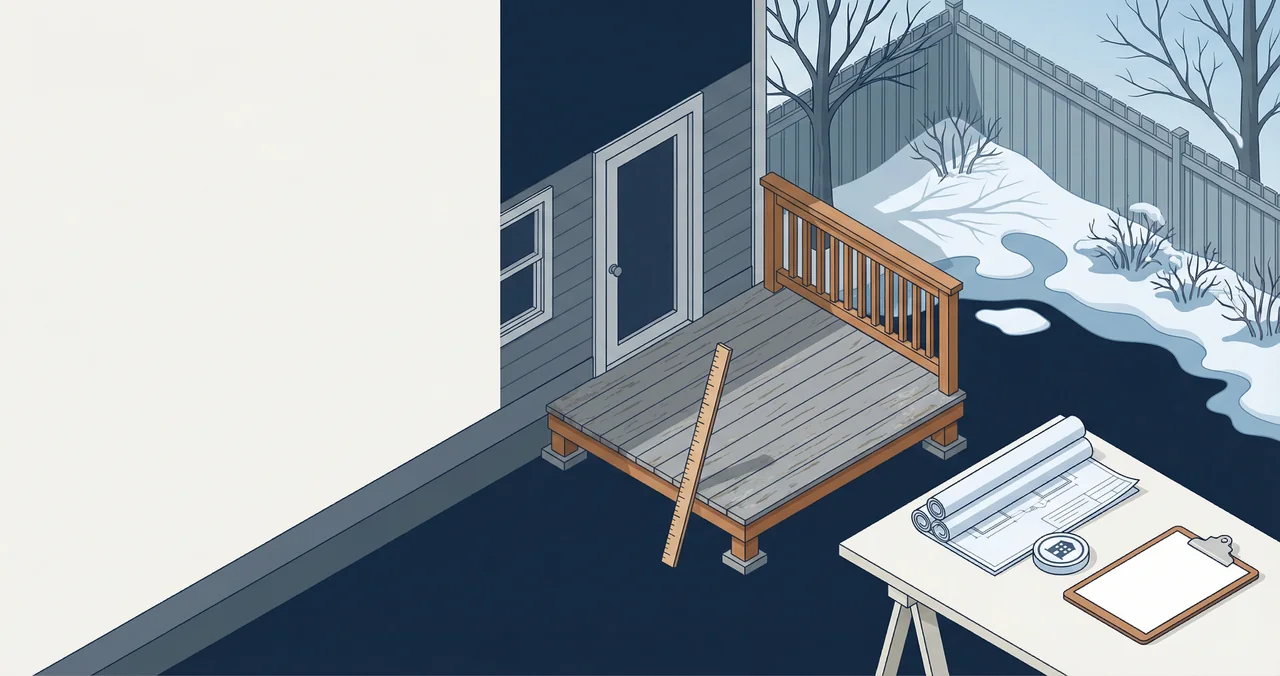
Do You Need a Deck Permit in Boston?
If you're planning to build a deck in Boston, the short answer is yes — you almost certainly need a permit. The City of Boston's Inspectional Services Department (ISD) requires a building permit for any deck that is more than 200 square feet in area or more than 30 inches above grade. That 30-inch threshold catches most useful decks, since even a single step up from your yard often puts you over it.
🏗️ Planning a deck project?
Get a free manual project review, or visualize your dream deck with AI before requesting quotes.
📋 Tool Alert: Permit Checker
Do you really need a permit? Check the exact rules for your city or township.
Check Permits →Looking for more regional information? Check out our Massachusetts State Decking Hub.
Small ground-level platforms — think a simple 10×12 pad sitting right on the ground — may be exempt. But "exempt" doesn't mean "no rules." You still need to comply with zoning setbacks and the Massachusetts State Building Code (780 CMR). And if you're in a historic district like Beacon Hill, Back Bay, or the South End, you'll also need approval from the Boston Landmarks Commission before any exterior construction.
The safest move: call ISD at (617) 635-5300 or visit their office at 1010 Massachusetts Avenue before you start buying lumber. A five-minute conversation can save you months of headaches.
<!-- slot:after-intro -->
When a Permit Is Required
Here's a quick breakdown of what triggers the permit requirement in Boston:
You need a permit if your deck:
- Exceeds 200 square feet in total area
- Is more than 30 inches above grade at any point
- Is attached to the house (structural connection to the building)
- Includes stairs, railings, or built-in seating
- Requires new footings or modifications to existing foundation elements
- Is part of a larger renovation that already requires a permit
You may not need a permit if:
- The deck is under 200 square feet AND under 30 inches above grade
- It's a freestanding, ground-level platform with no roof structure
- No electrical, plumbing, or gas work is involved
Even when a permit isn't technically required, getting one protects you. It creates a documented record that your deck was built to code — which matters when you sell your home. Boston real estate moves fast, and buyers' inspectors flag unpermitted work routinely.
Attached vs. Freestanding Decks
Attached decks — those bolted to your house with a ledger board — face stricter scrutiny because they affect the building envelope. Water infiltration at the ledger connection is one of the most common causes of structural damage in New England homes. ISD inspectors pay close attention to flashing details and lag bolt spacing on attached decks.
Freestanding decks still need permits if they exceed the size and height thresholds, but the review process is sometimes simpler since there's no structural connection to evaluate. For more on how this distinction affects the permitting process, see our guide on attached vs. freestanding deck permits.
Permit Fees & Processing Time
Boston's permit fees are based on the estimated construction cost of your project. Here's what to expect in 2026:
| Project Cost | Permit Fee (Approximate) |
|---|---|
| Under $1,000 | $50 |
| $1,000–$10,000 | $100–$250 |
| $10,000–$25,000 | $250–$500 |
| $25,000–$50,000 | $500–$800 |
| Over $50,000 | $800+ (scaled) |
Additional fees you might encounter:
- Zoning review: $50–$150 if your project needs zoning board sign-off
- Plan review fee: Included in the permit fee for standard residential projects
- Re-inspection fee: $75–$150 if you fail an inspection and need a return visit
- Historic district review: Varies; can add $100–$300 and several weeks
How Long Does It Take?
For a straightforward residential deck, expect 2 to 6 weeks from application to permit issuance. That timeline assumes your plans are complete and code-compliant on the first submission.
Factors that slow things down:
- Incomplete applications — the number-one cause of delays
- Zoning variances — if your deck encroaches on setbacks, add 4–8 weeks for a Zoning Board of Appeal hearing
- Historic district review — tack on 3–6 weeks
- Peak season submissions — April through June is when everyone applies, and the queue backs up
Pro tip: Submit your permit application in January or February. You'll beat the spring rush, and your permit will be ready well before the building season starts in May. Boston's best contractors book up by March, so having your permit in hand gives you leverage.
<!-- slot:mid-content -->
Building Codes & Setback Rules
Boston follows the Massachusetts State Building Code (780 CMR), which adopts the International Residential Code (IRC) with state-specific amendments. Here are the key requirements for residential decks:
Structural Requirements
- Frost line depth: Footings must extend 48 inches below grade in Boston (the city falls in the deeper end of Massachusetts's 36–60 inch range). This is non-negotiable — shallow footings will heave during freeze-thaw cycles and destroy your deck.
- Snow load: Decks must be designed for a ground snow load of 40 psf (pounds per square foot) minimum. Your structural plans need to account for this.
- Live load: 40 psf for the deck surface, 100 psf concentrated load for railings
- Joist sizing: Typically 2×8 or 2×10 pressure-treated lumber for most spans; engineered drawings required for larger decks
- Ledger board attachment: Must use ½-inch lag screws or through-bolts at specific spacing, with proper flashing to prevent water intrusion
Railing Requirements
- Required on any deck surface 30 inches or more above grade
- Minimum height: 36 inches (42 inches if more than 30 inches above grade in some interpretations — confirm with ISD)
- Baluster spacing: No more than 4 inches between balusters (the "soda can test")
- Must withstand 200 pounds of force applied in any direction at the top rail
For a deeper look at railing options that meet code, check out our guide to deck railing systems.
Setback Rules
Boston's zoning code establishes minimum setbacks that vary by neighborhood and zoning district. General guidelines:
- Side yard setback: Typically 5–10 feet from the property line
- Rear yard setback: Usually 20–25 feet, though this varies significantly by district
- Front yard: Decks are generally not permitted in front yard setbacks
- Lot coverage: Your deck counts toward the maximum lot coverage ratio for your zoning district
Boston lots — especially in neighborhoods like Dorchester, Jamaica Plain, Southie, and Charlestown — tend to be narrow. If your proposed deck doesn't fit within the setback requirements, you'll need a variance from the Zoning Board of Appeal (ZBA). This adds time and cost, with no guarantee of approval.
Climate-Specific Code Considerations
Boston's climate is brutal on outdoor structures. The building code reflects this:
- Freeze-thaw cycles: Concrete footings must use air-entrained concrete rated for freeze-thaw exposure
- Snow load: Structural members must handle accumulated snow. If your deck is below a roof line, factor in sliding snow loads too
- Ice dams: If your deck attaches near the roofline, flashing and drainage details become critical to prevent ice dam damage
- Moisture management: All wood-to-concrete connections require barriers; standing water must drain freely
This is why choosing the right decking material for freeze-thaw climates matters so much. Composite and PVC decking hold up best against Boston winters. Pressure-treated wood works but needs annual sealing to protect against moisture and road salt that gets tracked onto the deck. Cedar looks great but demands even more maintenance in this climate.
How to Apply for a Deck Permit in Boston
Step 1: Prepare Your Plans
You'll need:
- Site plan showing your property boundaries, the house footprint, and the proposed deck location with dimensions and setback measurements
- Structural drawings including footing details, framing plan, joist layout, beam sizes, and ledger board connection (if attached)
- Elevation drawings showing deck height, railing details, and stair configuration
- Material specifications — what you're building with and manufacturer specs for engineered products
For a standard residential deck, many contractors prepare these plans as part of their bid. For larger or more complex projects, you may need a licensed structural engineer — expect to pay $500–$1,500 for engineered plans.
Use PaperPlan to visualize different decking materials on your own home before committing — it can help you finalize your design before drafting permit drawings.
Step 2: Submit Your Application
Boston uses an online permitting system through the ISD. You can also submit in person at 1010 Massachusetts Avenue.
What to bring or upload:
- Completed building permit application form
- Two sets of construction drawings
- Proof of property ownership or owner authorization
- Contractor's license number and insurance certificate (if using a contractor)
- Plot plan or survey showing property lines
Step 3: Plan Review
ISD reviews your plans for code compliance. For a simple deck, this typically takes 2–4 weeks. You may receive comments requiring revisions — respond promptly to avoid restarting the review clock.
Step 4: Receive Your Permit & Schedule Inspections
Once approved, you'll receive your building permit. Post it visibly at the job site — this is a legal requirement.
You'll need inspections at these stages:
1. Footing inspection — before pouring concrete (inspector verifies depth and diameter)
2. Framing inspection — after the structure is up but before decking is installed
3. Final inspection — completed deck with railings, stairs, and all finish work
Do not pour concrete before the footing inspection. This is the most common mistake, and it means digging everything up and starting over.
Step 5: Final Sign-Off
After passing the final inspection, you'll receive a Certificate of Completion. Keep this document — you'll need it when you sell your home.
What Happens If You Build Without a Permit
Building without a permit in Boston is a gamble that rarely pays off. Here's what you're risking:
- Stop-work order: ISD can shut down your project immediately. Your half-built deck sits there until you get a permit — which is harder to obtain after the fact.
- Fines: Boston can impose fines of $100–$300 per day for unpermitted construction. These add up fast.
- Forced removal: In serious cases, you may be required to demolish the deck entirely at your own expense.
- Insurance problems: If someone gets injured on an unpermitted deck, your homeowner's insurance may deny the claim. That's a lawsuit waiting to happen.
- Sale complications: When you sell your home, the buyer's inspector or attorney will flag unpermitted work. You'll either need to retrofit it to code (expensive), tear it down, or reduce your asking price. In Boston's competitive market, this kills deals.
- Liability if it fails: An unpermitted deck that collapses means you're personally liable — both civilly and potentially criminally.
For a detailed look at the risks, read our post on building a deck without a permit.
The permit exists to protect you. The fee is a tiny fraction of your total project cost. Get the permit.
<!-- slot:before-faq -->
What Does a Deck Actually Cost in Boston?
Since you're already planning your permit, here's what you should budget for the build itself. Boston's shorter building season (May through October) and high demand mean prices run above the national average.
| Material | Installed Cost (per sq ft) |
|---|---|
| Pressure-treated wood | $25–$45 |
| Cedar | $35–$55 |
| Composite | $45–$75 |
| Trex (brand-name composite) | $50–$80 |
| Ipe (tropical hardwood) | $60–$100 |
For a typical 16×20 deck (320 sq ft), you're looking at:
- Pressure-treated: $8,000–$14,400
- Composite: $14,400–$24,000
- Trex: $16,000–$25,600
These prices include labor, materials, footings, railings, and stairs. Permit fees, engineering, and site prep are extra.
Boston-specific cost factors:
- Deep footings (48 inches) cost more to excavate than in milder climates
- Contractor demand peaks March through May — booking early often means better pricing
- Access challenges in tight neighborhoods like the North End, Beacon Hill, or South Boston can add 10–20% for difficult material delivery and staging
- Lead paint concerns on older homes may require abatement before attaching a ledger board
For a deeper dive into project budgets, see our composite decking cost guide and our overview of low-maintenance decking options.
🎨 Not sure which material to pick?
Upload a photo of your backyard and see exactly how Trex, TimberTech, or cedar would look — free and instant.
Frequently Asked Questions
How much does a deck permit cost in Boston?
Most residential deck permits in Boston cost between $100 and $500, depending on your project's estimated construction value. Simple decks on the lower end, large or multi-level decks on the higher end. Budget an additional $50–$150 if you need a zoning review. Fees are set by the Inspectional Services Department and can be confirmed by calling (617) 635-5300.
How long does it take to get a deck permit in Boston?
Plan for 2 to 6 weeks from submission to approval. Straightforward projects with complete, code-compliant plans move fastest. If you need a zoning variance or historic district approval, add another 4 to 8 weeks. Submit in winter to avoid the spring backlog — by April, everyone in Boston is thinking about their backyard.
Can I build a small deck without a permit in Boston?
Potentially. If your deck is under 200 square feet and under 30 inches above grade, it may be exempt from the permit requirement. However, you still must follow zoning setbacks and building code standards. Even for exempt projects, many homeowners get a permit anyway — it's cheap insurance against future problems when selling.
Do I need a permit to repair or replace my existing deck?
It depends on the scope. Cosmetic repairs like replacing a few boards or re-staining typically don't need a permit. But if you're replacing the structural framing, changing the footprint or height, or rebuilding more than 50% of the deck, Boston generally requires a permit. When in doubt, call ISD — they'd rather answer a question upfront than issue a violation later.
What is the frost line depth for deck footings in Boston?
Deck footings in Boston must reach a minimum of 48 inches below grade to get below the frost line. This prevents frost heave from pushing your footings up during winter freeze-thaw cycles. Skimping on footing depth is one of the most expensive shortcuts you can take — a heaving deck means cracked concrete, warped framing, and a full rebuild. Your contractor should know this, but verify it's on the plans before they start digging.
<!-- slot:end -->
📋 Planning a deck project?
Get a free manual project review from our team — no obligation, no spam.
Get Free Project Review →Upload a backyard photo and preview real decking materials with AI — free, instant, no sign-up.
Permits, costs, material comparisons, and questions to ask before requesting quotes — delivered to your inbox.