
Deck Permits in Cincinnati (2026)
Need a deck permit in Cincinnati? Learn requirements, fees, building codes, setback rules, and how to apply. Updated for 2026 with local costs and timelines.
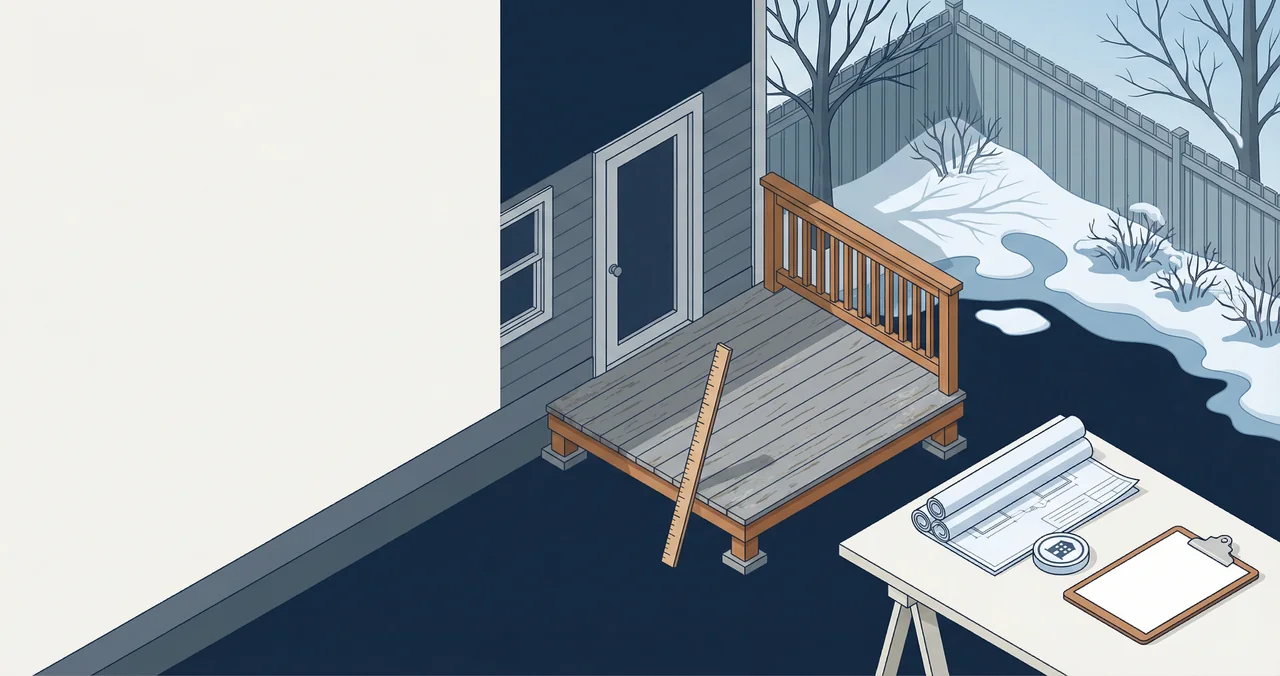
Deck Permits in Cincinnati: Requirements, Costs & How to Apply in 2026
Building a deck in Cincinnati without pulling the right permits can cost you thousands — in fines, forced teardowns, or problems when you sell your home. Before you pick out decking materials or call a contractor, you need to know what Cincinnati's Building & Development Services department requires.
🏗️ Planning a deck project?
Get a free manual project review, or visualize your dream deck with AI before requesting quotes.
📋 Tool Alert: Permit Checker
Do you really need a permit? Check the exact rules for your city or township.
Check Permits →Looking for more regional information? Check out our Ohio State Decking Hub.
Here's everything Cincinnati homeowners need to know about deck permits in 2026, including fees, codes, timelines, and the application process.
<!-- slot:after-intro -->
Do You Need a Deck Permit in Cincinnati?
Short answer: almost certainly yes.
In Cincinnati, a building permit is required for any deck that is more than 30 inches above grade or exceeds 200 square feet in area. That covers the vast majority of backyard deck projects. Even a modest 12×16 deck (192 sq ft) sits right at the threshold — and if your yard slopes at all, you'll likely cross the 30-inch height mark.
Here's when you do and don't need a permit:
When a Permit Is Required
- Decks over 200 square feet in total area
- Decks more than 30 inches above grade at any point
- Attached decks — any deck connected to your house structurally
- Decks with roofing or overhead structures (pergolas, covered areas)
- Electrical work for deck lighting or outlets (separate electrical permit)
- Multi-level or second-story decks
When You Might Not Need a Permit
- Ground-level platforms under 200 sq ft that sit less than 30 inches off the ground
- Freestanding patios at grade level (pavers, concrete)
- Minor repairs — replacing boards or refinishing without structural changes
Even if your project technically falls under the exemption, call Cincinnati's Building & Development Services at (513) 352-3276 before starting work. Interpretations vary, and a quick phone call can save you from a stop-work order later.
When a Permit Is Required
Beyond the size and height triggers above, Cincinnati requires permits for several situations homeowners overlook:
- Replacing an existing deck — if you're tearing down and rebuilding, that's new construction and needs a permit
- Converting a porch to a deck or vice versa
- Adding stairs that connect to grade changes over 30 inches
- Hot tub installations on decks — the added load requires structural review
If a contractor tells you "we don't need a permit for this," that's a red flag. Reputable Cincinnati deck builders pull permits as standard practice. It protects both of you.
Permit Fees & Processing Time
Cincinnati's permit fees are based on the estimated project cost. Here's what to expect in 2026:
Residential Deck Permit Fees
| Project Value | Approximate Permit Fee |
|---|---|
| Under $5,000 | $75–$125 |
| $5,000–$15,000 | $150–$300 |
| $15,000–$30,000 | $300–$500 |
| Over $30,000 | $500+ (scaled to value) |
Additional fees may apply for:
- Plan review: $50–$150 depending on complexity
- Electrical permit: $50–$100 (for lighting, outlets)
- Re-inspection fees: $75+ if you fail an inspection and need a return visit
How Long Does It Take?
For a standard residential deck, plan on 2 to 4 weeks for permit approval in Cincinnati. During peak building season (May through August), processing can stretch to 4 to 6 weeks as the department handles higher volume.
Pro tip: Cincinnati's building season is short. Harsh winters with snow and freeze-thaw cycles limit outdoor construction to roughly May through October. Contractor schedules fill up fast, so submit your permit application by March to have approval in hand by spring. Waiting until May to start the process means you might not break ground until July.
<!-- slot:mid-content -->
Building Codes & Setback Rules
Cincinnati follows the Ohio Residential Code (ORC), which is based on the International Residential Code (IRC) with state-specific amendments. Here are the key requirements that affect your deck:
Structural Requirements
- Frost line depth: Footings must extend 36 inches minimum below grade in the Cincinnati area. Some inspectors require deeper footings depending on soil conditions — don't assume 36 inches is always sufficient
- Post footings: Typically 12-inch diameter minimum for concrete piers, extending below the frost line
- Beam and joist sizing: Must comply with ORC span tables. A 2×8 joist at 16 inches on-center spans roughly 10–12 feet depending on species and grade
- Ledger board attachment: Lag bolts or through-bolts at specific spacing — this is where most structural failures happen, so inspectors scrutinize it closely
- Live load: 40 pounds per square foot (psf) minimum
- Dead load: 10 psf minimum
- Snow load: Cincinnati's ground snow load is approximately 20 psf, and your deck design must account for this
Railing Requirements
- Required when deck surface is 30 inches or more above grade
- Minimum height: 36 inches for residential decks
- Baluster spacing: No more than 4 inches between balusters (the "4-inch sphere rule")
- Graspable handrail required on stairs
Setback Rules
Cincinnati's zoning code dictates how close your deck can sit to property lines:
- Rear yard setback: Typically 15–25 feet from the rear property line, depending on your zoning district (most residential areas are R-1, R-2, or R-3)
- Side yard setback: Usually 3–5 feet minimum
- Front yard: Decks are generally not permitted in front yard setbacks
Check your specific zoning district. Cincinnati has dozens of zoning classifications, and setbacks vary. You can look up your property's zoning on the city's online zoning map or call the Zoning Division at (513) 352-3276.
Cincinnati-Specific Climate Considerations
Cincinnati's freeze-thaw cycles are brutal on deck structures. Between November and March, temperatures regularly swing above and below freezing, which causes:
- Frost heave on footings that don't extend below the frost line — your deck literally shifts and becomes uneven
- Ice dam formation where decks attach to the house
- Moisture damage to wood decking that hasn't been properly sealed
This is why inspectors in Cincinnati pay close attention to footing depth and drainage. It's also why many homeowners here are switching to composite or PVC decking, which handles moisture and temperature swings far better than wood. If you go with pressure-treated lumber, plan on annual sealing to protect against moisture and road salt tracked onto the surface. For a deeper look at how materials perform in cold climates, check out our guide on the best decking materials for freeze-thaw climates.
How to Apply for a Deck Permit in Cincinnati
Here's the step-by-step process:
Step 1: Gather Your Documents
Before you apply, you'll need:
- Site plan/survey showing your property lines, the house footprint, and the proposed deck location with dimensions and setback distances
- Deck construction plans including:
- Framing layout (joists, beams, posts)
- Footing details (size, depth, spacing)
- Ledger board attachment method
- Railing details
- Material specifications
- Stair layout if applicable
- Elevation drawings showing deck height above grade
Most contractors prepare these plans as part of their service. If you're building yourself, you can draft plans or hire a designer. Use PaperPlan to visualize different decking materials on your own home before committing — it helps both with planning and with showing the inspector exactly what you intend to build.
Step 2: Submit Your Application
Cincinnati accepts permit applications through:
- Online: The city's KIVA/Accela online permitting portal
- In person: Department of Buildings & Inspections, 805 Central Avenue, Suite 500, Cincinnati, OH 45202
The online system lets you upload plans, pay fees, and track your application status.
Step 3: Plan Review
A plans examiner reviews your submission for code compliance. For straightforward deck projects, this takes 2 to 4 weeks. You may receive comments requesting revisions — respond promptly to avoid delays.
Step 4: Receive Your Permit
Once approved, you'll receive your building permit. Post it visibly at the job site — this is required by law.
Step 5: Schedule Inspections
Cincinnati typically requires two inspections for deck construction:
1. Footing/foundation inspection — before pouring concrete, the inspector verifies hole depth and diameter
2. Final inspection — after construction is complete, verifying the deck matches approved plans
Some projects may require additional inspections (framing, electrical). Your permit will specify which inspections are needed.
Step 6: Get Your Certificate of Completion
After passing final inspection, you'll receive documentation that the deck was built to code. Keep this paperwork — you'll need it if you ever sell your home.
What Happens If You Build Without a Permit
Skipping the permit process might seem tempting, but the consequences in Cincinnati are serious:
- Stop-work orders: An inspector can shut down your project immediately
- Fines: Cincinnati can impose fines of $100–$500 per day for unpermitted construction
- Forced removal: In extreme cases, you may be ordered to demolish the deck entirely
- Double permit fees: If you apply after the fact, expect to pay double the standard fee
- Insurance issues: Your homeowner's insurance may deny claims for damage related to an unpermitted structure
- Problems selling your home: Title searches and home inspections flag unpermitted work. Buyers walk away, or you're forced to retroactively permit (and potentially modify) the deck
Neighborhoods like Hyde Park, Mount Lookout, and Oakley — where homes turn over frequently — see this issue regularly. Buyers in these areas are savvy, and their inspectors will catch unpermitted decks.
For a closer look at the risks, read our article on building a deck without a permit and the risks involved. While it focuses on Ontario, the legal and financial consequences are strikingly similar.
What Does a Deck Actually Cost in Cincinnati?
Permit costs are just one piece of the puzzle. Here's what Cincinnati homeowners are paying for deck installation in 2026:
| Material | Installed Cost (per sq ft) |
|---|---|
| Pressure-treated wood | $25–$45 |
| Cedar | $35–$55 |
| Composite | $45–$75 |
| Trex (brand-name composite) | $50–$80 |
| Ipe (hardwood) | $60–$100 |
For a typical 16×20 deck (320 sq ft), that works out to:
- Pressure-treated: $8,000–$14,400
- Composite: $14,400–$24,000
- Trex: $16,000–$25,600
These prices include materials, labor, footings, railings, and stairs. Permits, design fees, and site prep (grading, demolition of old structures) are typically extra.
Given Cincinnati's climate, composite and PVC decking deliver the best long-term value. The upfront cost is higher, but you avoid annual sealing, staining, and the board replacements that come with wood decking after a few harsh winters. If you're weighing your options, our guide on the best low-maintenance decking in Canada covers composite brands that perform well in similar cold climates.
Planning to build the deck yourself? Read up on whether you can build your own deck — it covers skill requirements, tools, and when hiring a pro makes more sense.
<!-- slot:before-faq -->
🎨 Not sure which material to pick?
Upload a photo of your backyard and see exactly how Trex, TimberTech, or cedar would look — free and instant.
Frequently Asked Questions
How much does a deck permit cost in Cincinnati?
Most residential deck permits in Cincinnati cost between $75 and $500, depending on the total project value. A standard backyard deck in the $10,000–$20,000 range typically requires a permit fee of $150–$400. Plan review and inspection fees may add another $50–$150. Budget roughly $200–$500 total for all permit-related costs.
How long does it take to get a deck permit in Cincinnati?
Standard residential deck permits take 2 to 4 weeks for approval. During peak season (April through July), expect closer to 4–6 weeks. Submit your application by March if you want to start building in May. If plans need revisions, add another 1–2 weeks per revision cycle.
Can I build a deck without a permit in Cincinnati?
Technically, you can build a small ground-level platform under 200 square feet that sits less than 30 inches above grade without a permit. But most practical deck projects exceed these thresholds. Building without a required permit risks fines up to $500 per day, forced demolition, and serious complications when selling your home. It's not worth it.
Do I need a permit to replace my existing deck in Cincinnati?
Yes. Tearing down and rebuilding a deck is considered new construction and requires a full building permit, even if the new deck is the same size as the old one. If you're only replacing surface boards without modifying the structure, you may not need a permit — but call the department to confirm.
What is the frost line depth in Cincinnati for deck footings?
Cincinnati's frost line depth is 36 inches minimum, though some areas with specific soil conditions may require footings to 48 inches or deeper. Your footings must extend below the frost line to prevent frost heave — a common cause of deck shifting and structural failure in Ohio's freeze-thaw climate. The inspector will verify footing depth during the foundation inspection. For more on how to handle frost-related challenges, see our guide on attached vs. freestanding deck permits, which covers footing requirements in detail.
When is the best time to build a deck in Cincinnati?
The ideal building window is May through October, but the planning starts much earlier. Submit your permit application in February or March, lock in a contractor by March, and aim to break ground by May. Cincinnati's short building season means contractors book up quickly — waiting until summer to start planning often pushes your project into the following year. For more on seasonal timing, check out best time to build a deck.
<!-- slot:end -->
📋 Planning a deck project?
Get a free manual project review from our team — no obligation, no spam.
Get Free Project Review →Upload a backyard photo and preview real decking materials with AI — free, instant, no sign-up.
Permits, costs, material comparisons, and questions to ask before requesting quotes — delivered to your inbox.