
Ipe Decking in Texas (2026)
Considering Ipe decking for your Texas home? Learn if this premium hardwood can withstand the extreme heat, costs, and maintenance requirements.
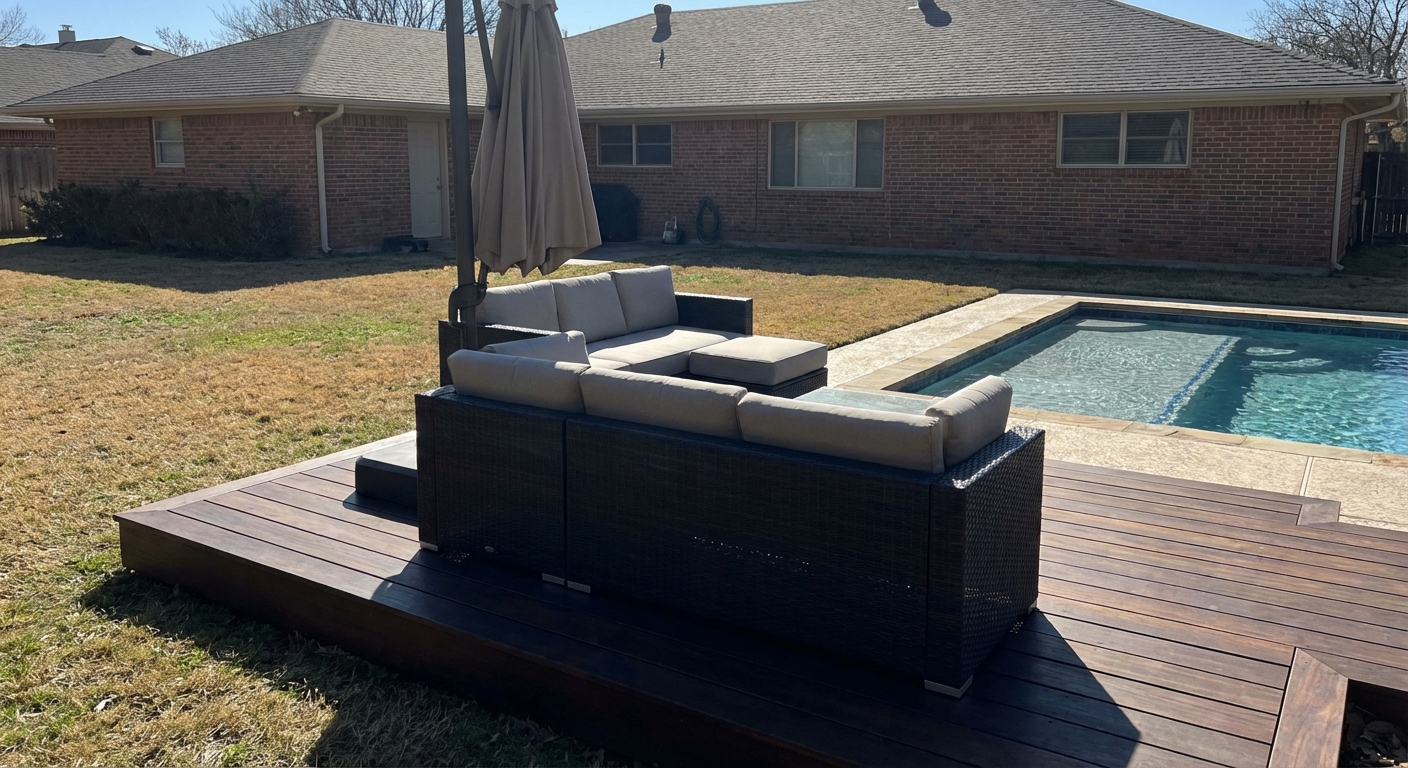
Are you dreaming of a beautiful, long-lasting deck for your Texas home, but worried about how it will hold up to the scorching sun and intense weather? You're not alone. Many Texas homeowners struggle to find decking materials that can withstand the extreme heat. Ipe decking might be the answer. This dense, durable hardwood is known for its exceptional resistance to the elements, making it a popular choice for high-end decks across the state. This guide will cover everything you need to know about ipe decking in Texas, helping you decide if it’s the right material for your outdoor living space.
🌳 Tool Alert: Material Comparison
PT vs Composite vs Cedar. Compare 25-year total cost of ownership including maintenance.
Compare Materials →Why Choose Ipe Decking for Your Texas Home?
Looking for more regional information? Check out our Texas State Decking Hub.
🏗️ Planning a deck project?
Get a free manual project review, or visualize your dream deck with AI before requesting quotes.
Texas weather is tough on decks. Summers regularly see temperatures soaring between 95-105°F, and the UV exposure is relentless. This can cause many decking materials to fade, warp, crack, and even become unbearably hot to the touch. Composite decking, while popular, can reach surface temperatures exceeding 150°F in direct sunlight. Ipe offers a superior alternative due to its unique properties:
- Exceptional Durability: Ipe is one of the hardest woods in the world, making it incredibly resistant to scratches, dents, and wear.
- Natural Resistance to Rot and Insects: Unlike many other wood species, ipe contains natural oils that make it highly resistant to rot, decay, and insect infestation, including termites which are a concern in Gulf Coast areas.
- Fire Resistance: Ipe has a Class A fire rating, the same as concrete and steel, providing an added layer of safety for your home.
- Heat Resistance: Ipe doesn’t retain heat like composite decking, staying cooler underfoot even on the hottest Texas days.
- Long Lifespan: With proper maintenance, an ipe deck can last for 50+ years, making it a worthwhile investment.
Because Texas has no state income tax, many homeowners find they have more disposable income to invest in premium home improvements like ipe decking.
<!-- slot:after-intro -->
Choosing between composite and wood? Our composite vs wood decking breaks down the real costs over 10 years. For full installed pricing by material type, see our complete deck cost guide for Texas.
Ipe Decking Costs in Texas: What to Expect
Ipe decking is a premium material, and its cost reflects that. While the upfront investment is higher than other options, its longevity and low maintenance can make it a cost-effective choice in the long run.
Here's a comparison of typical installed deck costs in Texas:
| Material | Cost per Square Foot (Installed) |
| ----------------- | -------------------------------- |
| Pressure-Treated | $25-$45 |
| Cedar | $35-$55 |
| Composite | $45-$75 |
| Trex | $50-$80 |
| Ipe | $60-$100 |
As you can see, ipe decking typically costs between $60 and $100 per square foot installed in Texas. This price includes the cost of the ipe lumber, fasteners, labor, and any necessary permits. The total cost will vary depending on the size and complexity of your deck, as well as your location. For example, deck projects in larger cities like Houston, Dallas, Austin, and San Antonio might be slightly more expensive due to higher labor costs.
Before settling on a design, use PaperPlan (paperplan.app) to visualize your deck with PaperPlan design with different materials and layouts before committing to a contractor. This will help you understand the material costs and choose a design that fits your budget.
Ipe Decking Installation in Texas: Key Considerations
Installing an ipe deck requires specialized knowledge and experience. Because of its density, ipe is difficult to work with and requires pre-drilling for all screws and fasteners. It's crucial to hire a contractor experienced in working with hardwoods to ensure a properly installed and long-lasting deck.
Here are some key considerations for ipe decking installation in Texas:
- Permits: Most Texas cities require permits for decks exceeding 200 square feet or 30 inches above grade. Check with your local building department for specific requirements.
* Houston: No zoning, but permits are required from the City of Houston Permitting Center.
* Dallas: Permits are obtained through Dallas Development Services, with fees ranging from $200-$500.
* Austin: Permits are processed through Austin Development Services, which are known for longer processing times (8-12 weeks).
* San Antonio: Permits are obtained through the Development Services Department, generally with faster processing times.
- Footings: Due to Texas's mild winters, the frost line is relatively shallow, typically only 6-12 inches. This can result in lower footing costs compared to northern states where frost lines can reach 36-48 inches.
- Fasteners: Use high-quality stainless steel screws and hidden fastener systems designed for hardwood decking.
- Acclimation: Allow the ipe lumber to acclimate to the local climate for several days before installation to minimize expansion and contraction.
- Spacing: Proper spacing between deck boards is essential to allow for expansion and contraction due to temperature and humidity changes. Your contractor will know the correct spacing to use for your specific climate.
- Sealing: While ipe is naturally resistant to rot and insects, applying a UV-inhibiting sealant can help maintain its color and prevent fading.
Consider the best time of year to build your deck. In Texas, the most comfortable months for outdoor construction are typically from October to April, avoiding the peak summer heat.
<!-- slot:mid-content -->
Ipe Decking Maintenance in Texas: Keeping Your Deck Looking Its Best
Ipe decking is relatively low-maintenance, but regular cleaning and occasional sealing will help preserve its beauty and extend its lifespan.
Here are some tips for maintaining your ipe deck in Texas:
- Regular Cleaning: Sweep or blow off debris regularly to prevent buildup. Wash the deck with a mild soap and water solution at least twice a year.
- Sealing: Apply a UV-inhibiting sealant every 1-3 years to protect the wood from fading and weathering. Choose a sealant specifically designed for hardwoods.
- Oil Finish: Alternatively, you can use a penetrating oil finish to enhance the natural color and grain of the wood. Oil finishes typically need to be reapplied more frequently than sealants.
- Stain Removal: Address spills and stains promptly to prevent them from setting in. Use a deck cleaner specifically formulated for ipe wood.
- Termite Inspection: Especially in Gulf Coast regions, regular termite inspections are recommended to ensure early detection and prevent potential damage.
Ipe Decking vs. Other Decking Materials in Texas
Choosing the right decking material depends on your budget, aesthetic preferences, and maintenance expectations. Here's a comparison of ipe decking to other popular options in Texas:
| Material | Pros | Cons |
| ----------------- | -------------------------------------------------------------------------------------------------------------------------------------------------------------- | ------------------------------------------------------------------------------------------------------------------------------------------------------------- |
| Pressure-Treated | Most affordable, readily available, can be stained or painted. | Prone to warping, cracking, and rot; requires regular treatment; shorter lifespan. |
| Cedar | Naturally beautiful, insect-resistant, relatively affordable. | Softer than ipe, more susceptible to scratches and dents; requires regular sealing; can fade over time. |
| Composite | Low-maintenance, resistant to rot and insects, available in various colors and styles. | Can be expensive, can get very hot in direct sunlight, not as natural-looking as wood; can be prone to mold and mildew in humid climates. |
| Trex | Durable composite decking, wide range of colors and textures, low maintenance. | Higher cost than some composites, can still get hot, potential for fading over time. |
| Ipe | Exceptionally durable, naturally resistant to rot and insects, fire-resistant, long lifespan, beautiful natural appearance, stays cooler than composite. | Most expensive option, requires specialized installation, can be difficult to work with, needs occasional sealing to maintain color, may develop splinters. |
Many Texas homeowners are creating elaborate outdoor living spaces, including covered decks, outdoor kitchens, pool decks, and shade structures. The strength and durability of ipe make it ideal for these types of projects.
<!-- slot:before-faq -->
Is Ipe Decking Right for You?
Ipe decking is an excellent choice for Texas homeowners who want a beautiful, durable, and long-lasting deck that can withstand the extreme heat and weather conditions. While the upfront cost is higher, its longevity and low maintenance can make it a cost-effective investment in the long run. If you prioritize quality, durability, and natural beauty, ipe decking is worth considering.
<!-- slot:end -->
🎨 Not sure which material to pick?
Upload a photo of your backyard and see exactly how Trex, TimberTech, or cedar would look — free and instant.
Frequently Asked Questions
How long will an ipe deck last in Texas?
With proper maintenance, an ipe deck can last for 50 years or more in Texas. Its natural resistance to rot, insects, and the elements makes it an exceptionally durable choice for the Texas climate.
Does ipe decking get hot in the sun?
While all decking materials will heat up in direct sunlight, ipe doesn't retain heat as much as composite decking. It will stay cooler underfoot compared to composite options, making it more comfortable to walk on during hot Texas days.
How often do I need to seal my ipe deck?
The frequency of sealing depends on the specific sealant used and the amount of sun exposure. Generally, you should seal your ipe deck every 1-3 years to maintain its color and protect it from UV damage.
Can I stain ipe decking?
While ipe has a beautiful natural color, you can stain it if you prefer a different look. Use a high-quality oil-based stain specifically designed for hardwoods. Keep in mind that staining will require more frequent maintenance than simply sealing the wood.
Is ipe decking slippery when wet?
Ipe can become slippery when wet, especially if it has a smooth surface. To improve traction, consider adding a textured finish or using anti-slip strips in high-traffic areas.
How Much Does a Deck Cost in Texas? Complete 2026 Guide
Deck Cost Per Square Foot in Texas: 2026 Pricing Breakdown
Best Composite Decking for Texas Heat: Top Brands Compared
📋 Planning a deck project?
Get a free manual project review from our team — no obligation, no spam.
Get Free Project Review →Upload a backyard photo and preview real decking materials with AI — free, instant, no sign-up.
Permits, costs, material comparisons, and questions to ask before requesting quotes — delivered to your inbox.