
Black Aluminum Fence in Ontario: Modern and Low-Maintenance
Black aluminum fences offer Ontario homeowners sleek modern style with zero rust, zero rot, and near-zero maintenance. Pricing, code rules, and install tips.
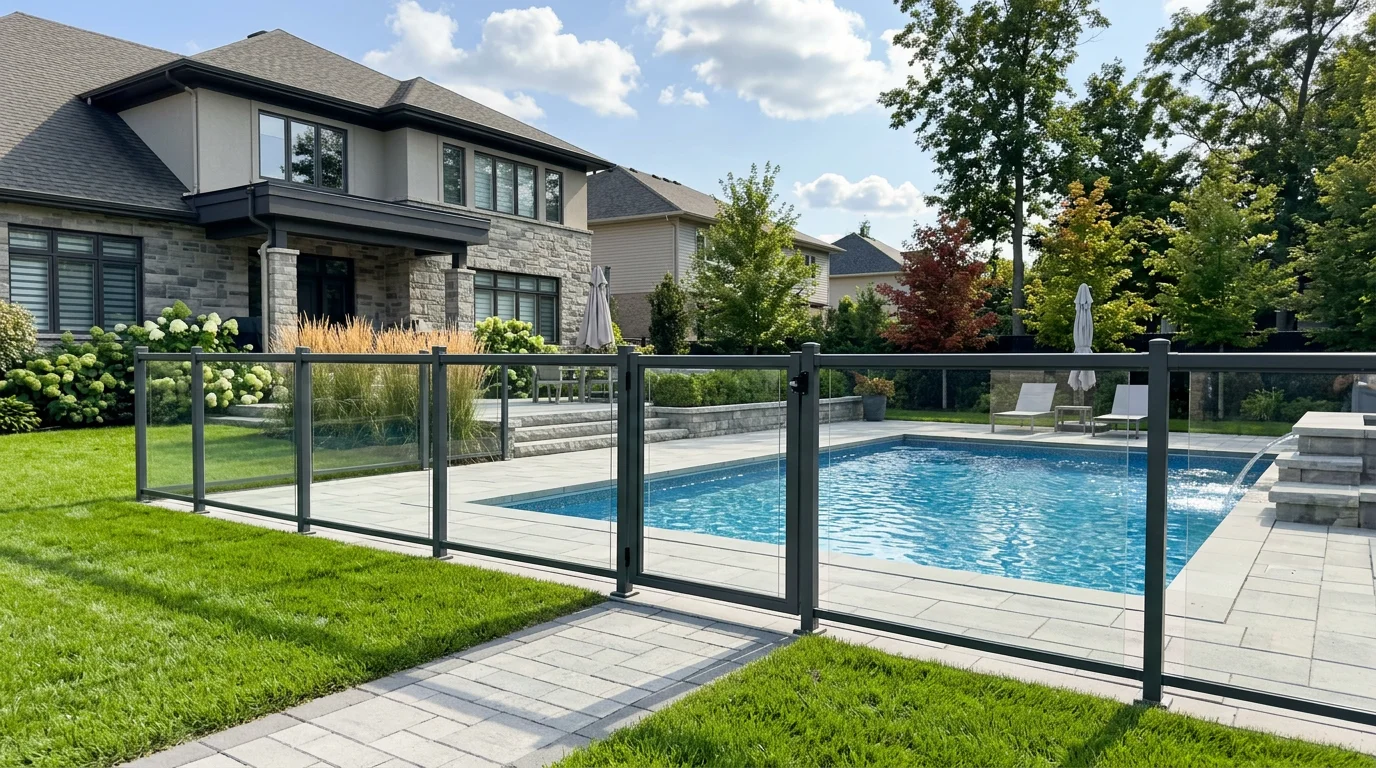
Black aluminum fencing has become the top choice for Ontario homeowners who want the look of wrought iron without the rust, the elegance of metal without the maintenance, and the durability to handle freeze-thaw cycles without warping or rotting.
You're seeing it everywhere in KWC neighbourhoods: around pools, defining property lines, framing front yards. There's a reason. Black aluminum delivers a clean, modern aesthetic that complements everything from century homes to new builds, and it holds up to Ontario winters without the scraping, sanding, or repainting that wood and steel demand.
Here's what you need to know about cost, code requirements, installation, and long-term performance.
Why Black Aluminum Fencing Works in Ontario
Aluminum doesn't rust. That's the fundamental advantage. Steel fences corrode. Wrought iron flakes and needs regular repainting. Aluminum oxidizes into a protective layer that prevents further corrosion—no surface rust, no paint bubbling, no rust stains bleeding onto your driveway.
🏗️ Planning a deck project?
Get a free manual project review, or visualize your dream deck with AI before requesting quotes.
Key benefits for Ontario climates:
- Freeze-thaw resistant: Aluminum doesn't absorb moisture, so it won't crack, split, or warp when temperatures swing from -20°C to +30°C
- No maintenance painting: Powder-coated finish lasts 20+ years without repainting
- Lightweight but strong: Easy to install on slopes and uneven terrain, but handles snow load and wind pressure
- No rot or insect damage: Unlike wood, aluminum won't decay, attract carpenter ants, or require annual sealing
- Powder-coat durability: The black finish is baked on at 200°C, creating a hard, UV-resistant surface that won't fade like paint
Black aluminum also passes the "curb appeal test" better than chain-link or vinyl. It reads as premium fencing without the premium maintenance schedule of wood or steel.
Black Aluminum Fence Cost in Ontario (2026)
Expect to pay $50 to $80 per linear foot installed for black aluminum fencing in Ontario. That's higher than wood or chain-link but comparable to vinyl and far less than ornamental steel.
Cost breakdown (typical 6 ft residential fence):
| Item | Cost per Linear Foot |
|------|----------------------|
| Aluminum panels (6 ft high, 6 ft wide) | $30–50 |
| Posts (3" square aluminum) | $8–12 |
| Gates (single walk gate, 4 ft wide) | $400–700 each |
| Installation labor | $15–25 |
| Concrete footings (per post) | $5–10 |
Example project costs:
- 50 linear feet (side yard, no gate): $2,500–4,000
- 100 linear feet (backyard perimeter, one gate): $5,500–8,500
- 150 linear feet (full property line, two gates): $8,500–12,500
Higher-end ornamental styles with finials, rings, or custom designs can push costs to $90–120/linear foot. Pool fencing with self-closing gates runs higher due to code-required hardware.
For comparison: wood fences run $35–55/linear foot installed but require staining every 2–3 years. Over 20 years, the maintenance savings on aluminum offset the higher upfront cost.
Height Limits and Permit Requirements
Ontario municipalities regulate fence height based on location on your property.
Standard KWC height limits:
- Front yard: 3 ft maximum (some areas allow 4 ft)
- Side and rear yards: 6 ft maximum
- Corner lots: 3 ft maximum in the sight triangle (the area within 4.5 m of the corner)
Most residential aluminum fences are 48 inches (4 ft) or 72 inches (6 ft) high. Pool fencing must meet Ontario Building Code Section 4.8.3.10, which requires a minimum height of 1.2 m (47 inches) with no horizontal members that create a climbing hazard.
Do you need a fence permit in Ontario?
It depends on your municipality. Generally:
- Kitchener: No permit required for residential fences under 2 m (6.5 ft)
- Waterloo: Permit required for fences over 1 m (39 inches) in front yards; no permit for rear/side yards under 2 m
- Cambridge: No permit for fences under 2 m on residential properties
Check with your city before installing. Even where permits aren't required, you must still follow setback rules and height limits. Installing a fence on or over your property line can trigger disputes—survey your lot if boundaries are unclear.
Installation Considerations
Black aluminum fence panels are modular: they ship as pre-assembled sections (typically 6 ft or 8 ft wide) that attach to posts with brackets. This makes installation faster than wood fencing, which requires cutting, leveling, and fastening individual boards.
Post installation methods:
1. Concrete footings (most common): Dig holes 10–12 inches in diameter, 36 inches deep, insert post, pour concrete. Posts stay plumb and resist frost heave.
2. Drive-in ground spikes: Faster but less stable—only suitable for level terrain and non-load-bearing sections (not gates).
In Ontario, dig footings below the frost line—minimum 48 inches (1.2 m)—to prevent heaving. Clay soils in KWC areas retain moisture and expand when frozen, so proper footing depth is critical.
Slope and grade changes:
Aluminum panels can "rack" (pivot at the posts) to follow gentle slopes, or you can "step" the fence (install panels at different heights to follow steep grades). Racking works for slopes up to about 10 degrees; steeper grades require stepping.
Gate considerations:
Gates are the weak point of any fence system. For aluminum:
- Use reinforced gate posts (heavier-gauge aluminum or steel inserts) to handle the weight and prevent sagging
- Install self-closing hinges if this is pool fencing (required by code)
- Choose gravity latches or magnetic latches that engage automatically
- Gate widths: 36–48 inches for walk gates, 10–12 ft for double drive gates
Double-check that walk gates open outward if this is pool fencing—that's code.
Styles and Design Options
Black aluminum fencing comes in several profiles:
1. Flat-top (classic picket): Straight vertical pickets with no decorative top. Clean, minimal, modern. Works well with contemporary homes.
2. Spear-top: Pickets end in pointed spears. Traditional look, slight security benefit (harder to climb). Most popular residential style.
3. Loop-top: Pickets have decorative loops or rings at the top. Ornamental, pairs well with Victorian or heritage homes.
4. Quad finial: Square or pyramid caps on each picket. Formal, upscale appearance.
Most manufacturers offer 2-rail, 3-rail, or 4-rail configurations. More rails = less space between pickets = more privacy and security, but also more material cost.
Picket spacing:
Standard residential spacing is 4 inches on center (roughly 3.5 inches of open space between pickets). Pool fencing must have gaps no wider than 4 inches (100 mm) to prevent children from squeezing through—most aluminum pool panels meet this by default.
Maintenance and Longevity
Aluminum fences are virtually maintenance-free. The powder-coat finish resists UV, moisture, salt spray, and most physical impacts.
Annual care:
- Rinse with a garden hose to remove dirt, pollen, and road salt (spring and fall)
- Wipe down with soapy water if you see stubborn grime or bird droppings
- Check gate hardware: tighten screws, lubricate hinges with WD-40 or silicone spray
That's it. No sanding, no staining, no painting, no sealing.
Expected lifespan:
- Powder-coat finish: 20–30 years before any visible fading or chalking
- Structural integrity: 30–50+ years (aluminum doesn't rot or corrode through)
Compare that to a pressure-treated wood fence, which needs re-staining every 2–3 years and replacement boards every 10–15 years. Or a steel fence, which needs rust treatment and repainting every 5–7 years.
Black vs. Other Colors
Most aluminum fencing comes in black, white, bronze, and sometimes green or beige. Black is the most popular for several reasons:
- Hides dirt and pollen better than white
- Blends into landscaping rather than standing out as a stark boundary
- Coordinates with virtually any home exterior (brick, stone, siding, stucco)
- Looks consistent year-round (white fences yellow over time; black stays black)
Bronze and dark bronze are close seconds—they warm up the look slightly and pair well with earth-tone homes.
White aluminum is an option if you want a traditional picket-fence aesthetic or if your home has white trim and you're matching. But white shows pollen, dust, and water spots more noticeably in Ontario's spring/summer months.
Pool Fencing Specific Requirements
If you're installing aluminum fencing around an in-ground or above-ground pool, Ontario Building Code Section 4.8.3.10 applies. Key rules:
- Minimum height: 1.2 m (47 inches) measured from grade
- Maximum gap between pickets: 100 mm (4 inches)
- No horizontal climbing aids within 900 mm (35 inches) of the top
- Gates must be self-closing and self-latching, with the latch at least 1.5 m (59 inches) above grade or on the pool side of the gate
- Fencing must enclose the pool area (you can use the house wall as one side if doors have alarms)
Most aluminum pool fence panels are designed to meet these requirements out of the box. Specify "pool-code fencing" when ordering.
If you're adding a pool to an existing property, you'll need a pool permit—the same setback rules that apply to decks apply to pools and their enclosures.
Aluminum vs. Other Fence Materials
Here's how black aluminum stacks up against common alternatives:
| Material | Cost (installed) | Maintenance | Lifespan | Rust/Rot |
|----------|------------------|-------------|----------|----------|
| Aluminum | $50–80/ft | None | 30–50 years | No rust, no rot |
| Wood (PT) | $30–50/ft | Stain every 2–3 years | 15–20 years | Rots, splits |
| Cedar | $40–60/ft | Stain every 2–3 years | 20–25 years | Rots (slower) |
| Vinyl | $45–70/ft | None | 20–30 years | No rust, no rot (can crack) |
| Steel/Iron | $60–100/ft | Paint every 5–7 years | 30–40 years | Rusts |
| Chain-link | $20–35/ft | None | 15–25 years | Rusts (galvanized lasts longer) |
When to choose aluminum over wood:
- You want zero-maintenance
- You're fencing around a pool (aluminum meets code easily)
- You're in a high-moisture area (near a creek, low-lying yard)
- You prefer a modern or ornamental look
When to choose wood over aluminum:
- You need full privacy (solid board fence)
- Budget is tight (wood is cheaper upfront)
- You want a rustic or traditional aesthetic
For a comparison of fence materials suited to Ontario weather, see best fence materials for Ontario.
Finding an Installer in KWC
Aluminum fencing installation is straightforward, but proper post-setting and gate alignment require some skill. Poorly set posts will heave in winter; poorly hung gates will sag and drag.
What to ask fence contractors:
- Do you dig footings below frost line (48 inches)?
- Do you use concrete footings or ground spikes? (Concrete is better)
- What's your warranty on labor? (Look for 1–2 years minimum)
- Do you handle permit applications if needed?
- Can I see photos of recent aluminum fence installs?
Get at least three quotes. Pricing varies based on site access, soil conditions, and the number of gates. A yard with heavy clay soil and multiple grade changes will cost more than a flat, easy-access lot.
Expect a typical 100-linear-foot aluminum fence to take 1–2 days to install with a two-person crew.
DIY Installation
Aluminum fence kits are available at most building supply stores, and the panels are light enough for one person to handle (around 20–30 lbs per 6 ft section). If you're comfortable digging post holes and working with concrete, this is a DIY-friendly project.
Tools you'll need:
- Post hole digger or auger
- Level (4 ft recommended)
- Tape measure
- Drill/driver
- Concrete mix
- Wheelbarrow or mixing tub
- String line for alignment
DIY cost savings:
If you buy materials and install yourself, expect to pay $30–50 per linear foot in materials only—about a 40% savings over professional installation.
The trickiest part is getting posts plumb and perfectly spaced. Even small errors compound across long runs. If you've never set fence posts before, hire a pro or practice on a short section first.
🎨 Not sure which material to pick?
Upload a photo of your backyard and see exactly how Trex, TimberTech, or cedar would look — free and instant.
Common Questions
How long does black aluminum fencing last in Ontario?
30 to 50 years structurally, with the powder-coat finish lasting 20–30 years before any noticeable fading. Aluminum doesn't rust or rot, so the fence won't fail the way wood or steel does. After 25–30 years, you might see minor chalking or UV fading, but the fence remains structurally sound.
Will black aluminum fence fade over time?
High-quality powder-coat finishes resist UV degradation for 20+ years. You may see slight fading or chalking after 25 years, especially on south-facing sections with full sun exposure. Cheaper aluminum fencing with lower-grade coatings can fade faster. Look for manufacturers that offer a 20-year finish warranty—that's a good indicator of quality.
Can you install aluminum fencing on a slope?
Yes. Aluminum panels can rack (pivot at the posts) to follow slopes up to about 10 degrees, or you can step the panels (install them horizontally at different heights) for steeper grades. Racking looks more uniform; stepping is easier to install. Most aluminum fence systems support both methods.
Do aluminum fences provide privacy?
Not much. Standard picket-style aluminum fences have 3.5 to 4 inches of open space between pickets, so neighbors and passersby can see through. You can add privacy slats (plastic or metal strips woven through the pickets) or plant shrubs along the fence line. For true privacy, wood or vinyl fencing with solid panels is a better choice.
Is aluminum fencing safe for dogs?
Yes, if the picket spacing is narrow enough. Standard 4-inch spacing works for medium to large dogs. Small dogs (under 15 lbs) can sometimes squeeze through—look for panels with 2.5 to 3-inch spacing if you have a small breed. Aluminum won't splinter or rot, so there's no risk of sharp edges or toxic chemicals (unlike treated wood). Gates should have secure latches that dogs can't nose open.
Upload a backyard photo and preview real decking materials with AI — free, instant, no sign-up.
Permits, costs, material comparisons, and questions to ask before requesting quotes — delivered to your inbox.