
Best Fence Materials for Ontario: Climate and Budget Guide
Compare wood, vinyl, aluminum, and chain-link fence materials for Ontario's freeze-thaw climate. Real costs, lifespan, and maintenance requirements.
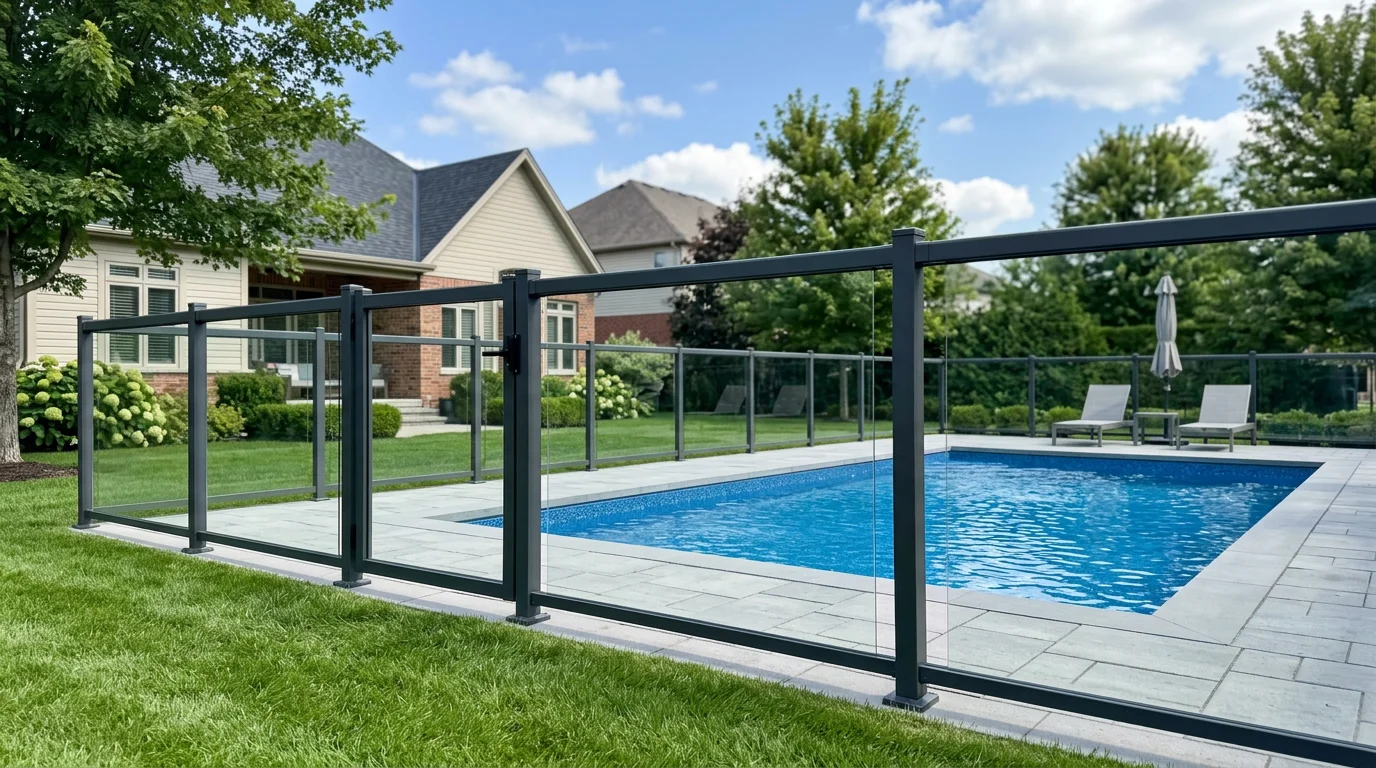
Choosing the right fence material means balancing upfront cost, lifespan, and how well it handles Ontario's freeze-thaw cycles. A $30/linear foot pressure-treated wood fence might save you money now, but it'll need staining every 2-3 years. A $60/linear foot vinyl fence costs double upfront but requires almost no maintenance for 25+ years.
Here's how the most common fence materials perform in Ontario's climate, what they actually cost in 2026, and which situations favor each option.
Pressure-Treated Wood Fencing
Cost: $30-50/linear foot installed
🏗️ Planning a deck project?
Get a free manual project review, or visualize your dream deck with AI before requesting quotes.
Lifespan: 15-20 years with proper maintenance
Maintenance: High
Pressure-treated (PT) wood remains the most popular fence material in KWC because it's affordable and available everywhere. You're looking at $30-38/linear foot for a basic 6-foot privacy fence with PT posts and rails, or $40-50/linear foot for higher-grade boards with better appearance.
The main advantage: low upfront cost. A 150-foot fence runs $4,500-7,500 installed.
The downsides show up quickly in Ontario's climate. PT wood absorbs moisture during freeze-thaw cycles, leading to warping, cracking, and splitting within 5-10 years if you don't maintain it. You'll need to:
- Stain or seal every 2-3 years ($2-4/linear foot for professional staining)
- Replace warped boards every 5-8 years
- Check for rot around post bases annually
PT wood works best when you're on a tight budget now and willing to do regular maintenance. It's also easy to repair — any contractor can replace a few boards without rebuilding the entire fence.
Climate consideration: Use PT rated for ground contact (0.40 retention level minimum) for posts. Ontario's clay soil holds moisture, accelerating rot in lower-grade PT lumber.
Cedar Fencing
Cost: $40-60/linear foot installed
Lifespan: 20-25 years with maintenance
Maintenance: Moderate to high
Cedar costs 30-40% more than pressure-treated wood but naturally resists rot and insects. A 6-foot cedar privacy fence typically runs $45-55/linear foot installed in KWC.
Cedar's tight grain and natural oils help it weather Ontario winters better than PT wood. Without treatment, cedar weathers to a silver-grey patina — some homeowners want this look. If you prefer to maintain the original color, plan on staining every 2-4 years.
The wood still experiences some warping and splitting in freeze-thaw cycles, just less severe than PT lumber. Posts still need ground-contact treatment or concrete footings below the frost line (42 inches minimum in Ontario).
Cedar makes sense when you want a natural wood appearance, better durability than PT, and don't mind moderate maintenance. It's also lighter than PT, making DIY installation more manageable.
Budget reality: A 150-foot cedar fence costs $6,750-9,000 installed compared to $4,500-7,500 for PT. Over 20 years, maintenance costs are similar — cedar just starts from a higher base price.
Vinyl (PVC) Fencing
Cost: $45-70/linear foot installed
Lifespan: 25-30 years
Maintenance: Very low
Vinyl fencing has become increasingly popular in Ontario because it requires almost no maintenance. Expect to pay $50-65/linear foot for a 6-foot privacy fence, or $45-55/linear foot for a semi-privacy style with spacing between pickets.
Modern vinyl formulations handle freeze-thaw cycles well. Quality vinyl (not the cheap big-box store versions) includes:
- UV inhibitors to prevent yellowing and brittleness
- Impact modifiers for cold-weather flexibility
- Titanium dioxide for color stability
The fence won't rot, warp significantly, or need painting. You'll wash it once or twice annually with soap and water — that's the entire maintenance schedule.
The catches:
1. Brittle in extreme cold: Lower-quality vinyl can crack if impacted during winter. Look for products rated for Canadian climates.
2. Expansion/contraction: Vinyl expands and contracts more than wood. Proper installation includes spacing allowances to prevent buckling.
3. Limited repair options: Damaged sections typically require panel replacement, not just board swaps like wood.
Vinyl makes financial sense if you're staying in your home long-term. A $9,000 vinyl fence versus a $6,000 PT wood fence breaks even around year 8-10 when you factor in wood staining costs ($600-900 every 2-3 years).
Ontario Building Code allows vinyl for fence heights up to 8 feet without engineered posts, though local bylaws typically restrict residential fences to 6 feet in rear yards.
Aluminum Fencing
Cost: $50-80/linear foot installed
Lifespan: 30-40 years
Maintenance: Very low
Aluminum offers a high-end appearance at mid-range pricing. Standard aluminum fencing runs $55-70/linear foot for 4-6 foot heights, while decorative styles with finials and scrollwork cost $65-80/linear foot.
Aluminum doesn't rust (it develops a protective oxide layer instead), won't rot, and handles Ontario winters without brittleness. Powder-coated finishes last 15-20 years before needing touch-ups.
Key limitations:
- No privacy: Aluminum is almost always open-rail style. It defines boundaries and looks elegant but won't block sightlines or noise.
- Lower security: Aluminum bends under impact more easily than steel. It deters casual intrusion but won't stop determined attempts.
- Wind load: Open rails create less wind resistance, which helps in storms but means you still see through to neighbors.
Aluminum works well for front yards where privacy screens aren't needed, pool barriers meeting Ontario's fencing requirements, or properties where appearance matters more than privacy.
The material performs exceptionally well around pools. Unlike wood, it won't rot from splashing or ground moisture. Unlike vinyl, it doesn't become brittle or crack from pool chemicals.
Chain-Link Fencing
Cost: $20-35/linear foot installed
Lifespan: 20-30 years
Maintenance: Low
Chain-link remains the most affordable fencing option at $20-28/linear foot for standard galvanized wire, or $28-35/linear foot for vinyl-coated color options.
Galvanized chain-link handles freeze-thaw cycles perfectly — there's nothing to rot, crack, or warp. You'll occasionally tighten tension wires and replace damaged sections, but maintenance is minimal.
Functional benefits:
- Extremely durable in harsh weather
- See-through design won't block sunlight to gardens
- Easy to install gates and access points
- Can add privacy slats later if needs change
Aesthetic reality: Chain-link looks industrial. Most homeowners use it for rear or side yards, not front-facing areas. HOAs often restrict or prohibit it.
It's the practical choice for large properties, pet containment, or when you need a fence quickly and affordably. A 200-foot chain-link fence costs $4,000-7,000 versus $10,000-14,000 for vinyl or cedar.
Composite Fencing
Cost: $60-85/linear foot installed
Lifespan: 25-30 years
Maintenance: Very low
Composite (wood fiber + plastic) fencing brings the same benefits as composite decking to fence applications. Expect to pay $65-80/linear foot for quality composite privacy fencing.
Composite resists rot, insects, warping, and splitting better than natural wood while providing a wood-like appearance that vinyl can't match. Most manufacturers offer 25-year warranties covering material defects.
Ontario climate performance:
- Handles freeze-thaw without cracking
- Won't absorb moisture and swell like wood
- Maintains color better than wood (still fades slightly over 10-15 years)
- Heavier than vinyl, less prone to wind damage
The main drawback is cost. Composite typically runs 15-25% more than vinyl and nearly double pressure-treated wood. It makes sense when you want low maintenance and natural wood aesthetics, but it's hard to justify purely on budget.
Composite material maintenance is similar for fencing: annual washing, immediate stain cleanup, and occasional mold removal in shaded areas.
Steel and Wrought Iron
Cost: $75-150/linear foot installed
Lifespan: 40-60 years
Maintenance: Moderate (rust prevention)
Ornamental steel and wrought iron fencing offers maximum security and traditional elegance at premium pricing. Custom ornamental steel runs $80-120/linear foot, while true wrought iron (increasingly rare) costs $100-150/linear foot.
Steel handles Ontario winters well structurally but requires rust prevention. Quality installations include:
- Hot-dip galvanizing before powder coating
- Rust-inhibiting primer at welds and joints
- Regular inspection of coating damage
You'll need to touch up paint chips every 2-3 years and do a full repaint every 10-15 years ($8-15/linear foot professionally).
Steel makes sense for high-security needs, historic properties, or when appearance justifies the investment. The material lasts decades longer than wood or vinyl, but at 3-4× the upfront cost.
Material Comparison Table
| Material | Installed Cost/LF | Lifespan | Winter Performance | Maintenance | Privacy | Best For |
|----------|-------------------|----------|-------------------|-------------|---------|----------|
| PT Wood | $30-50 | 15-20 yr | Fair (warping) | High | Excellent | Tight budgets |
| Cedar | $40-60 | 20-25 yr | Good | Moderate | Excellent | Natural appearance |
| Vinyl | $45-70 | 25-30 yr | Very good | Very low | Excellent | Low maintenance |
| Aluminum | $50-80 | 30-40 yr | Excellent | Very low | None | Decorative boundaries |
| Chain-Link | $20-35 | 20-30 yr | Excellent | Low | Poor | Large areas, pets |
| Composite | $60-85 | 25-30 yr | Excellent | Very low | Excellent | Premium low-maintenance |
| Steel | $75-150 | 40-60 yr | Very good | Moderate | None | Security, elegance |
Climate Factors for Ontario
Ontario's weather creates specific challenges that affect material performance:
Freeze-thaw cycles: KWC experiences 40-60 freeze-thaw events per winter. Water trapped in wood, concrete, or poorly designed vinyl expands when frozen, causing cracks and structural damage. Materials that resist moisture absorption (vinyl, aluminum, composite) perform best.
Clay soil: Much of KWC sits on clay soil that expands when wet and contracts when dry. This soil movement stresses fence posts more than sandy soils would. All materials require posts set below the 42-inch frost line in concrete footings. Helical piles offer an alternative for challenging soil conditions — similar to deck footing options.
Wind exposure: Open areas experience 40-60 km/h winds regularly. Solid privacy fences create more wind load than open designs. Vinyl and wood fences need proper post spacing (6-8 feet maximum) and deep footings. Aluminum's open design naturally handles wind better.
UV exposure: South and west-facing fences receive intense summer sun. Wood fades and dries out without UV-protective stains. Vinyl without UV inhibitors yellows and becomes brittle. Always verify UV ratings match Canadian sun exposure.
Budget-Based Recommendations
Under $5,000 (up to 130 linear feet):
Pressure-treated wood or chain-link. Accept higher maintenance (PT) or industrial appearance (chain-link) to stay in budget. Consider doing PT staining yourself to reduce costs.
$5,000-10,000 (130-200 linear feet):
Cedar or vinyl. Cedar if you like natural wood and will maintain it; vinyl if you want minimal upkeep. Both offer good value at this price point.
$10,000-15,000 (200+ linear feet):
Vinyl or composite for large areas needing privacy. Aluminum if you're fencing front yards or pools without privacy requirements.
$15,000+ (premium):
Composite, aluminum, or ornamental steel based on needs. Composite for natural-looking privacy, aluminum for elegant boundaries, steel for security and longevity.
Permit and Code Requirements
Ontario Building Code doesn't typically require permits for fences under 8 feet in height, but municipalities often have their own rules:
- Kitchener: Permit required for fences over 6 feet or within setback areas
- Waterloo: Generally no permit needed, but verify setbacks from property lines
- Cambridge: Permit may be required depending on height and location
All three cities enforce height restrictions: typically 6 feet maximum in rear/side yards, 3-4 feet in front yards. Check specific bylaws before installing — see deck setback rules for similar property line considerations.
Fence permits where required typically cost $50-200 depending on municipality. Processing takes 2-4 weeks.
Making Your Decision
Start by clarifying priorities:
1. Budget now vs. budget over time: PT wood saves money upfront but costs more over 15-20 years. Vinyl or composite cost more initially but less annually.
2. Privacy needs: Solid materials (wood, vinyl, composite) provide complete privacy. Open designs (aluminum, chain-link) define boundaries without blocking views.
3. Maintenance tolerance: Honest assessment matters. If you won't stain wood every 2-3 years, pay more for vinyl/composite now.
4. Appearance requirements: Front yards usually need better aesthetics than rear yards. Consider mixing materials — aluminum in front, vinyl in back.
5. Lifespan plans: Staying 5-10 years? PT wood works fine. Staying 20+ years? Vinyl or composite pays off.
Get quotes from 3-4 local contractors to compare pricing and warranty terms. Similar to deck quote considerations, verify what's included in installation (removal of old fence, concrete footings, gates, disposal fees).
🎨 Not sure which material to pick?
Upload a photo of your backyard and see exactly how Trex, TimberTech, or cedar would look — free and instant.
Common Questions
What is the longest-lasting fence material for Ontario?
Steel and aluminum last longest in Ontario's climate — 30-60 years depending on quality and maintenance. Steel requires rust prevention (touch-up painting every few years), while aluminum needs almost no maintenance. For privacy fencing specifically, vinyl and composite last 25-30 years and outperform wood by 10-15 years.
Should I choose vinyl or wood fencing in Ontario?
Choose vinyl if you want minimal maintenance and can afford the higher upfront cost ($45-70/linear foot vs. $30-50/linear foot for wood). Vinyl handles freeze-thaw cycles better, never needs staining, and lasts 25-30 years. Choose wood if you prefer natural appearance and will commit to staining every 2-3 years. Over 15+ years, vinyl costs less when you factor in wood maintenance expenses.
Do vinyl fences crack in Ontario winters?
Quality vinyl fences rated for Canadian climates handle Ontario winters well. Look for products with impact modifiers and cold-weather flexibility ratings. Cheap vinyl from big-box stores may crack below -20°C when impacted. Premium brands like Bufftech, CertainTeed, or Veranda include UV inhibitors and cold-weather formulations specifically designed for freeze-thaw cycles. Always verify the manufacturer rates their product for Zone 5 climates or colder.
What's the cheapest fence option that will last 20+ years?
Chain-link fencing at $20-35/linear foot lasts 20-30 years with minimal maintenance and lowest upfront cost. Galvanized chain-link won't rot, warp, or crack in freeze-thaw cycles. The trade-off is appearance — it looks industrial and provides no privacy. For privacy fencing that reaches 20+ years, pressure-treated wood with diligent maintenance costs least upfront ($30-50/linear foot) but requires staining every 2-3 years. Vinyl at $45-70/linear foot costs more initially but needs almost no maintenance over 25-30 years, making it cheaper long-term.
Can I install a fence right on my property line in KWC?
Ontario law allows fences on property lines, but both neighbors technically own it (line fence) and share maintenance responsibility. Most homeowners install fences 1-2 feet inside their property to avoid disputes and maintain full ownership. Kitchener, Waterloo, and Cambridge each have setback requirements from front lot lines (typically 3-10 feet depending on zoning). Verify your property's exact boundaries with a survey before installing — fence disputes with neighbors are common and expensive to resolve. Check KWC zoning setbacks to understand how to verify your property restrictions.
Upload a backyard photo and preview real decking materials with AI — free, instant, no sign-up.
Permits, costs, material comparisons, and questions to ask before requesting quotes — delivered to your inbox.