
Deck Cost in Fort Worth (2026)
What does a new deck cost in Fort Worth? See 2026 pricing by material, labor rates, cost per square foot, and tips to save on your Fort Worth deck project.
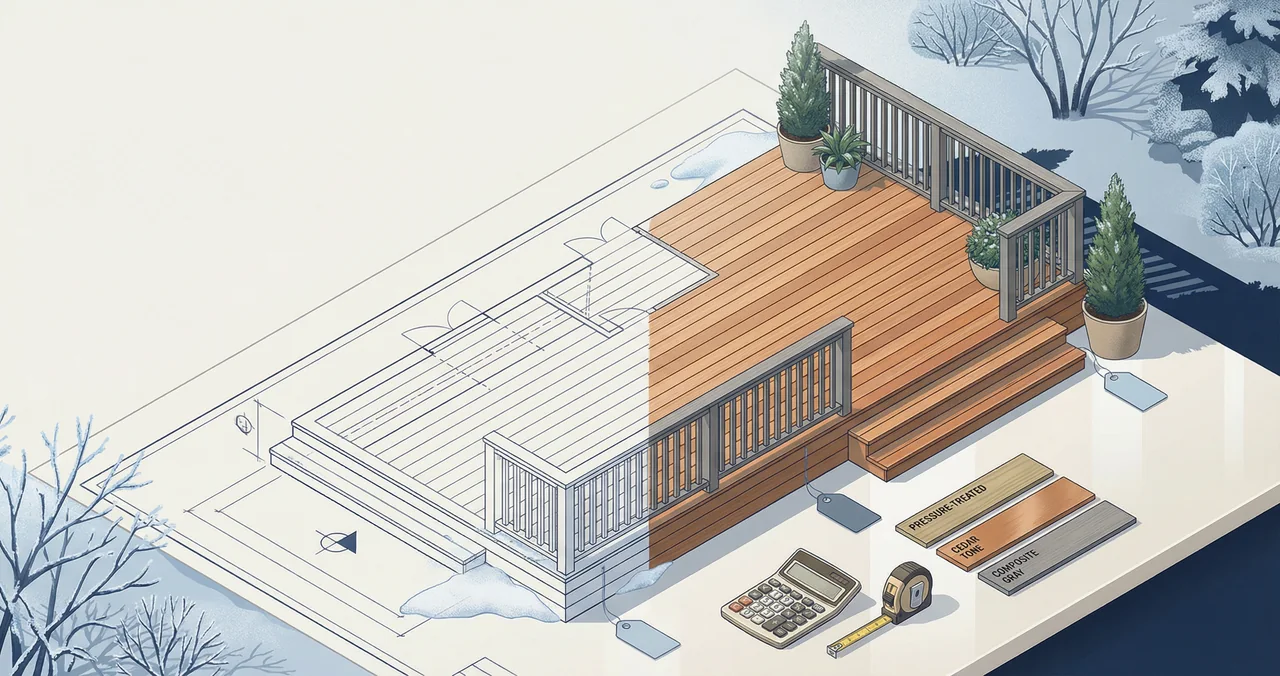
Deck Cost in Fort Worth: What Homeowners Are Paying in 2026
A new deck in Fort Worth runs anywhere from $8,000 to $30,000+ depending on size, materials, and complexity. That's a wide range — and not particularly helpful if you're trying to set a realistic budget.
🏗️ Planning a deck project?
Get a free manual project review, or visualize your dream deck with AI before requesting quotes.
🧮 Tool Alert: Deck Cost Calculator
Estimate your project costs in seconds based on local pricing bands for your area.
Calculate My Cost →Looking for more regional information? Check out our Texas State Decking Hub.
So here's what Fort Worth homeowners are actually paying right now, broken down by material, square footage, and the labor costs specific to the DFW market.
<!-- slot:after-intro -->
For a broader look at deck pricing across different materials and regions, see our complete deck cost guide for Texas. Timing your build right can also save thousands — check our guide on the best time to build a deck.
Average Deck Cost in Fort Worth by Material
Material choice drives most of your budget. Here's what installed pricing looks like across Fort Worth in 2026 for a standard 300–400 sq ft deck:
| Material | Installed Cost (Per Sq Ft) | 300 Sq Ft Deck | 400 Sq Ft Deck |
|---|---|---|---|
| Pressure-Treated Pine | $25–$45 | $7,500–$13,500 | $10,000–$18,000 |
| Cedar | $35–$55 | $10,500–$16,500 | $14,000–$22,000 |
| Composite | $45–$75 | $13,500–$22,500 | $18,000–$30,000 |
| Trex (brand-specific) | $50–$80 | $15,000–$24,000 | $20,000–$32,000 |
| Ipe (hardwood) | $60–$100 | $18,000–$30,000 | $24,000–$40,000 |
A few things to note. Pressure-treated pine dominates the Fort Worth market — it's cheap and readily available from local lumber yards. But Fort Worth's brutal summers punish wood decks. Expect to re-seal every 1–2 years or watch boards warp, crack, and gray out fast.
Cedar holds up better against insects and moisture than pine, but it's not immune to Fort Worth's UV exposure. You'll still need to stain it regularly.
Composite and Trex cost more upfront but require almost zero maintenance. In a climate where summer temps regularly hit 100°F+, that matters more than you think.
Cost Per Square Foot Breakdown
The per-square-foot number your contractor quotes includes materials, labor, and basic hardware. But "installed cost" can mean different things depending on who you're talking to.
Here's what's typically included in per-sq-ft pricing:
- Decking boards
- Framing lumber (joists, beams, ledger board)
- Standard post footings
- Basic fasteners and hardware
- Labor for installation
Here's what's usually extra:
- Railings: Add $20–$50 per linear foot depending on material (aluminum, cable, wood, composite)
- Stairs: $75–$200 per step, more for wider staircases
- Permits and inspections: $200–$600 in Fort Worth
- Demolition of an old deck: $5–$15 per sq ft
- Site prep and grading: $500–$2,000 depending on your lot
A homeowner in the Ridglea Hills area, for example, might pay more for site prep on a sloped lot than someone building on flat ground in Keller or Saginaw. Terrain shapes cost just as much as material selection.
Labor Costs in Fort Worth
Labor accounts for roughly 40–60% of your total deck cost in Fort Worth. That's in line with the broader DFW market, though Fort Worth tends to run slightly lower than Dallas proper due to a larger pool of residential contractors.
Typical labor rates in Fort Worth for 2026:
- General deck labor: $15–$30 per sq ft
- Skilled carpentry (custom designs, curves, multi-level): $25–$40 per sq ft
- Demolition/removal: $5–$15 per sq ft
Labor costs fluctuate seasonally. Fort Worth's year-round building climate means contractors don't face the same winter shutdown that northern states deal with, which keeps availability relatively steady. That said, spring and early summer are peak booking season — contractors get slammed from March through June as homeowners race to finish before triple-digit heat arrives.
Best time to hire: October through February. Contractors are hungrier for work, more willing to negotiate, and scheduling is easier. The weather is mild enough for comfortable building, and your deck will be ready for spring entertaining.
If you're comparing contractors across the metroplex, the best deck builders in Houston and San Antonio face similar climate challenges and can provide useful benchmarking.
<!-- slot:mid-content -->
What Affects Your Total Price
Two Fort Worth homeowners can build the same-size deck and end up with bills $10,000 apart. Here's why.
Deck Size and Layout
Bigger costs more — obviously. But layout complexity matters just as much as raw square footage. A simple rectangular 12x16 deck is straightforward to frame and build. Add angles, curves, multiple levels, or a wraparound design and labor hours climb fast.
Material Grade
Even within a single material category, there's a range. Pressure-treated lumber comes in #1 and #2 grades. Composite decking ranges from budget lines (like Trex Enhance) to premium tiers (Trex Transcend, TimberTech Vintage). The premium lines cost 30–50% more but offer better fade resistance — which matters under Fort Worth's relentless sun.
Foundation and Footings
Fort Worth's frost line sits at 6–12 inches, which is shallow compared to northern states. That keeps footing costs down. But soil composition varies across Tarrant County — expansive clay soils in some neighborhoods require deeper or wider footings, which adds $500–$1,500 to your project.
Height and Access
A ground-level deck is the cheapest to build. Once you get above 30 inches — which triggers a permit requirement in Fort Worth — you're adding railings, more structural support, and potentially stairs. Second-story decks can cost 2–3x a ground-level build per square foot.
Permits
In Fort Worth, deck permits are typically required for structures over 200 sq ft or 30 inches above grade. You'll need to work with Fort Worth's Building/Development Services department. Permit fees run $200–$600 depending on the project scope. Your contractor should handle this, but verify — some budget operators skip permits, which creates headaches when you sell your home. For more on the risks, see what happens when you build without a permit.
Add-Ons That Add Up
- Built-in seating: $2,000–$5,000
- Pergola or shade structure: $3,000–$10,000
- Deck lighting: $500–$2,500
- Outdoor kitchen rough-in: $1,500–$5,000
- Skirting/fascia: $500–$2,000
Composite vs Wood: Cost Comparison for Fort Worth
This is the decision most Fort Worth homeowners wrestle with. Here's a head-to-head comparison over a 10-year ownership period for a 350 sq ft deck:
| Factor | Pressure-Treated Wood | Composite |
|---|---|---|
| Upfront cost | $8,750–$15,750 | $15,750–$26,250 |
| Annual maintenance | $200–$500 (staining, sealing) | $0–$50 (occasional cleaning) |
| 10-year maintenance total | $2,000–$5,000 | $0–$500 |
| 10-year total cost | $10,750–$20,750 | $15,750–$26,750 |
| Expected lifespan | 10–15 years | 25–30+ years |
| Warranty | None (typically) | 25–50 years |
The gap narrows significantly over time. And in Fort Worth specifically, wood takes a beating. The combination of intense UV, summer humidity, and termite pressure means pressure-treated decks degrade faster here than in drier or cooler climates.
Composite resists all three. No sealing, no staining, no termite treatment. It does get hot underfoot in direct sun — a legitimate concern when surface temperatures can hit 150°F+ in July and August. Lighter colors and shaded areas help.
If budget is tight right now but you want longevity, cedar sits in the middle. It costs less than composite, resists insects naturally, and looks beautiful — but still needs regular staining. Check out the best low-maintenance decking options for a deeper dive into materials that hold up with minimal effort.
Use PaperPlan to visualize different decking materials on your own home before committing — seeing composite vs. wood on your actual house makes the decision a lot clearer.
How to Save Money on Your Fort Worth Deck
You don't have to cut corners to cut costs. Here are strategies that actually work in this market.
Build in the Off-Season
October through February is your window. Fort Worth contractors have lighter schedules, and some offer 10–15% discounts to fill gaps. The weather cooperates — cool enough for comfortable building, no freeze concerns to slow things down.
Keep the Design Simple
Rectangular decks cost less per square foot than complex layouts. Skip the curves and multi-level designs unless they're essential to your yard's layout. A clean, well-built rectangular deck looks great and keeps framing labor minimal.
Choose Pressure-Treated for Less-Used Areas
If you're building a large deck with different zones, consider composite for the main entertaining area and pressure-treated for less-visible sections. This hybrid approach can save 15–25% on materials.
Get Three to Five Quotes
Fort Worth has a deep contractor market. Don't settle for the first quote. Get at least three — ideally five — and compare not just price but scope. Make sure each quote includes the same specs so you're comparing apples to apples.
DIY the Demo
If you're replacing an old deck, tearing down the existing structure yourself saves $1,500–$5,000. It's grunt work, not skilled labor. Rent a dumpster, grab some friends, and handle it in a weekend. Just confirm your contractor is fine with this arrangement before starting.
Skip Premium Railings on Low Decks
If your deck is under 30 inches high, Fort Worth code generally doesn't require railings. Some homeowners add them anyway for aesthetics, but if budget is a priority, it's an easy place to save $2,000–$6,000.
For homeowners also considering fencing alongside their deck project, understanding how much fencing adds to your backyard investment helps you budget the full scope.
<!-- slot:before-faq -->
🎨 Not sure which material to pick?
Upload a photo of your backyard and see exactly how Trex, TimberTech, or cedar would look — free and instant.
Frequently Asked Questions
How much does a 12x16 deck cost in Fort Worth?
A 12x16 (192 sq ft) deck in Fort Worth costs approximately $4,800–$8,640 in pressure-treated wood or $8,640–$14,400 in composite, fully installed. These figures include standard framing, footings, and basic hardware but not railings, stairs, or permit fees. A project this size is one of the most popular builds in the DFW area.
Do I need a permit to build a deck in Fort Worth?
Yes, in most cases. Fort Worth requires permits for decks over 200 sq ft or more than 30 inches above grade. Contact Fort Worth's Building/Development Services department before starting. Your contractor should pull the permit — if they suggest skipping it, that's a red flag. Unpermitted work can cause problems during home sales and insurance claims.
What is the best decking material for Fort Worth's climate?
Composite decking handles Fort Worth's climate best overall. It resists UV fading, doesn't absorb moisture that leads to mold, and termites can't eat it. The tradeoff is heat retention — composite surfaces get very hot in direct summer sun. If you go composite, choose lighter colors and plan for shade. For budget builds, pressure-treated pine works but requires annual sealing and diligent termite monitoring.
When is the cheapest time to build a deck in Fort Worth?
Late fall through winter (October–February) offers the best pricing. Contractor demand drops after the summer rush, and many are willing to negotiate on price to keep crews working. You'll also face fewer scheduling delays. Avoid booking between March and June — that's peak season, and you'll pay premium rates with longer wait times.
How long does it take to build a deck in Fort Worth?
A standard 300–400 sq ft deck typically takes 1–3 weeks from start to finish, depending on complexity. Simple ground-level decks can be done in a week. Multi-level builds with stairs, railings, and custom features run closer to 3–4 weeks. Permit approval adds 1–3 weeks before construction starts, so factor that into your timeline — especially if you're building for a specific event or season.
<!-- slot:end -->
📋 Planning a deck project?
Get a free manual project review from our team — no obligation, no spam.
Get Free Project Review →Upload a backyard photo and preview real decking materials with AI — free, instant, no sign-up.
Permits, costs, material comparisons, and questions to ask before requesting quotes — delivered to your inbox.