
Deck Cost in Katy: What Homeowners Are…
What does a deck cost in Katy, TX? See 2026 pricing by material, square footage breakdowns, labor rates, and smart ways to save on your new deck.
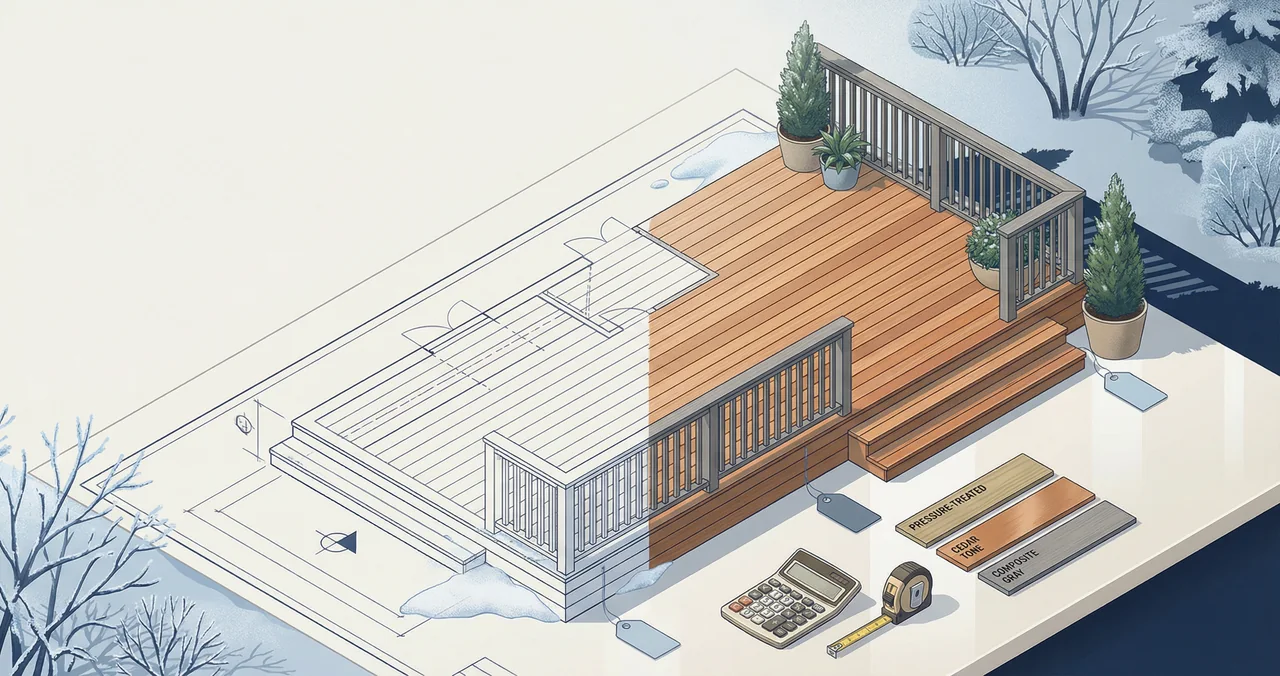
How Much Does a Deck Cost in Katy Right Now?
If you're pricing out a new deck in Katy, you're probably seeing numbers all over the map. One contractor quotes $8,000, another says $22,000 for what sounds like the same project. The gap makes sense once you understand what drives costs here — material choice, deck size, elevation, and Katy's specific climate demands all push your final number up or down.
🏗️ Planning a deck project?
Get a free manual project review, or visualize your dream deck with AI before requesting quotes.
🧮 Tool Alert: Deck Cost Calculator
Estimate your project costs in seconds based on local pricing bands for your area.
Calculate My Cost →Looking for more regional information? Check out our Texas State Decking Hub.
Here's the short answer: most Katy homeowners pay between $8,500 and $28,000 for a new deck in 2026, with the average 12×16 deck landing around $12,000 to $18,000 installed. But your deck isn't average — so let's break down exactly what you'll pay based on what you actually want.
<!-- slot:after-intro -->
For a broader look at deck pricing across different materials and regions, see our complete deck cost guide for Texas. Timing your build right can also save thousands — check our guide on the best time to build a deck.
Average Deck Cost in Katy by Material
Material is the single biggest variable in your deck budget. Here's what Katy contractors are charging in 2026 for a fully installed deck, including framing, decking boards, basic railing, and labor:
| Material | Installed Cost (per sq ft) | 12×16 Deck (192 sq ft) | 16×20 Deck (320 sq ft) |
|---|---|---|---|
| Pressure-Treated Pine | $25–$45 | $4,800–$8,640 | $8,000–$14,400 |
| Cedar | $35–$55 | $6,720–$10,560 | $11,200–$17,600 |
| Composite (mid-range) | $45–$75 | $8,640–$14,400 | $14,400–$24,000 |
| Trex (premium lines) | $50–$80 | $9,600–$15,360 | $16,000–$25,600 |
| Ipe (hardwood) | $60–$100 | $11,520–$19,200 | $19,200–$32,000 |
A few things to note. Those ranges are wide because the low end assumes a simple, ground-level rectangle with basic railing. The high end reflects elevated decks, multi-level designs, premium railing systems, and built-in features like benches or planters.
Pressure-treated pine remains the most popular choice in Katy neighborhoods like Cinco Ranch, Cross Creek Ranch, and Firethorne — it's affordable and widely available from local lumber yards. But in Katy's heat and humidity, you'll need to seal it within the first year and re-seal every 1–2 years after that. Skip this and you'll see warping, graying, and mold growth within a single summer.
Cost Per Square Foot Breakdown
That per-square-foot number isn't all decking boards. Here's roughly where your money goes on a typical Katy deck project:
- Decking material (boards): 30–40% of total cost
- Substructure and framing: 15–20%
- Railing and stairs: 10–20%
- Labor: 25–35%
- Permits, hardware, and fasteners: 3–5%
What Size Deck Do You Actually Need?
Most Katy homeowners building for the first time underestimate how much space they need. A quick reference:
- 12×12 (144 sq ft): Fits a small dining set. Good for townhomes or tight backyards.
- 12×16 (192 sq ft): The most common size in Katy. Room for a dining table and a couple of lounge chairs.
- 16×20 (320 sq ft): Comfortable entertaining space. Fits a grill station, dining area, and seating zone.
- 20×20 (400 sq ft): Large-scale outdoor living. Multiple zones, room for a hot tub or outdoor kitchen access.
Bigger decks have a slightly lower cost per square foot because fixed costs (permits, mobilization, design) spread across more area. Going from a 12×16 to a 16×20 doesn't double your price — expect roughly a 50–65% increase.
<!-- slot:mid-content -->
Labor Costs in Katy
Labor typically runs $15–$30 per square foot in the Greater Katy area, depending on the complexity of the build and the contractor's experience. That's in line with broader Houston-area rates, though Katy's suburban growth means plenty of contractors compete for work — which works in your favor.
A few factors that push labor costs higher:
- Elevated decks (over 30 inches) require more structural engineering and deeper footings
- Multi-level or wraparound designs add complexity and time
- Demolition of an old deck — budget an extra $500–$1,500 for tear-out and disposal
- Difficult access — if materials can't be delivered directly to your backyard, expect a surcharge
One thing Katy homeowners have going for them: year-round building weather. Unlike northern states where contractors cram all their work into a short season, Katy's mild winters mean builders stay busy but not slammed from October through April. That's your window for the best pricing and scheduling flexibility. Summer builds are doable but less comfortable for crews, and some contractors add a heat premium for July and August work.
If you're comparing with Houston's best deck builders, many of them actively serve the Katy area too. Get at least three quotes — pricing can vary 20–30% between contractors for the same scope of work.
What Affects Your Total Price
Beyond material and size, here's what actually moves the needle on your final bill:
Deck Height and Foundation
A ground-level deck on concrete blocks might cost $25–$40 per square foot installed. Raise that deck 4 feet off the ground and you're looking at $40–$65+ because of deeper post footings, more lumber for the substructure, and additional railing requirements. Katy's frost line sits at just 6–12 inches, so footings here are shallower (and cheaper) than what homeowners in the north deal with.
Railings and Stairs
Basic pressure-treated wood railing runs $15–$25 per linear foot. Upgrade to composite railing and you're at $30–$60 per linear foot. Cable railing or glass panels? $50–$100+. A single set of stairs adds $500–$2,000 depending on height and material.
Permits in Katy
In Katy, Texas, deck permits are typically required for structures over 200 sq ft or 30 inches above grade. Check with Katy's Building/Development Services department before starting work. Many master-planned communities like Cinco Ranch and Elyson also have HOA architectural review requirements on top of city permits — your contractor should handle both, but confirm this upfront.
Permit fees are usually $200–$500 depending on project scope. Building without a permit can trigger fines and create problems when you sell your home. Not worth the risk.
Climate-Specific Upgrades
Katy's climate demands specific choices that might not apply elsewhere:
- Stainless steel or coated fasteners — standard galvanized hardware corrodes faster in Katy's humidity. Budget an extra $100–$300 for upgraded screws and brackets.
- Mold-resistant underlayment — moisture gets trapped under deck boards in Katy's humid summers. Good ventilation and mold-resistant barriers save you headaches.
- UV-resistant composite — Katy gets intense, direct sunlight roughly 8 months of the year. Cheaper composite boards can fade noticeably. Name brands like Trex Transcend and TimberTech AZEK include UV inhibitors that hold up better.
- Termite treatment — pressure-treated lumber is already treated against termites, but the connection points and any untreated components need protection. Ask your contractor about borate treatments for extra insurance.
Composite vs Wood: Cost Comparison
This is the decision most Katy homeowners agonize over. Here's an honest comparison:
| Factor | Pressure-Treated Wood | Composite (Mid-Range) |
|---|---|---|
| Upfront cost (installed, per sq ft) | $25–$45 | $45–$75 |
| Annual maintenance cost | $200–$500 (sealing/staining) | $0–$50 (occasional cleaning) |
| Lifespan in Katy's climate | 10–15 years with maintenance | 25–30+ years |
| 10-year total cost (16×20 deck) | $12,000–$19,400 | $14,400–$24,000 |
| Mold/mildew resistance | Low — needs regular treatment | High — built-in resistance |
| Termite resistance | Moderate (treated) | Immune |
| Heat retention | Lower surface temperature | Can get hot in direct sun |
| Appearance over time | Grays and weathers | Maintains color |
The 10-year total cost column is revealing. When you factor in Katy's aggressive maintenance cycle — you really do need to seal wood every 1–2 years here, not the 3–5 years you'd get away with in drier climates — composite's premium shrinks significantly over time.
One real downside of composite in Katy: surface heat. Dark composite boards in direct July sun can hit 150°F+. If your deck gets full afternoon exposure, choose lighter colors or plan for shade structures. Exploring the best low-maintenance decking options in Canada covers composite brand comparisons that apply regardless of where you live.
Use PaperPlan to visualize different decking materials on your own home before committing — seeing the color and texture against your siding and landscape makes the decision much easier than staring at 2-inch samples at the hardware store.
How to Save Money on Your Katy Deck
Smart savings that don't compromise quality:
Time Your Project Right
October through April is the sweet spot. Contractors are more available, willing to negotiate, and your project won't compete with the summer rush. January and February are particularly good — it's too cold for most homeowners to think about decks, but Katy's winters are mild enough for comfortable building.
Keep the Design Simple
Every angle, curve, and level change adds cost. A rectangular deck with a single set of stairs is the most cost-efficient layout. If you want visual interest, invest in a premium railing or quality deck stain rather than complex geometry.
Mix Materials Strategically
Use composite for the decking surface (where you'll benefit most from low maintenance) and pressure-treated lumber for the substructure (which is hidden and protected from UV). This hybrid approach can save 15–25% compared to an all-composite build.
Buy Materials Yourself — Maybe
Some homeowners save by purchasing lumber directly. This can work, but only if you know exactly what you need and have storage space. Most contractors get contractor pricing that's close to or better than retail. Ask your builder if they'll discount labor if you supply materials — some will, some won't.
Don't Over-Build for "Someday"
Building a 20×20 deck because you might host large parties someday costs thousands more than the 16×20 that fits your actual lifestyle. Build what you need now. Expanding later is always an option, and a well-built deck can be extended without starting over.
Compare Quotes Carefully
Get at least three written quotes. Make sure each quote includes the same scope: material specs, railing type, stair count, footing depth, permit handling, and cleanup. The cheapest bid often leaves out items that show up as change orders later. If you're looking at what deck projects cost elsewhere for comparison, 12×16 deck cost breakdowns and 16×20 deck pricing give you useful benchmarks.
<!-- slot:before-faq -->
🎨 Not sure which material to pick?
Upload a photo of your backyard and see exactly how Trex, TimberTech, or cedar would look — free and instant.
Frequently Asked Questions
How much does a 12×16 deck cost in Katy?
A 12×16 (192 sq ft) deck in Katy costs between $4,800 and $14,400 installed in 2026, depending on material. Pressure-treated pine falls at the low end, composite in the middle, and premium hardwoods like Ipe at the top. Most homeowners choosing a mid-range composite for this size pay $9,000–$12,000 all-in with basic railing and one set of stairs.
Do I need a permit to build a deck in Katy?
Yes, in most cases. Katy requires permits for decks over 200 sq ft or 30 inches above grade. Many Katy subdivisions also require HOA architectural approval. Your contractor should pull all necessary permits — if they suggest skipping this step, find a different contractor. Building without permits carries real risks including fines, forced removal, and complications at resale.
What's the best decking material for Katy's climate?
Composite decking is the top performer in Katy's hot, humid conditions. It resists moisture, mold, termites, and UV fading without the constant sealing that wood demands here. If budget is the priority, pressure-treated pine works well as long as you commit to annual maintenance. Cedar looks beautiful but weathers faster in Katy's humidity than in drier climates. For choosing between the top composite brands, focus on lines with strong UV warranties — you'll need them.
When is the cheapest time to build a deck in Katy?
Late fall through early spring (October–April) offers the best pricing. Contractor schedules are more flexible, and you'll avoid the summer heat that slows crews down and can affect material handling. January and February tend to be the absolute lowest-demand months, giving you the most leverage on pricing. The tradeoff is you won't enjoy the deck immediately — but saving 10–15% on a $15,000 project is worth the wait.
How long does it take to build a deck in Katy?
Most standard decks (12×16 to 16×20) take 3–7 days of actual build time once materials arrive. Add 1–3 weeks for permit approval, depending on Katy's current backlog and whether your HOA needs to review plans. Larger or more complex projects — multi-level decks, extensive stairs, built-in features — can stretch to 2–3 weeks of construction. Your contractor should give you a timeline in writing before work begins.
<!-- slot:end -->
📋 Planning a deck project?
Get a free manual project review from our team — no obligation, no spam.
Get Free Project Review →Upload a backyard photo and preview real decking materials with AI — free, instant, no sign-up.
Permits, costs, material comparisons, and questions to ask before requesting quotes — delivered to your inbox.