
Deck Cost in Round Rock (2026)
What does a deck cost in Round Rock in 2026? Get real pricing per square foot by material, labor rates, and smart ways to save on your new deck.
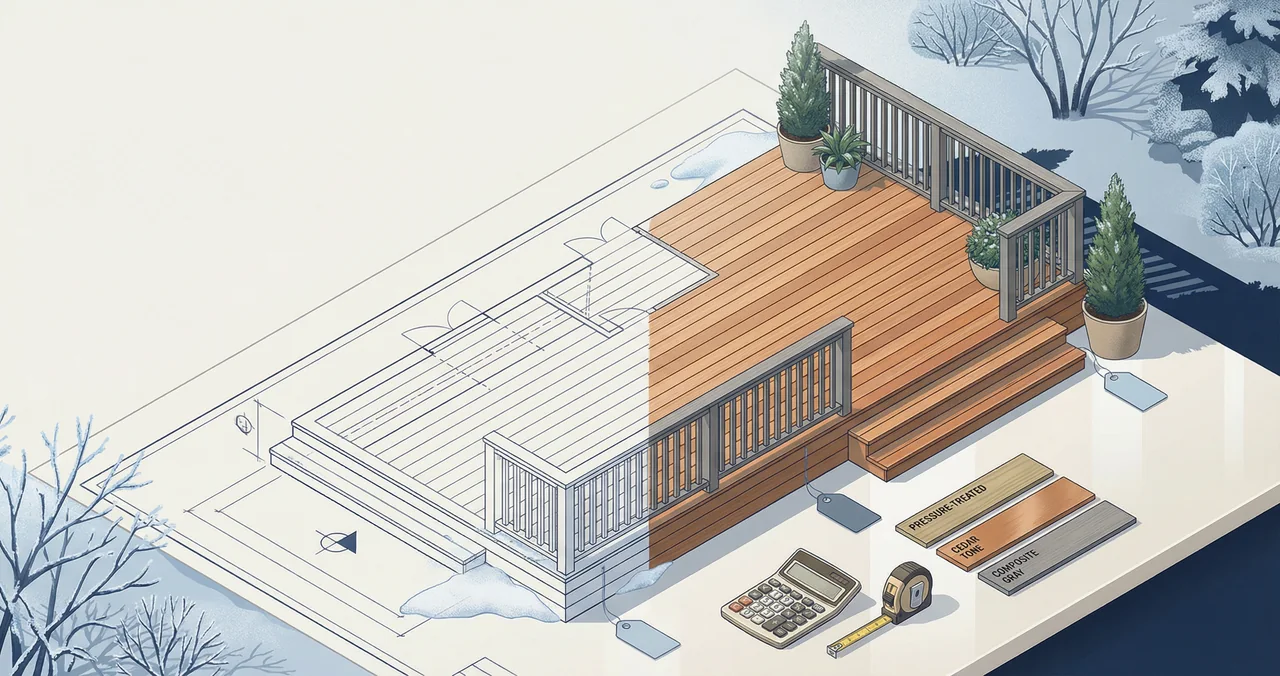
How Much Does a Deck Cost in Round Rock?
A standard 16×20 deck in Round Rock runs between $8,000 and $24,000 installed, depending on material. That's a wide range, and the final number comes down to what you build with, how complex the design is, and who you hire.
🏗️ Planning a deck project?
Get a free manual project review, or visualize your dream deck with AI before requesting quotes.
🧮 Tool Alert: Deck Cost Calculator
Estimate your project costs in seconds based on local pricing bands for your area.
Calculate My Cost →Looking for more regional information? Check out our Texas State Decking Hub.
Round Rock homeowners deal with a specific set of challenges — brutal summer UV, humidity that invites mold, and termites that never take a season off. Those factors should drive your material choice just as much as your budget does.
Here's what Round Rock homeowners are actually paying in 2026, broken down by material, square footage, and labor.
<!-- slot:after-intro -->
For a broader look at deck pricing across different materials and regions, see our complete deck cost guide for Texas. Timing your build right can also save thousands — check our guide on the best time to build a deck.
Average Deck Cost in Round Rock by Material
Not all decking is created equal, especially in Central Texas heat. Below are installed prices — materials plus labor — based on current 2026 rates in the Round Rock and greater Austin metro area.
| Material | Installed Cost per Sq Ft | 320 Sq Ft Deck (16×20) |
|---|---|---|
| Pressure-Treated Wood | $25–$45 | $8,000–$14,400 |
| Cedar | $35–$55 | $11,200–$17,600 |
| Composite | $45–$75 | $14,400–$24,000 |
| Trex (brand-name composite) | $50–$80 | $16,000–$25,600 |
| Ipe (hardwood) | $60–$100 | $19,200–$32,000 |
Pressure-treated pine dominates the Round Rock market because it's affordable and available everywhere. But in this climate, you'll be re-staining and sealing every 1–2 years to keep it from graying, cracking, or growing mildew.
Composite decking costs more upfront but requires almost zero maintenance. For homeowners in neighborhoods like Teravista, Paloma Lake, or Forest Creek — where you want the deck to look good year after year without constant upkeep — composite is the practical long-term play.
Ipe is the premium tier. It's extraordinarily dense and naturally resistant to rot, insects, and UV. But it's expensive, heavy, and harder to install. Most Round Rock contractors charge a premium for ipe labor because it dulls saw blades fast and requires pre-drilling every fastener.
Cost Per Square Foot Breakdown
Square footage is the single biggest driver of your total cost. Here's how the math works at different deck sizes:
Small Deck (10×12 = 120 sq ft)
| Material | Estimated Total |
|---|---|
| Pressure-Treated | $3,000–$5,400 |
| Composite | $5,400–$9,000 |
| Trex | $6,000–$9,600 |
A 10×12 deck works well as a simple grill pad or back-door landing. At this size, your per-square-foot cost tends to be on the higher end because fixed costs (permits, delivery, mobilization) get spread over fewer square feet.
Mid-Size Deck (14×16 = 224 sq ft)
| Material | Estimated Total |
|---|---|
| Pressure-Treated | $5,600–$10,080 |
| Composite | $10,080–$16,800 |
| Trex | $11,200–$17,920 |
This is the most common size Round Rock contractors build. It gives you room for a dining set, a couple of chairs, and enough space to move around comfortably.
Large Deck (16×20 = 320 sq ft)
| Material | Estimated Total |
|---|---|
| Pressure-Treated | $8,000–$14,400 |
| Composite | $14,400–$24,000 |
| Trex | $16,000–$25,600 |
At this size, you're getting into entertaining territory — multiple seating zones, room for a built-in bench or planter boxes. If you're in a neighborhood like Cat Hollow or Round Rock Ranch with a bigger lot, this is a popular choice.
Labor Costs in Round Rock
Labor typically makes up 40% to 60% of your total deck cost. In Round Rock and the surrounding Austin metro, here's what to expect:
- General labor rate: $15–$35 per square foot for standard builds
- Complex builds (multi-level, wraparound, stairs, curved edges): $30–$50 per square foot
- Demolition and removal of an old deck: $3–$8 per square foot
Round Rock sits in a sweet spot for labor pricing. It's close enough to Austin to have a deep contractor pool, but far enough out that you're not paying downtown Austin premiums. The year-round building season helps too — contractors don't have to cram all their work into a 6-month window like they do up north, so scheduling is more flexible and you have more negotiating room on timing.
When to Book Your Contractor
October through April is the ideal building window in Round Rock. Summer builds aren't impossible, but working in 100°F+ heat slows crews down, and some adhesives and stains don't perform well above 90°F. Booking a fall or winter build can sometimes save you 5–10% on labor because demand dips.
If your project involves choosing the right composite brand, get samples shipped to you early so you can see how colors look against your home's exterior in Texas sunlight — colors read differently under our intense UV.
<!-- slot:mid-content -->
What Affects Your Total Price
The per-square-foot numbers above are your starting point. Here's what pushes the final invoice up or down.
Deck Height and Foundation
A ground-level deck on simple pier blocks costs far less than an elevated deck requiring 6×6 posts, concrete footers, and engineered beams. In Round Rock, the frost line sits at 6–12 inches, so footings don't need to go deep — but they still need to be done right to meet code.
Elevated decks (30+ inches above grade) also require railings by code, which adds $20–$50 per linear foot depending on material.
Railings and Stairs
- Wood railings: $15–$30 per linear foot
- Composite railings: $25–$45 per linear foot
- Cable or glass railings: $50–$100+ per linear foot
- Stairs: $75–$200 per step, installed
Stairs are deceptively expensive. A simple 4-step run with railings can add $800–$1,500 to your project.
Permits and Inspections
In Round Rock, deck permits are typically required for structures over 200 sq ft or those elevated 30 inches or more above grade. Contact Round Rock's Building/Development Services department before you start — permit fees generally run $200–$500 depending on project scope.
Building without a permit is a gamble. If you ever sell your home, an unpermitted deck can delay closing or require expensive remediation. It's not worth the risk. For a deeper look at permit implications, see what happens when you build without a permit.
Site Prep and Access
If your backyard slopes, has large tree roots, or requires grading, expect to add $500–$2,000 for site preparation. Limited access (think: no gate wide enough for material delivery) can also increase labor costs because crews have to carry everything through the house or over fences.
Design Complexity
A simple rectangular deck is the cheapest to build. Every angle, curve, built-in bench, planter, or multi-level transition adds cost. Diagonal decking patterns use roughly 15% more material than straight runs due to waste from cuts.
Use PaperPlan to visualize different decking materials on your own home before committing — it helps you see how a design actually looks in context before you're locked into a contract.
Composite vs Wood: Cost Comparison
This is the decision most Round Rock homeowners wrestle with. Here's a real-world comparison over 10 years for a 320 sq ft deck:
| Factor | Pressure-Treated Wood | Composite |
|---|---|---|
| Upfront cost | $8,000–$14,400 | $14,400–$24,000 |
| Annual maintenance | $200–$500 (stain/seal) | $0–$50 (occasional cleaning) |
| 10-year maintenance total | $2,000–$5,000 | $0–$500 |
| 10-year total cost | $10,000–$19,400 | $14,400–$24,500 |
| Lifespan | 10–15 years | 25–30+ years |
| Warranty | Limited or none | 25–50 years (varies by brand) |
The gap narrows fast when you factor in maintenance. And in Round Rock's climate, that maintenance isn't optional — skip a year of sealing pressure-treated wood, and you'll see warping, graying, and mildew growth within months.
Composite also handles Round Rock's specific challenges better:
- UV resistance — quality composites include UV inhibitors that prevent fading, critical when your deck gets 250+ days of direct sun per year
- Moisture resistance — no rotting, no swelling, no mildew penetration
- Insect resistance — termites can't eat composite. They absolutely can eat untreated or poorly maintained wood.
That said, composite does get hotter underfoot than wood in direct summer sun. If your deck faces south or west with no shade, consider lighter colors or plan for a shade structure. For a broader look at low-maintenance decking options, there are several brands worth comparing.
How to Save Money on Your Round Rock Deck
You don't have to cut corners to reduce costs. These strategies actually work:
1. Build During the Off-Season
Schedule your project between November and February. Contractor demand drops, and many will offer better pricing to keep their crews busy. You'll also avoid the summer heat that slows down construction timelines.
2. Keep the Design Simple
A rectangular deck with standard railings costs significantly less than a multi-level design with curves and built-ins. If budget is tight, start with a clean rectangle — you can always add features later.
3. Use Pressure-Treated for the Frame, Composite for the Surface
This hybrid approach saves money on the structural components (which nobody sees) while giving you the low-maintenance benefits of composite where it matters. Most Round Rock contractors are comfortable with this setup, and it can shave 10–15% off the total compared to an all-composite build.
4. Get Three to Five Quotes
Pricing varies significantly between contractors in the Austin metro. Get at least three detailed written estimates that break out materials, labor, and permits separately. Don't automatically take the cheapest — look at their portfolio, reviews, and whether they pull permits.
5. Consider a Freestanding Deck
An attached deck requires a ledger board bolted to your home's rim joist, which means flashing, waterproofing, and potential warranty concerns with your siding. A freestanding deck avoids all of that. In some cases, freestanding decks also have different permit requirements, which can simplify the approval process.
6. Do Your Own Demo
If you're replacing an old deck, tearing out the existing structure yourself can save $500–$2,000 in labor. It's physical work, but it doesn't require specialized skills — just a pry bar, a reciprocating saw, and a dumpster rental.
7. Buy Materials Yourself
Some contractors mark up materials 10–20%. Ask if they'll work with homeowner-supplied materials. Not all will, but it's worth asking. Watch for seasonal sales at home improvement stores — spring clearance events in particular can offer significant savings on decking and railing systems.
<!-- slot:before-faq -->
🎨 Not sure which material to pick?
Upload a photo of your backyard and see exactly how Trex, TimberTech, or cedar would look — free and instant.
Frequently Asked Questions
How much does a 12×16 deck cost in Round Rock?
A 12×16 deck (192 sq ft) in Round Rock costs approximately $4,800–$8,640 for pressure-treated wood and $8,640–$14,400 for composite, fully installed. These estimates include standard railings and a basic set of stairs. For projects right around this size, see how a similar-sized deck prices out in other markets for comparison.
Do I need a permit to build a deck in Round Rock?
Most likely, yes. Round Rock requires permits for decks over 200 sq ft or those elevated 30 inches or more above grade. Even if your deck falls below these thresholds, it's smart to call Round Rock's Building/Development Services department to confirm. Permit fees are modest — typically $200–$500 — and the inspection process ensures your deck is structurally sound.
What's the best decking material for Round Rock's climate?
Composite decking is the best all-around choice for Round Rock. It handles the intense UV, humidity, and termite pressure without the constant maintenance that wood demands. If budget is the priority, pressure-treated pine works — but commit to staining and sealing every 1–2 years, or it'll deteriorate fast in this climate. For a detailed comparison of how different materials hold up, the performance gap is significant over time.
How long does it take to build a deck in Round Rock?
A straightforward 300 sq ft deck typically takes 3–5 days once the crew starts. But the full timeline — from first call to finished deck — is usually 3–8 weeks when you factor in design, permitting, material ordering, and scheduling. Ordering composite materials during peak season can add lead time, so plan ahead if you want a specific brand or color.
Is it cheaper to build a deck or a patio in Round Rock?
A basic concrete patio is cheaper — roughly $6–$15 per square foot installed versus $25–$45+ for a deck. But they serve different purposes. Decks work better on sloped lots, provide better drainage underneath, and can be built to any height. Patios are limited to ground level. If you're comparing the two options, consider what your yard's grade and drainage situation actually demands rather than just looking at price.
<!-- slot:end -->
📋 Planning a deck project?
Get a free manual project review from our team — no obligation, no spam.
Get Free Project Review →Upload a backyard photo and preview real decking materials with AI — free, instant, no sign-up.
Permits, costs, material comparisons, and questions to ask before requesting quotes — delivered to your inbox.