
Deck Cost in Tampa: What Homeowners Are…
What does a deck cost in Tampa in 2026? Get real pricing per square foot for composite, wood, and Trex decks — plus tips to save on your Tampa build.
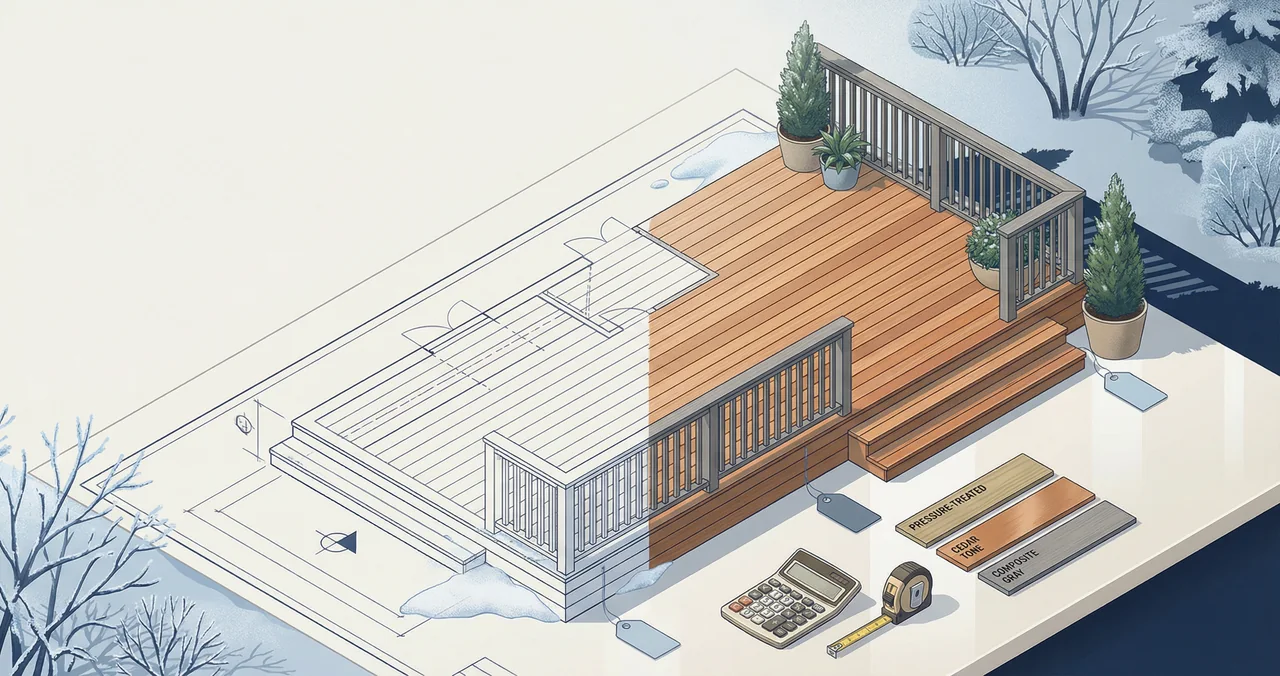
A new deck in Tampa runs anywhere from $8,000 to over $40,000 depending on size, materials, and how complex the design gets. That's a wide range — and not particularly helpful if you're trying to set a realistic budget.
🧮 Tool Alert: Deck Cost Calculator
Estimate your project costs in seconds based on local pricing bands for your area.
Calculate My Cost →So here's what Tampa homeowners are actually paying in 2026, broken down by material, square footage, and the labor costs specific to this market.
Looking for more regional information? Check out our Florida State Decking Hub.
Average Deck Cost in Tampa by Material
Material choice is the single biggest lever on your total price. Here's what installed costs look like across Tampa right now:
🏗️ Planning a deck project?
Get a free manual project review, or visualize your dream deck with AI before requesting quotes.
| Material | Installed Cost Per Sq Ft | 12×16 Deck (192 sq ft) | 16×20 Deck (320 sq ft) |
|---|---|---|---|
| Pressure-Treated Wood | $25–$45 | $4,800–$8,640 | $8,000–$14,400 |
| Cedar | $35–$55 | $6,720–$10,560 | $11,200–$17,600 |
| Composite | $45–$75 | $8,640–$14,400 | $14,400–$24,000 |
| Trex (brand-name composite) | $50–$80 | $9,600–$15,360 | $16,000–$25,600 |
| Ipe (tropical hardwood) | $60–$100 | $11,520–$19,200 | $19,200–$32,000 |
Those prices include materials, labor, standard railing, and basic stairs. They don't include permits, demolition of an existing structure, or design upgrades like built-in benches or multi-level framing.
Pressure-treated pine remains the most popular choice in Tampa for budget-conscious builds. It handles the job, but Tampa's humidity and UV exposure mean you'll need to seal or stain it every 1–2 years to prevent warping, graying, and mildew.
Composite decking has gained serious ground in the Tampa market. The upfront cost stings, but you skip the annual sealing routine — and the boards won't rot, split, or attract termites. In a climate this punishing, that matters.
<!-- slot:after-intro -->
For a broader look at deck pricing across different materials and regions, see our complete deck cost guide for Florida.
Cost Per Square Foot Breakdown
The per-square-foot number is what most contractors will quote you, so it's worth understanding what's baked into it.
A typical installed price per square foot in Tampa includes:
- Materials (decking boards, joists, posts, concrete footings, fasteners): 40–50% of total cost
- Labor: 30–40% of total cost
- Hardware, railings, stairs: 10–20% of total cost
- Permits and overhead: 5–10%
What pushes you toward the high end
- Decks elevated more than 4 feet above grade (requires additional structural engineering)
- Curved or multi-level designs
- Hurricane-rated fasteners and hardware — required in many Tampa coastal zones and strongly recommended throughout Hillsborough County
- Premium railing systems (cable rail, glass panels, aluminum)
- Built-in features: planter boxes, seating, pergola attachments
What keeps costs on the lower end
- Ground-level, rectangular deck on flat terrain
- Pressure-treated lumber with basic wood railings
- Direct access from the house (no long stairways)
- Standard fastener patterns with no coastal wind load requirements
A straightforward 12×16 pressure-treated deck with standard railings in South Tampa or Westchase typically lands between $5,500 and $9,000 fully installed.
Labor Costs in Tampa
Tampa labor rates for deck construction run $15–$35 per square foot, depending on the contractor's experience and the project's complexity. That's competitive compared to markets like Chicago or New York, where labor alone can exceed $40/sq ft.
A few factors specific to Tampa's labor market:
Year-round building season works in your favor. Unlike northern states and best time to build a deck, where contractors compress all their work into a 6–7 month window, Tampa builders stay busy twelve months a year. That means more contractor availability and more room to negotiate on pricing — especially during the slower summer months when the heat keeps many homeowners from starting projects.
Summer scheduling can mean discounts. June through September is Tampa's off-peak season for outdoor construction. Many contractors offer 5–15% discounts to keep crews working. You'll deal with afternoon thunderstorms and brutal heat (your crew will too), but the savings can be real.
Licensed and insured matters more here. Florida's contractor licensing requirements are strict. Always verify your builder holds an active license through the Florida Department of Business and Professional Regulation (DBPR). Unlicensed work in Tampa can void your homeowner's insurance coverage and create nightmares if you ever need to file a hurricane damage claim.
<!-- slot:mid-content -->
What Affects Your Total Price
Beyond material and labor, several Tampa-specific factors shift your final number.
Permits and Inspections
In Tampa, deck permits are typically required for structures over 200 sq ft or raised more than 30 inches above grade. Contact Tampa's Building/Development Services department before you start. Permit fees generally run $150–$500 depending on project scope, and inspections are required at footing, framing, and final stages.
Skipping the permit is a bad idea in Florida. Insurance claims related to hurricane or storm damage can be denied if unpermitted structures are involved. If you're unsure about permit requirements for your specific situation, err on the side of pulling one.
Site Conditions
- Soil type: Tampa's sandy soil drains well but may require deeper footings — typically 12–24 inches deep, well past the minimal frost line of 6–12 inches, to reach stable ground
- Slope: A sloped lot in areas like Seminole Heights or Bayshore can add $2,000–$5,000 for additional framing and engineering
- Access: If materials can't be delivered directly to the build site (narrow side yards, gated communities), expect a small upcharge for manual transport
Climate-Driven Requirements
Tampa's climate is the single biggest factor that separates local deck building from builds in drier or cooler regions.
- Termites: Subterranean termites are aggressive across Hillsborough County. Pressure-treated lumber is chemically treated to resist them, but ground contact points still need monitoring. Composite eliminates this concern entirely.
- Mold and mildew: With average humidity above 70% for much of the year, organic materials grow mold fast. Regular cleaning is non-negotiable for wood decks. Composite and PVC resist mold growth at the surface level.
- UV degradation: Tampa gets roughly 250 sunny days per year. Untreated wood will gray and crack within months. UV-stable composite boards hold their color significantly longer.
- Hurricane fasteners: In coastal zones and areas subject to high wind loads, your deck may require Simpson Strong-Tie hurricane clips or equivalent rated connectors. This adds $300–$800 to a typical build but is code-required in many Tampa neighborhoods.
Demolition and Removal
Tearing out an old deck before building new runs $5–$15 per square foot, depending on the material and how it was built. A rotting 300 sq ft deck might cost $1,500–$4,500 to demo and haul away. Some contractors bundle this into the new build price; always ask.
Composite vs Wood: Cost Comparison
This is the decision most Tampa homeowners wrestle with. Here's a direct comparison over a 10-year period for a 320 sq ft deck (16×20):
| Factor | Pressure-Treated Wood | Composite |
|---|---|---|
| Installed cost | $8,000–$14,400 | $14,400–$24,000 |
| Annual maintenance | $200–$400 (sealing, staining) | $0–$50 (occasional cleaning) |
| 10-year maintenance total | $2,000–$4,000 | $0–$500 |
| Expected lifespan | 10–15 years (Tampa climate) | 25–30+ years |
| 10-year total cost | $10,000–$18,400 | $14,400–$24,500 |
| Termite risk | Moderate (treated, not immune) | None |
| Mold resistance | Low (requires treatment) | High |
The gap narrows significantly over time. And in Tampa's environment, pressure-treated wood decks on the lower end of that quality spectrum may only last 8–12 years before boards need replacement — especially in shaded areas where moisture lingers.
The honest take: If you plan to stay in your home for 7+ years, composite almost always wins on total cost of ownership in Tampa. If you're building for resale within 3–5 years or need to minimize upfront spend, pressure-treated wood does the job. Just budget for that annual maintenance.
Use PaperPlan to visualize different decking materials on your own home before committing — seeing composite vs. wood against your actual siding and landscaping makes the decision easier.
For a deeper comparison of composite decking brands and what to look for, that guide covers the major players like Trex, TimberTech, and Fiberon in detail.
How to Save Money on Your Tampa Deck
Time your build strategically
Book your project for June through September when contractor schedules open up. Yes, it's hot. But Tampa builders are accustomed to the heat, and you can often lock in lower labor rates during these months. October through April is prime building weather, and that's when demand — and prices — peak.
Keep the design simple
Every angle, curve, and level change adds cost. A rectangular, single-level deck attached directly to your home is the most cost-efficient design. You can always add character with railing style, lighting, or furniture rather than expensive structural complexity.
Compare at least three quotes
Tampa has a healthy pool of licensed deck builders. Get three to five written estimates for the same scope of work. Compare not just price but included items: are permits included? Demolition? Post-construction cleanup? The cheapest quote often leaves things out.
Consider a phased approach
Build the deck platform now and add the pergola, built-in seating, or lighting next year. Spreading the project across two phases lets you manage cash flow without compromising on the foundation.
Don't over-build on material
Not every deck needs Ipe or top-tier Trex. Mid-range composite from brands like Fiberon or TimberTech's entry lines deliver solid performance in Tampa's climate at $45–$60/sq ft installed — well below premium lines. Similarly, if you're going wood, pressure-treated southern yellow pine from a reputable supplier is the local standard and costs far less than cedar or redwood.
Handle demolition yourself
If you're replacing an old deck, tearing out the existing structure yourself can save $1,000–$3,000. Rent a dumpster, grab a pry bar, and put in a weekend. Just leave the footings for your contractor to evaluate — they may be reusable.
<!-- slot:before-faq -->
🎨 Not sure which material to pick?
Upload a photo of your backyard and see exactly how Trex, TimberTech, or cedar would look — free and instant.
Frequently Asked Questions
How much does a 12x16 deck cost in Tampa?
A 12×16 deck (192 sq ft) in Tampa costs between $4,800 and $15,360 depending on material. Pressure-treated wood lands on the low end at $4,800–$8,640 installed. Composite runs $8,640–$14,400. Add $500–$2,000 for upgraded railings, stairs, or permit fees. Most Tampa homeowners building a deck this size spend $7,000–$12,000 all-in.
Do I need a permit to build a deck in Tampa?
Yes, in most cases. Tampa requires permits for decks over 200 sq ft or more than 30 inches above grade. Even smaller decks may need a permit depending on your lot and zoning. Contact Tampa's Building/Development Services department before breaking ground. Permit fees typically run $150–$500, and the process takes 1–3 weeks for approval.
What is the best decking material for Tampa's climate?
Composite decking is the top performer in Tampa's heat and humidity. It resists moisture, mold, termites, and UV fading — all major concerns here. Brands like Trex Transcend, TimberTech PRO, and Fiberon Paramount are specifically engineered for harsh climates. If budget is tight, pressure-treated southern yellow pine works but demands consistent sealing every 1–2 years. Avoid untreated cedar in Tampa — it can't handle the moisture without aggressive maintenance.
When is the cheapest time to build a deck in Tampa?
Summer (June–September) offers the best pricing. Tampa's heat and afternoon storms slow demand, so many contractors discount labor by 5–15% to keep crews busy. You'll also find shorter wait times for scheduling. The tradeoff is weather delays and working in intense heat, but experienced Tampa builders plan around afternoon storms as a matter of routine.
How long does it take to build a deck in Tampa?
A standard 200–400 sq ft deck takes 3–7 days of actual construction time once materials are on-site. The full timeline including design, permitting, and scheduling typically runs 3–6 weeks. Factors that extend the timeline: permit delays, custom railing orders, complex multi-level designs, or site accessibility challenges. Rain delays during summer can add a few days, though Tampa builders typically work around the predictable afternoon storm pattern.
<!-- slot:end -->
📋 Planning a deck project?
Get a free manual project review from our team — no obligation, no spam.
Get Free Project Review →Upload a backyard photo and preview real decking materials with AI — free, instant, no sign-up.
Permits, costs, material comparisons, and questions to ask before requesting quotes — delivered to your inbox.