
Deck Maintenance in Florida (2026)
Florida decks face unique challenges: humidity, UV, termites. Learn how to protect your investment with our guide to deck maintenance.
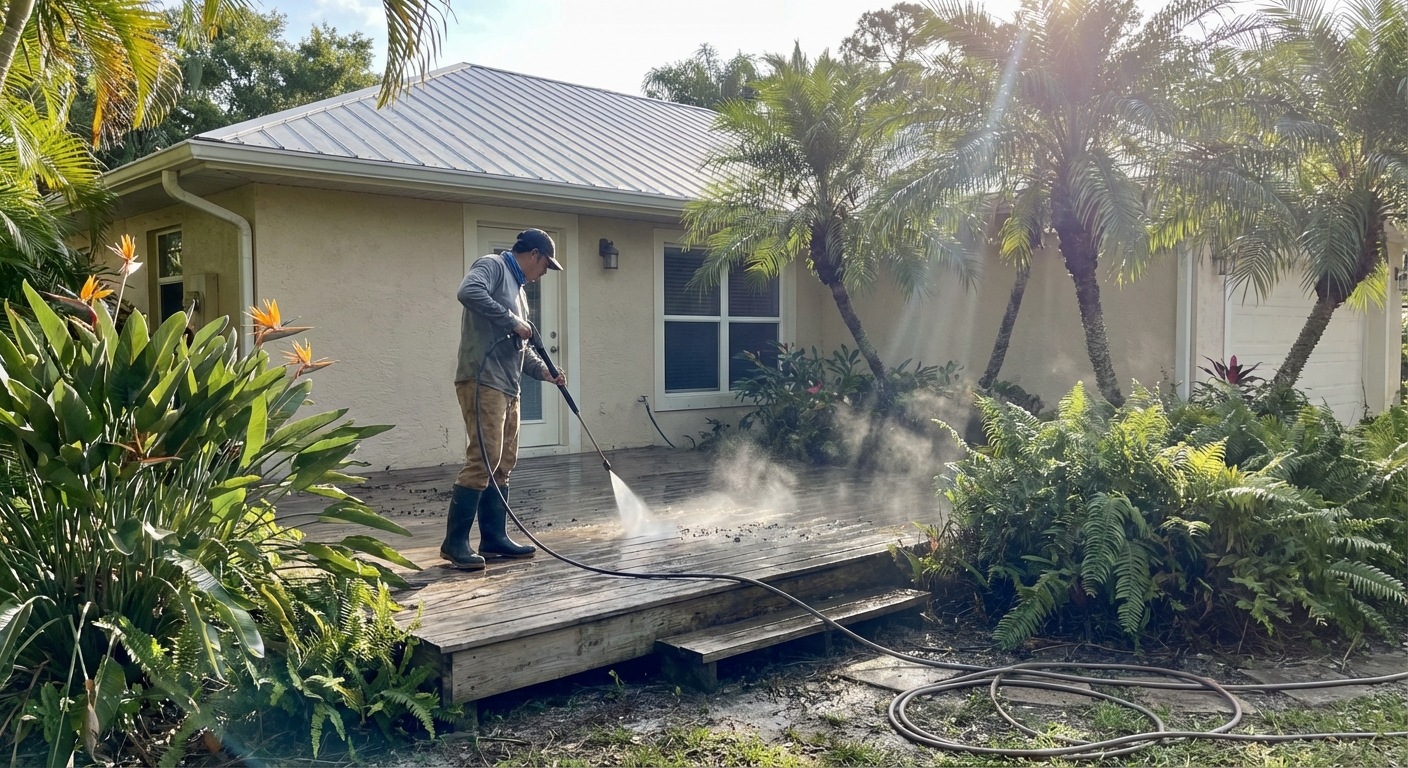
Owning a deck in Florida is fantastic for enjoying the outdoors, but the state's harsh climate demands consistent maintenance. The relentless humidity, intense UV radiation, and persistent threat of pests can quickly degrade even the most well-built decks. This guide provides a comprehensive strategy to protect your deck and maximize its lifespan.
📅 Tool Alert: Maintenance Planner
Get a custom seasonal maintenance schedule to protect your investment for decades.
Plan Maintenance →Understanding Florida's Deck Maintenance Challenges
Looking for more regional information? Check out our Florida State Decking Hub.
🏗️ Planning a deck project?
Get a free manual project review, or visualize your dream deck with AI before requesting quotes.
Florida's environment presents unique challenges that require a proactive approach to deck maintenance. Ignoring these factors can lead to costly repairs or even premature deck failure.
- Humidity: Florida experiences average relative humidity between 70-90% year-round. This constant moisture promotes wood rot, mold, and mildew growth, weakening the deck structure and creating unsightly stains.
- UV Exposure: The sun's ultraviolet rays are intense year-round in Florida. This UV exposure breaks down deck finishes, causing fading, cracking, and warping.
- Pests: Termites, especially Formosan subterranean termites, thrive in Florida's warm, humid climate. They can rapidly destroy wooden decks from the inside out. Pressure-treated lumber is essential, but ongoing inspection and preventative treatments are crucial.
- Hurricanes: While routine maintenance won't prevent hurricane damage, ensuring your deck is structurally sound and meets the Florida Deck Building Codes: Key Requirements for 2026 is crucial. These codes address wind uplift requirements to minimize damage during storms.
- Saltwater: For coastal properties, saltwater spray accelerates corrosion of metal fasteners and can damage wood. Regular cleaning is essential.
- Permitting: Remember that most Florida cities require permits for decks over 200 sqft or 30 inches above grade. This is unrelated to maintenance but important if you are considering any structural changes.
<!-- slot:after-intro -->
Choosing the Right Materials for Florida
The type of decking material you choose significantly impacts the level of maintenance required. While all materials need some upkeep, some are inherently more resistant to Florida's harsh conditions.
Comparing Decking Material Costs & Maintenance Needs
| Material | Cost (Installed per sqft) | Maintenance Frequency | Resistance to Humidity | Resistance to UV | Resistance to Insects | Lifespan |
| ------------------- | ------------------------- | ----------------------- | ------------------------ | ------------------ | ----------------------- | -------------- |
| Pressure-Treated Wood | $25-45 | Annually | Moderate | Low | Moderate (if treated) | 10-20 years |
| Composite | $45-75 | Bi-Annually | High | High | High | 25-50 years |
| Cedar | $35-60 | Annually | Moderate | Moderate | Moderate | 15-25 years |
| Ipe (Brazilian Walnut) | $65-110 | Bi-Annually | High | High | High | 50+ years |
As you can see, while pressure-treated wood is the most affordable upfront, its lower resistance to humidity, UV, and insects translates to more frequent maintenance and a shorter lifespan. Composite and Ipe offer superior durability but come at a higher initial cost. Consider the long-term cost and effort when making your decision. Explore Composite vs Wood Decking in Florida: Pros, Cons & Costs for a detailed comparison.
Pressure-Treated Wood: The Budget-Friendly Option
Pressure-treated lumber is a common choice due to its affordability. However, it requires regular sealing (every 1-2 years) to prevent moisture absorption and cracking. Also, inspect for termite damage annually, especially if you live in South Florida.
Composite Decking: Low-Maintenance Durability
Composite decking is a popular alternative to wood, offering excellent resistance to moisture, UV rays, and insects. It requires minimal maintenance – typically just cleaning with soap and water. While the initial cost is higher, the reduced maintenance and longer lifespan can make it a cost-effective choice in the long run. Read more about Composite Deck Cost in Florida: What to Expect in 2026.
Cedar: Natural Beauty with Moderate Maintenance
Cedar is a naturally beautiful wood that offers some resistance to decay and insects. However, it still requires regular sealing and staining to protect it from the elements. Cedar can be a good choice if you prefer the look of natural wood but are willing to invest in ongoing maintenance. Understand Cedar Deck Cost in Florida: Is It Worth It in the Humidity? before choosing this option.
Ipe: The Premium, Long-Lasting Choice
Ipe is a dense, durable hardwood that is naturally resistant to moisture, insects, and UV rays. It's a premium decking material that requires minimal maintenance and can last for decades. However, it's also the most expensive option.
Essential Deck Maintenance Tasks in Florida
Regardless of the material you choose, regular maintenance is crucial for preserving your deck's appearance and structural integrity.
Regular Cleaning
- Frequency: Clean your deck at least twice a year, ideally in the spring and fall. Coastal properties may require more frequent cleaning due to saltwater exposure.
- Process: Use a stiff brush and a deck cleaner specifically designed for your decking material. For wood decks, consider a cleaner with a mildewcide to prevent mold growth. For composite decks, follow the manufacturer's recommendations. Power washing can be effective, but use a low setting to avoid damaging the surface.
- Pool Decks: Special attention should be given to pool decks. Regular cleaning is essential to remove chlorine and other chemicals that can damage the surface. Ensure you use a slip-resistant cleaner to maintain safety.
Sealing and Staining (Wood Decks)
- Frequency: Seal and stain your wood deck every 1-2 years, depending on the level of exposure to sun and rain.
- Preparation: Before sealing or staining, thoroughly clean the deck and allow it to dry completely. Remove any loose or peeling paint or stain.
- Application: Apply the sealant or stain according to the manufacturer's instructions. Choose a high-quality product that contains UV inhibitors to protect against sun damage. Consider using a tinted stain to add color and further protect the wood.
Inspecting for Damage
- Frequency: Inspect your deck at least twice a year for signs of damage, such as rot, cracks, loose boards, and insect infestation.
- Focus Areas: Pay close attention to areas that are exposed to moisture, such as the underside of the deck, areas around posts, and where the deck meets the house.
- Termite Inspection: Look for mud tubes, hollow-sounding wood, and other signs of termite activity. If you suspect a termite infestation, contact a professional pest control company immediately.
Repairing Damage
- Rotten Wood: Replace any rotten wood immediately. Cut out the affected area and replace it with pressure-treated lumber.
- Cracked Boards: Replace cracked boards to prevent further damage and potential safety hazards.
- Loose Fasteners: Tighten any loose screws or nails. Replace them with new, corrosion-resistant fasteners if necessary.
- Structural Issues: If you notice any structural issues, such as sagging or leaning, consult a qualified deck builder to assess the problem and make necessary repairs.
Preventing Mold and Mildew
- Proper Ventilation: Ensure adequate ventilation under the deck to prevent moisture buildup.
- Sunlight: Trim back any trees or shrubs that are blocking sunlight from reaching the deck.
- Mildewcide: Use a deck cleaner with a mildewcide to kill existing mold and mildew and prevent future growth.
- Regular Cleaning: Regular cleaning is the best way to prevent mold and mildew growth.
<!-- slot:mid-content -->
Florida-Specific Considerations
Beyond the general maintenance tasks, there are some specific considerations for deck maintenance in Florida.
Hurricane Preparedness
- Inspection: Before hurricane season, inspect your deck for any loose boards, damaged fasteners, or structural weaknesses.
- Reinforcement: Reinforce any weak areas to help the deck withstand high winds.
- Debris Removal: Remove any loose objects from the deck that could become projectiles during a storm.
Coastal Properties
- Saltwater Protection: Rinse your deck with fresh water regularly to remove salt buildup.
- Corrosion-Resistant Fasteners: Use corrosion-resistant fasteners, such as stainless steel, to prevent rust.
- Protective Coatings: Apply a protective coating to the deck to shield it from saltwater damage.
Permitting for Repairs
While minor repairs typically don't require a permit, major structural repairs or modifications may. Always check with your local building department before undertaking any significant work. In Miami-Dade County, expect a longer permit process (6-12 weeks) due to stricter regulations. Miami Deck Permit: Requirements, Costs & Miami-Dade Rules provides more detail. In Tampa/Hillsborough, permits are handled through the county's Building Services. Remember to research Do You Need a Deck Permit in Florida? State & City Rules before starting any work.
Finding Reliable Deck Builders in Florida
If you're not comfortable performing deck maintenance yourself, or if you need assistance with repairs or renovations, it's essential to find a reliable deck builder. Here are some resources for finding contractors in major Florida cities:
- Best Deck Builders in Tampa: How to Find the Right Contractor
- Best Deck Builders in Orlando: What to Look For in 2026
- Best Deck Builders in Jacksonville: Local Guide
- Best Deck Builders in Fort Lauderdale: How to Choose in 2026
Use PaperPlan (paperplan.app) to visualize your deck with PaperPlan design with different materials and layouts before committing to a contractor. It helps you make informed decisions and communicate your vision effectively.
<!-- slot:before-faq -->
Cost Considerations
The cost of deck maintenance in Florida varies depending on the size of your deck, the materials used, and the extent of the work required.
- DIY vs. Professional: Performing maintenance tasks yourself can save you money, but it requires time, effort, and the necessary tools and skills. Hiring a professional can be more expensive, but it ensures the job is done correctly and efficiently.
- Material Costs: The cost of maintenance materials, such as cleaners, sealants, and stains, can add up over time. Choose high-quality products that will provide long-lasting protection.
- Repair Costs: Repairing damage can be costly, especially if structural issues are involved. Regular maintenance can help prevent costly repairs down the road.
Understanding the average deck costs in Florida can help you budget for both initial construction and ongoing maintenance. Expect to pay around $25-45 per square foot for a pressure-treated wood deck, $45-75 per square foot for a composite deck, $35-60 per square foot for a cedar deck, and $65-110 per square foot for an Ipe deck, installed. Be sure to check out How Much Does a Deck Cost in Florida? Complete 2026 Guide for more cost breakdowns. For local pricing, see Deck Cost in Miami: Local Pricing Guide for 2026 and Deck Cost in Fort Lauderdale: 2026 Local Pricing Guide.
<!-- slot:end -->
🎨 Not sure which material to pick?
Upload a photo of your backyard and see exactly how Trex, TimberTech, or cedar would look — free and instant.
Frequently Asked Questions
What is the best time of year to build a deck in Florida?
The best time to build a deck in Florida is during the dry season, which typically runs from November to April. The weather is milder, and there is less rain, making it ideal for outdoor construction.
How do I prevent my wooden deck from rotting in Florida's humidity?
The key to preventing rot is proper sealing and ventilation. Seal your deck every 1-2 years with a high-quality sealant and ensure adequate ventilation underneath the deck to prevent moisture buildup.
What are the signs of termite damage on a deck?
Signs of termite damage include mud tubes, hollow-sounding wood, and small holes in the wood. If you suspect termite damage, contact a professional pest control company immediately.
How often should I clean my composite deck in Florida?
Clean your composite deck at least twice a year, or more frequently if it's exposed to saltwater or heavy use. Use a deck cleaner specifically designed for composite decking.
Are ground-level decks a good option in Florida?
Yes, ground-level decks are popular in Florida due to the state's relatively flat terrain and high water tables. However, ensure proper drainage to prevent moisture buildup and potential rot.
📋 Planning a deck project?
Get a free manual project review from our team — no obligation, no spam.
Get Free Project Review →Upload a backyard photo and preview real decking materials with AI — free, instant, no sign-up.
Permits, costs, material comparisons, and questions to ask before requesting quotes — delivered to your inbox.