
Deck Permits in Florida: 2026 Rules
Planning a deck in Florida? Understand Florida's deck permit requirements, building codes, costs, and navigate city-specific rules in Miami, Tampa, Orlando & Jacksonville.
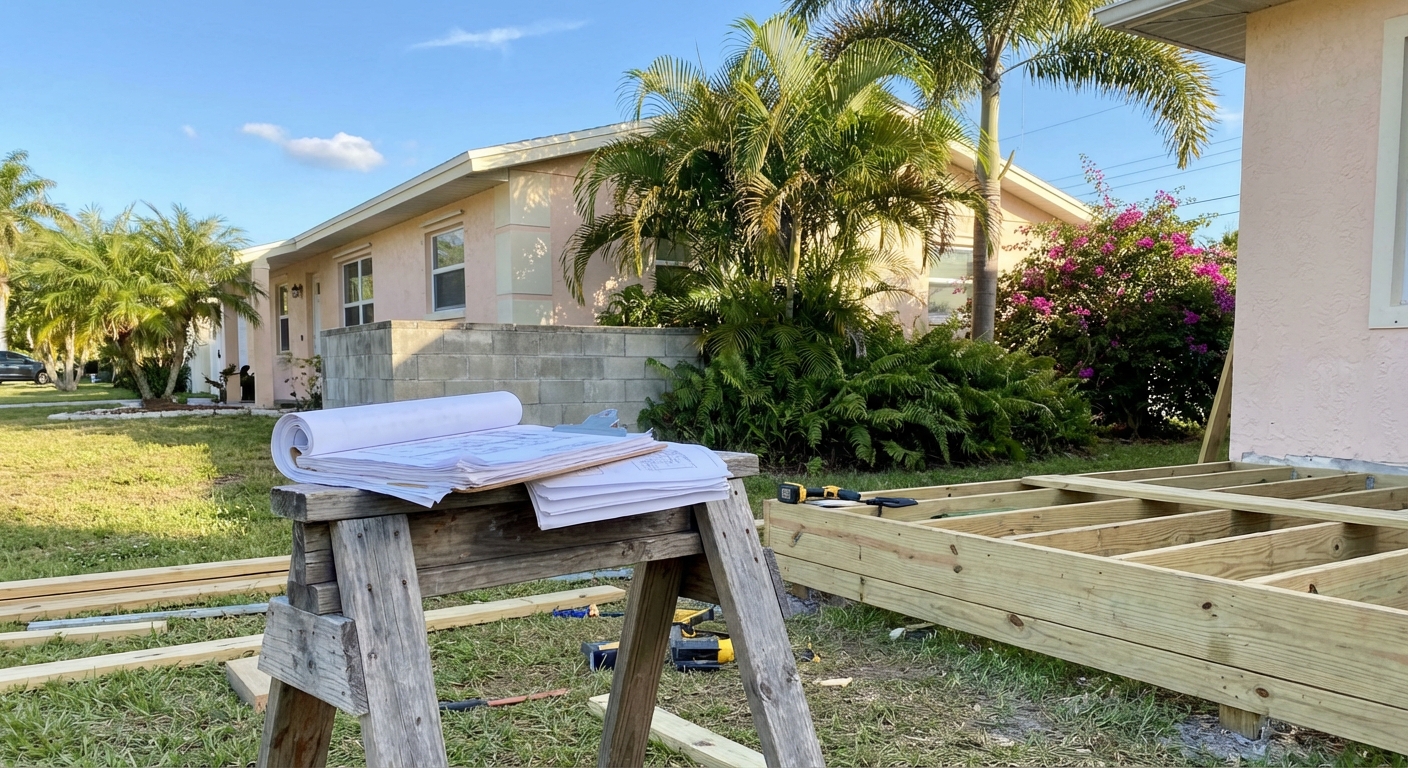
Do you need a permit to build a deck in Florida? The short answer is: probably, yes. Because Florida has no state income tax, many homeowners invest heavily in improving their outdoor living spaces. However, navigating the permitting process can be tricky. This guide breaks down Florida's deck permit requirements, explains the relevant building codes, and provides insights into costs and common pitfalls.
📋 Tool Alert: Permit Checker
Do you really need a permit? Check the exact rules for your city or township.
Check Permits →Understanding Florida's Deck Permit Landscape
Looking for more regional information? Check out our Florida State Decking Hub.
🏗️ Planning a deck project?
Get a free manual project review, or visualize your dream deck with AI before requesting quotes.
Florida doesn’t have a statewide deck permit requirement, but most counties and municipalities do. This means that the rules vary depending on where you live. Generally, if your deck is attached to your house or exceeds a certain size (often 200 square feet), you'll need a permit. Why? Primarily for safety and to ensure compliance with Florida's stringent building codes, particularly regarding hurricane resistance.
Florida's unique climate and geography necessitate robust building regulations. The Florida Building Code is among the strictest in the US, designed to protect structures from hurricanes, high winds, and flooding. These codes dictate everything from the materials you can use to the way your deck must be anchored.
<!-- slot:after-intro -->
Key Reasons for Deck Permits in Florida
- Safety: Permits ensure your deck is structurally sound and safe for use, adhering to load-bearing requirements.
- Hurricane Resistance: Florida decks must be able to withstand significant wind loads, typically ranging from 110-180 mph depending on your location. Permits verify proper construction techniques.
- Code Compliance: Ensures your deck meets all local building codes, preventing future issues with inspections or resale value.
- Insurance: Unpermitted structures can create problems when filing insurance claims if damage occurs.
- Property Value: A properly permitted deck adds value to your property and avoids potential legal complications.
Florida-Specific Challenges: Climate and Materials
Florida's environment presents unique challenges for deck construction. The state experiences extremely high humidity, averaging 70-90% year-round, which fosters mold and mildew growth. Termites, both subterranean and drywood, are a constant threat. Coastal areas face salt air corrosion and UV degradation from intense sunlight.
These factors heavily influence material choices. While pressure-treated lumber is a common option, composite decking is gaining popularity due to its resistance to rot, insects, and fading.
Material Considerations and Costs
Here's a look at typical installed deck costs in Florida:
| Material | Cost per Square Foot (Installed) | Pros | Cons |
|-------------------|-----------------------------------|-----------------------------------------------------------------------------------------------------------------|-----------------------------------------------------------------------------------------------------------|
| Pressure-Treated | $25-45 | Most affordable, readily available | Requires regular maintenance, susceptible to rot and insects |
| Composite | $45-80 | Low maintenance, durable, resists rot and insects, various colors and styles | Higher initial cost, can get hot in direct sunlight |
| Cedar | $35-55 | Naturally rot and insect resistant, beautiful appearance | Requires more maintenance than composite, softer wood susceptible to scratches |
| Trex (Composite) | $50-85 | Premium composite, excellent durability and aesthetics, eco-friendly options | Higher cost than standard composite |
| Ipe (Hardwood) | $65-110 | Extremely durable, naturally resistant to rot and insects, beautiful exotic wood | Highest cost, requires specialized installation, can be difficult to source |
For coastal properties (within 3000 feet of saltwater), using stainless steel or hot-dipped galvanized hardware is crucial to prevent corrosion.
Use PaperPlan (paperplan.app) to visualize your deck with PaperPlan design with different materials and layouts before committing to a contractor. This can help you make informed decisions about cost and aesthetics.
City-Specific Deck Permit Requirements
While the underlying principles of safety and code compliance remain consistent, specific requirements can vary significantly between cities and counties in Florida. Here's a look at some major metropolitan areas:
Miami-Dade County
Miami-Dade County has some of the strictest building codes in the nation, reflecting its location in a high-risk hurricane zone. Any deck project requires meticulous planning and adherence to the Florida Building Code, 7th Edition (2020), and the Miami-Dade County Amendments.
- NOA (Notice of Acceptance): Many materials used in deck construction in Miami-Dade require a Notice of Acceptance, demonstrating they meet the county's stringent performance standards. This is especially true for composite decking and railing systems.
- Wind Load: Deck designs must account for extremely high wind loads.
- Inspections: Expect multiple inspections throughout the construction process.
Before starting your project, contact the Miami-Dade County Department of Regulatory and Economic Resources (RER) for detailed guidance. It's highly recommended to work with a contractor experienced in Miami-Dade's permitting process.
Interested in the cost of building a deck in Miami? Check out our guide: Deck Cost in Miami: Local Pricing Guide for 2026
Tampa/Hillsborough County
In Tampa and Hillsborough County, deck permits are handled through the county's Building Services department. The process generally involves submitting detailed plans, obtaining the necessary approvals, and scheduling inspections.
- Permit Costs: Expect to pay between $200-600 for a deck permit, depending on the size and complexity of the project.
- Plan Review: Your plans will be reviewed to ensure they meet all applicable codes.
- Common Issues: Common reasons for plan rejection include insufficient details on structural connections, inadequate wind load calculations, and failure to address drainage.
Find local Tampa deck builders here: Best Deck Builders in Tampa: How to Find the Right Contractor
Orlando/Orange County
Orlando and Orange County residents obtain deck permits through the Orange County Building Division. The process is similar to Hillsborough County, requiring detailed plans and inspections.
- Online Permitting: Orange County offers online permitting services for some types of deck projects, streamlining the application process.
- Setback Requirements: Be aware of setback requirements, which dictate how far your deck must be from property lines.
- Focus on Safety: Inspectors will pay close attention to safety features like railings and stairways.
Looking for deck builders in Orlando? See our guide: Best Deck Builders in Orlando: What to Look For in 2026
Jacksonville/Duval County
Jacksonville and Duval County generally have a more straightforward permitting process compared to Miami-Dade. However, compliance with the Florida Building Code is still essential.
- Simplified Process: The city offers resources and guidance to help homeowners navigate the permit application.
- Focus on Foundations: Inspectors will carefully examine the deck's foundation to ensure it's properly supported and anchored.
- Coastal Considerations: For decks near the coast, adherence to specific wind load and corrosion resistance requirements is critical.
Find Jacksonville deck builders in this guide: Best Deck Builders in Jacksonville: Local Guide for 2026
<!-- slot:mid-content -->
Steps to Obtain a Deck Permit in Florida
Regardless of your location, the general process for obtaining a deck permit in Florida typically involves these steps:
1. Design and Planning: Create detailed deck plans that include dimensions, materials, structural details, and compliance with local building codes. Consider hiring a qualified architect or engineer for complex projects.
2. Application Submission: Submit your plans and application to your local building department. This may be done online or in person.
3. Plan Review: The building department will review your plans to ensure they meet all requirements. Be prepared to address any comments or revisions they may request.
4. Permit Issuance: Once your plans are approved, you'll receive a permit. Post the permit visibly on your property during construction.
5. Inspections: Schedule inspections at various stages of construction, such as after the foundation is poured, framing is complete, and the deck is finished.
6. Final Inspection: After all work is complete, schedule a final inspection to obtain a certificate of completion.
Common Florida Deck Features and Best Build Times
Florida decks often incorporate features designed to enhance outdoor living and address the state's unique climate.
- Screened-In Decks: Offer protection from insects, especially mosquitoes.
- Pool Decks: Create a comfortable and safe area around swimming pools.
- Waterfront Decks: Maximize views and provide access to waterways (require extra permitting near wetlands).
- Shade Structures: Provide relief from the intense Florida sun.
Due to the potential for hurricanes, the best months to build a deck in Florida are typically October through May. This avoids the peak of hurricane season, which runs from June to November.
Given Florida's slab-on-grade construction, ground-level decks are a popular and often more affordable option, frequently requiring less extensive permitting.
Considering using composite decking? Read more here: Composite Deck Cost in Florida: What to Expect in 2026 and Composite vs Wood Decking in Florida: Pros, Cons & Costs
The Risks of Building Without a Permit
Building a deck without a permit in Florida can have serious consequences:
- Fines: You could face fines from your local building department.
- Stop-Work Orders: The building department can issue a stop-work order, halting construction until you obtain a permit.
- Removal Orders: In some cases, you may be required to tear down the unpermitted deck.
- Insurance Issues: Your insurance company may deny claims if your deck is damaged and was built without a permit.
- Resale Problems: Selling your home with an unpermitted deck can create legal and financial complications.
<!-- slot:before-faq -->
Working with a Qualified Contractor
Navigating the permit process and building a deck that meets Florida's stringent building codes is best left to experienced professionals. A qualified deck builder can:
- Help you design a deck that meets your needs and complies with local regulations.
- Obtain the necessary permits and schedule inspections.
- Ensure the deck is built to withstand Florida's harsh climate and potential hurricanes.
- Provide warranties on their work.
Before hiring a contractor, check their license, insurance, and references. Get multiple bids and carefully review the contract before signing.
<!-- slot:end -->
🎨 Not sure which material to pick?
Upload a photo of your backyard and see exactly how Trex, TimberTech, or cedar would look — free and instant.
Frequently Asked Questions
Do I need a permit for a ground-level deck in Florida?
Generally, ground-level decks that are not attached to your house and are under 200 square feet may not require a permit. However, it's always best to check with your local building department to confirm.
How long does it take to get a deck permit in Florida?
The time it takes to obtain a deck permit can vary depending on your location and the complexity of the project. It can take anywhere from a few weeks to several months. Factors that can affect the timeline include the completeness of your application, the backlog at the building department, and the need for revisions.
What are the most common reasons for deck permit rejections in Florida?
Common reasons for rejection include incomplete plans, failure to meet wind load requirements, inadequate structural details, and non-compliance with setback regulations.
What is the Florida Building Code?
The Florida Building Code (FBC) is a comprehensive set of regulations that govern the design and construction of buildings in Florida. It addresses various aspects of building safety, including structural integrity, fire protection, energy efficiency, and accessibility. It is updated periodically to reflect the latest advancements in building technology and best practices. See more here: Florida Deck Building Codes: Key Requirements for 2026
How can I find a qualified deck builder in Florida?
You can find qualified deck builders through online directories like local.click, referrals from friends or neighbors, and by checking with your local building department for a list of licensed contractors. Always verify their license, insurance, and references before hiring.
📋 Planning a deck project?
Get a free manual project review from our team — no obligation, no spam.
Get Free Project Review →Upload a backyard photo and preview real decking materials with AI — free, instant, no sign-up.
Permits, costs, material comparisons, and questions to ask before requesting quotes — delivered to your inbox.