
Deck Cost in Florida: 2026 Price Guide
Planning a new deck in Florida? This 2026 guide breaks down deck costs per square foot, materials, permits, and factors impacting price. Get a realistic budget!
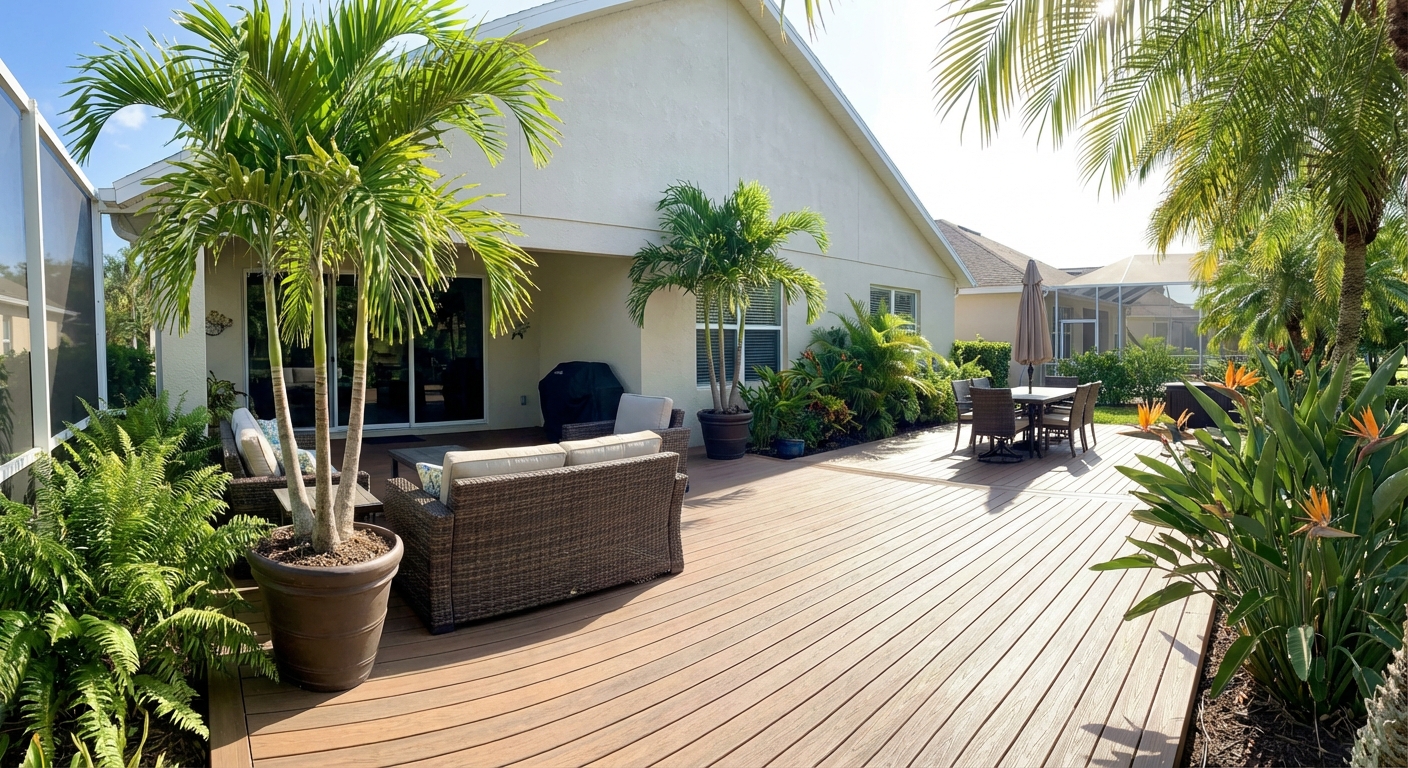
Dreaming of a new deck to enjoy the Florida sunshine? Understanding the costs involved is the first step. This guide provides a detailed breakdown of deck prices in Florida for 2026, covering materials, labor, permits, and unique factors impacting your final bill.
🧮 Tool Alert: Deck Cost Calculator
Estimate your project costs in seconds based on local pricing bands for your area.
Calculate My Cost →Average Deck Costs in Florida: Material Breakdown
Looking for more regional information? Check out our Florida State Decking Hub.
🏗️ Planning a deck project?
Get a free manual project review, or visualize your dream deck with AI before requesting quotes.
The cost of your deck hinges largely on the materials you choose. Here's a breakdown of average installed costs per square foot in Florida:
- Pressure-Treated Lumber: $25-$45/sqft - The most affordable option, but requires regular maintenance.
- Composite Decking: $45-$80/sqft - Low-maintenance and durable, but a higher upfront investment. See our guide on Composite Deck Cost in Florida: What to Expect in 2026 for more details.
- Cedar Decking: $35-$55/sqft - Naturally beautiful and insect-resistant, but susceptible to moisture.
- Trex Decking: $50-$85/sqft - A popular composite brand known for its durability and wide range of colors.
- Ipe Decking: $65-$110/sqft - A premium hardwood prized for its exceptional strength and longevity.
Keep in mind these are average ranges. Prices can fluctuate based on your location (Miami, Tampa, Orlando, Jacksonville, Fort Lauderdale), contractor rates, and the complexity of your deck design.
| Material | Average Cost (Installed) | Pros | Cons |
| ----------------- | ------------------------ | --------------------------------------------------------- | --------------------------------------------------------------- |
| Pressure-Treated | $25-$45/sqft | Affordable, readily available | High maintenance, prone to rot/warping |
| Composite | $45-$80/sqft | Low maintenance, durable, resists fading/staining | Higher upfront cost, can get hot in direct sunlight |
| Cedar | $35-$55/sqft | Naturally beautiful, insect-resistant | Requires sealing, susceptible to moisture in humid environments |
| Trex | $50-$85/sqft | Durable, wide color selection, low maintenance | Higher cost than wood, can get hot |
| Ipe | $65-$110/sqft | Extremely durable, naturally resistant to insects and rot | Very expensive, requires specialized installation |
<!-- slot:after-intro -->
For a broader look at deck pricing across different materials and regions, see our complete deck cost guide for Florida. Timing your build right can also save thousands — check our guide on the best time to build a deck.
Factors Influencing Deck Costs in Florida
Beyond the material, several factors significantly impact the final cost of your deck project in Florida:
1. Size and Complexity
The larger and more complex your deck design, the more it will cost. Multi-level decks, custom shapes, built-in seating, and elaborate railings all add to the labor and material expenses.
2. Labor Costs
Labor rates vary depending on your location and the experience of the contractor. Expect to pay more in major metropolitan areas like Miami or Fort Lauderdale compared to more rural areas. Getting multiple quotes from qualified deck builders is crucial. Consider searching for the Best Deck Builders in Tampa: How to Find the Right Contractor, Best Deck Builders in Orlando: What to Look For in 2026, or Best Deck Builders in Jacksonville: Local Guide for 2026 to find reputable professionals in your area.
3. Permitting and Inspections
Most Florida counties require permits for decks attached to the house or exceeding 200 sqft. These permits ensure your deck meets local building codes and safety standards. The permit process can add $200-$600 to your overall cost, depending on the county. Miami-Dade County, being a high-velocity hurricane zone, has the strictest codes and often requires a Notice of Acceptance (NOA) for building materials, adding to the complexity and cost. Tampa/Hillsborough County permits are handled through county building services. Orlando/Orange County uses the Orange County Building Division. Jacksonville/Duval County generally has a more straightforward process. See Do You Need a Deck Permit in Florida? State & City Rules Explained for more information.
4. Florida Building Codes & Hurricane Resistance
Florida's building codes are among the strictest in the US, especially concerning wind resistance. Decks must be designed to withstand wind loads between 110-180 mph, depending on your specific location and wind zone. This often requires stronger framing, specialized fasteners, and reinforced connections, all of which increase costs.
5. Site Preparation
If your yard requires significant grading, leveling, or removal of existing structures, this will add to the overall cost. Obstacles like trees, utility lines, or uneven terrain can increase labor time and require specialized equipment. Ground-level decks are common in Florida due to slab-on-grade construction, simplifying site prep in many cases.
6. Material Upgrades & Features
Adding features like screened-in enclosures, pool decks, waterfront access, shade structures (pergolas, awnings), or custom railings will increase the cost of your deck. These features require additional materials, labor, and sometimes specialized expertise. Florida homeowners often opt for screened-in decks to combat insects and enjoy the outdoors year-round.
7. Location & Accessibility
Your location within Florida can influence costs. Coastal areas face additional challenges like salt air corrosion, requiring stainless steel or hot-dipped galvanized hardware (within 3000 ft of saltwater) to prevent rust. Accessibility to the construction site can also impact labor costs. Difficult-to-reach areas may require more time and effort to transport materials and equipment.
8. Pest Control & Material Selection
Florida's climate is ideal for termites (both subterranean and drywood), making pest control a critical consideration. Using pressure-treated lumber is a common defense, but consider termite-resistant alternatives like composite decking for added protection. Regular inspections and preventative treatments are also recommended. Choosing the right materials is key; our article on Best Decking Material for Florida Humidity: What Won't Warp or Rot can help.
Estimating Your Deck Project Costs
To get a more accurate estimate for your deck project, follow these steps:
1. Measure Your Desired Deck Size: Determine the approximate dimensions of your deck in square feet.
2. Choose Your Materials: Research different decking materials and select the one that best suits your budget and needs. Consider Composite vs Wood Decking in Florida: Pros, Cons & Costs before making your choice.
3. Factor in Additional Features: List any extra features you want to include, such as railings, stairs, built-in seating, or a pergola.
4. Get Multiple Quotes: Contact at least three reputable deck builders in your area and request detailed quotes. Be sure to provide them with accurate information about your project requirements.
5. Consider Permitting Costs: Research the permit requirements in your county and factor in the associated fees.
6. Add a Contingency Fund: It's always wise to add a contingency fund (typically 10-15%) to cover unexpected costs or changes during the project.
Use PaperPlan (paperplan.app) to visualize your deck with PaperPlan design with different materials and layouts before committing to a contractor. This can help you refine your vision and get more accurate quotes.
<!-- slot:mid-content -->
Deck Maintenance Costs in Florida
Don't forget to factor in ongoing maintenance costs. Even low-maintenance materials like composite decking require occasional cleaning. Wood decks need regular sealing, staining, and repairs to prevent rot and insect damage.
- Wood Deck Maintenance: Expect to spend $200-$500 per year on cleaning, sealing, and minor repairs.
- Composite Deck Maintenance: Typically requires less maintenance, with cleaning costs ranging from $100-$300 per year.
Best Time to Build a Deck in Florida
The best time to build a deck in Florida is generally between October and May. This avoids the peak hurricane season (June-November) and the hottest, most humid months. Building during the cooler months allows for more comfortable working conditions and reduces the risk of weather-related delays.
Florida Deck Cost Examples
Here are a couple of hypothetical deck project cost examples:
Example 1: Small Pressure-Treated Deck
- Size: 150 sqft
- Material: Pressure-treated lumber
- Features: Basic railings, stairs
- Estimated Cost: $3,750 - $6,750 ($25-$45/sqft)
- Permit Cost (Estimate): $300
- Total Estimated Cost: $4,050 - $7,050
Example 2: Mid-Size Composite Deck with Pergola
- Size: 300 sqft
- Material: Composite decking
- Features: Pergola, built-in seating, upgraded railings
- Estimated Cost: $13,500 - $24,000 ($45-$80/sqft)
- Permit Cost (Estimate): $450
- Total Estimated Cost: $13,950 - $24,450
Remember that these are just examples, and your actual costs may vary.
<!-- slot:before-faq -->
🎨 Not sure which material to pick?
Upload a photo of your backyard and see exactly how Trex, TimberTech, or cedar would look — free and instant.
Frequently Asked Questions
What is the cheapest decking material for Florida?
Pressure-treated lumber is the most affordable decking material in Florida, typically costing between $25-$45 per square foot installed. However, it requires regular maintenance to prevent rot and insect damage.
How much does a 12x12 deck cost in Florida?
A 12x12 deck is 144 sqft. Using the average cost ranges, here's what you can expect:
- Pressure-treated: $3,600 - $6,480
- Composite: $6,480 - $11,520
- Cedar: $5,040 - $7,920
- Trex: $7,200 - $12,240
- Ipe: $9,360 - $15,840
Do I need a permit to build a deck in Florida?
Yes, most Florida counties require permits for decks attached to the house or exceeding 200 sqft. Check with your local building department for specific requirements.
What type of decking holds up best in Florida's humidity?
Composite decking is generally considered the best option for Florida's humid climate. It resists rot, warping, and insect damage better than natural wood. Ipe is also an excellent choice due to its natural resistance to moisture and pests, but it is a more expensive option.
How can I find a reliable deck builder in Florida?
- Get Referrals: Ask friends, family, or neighbors for recommendations.
- Check Online Reviews: Look for reviews on sites like Google, Yelp, and the Better Business Bureau.
- Verify Licenses and Insurance: Ensure the contractor is properly licensed and insured in Florida.
- Get Multiple Quotes: Compare quotes from at least three different contractors.
- Review Their Portfolio: Ask to see examples of their previous work.
<!-- slot:end -->
📋 Planning a deck project?
Get a free manual project review from our team — no obligation, no spam.
Get Free Project Review →Upload a backyard photo and preview real decking materials with AI — free, instant, no sign-up.
Permits, costs, material comparisons, and questions to ask before requesting quotes — delivered to your inbox.