
Florida Deck Materials Ranked: What Actually Survives 90%+ Humidity
We compared Trex, Azek, TimberTech, IPE & PVC in Florida's brutal humidity. See which composites warp in year 1, the K mistake most homeowners make, and what installers actually recommend.
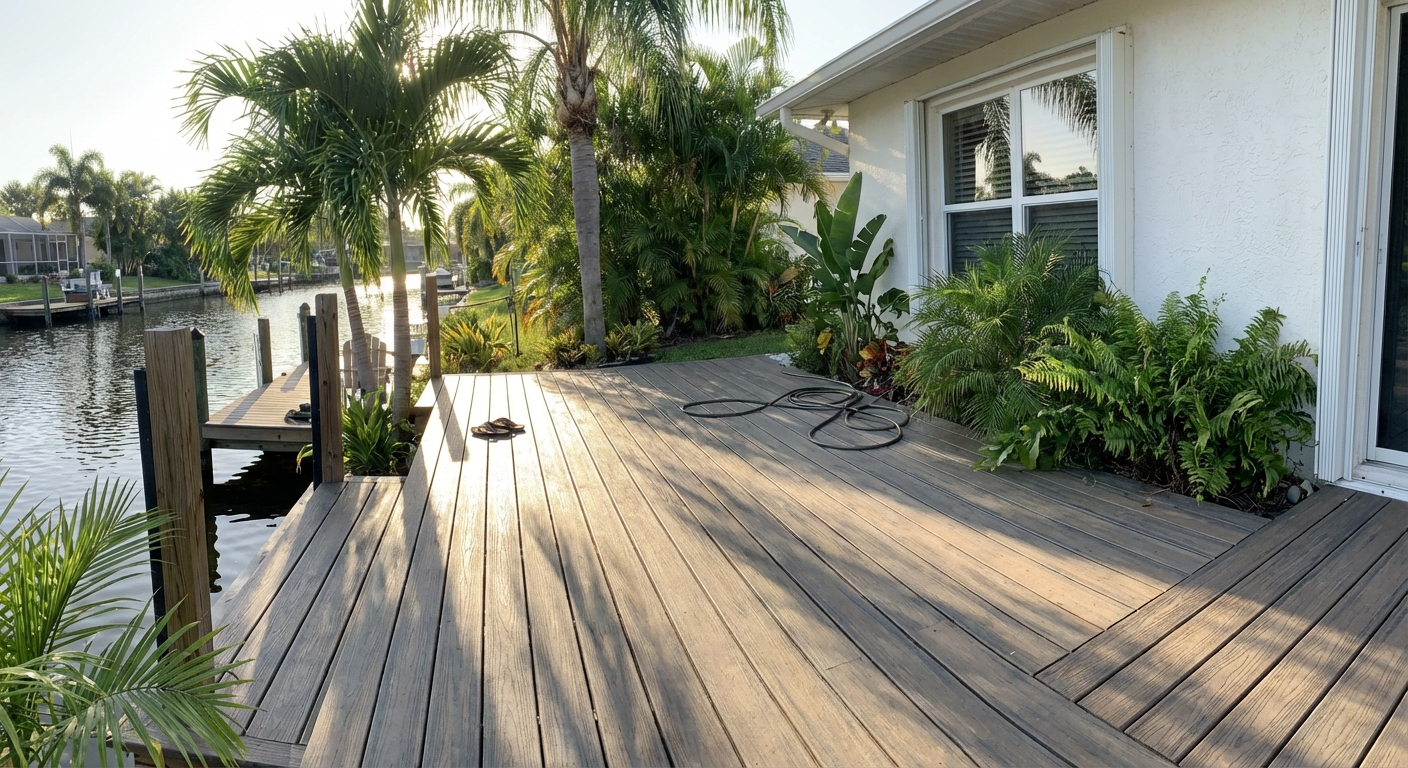
Are you dreaming of a beautiful new deck in your Florida backyard, but concerned about the relentless humidity causing warping, rot, or attracting unwanted pests? You're right to be cautious. Florida's climate, with its 70-90% humidity, intense sun, and the occasional hurricane, demands a decking material that can truly withstand the elements. This guide will walk you through the best options for your Florida deck, considering durability, cost, aesthetics, and local building codes. Because Florida has no state income tax, many homeowners choose to invest more in their outdoor living spaces – meaning a well-built and attractive deck can add significant value to your home.
🌳 Tool Alert: Material Comparison
PT vs Composite vs Cedar. Compare 25-year total cost of ownership including maintenance.
Compare Materials →Understanding Florida's Deck Challenges
Looking for more regional information? Check out our Florida State Decking Hub.
🏗️ Planning a deck project?
Get a free manual project review, or visualize your dream deck with AI before requesting quotes.
Florida presents unique challenges for deck construction that you need to consider before choosing your materials:
- Extreme Humidity: Constant moisture promotes mold, mildew, and rot in susceptible materials.
- Termites: Both subterranean and drywood termites are prevalent throughout Florida, posing a constant threat to wood decks.
- Salt Air Corrosion: If you live near the coast (within 3000 ft of saltwater), salt air will accelerate corrosion of metal fasteners and some decking materials. Use stainless steel or hot-dipped galvanized hardware.
- UV Degradation: Intense sunlight can fade and weaken many decking materials over time.
- Hurricane Building Codes: The Florida Building Code is among the strictest in the US, especially regarding wind load. Your deck needs to withstand winds of 110-180 mph depending on your zone. Miami-Dade County has the strictest regulations, requiring a Notice of Acceptance (NOA) for many building materials.
- Permitting: Most Florida counties require permits for decks attached to the home or over 200 sq ft. Expect permit costs to range from $200-600 depending on your location and the complexity of the design. For example, in Tampa/Hillsborough County, permits are handled through county building services. In Orlando/Orange County, contact the Orange County Building Division. Jacksonville/Duval County generally has a more straightforward permit process.
<!-- slot:after-intro -->
Choosing between composite and wood? Our composite vs wood decking breaks down the real costs over 10 years. For full installed pricing by material type, see our complete deck cost guide for Florida.
Top Decking Material Choices for Florida
Let's explore the decking materials best suited to combat Florida's harsh environment:
1. Pressure-Treated Lumber
- Description: Southern yellow pine that has been chemically treated to resist rot, decay, and insect infestation.
- Pros: Most affordable decking option, readily available, can be stained or painted.
- Cons: Prone to warping and cracking in Florida's humidity, requires regular maintenance (cleaning, sealing, staining), less aesthetically appealing than other options.
- Cost: $25-45 per sq ft installed.
- Florida Considerations: Choose lumber treated for ground contact even if your deck isn't directly on the ground. Regular sealing is crucial to prevent moisture absorption and warping.
2. Composite Decking
- Description: Made from a blend of recycled plastic and wood fibers.
- Pros: Highly resistant to rot, decay, and insect damage, low maintenance (no staining or sealing required), available in a wide range of colors and styles, doesn't splinter.
- Cons: More expensive than pressure-treated lumber, can get hot in direct sunlight, some cheaper composites can stain or fade.
- Cost: $45-80 per sq ft installed.
- Florida Considerations: Choose a high-quality composite decking with UV inhibitors to prevent fading. Look for brands with good warranties against staining and fading. Lighter colors will absorb less heat.
3. Cedar
- Description: Naturally rot- and insect-resistant softwood.
- Pros: Beautiful appearance, naturally resistant to decay and insects (though less so than pressure-treated or composite), relatively lightweight.
- Cons: More expensive than pressure-treated lumber, requires regular sealing to maintain its appearance and prevent weathering, can be susceptible to damage from extreme weather.
- Cost: $35-55 per sq ft installed.
- Florida Considerations: Western Red Cedar is a good choice. Regular sealing (every 1-2 years) is essential in Florida's humid climate. Consider a water-repellent preservative with UV protection.
4. Trex Decking
- Description: A well-known brand of composite decking made from recycled materials.
- Pros: Extremely durable, low maintenance, resistant to fading, staining, scratching, and mold, comes in a variety of colors and styles, long lifespan.
- Cons: One of the more expensive composite options, can get hot in direct sunlight, some product lines are more prone to scratching than others.
- Cost: $50-85 per sq ft installed.
- Florida Considerations: Trex is a solid choice for Florida decks due to its durability and low-maintenance qualities. Choose a lighter color to minimize heat absorption.
5. Ipe (Brazilian Walnut)
- Description: A dense, exotic hardwood known for its exceptional durability and resistance to rot, insects, and fire.
- Pros: Extremely durable, naturally resistant to rot, insects, and fire, beautiful appearance, long lifespan.
- Cons: Most expensive decking option, difficult to work with (requires pre-drilling), can be prone to splintering if not properly maintained, requires regular oiling to maintain its color.
- Cost: $65-110 per sq ft installed.
- Florida Considerations: Ipe is an excellent choice for high-end decks in Florida, especially near the coast. Its density makes it less susceptible to salt air corrosion. Regular oiling (every 1-2 years) will help maintain its color and prevent splintering.
Here's a table summarizing the key considerations:
| Material | Cost (Installed) | Durability | Maintenance | Aesthetics | Florida Suitability |
| -------------------- | ----------------- | ------------- | ----------- | ------------ | ---------------------------------------------------------------------------------------------------------------------------------------------------- |
| Pressure-Treated | $25-45/sqft | Moderate | High | Basic | Affordable, but requires frequent sealing to prevent warping and rot. |
| Composite | $45-80/sqft | High | Low | Good | Excellent choice for low-maintenance decks, choose a high-quality brand with UV protection. |
| Cedar | $35-55/sqft | Moderate | Medium | Very Good | Beautiful, but needs regular sealing and is less durable than composite or Ipe. |
| Trex | $50-85/sqft | High | Low | Very Good | A popular, durable composite option, but can get hot. |
| Ipe (Brazilian Walnut) | $65-110/sqft | Very High | Medium | Excellent | Extremely durable and beautiful, ideal for coastal areas, but expensive and requires oiling. |
Ground-Level Decks
Due to Florida's common slab-on-grade construction, ground-level decks are particularly popular. When building a ground-level deck, ensure proper drainage to prevent moisture buildup and consider using a weed barrier to prevent vegetation growth underneath. The close proximity to the ground increases the risk of termite infestation, so choosing a termite-resistant material or implementing preventative measures is even more critical.
<!-- slot:mid-content -->
Design Considerations for Florida Decks
Beyond the decking material itself, consider these design elements to maximize your deck's lifespan and enjoyment in Florida:
- Screened-In Decks: A screened-in deck can provide relief from mosquitoes and other insects, making your outdoor space more enjoyable year-round.
- Pool Decks: Choose a slip-resistant decking material for pool decks to ensure safety. Composite decking is a popular choice for its water resistance and barefoot-friendly surface.
- Waterfront Decks: If you're building a deck on the water, opt for materials that can withstand saltwater exposure, such as Ipe or high-quality composite decking with stainless steel fasteners.
- Shade Structures: Consider adding a pergola, awning, or other shade structure to protect your deck from the intense Florida sun and provide a more comfortable outdoor space.
- Permitting and Building Codes: Before starting your project, check with your local building department to obtain the necessary permits and ensure your deck complies with all applicable codes, including wind load requirements. Don't forget Miami-Dade County has the strictest requirements.
Installation Tips for Florida Decks
Proper installation is just as important as choosing the right materials. Here are some tips for building a durable and long-lasting deck in Florida:
- Use Quality Fasteners: Always use stainless steel or hot-dipped galvanized fasteners, especially near the coast, to prevent corrosion.
- Proper Spacing: Allow for proper spacing between deck boards to allow for expansion and contraction due to temperature and humidity changes.
- Adequate Ventilation: Ensure adequate ventilation underneath the deck to prevent moisture buildup and promote airflow.
- Professional Installation: Consider hiring a qualified deck builder to ensure your deck is built to code and will withstand Florida's harsh weather conditions.
Use PaperPlan (paperplan.app) to visualize your deck with PaperPlan design with different materials and layouts before committing to a contractor. This can help you make informed decisions and ensure you're happy with the final result.
Best Time to Build a Deck in Florida
The best months to build a deck in Florida are typically October through May. This avoids the peak hurricane season (June through November) and the hottest, most humid months.
<!-- slot:before-faq -->
<!-- slot:end -->
🎨 Not sure which material to pick?
Upload a photo of your backyard and see exactly how Trex, TimberTech, or cedar would look — free and instant.
Frequently Asked Questions
What type of decking lasts the longest in Florida?
Ipe (Brazilian Walnut) is generally considered the longest-lasting decking material in Florida due to its exceptional density and resistance to rot, insects, and fire. High-quality composite decking is also a very durable option with a long lifespan.
How much does it cost to build a deck in Florida?
The cost of building a deck in Florida varies depending on the size, materials, and complexity of the design. Expect to pay anywhere from $25 per sq ft for a basic pressure-treated lumber deck to $110 per sq ft or more for a high-end Ipe deck. For more detailed pricing, see How Much Does a Deck Cost in Florida? Complete 2026 Guide.
Do I need a permit to build a deck in Florida?
Yes, most Florida counties require permits for decks attached to the home or over 200 sq ft. Check with your local building department to determine the specific requirements in your area. See also: Do You Need a Deck Permit in Florida? State & City Rules Explained.
What is the most low-maintenance decking material for Florida?
Composite decking is the most low-maintenance option for Florida decks. It requires no staining, sealing, or painting and is resistant to rot, decay, and insect damage. A quick wash with soap and water is typically all that's needed to keep it clean. For a comparison, read Composite vs Wood Decking in Florida: Pros, Cons & Costs.
How do I prevent termites from damaging my deck in Florida?
Use pressure-treated lumber specifically treated for ground contact, even if your deck isn't on the ground. Consider using termite bait stations around your property. Regularly inspect your deck for signs of termite activity. If using wood, borate treatments can help.
📋 Planning a deck project?
Get a free manual project review from our team — no obligation, no spam.
Get Free Project Review →Upload a backyard photo and preview real decking materials with AI — free, instant, no sign-up.
Permits, costs, material comparisons, and questions to ask before requesting quotes — delivered to your inbox.