
DIY Floating Deck in Florida (2026)
Build your own floating deck in Florida! This guide covers materials, costs, permits, and crucial tips for Florida's unique climate.
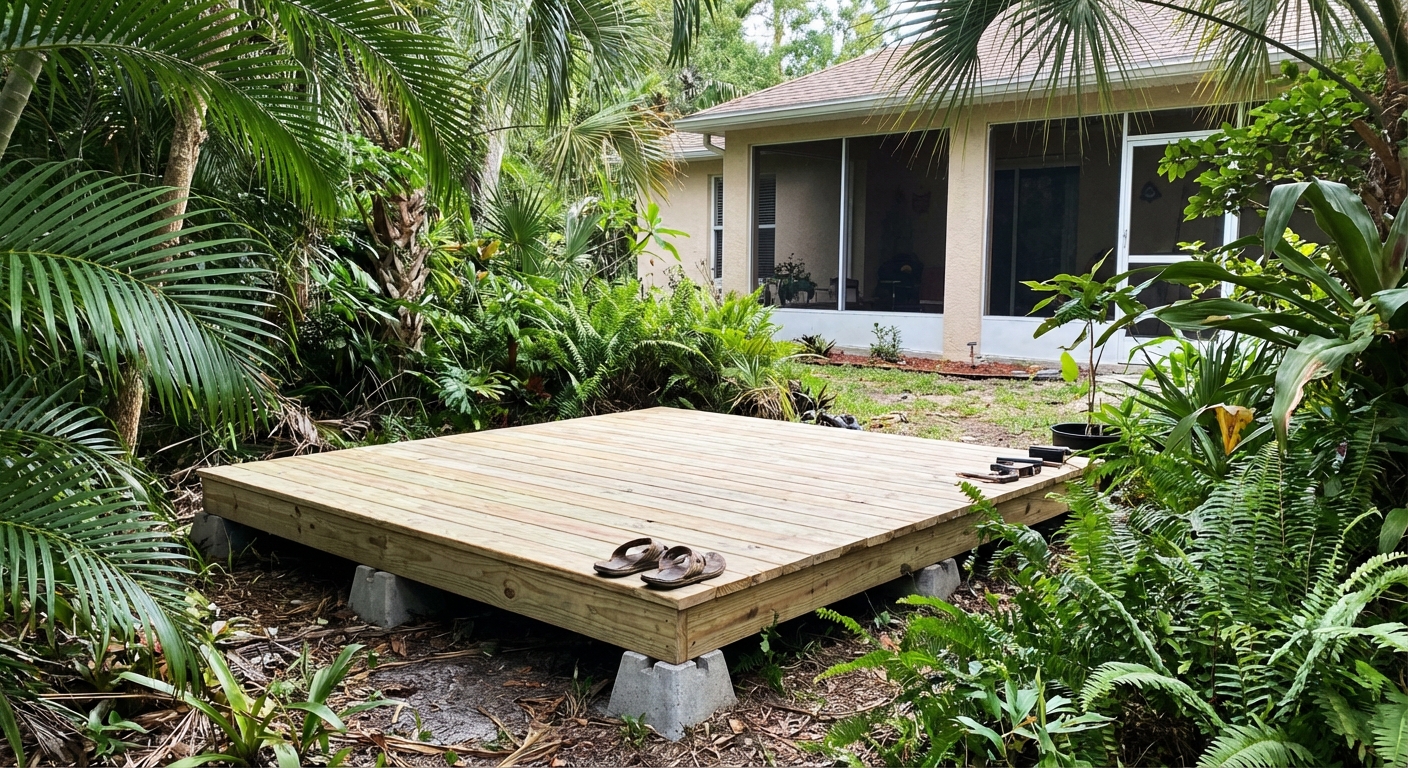
Dreaming of a new outdoor space, but don't want the hassle of a full-scale construction project? A floating deck might be the perfect DIY solution for your Florida home. This guide will walk you through the process of building a floating deck, tailored to the Sunshine State's specific challenges, from humidity to hurricane codes.
📐 Tool Alert: Deck Stair Calculator
Calculate rise, run, and stringer cuts while ensuring IRC/OBC code compliance.
Calculate Stairs →What is a Floating Deck?
Looking for more regional information? Check out our Florida State Decking Hub.
🏗️ Planning a deck project?
Get a free manual project review, or visualize your dream deck with AI before requesting quotes.
A floating deck is a ground-level deck that isn't attached to your house. It "floats" on top of the ground using a simple foundation of concrete blocks or gravel. This makes them easier and faster to build than traditional decks, as they don't require digging footings or attaching to your home's structure. They are ideal for patios, pool areas, or creating a defined outdoor living space in your yard.
<!-- slot:after-intro -->
Is a Floating Deck Right for You?
Consider these factors before starting your project:
- Pros:
* Ease of Construction: Simpler and faster to build than traditional decks.
* Cost-Effective: Typically cheaper due to less material and labor.
* No Attachment to House: Avoids potential structural issues with your home.
* DIY Friendly: A manageable project for most homeowners with basic skills.
- Cons:
* Limited Size: Best suited for smaller areas due to lack of structural support.
* Ground-Level Only: Cannot be elevated like traditional decks.
* Less Stability: May not be as stable as attached decks, especially on uneven ground.
* Florida-Specific Challenges: Requires careful material selection and construction techniques to withstand humidity, termites, and potential flooding.
Planning Your Florida Floating Deck
Size and Location
Before you buy any materials, determine the size and location of your deck. Consider the following:
- Purpose: How will you use the deck? Dining, lounging, grilling?
- Space: Measure the area where you plan to build.
- Sun Exposure: Consider shade and sun patterns throughout the day. Remember Florida's intense UV rays!
- Drainage: Ensure the area has good drainage to prevent water pooling.
- Accessibility: How will you access the deck from your house or yard?
- Proximity to Pool: If building a pool deck, prioritize slip-resistant materials.
Material Selection: Fighting Florida's Elements
Choosing the right materials is crucial for a long-lasting floating deck in Florida. The state's high humidity (70-90% relative humidity year-round), intense sun, and termite presence demand durable, weather-resistant options.
Here's a breakdown of common decking materials and their suitability for Florida:
| Material | Pros | Cons | Florida Suitability | Estimated Cost (Installed) |
| ------------------ | ---------------------------------------------------------------------------------------------------------- | ------------------------------------------------------------------------------------------------------ | ------------------------------------------------------------------------------------------------------------- | -------------------------- |
| Pressure-Treated Wood | Affordable, readily available, can be stained or painted. | Prone to warping, cracking, and decay if not properly maintained. Requires regular sealing. | Good option if properly treated and maintained. Essential to prevent termite damage. | $25-45/sqft |
| Composite | Low maintenance, durable, resistant to rot, insects, and fading. Available in various colors and textures. | More expensive than pressure-treated wood. Can get hot in direct sunlight. | Excellent choice for Florida's climate. Resists moisture and fading. Consider lighter colors to minimize heat. | $45-75/sqft |
| Cedar | Naturally beautiful, resistant to rot and insects (to some extent). | More expensive than pressure-treated wood. Requires regular sealing to prevent weathering. | Decent option, but requires more maintenance than composite. Susceptible to UV damage. | $35-60/sqft |
| Ipe (Brazilian Walnut) | Extremely durable, naturally resistant to rot, insects, and fire. Beautiful hardwood. | Very expensive, difficult to work with (requires specialized tools). | Excellent choice, but the high cost can be prohibitive. | $65-110/sqft |
Pressure-treated lumber is essential for the substructure of your floating deck, regardless of the decking material you choose, to prevent termite infestation. Formosan subterranean termites are a major threat in Florida.
Consider Best Decking Material for Florida Humidity for a deeper dive. Also see Composite vs Wood Decking in Florida: Pros, Cons & Costs for a detailed comparison.
Permitting in Florida
Many Florida cities require permits for decks, especially if they exceed a certain size or height. Generally, decks over 200 sqft or 30 inches above grade will require a permit.
- Miami-Dade County: Expect the strictest building codes in the US (High Velocity Hurricane Zone). Permits are processed through the Building Department and can take 6-12 weeks.
- Tampa/Hillsborough County: Permits are obtained through the county's Building Services department.
- Other Cities: Check with your local city or county building department for specific requirements.
Failing to obtain a permit can result in fines and even require you to tear down your deck. It’s always best to check. See Do You Need a Deck Permit in Florida? State & City Rules for a comprehensive look.
Hurricane Considerations: Florida Building Code
Even though floating decks are low to the ground, they still need to be built to withstand potential hurricane-force winds. The Florida Building Code mandates specific wind uplift requirements for all structures, including decks. While floating decks are less susceptible to wind damage than elevated decks, proper anchoring and construction techniques are still important. Consult your local building department for specific requirements in your area.
<!-- slot:mid-content -->
Building Your Floating Deck: Step-by-Step
Tools and Materials
- Lumber: Pressure-treated lumber for the frame and your chosen decking material.
- Concrete Blocks or Gravel: For the base. Concrete blocks provide a more stable and level surface.
- Fasteners: Deck screws (stainless steel or coated for corrosion resistance).
- Landscape Fabric: To prevent weed growth under the deck.
- Level: Essential for ensuring a level deck surface.
- Measuring Tape: For accurate measurements.
- Saw: Circular saw or miter saw for cutting lumber.
- Drill/Driver: For drilling pilot holes and driving screws.
- Shovel: For leveling the ground.
- Safety Glasses and Gloves: For personal protection.
- Optional: Post hole digger (if using concrete piers), tamper (for compacting gravel).
Step 1: Prepare the Site
1. Clear the area: Remove any grass, vegetation, and debris from the area where you plan to build the deck.
2. Level the ground: Use a shovel to level the ground as much as possible.
3. Lay landscape fabric: Cover the entire area with landscape fabric to prevent weed growth. Overlap the edges by at least 12 inches.
Step 2: Create the Foundation
Choose either concrete blocks or a gravel base:
- Concrete Blocks:
1. Place the concrete blocks in a grid pattern, spacing them evenly apart (typically 2-4 feet depending on the size and thickness of your lumber).
2. Ensure the blocks are level with each other using a level and shims if necessary.
- Gravel Base:
1. Spread a layer of gravel (4-6 inches thick) over the landscape fabric.
2. Compact the gravel using a tamper.
3. Ensure the gravel base is level.
Step 3: Build the Frame
1. Cut the lumber: Cut the pressure-treated lumber to the desired dimensions for the frame.
2. Assemble the frame: Assemble the frame using deck screws. Ensure the corners are square.
3. Add internal supports: Add internal support beams every 16-24 inches to provide additional stability.
Step 4: Attach the Decking
1. Pre-drill holes: Pre-drill holes through the decking boards to prevent splitting.
2. Attach the decking: Attach the decking boards to the frame using deck screws.
3. Space the boards: Use spacers to ensure consistent spacing between the boards. A gap of 1/8" to 1/4" is typical to allow for expansion and contraction. Remember that Florida humidity can cause significant expansion and contraction.
Step 5: Finishing Touches
1. Sand the edges: Sand any rough edges or splinters.
2. Apply a finish: Apply a stain, sealant, or paint to protect the wood from the elements (if using wood decking). Choose a product specifically designed for outdoor use and UV protection. Reapply annually, or as needed, due to Florida's intense sun.
3. Add edging (optional): Add edging around the perimeter of the deck for a more finished look.
Before you start, use PaperPlan (paperplan.app) to visualize your deck with PaperPlan design with different materials and layouts before committing to a contractor or beginning your DIY project. This will help you avoid costly mistakes and ensure you're happy with the final result.
Cost Considerations
The cost of your floating deck will depend on the size, materials, and complexity of the project. Here's a general estimate:
- Materials: $5 - $20 per square foot, depending on the material.
- Tools: $50 - $200 (if you don't already own them).
- Permit (if required): $50 - $500, depending on your location.
Factor in potential cost overruns of 10-20% for unforeseen issues.
Consider browsing How Much Does a Deck Cost in Florida? Complete 2026 Guide for a broader price overview, and Deck Cost in Miami: Local Pricing Guide for 2026 or Deck Cost in Fort Lauderdale: 2026 Local Pricing Guide for city-specific pricing.
Florida-Specific Tips for Success
- Build During the Dry Season: The best time to build your deck in Florida is during the dry season (November-April) when the weather is milder and there's less rain.
- Choose the Right Fasteners: Use stainless steel or coated deck screws to prevent corrosion in Florida's humid environment.
- Proper Spacing: Allow for adequate spacing between decking boards to accommodate expansion and contraction due to humidity.
- Regular Maintenance: Clean your deck regularly to prevent mold and mildew growth. Apply a sealant or stain every year or two to protect the wood from the elements.
- Consider Professional Help: If you're not comfortable with any aspect of the project, consider hiring a professional deck builder.
<!-- slot:before-faq -->
When to Call a Pro
While floating decks are DIY-friendly, some situations warrant professional help:
- Large or Complex Decks: If you're planning a large or complex deck, a professional can ensure it's built safely and correctly.
- Permitting Issues: Navigating the permitting process in cities like Miami or Tampa can be challenging. A professional can handle the paperwork and ensure your deck meets all building codes.
- Structural Concerns: If you have any concerns about the structural integrity of your deck, consult a professional engineer or deck builder.
- Time Constraints: If you don't have the time or skills to build the deck yourself, hiring a professional can save you time and stress.
Check out Best Deck Builders in Tampa: How to Find the Right Contractor, Best Deck Builders in Orlando: What to Look For in 2026, Best Deck Builders in Jacksonville: Local Guide, or Best Deck Builders in Fort Lauderdale: How to Choose in 2026 to find reliable local contractors.
<!-- slot:end -->
🎨 Not sure which material to pick?
Upload a photo of your backyard and see exactly how Trex, TimberTech, or cedar would look — free and instant.
Frequently Asked Questions
What's the best decking material for Florida's humidity?
Composite decking is generally considered the best option for Florida's humid climate due to its resistance to rot, insects, and fading. Pressure-treated wood is a more affordable option, but it requires regular maintenance and sealing.
Do I need a permit to build a floating deck in Miami-Dade County?
Yes, most likely. Miami-Dade County has very strict building codes and typically requires permits for decks. Check with the Miami-Dade County Building Department for specific requirements. See Miami Deck Permit: Requirements, Costs & Miami-Dade Rules
How do I prevent termites from damaging my floating deck?
Use pressure-treated lumber for the frame of your deck. This will help prevent termite infestation. Regularly inspect your deck for signs of termite activity and take action if you find any.
How do I maintain my floating deck in Florida?
Clean your deck regularly to prevent mold and mildew growth. Apply a sealant or stain every year or two to protect the wood from the elements. Inspect your deck regularly for signs of damage and make repairs as needed.
Can I build a floating deck around my pool?
Yes, you can build a floating deck around your pool. Choose a slip-resistant decking material, such as textured composite decking, to prevent accidents. Ensure the deck is properly drained to prevent water pooling.
📋 Planning a deck project?
Get a free manual project review from our team — no obligation, no spam.
Get Free Project Review →Upload a backyard photo and preview real decking materials with AI — free, instant, no sign-up.
Permits, costs, material comparisons, and questions to ask before requesting quotes — delivered to your inbox.