
Composite vs Wood Decking in Florida (2026)
Choosing between composite and wood decking in Florida? Weigh the pros, cons, costs, and Florida-specific challenges like humidity, termites, and hurricane codes.
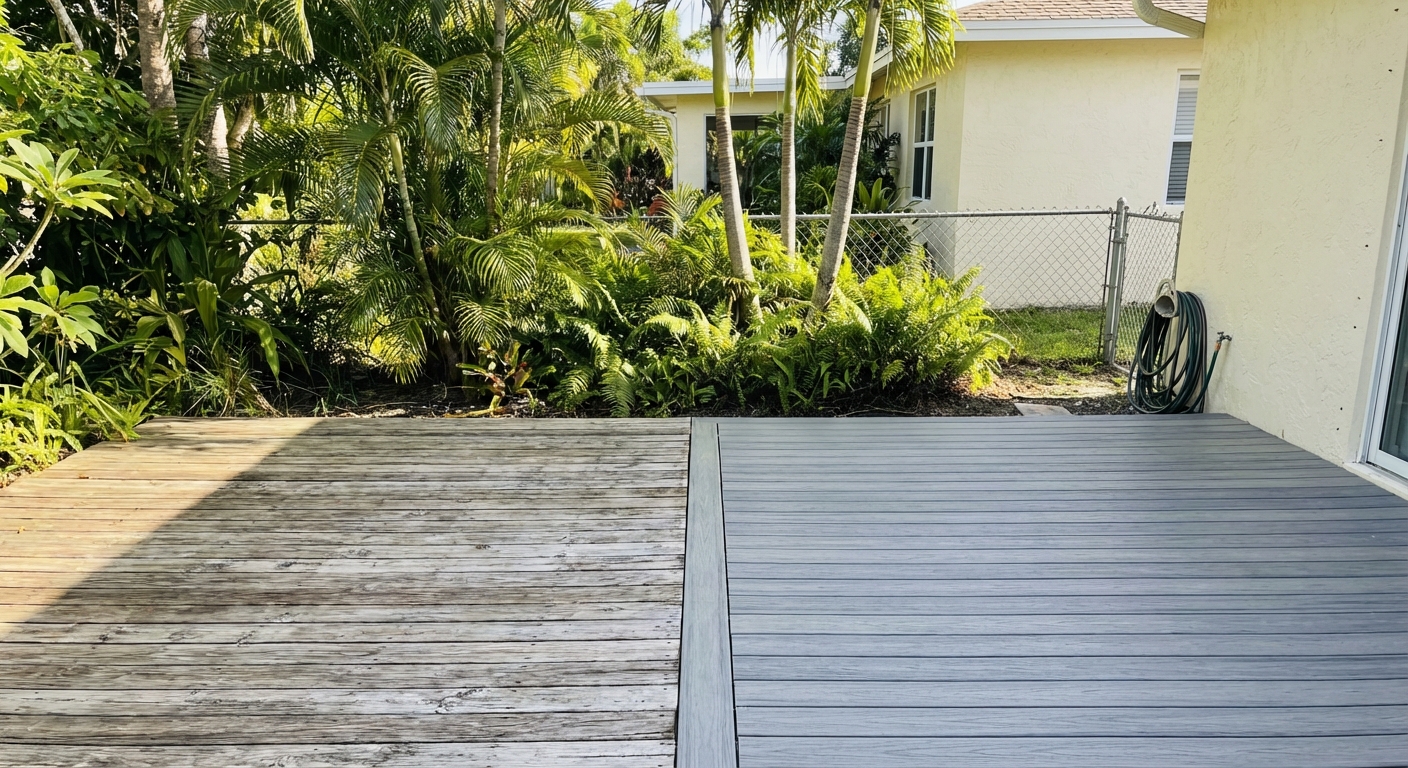
Are you dreaming of a new deck in Florida to take advantage of the beautiful weather? With no state income tax, many Florida homeowners invest heavily in creating outdoor living spaces. But before you start planning those backyard barbecues, you need to decide: composite or wood? The choice significantly impacts your deck's lifespan, maintenance needs, and overall cost, especially considering Florida's unique climate and building codes. This guide breaks down the pros, cons, and costs of each material to help you make the right decision for your Florida home.
🌳 Tool Alert: Material Comparison
PT vs Composite vs Cedar. Compare 25-year total cost of ownership including maintenance.
Compare Materials →Wood Decking in Florida: The Natural Choice
Looking for more regional information? Check out our Florida State Decking Hub.
🏗️ Planning a deck project?
Get a free manual project review, or visualize your dream deck with AI before requesting quotes.
Wood remains a popular choice for decking, offering a classic look and feel. However, Florida's environment presents some serious challenges for wood decks.
Pros of Wood Decking
- Aesthetics: Many homeowners prefer the natural look and warmth of real wood.
- Cost (Initially): Wood decking can be less expensive upfront than composite, depending on the type of wood you choose.
- Repairable: Damaged wood sections are often easier to repair than composite.
- Familiarity: Contractors have extensive experience working with wood.
Cons of Wood Decking
- High Maintenance: Wood requires regular staining, sealing, and cleaning to prevent rot, warping, and insect infestation. This is especially crucial in Florida's humid climate.
- Susceptible to Rot and Decay: Florida's high humidity (70-90% year-round) creates a breeding ground for mold and mildew, which can quickly damage wood decks.
- Termite Infestation: Florida is a haven for termites, both subterranean and drywood, which can wreak havoc on wood structures.
- UV Degradation: The intense Florida sun can cause wood to fade, crack, and splinter over time.
- Shorter Lifespan: Even with diligent maintenance, wood decks typically last 10-20 years in Florida, compared to the potential lifespan of composite.
- Hurricane Vulnerability: While all decks must adhere to Florida's strict hurricane building codes, wood decks may be more susceptible to wind damage than composite in extreme conditions, especially if not properly maintained. Decks must withstand 110-180 mph winds depending on your zone.
Types of Wood for Decks in Florida
- Pressure-Treated Pine: The most affordable option, but requires the most maintenance. Expect to pay around $25-45 per square foot installed.
- Cedar: Naturally resistant to rot and insects, but still needs regular sealing. Costs range from $35-55 per square foot installed.
- Ipe (Brazilian Walnut): An extremely durable and beautiful hardwood, but also the most expensive. Expect to pay $65-110 per square foot installed.
<!-- slot:after-intro -->
Choosing between composite and wood? Our composite vs wood decking breaks down the real costs over 10 years. For full installed pricing by material type, see our complete deck cost guide for Florida.
Florida-Specific Considerations for Wood Decks
- Termite Treatment: Pre-treating the soil and wood with termite repellent is essential in Florida.
- Proper Sealing: Use a high-quality sealant specifically designed for outdoor use and Florida's climate. Reapply regularly.
- Fastener Selection: Use stainless steel or hot-dipped galvanized hardware, especially near the coast (within 3000 ft of saltwater), to prevent corrosion from salt air.
- Building Codes and Permits: Most Florida counties require permits for any deck attached to the home or over 200 sqft. Be prepared for inspections and ensure your deck meets the Florida Building Code. Check with your local building department (e.g., Tampa/Hillsborough County Building Services, Orlando/Orange County Building Division, Jacksonville/Duval County). Permit costs can range from $200-600 depending on the project scope.
Composite Decking in Florida: The Low-Maintenance Option
Composite decking is made from a combination of wood fibers and recycled plastic, offering a durable and low-maintenance alternative to wood.
Pros of Composite Decking
- Low Maintenance: Requires minimal upkeep – no staining, sealing, or painting needed. Simply clean with soap and water.
- Resistant to Rot and Decay: Impervious to moisture, making it ideal for Florida's humid climate.
- Insect Resistant: Not susceptible to termite or other insect infestations.
- UV Resistant: Designed to resist fading and degradation from the sun.
- Long Lifespan: Can last 25-50 years with proper care.
- Consistent Appearance: Offers a uniform color and texture, unlike natural wood.
- Environmentally Friendly: Often made from recycled materials.
- Safety: Many composite decking options are splinter-free, making them safer for children and pets.
- Hurricane Resistance: Composite decking, when properly installed according to Florida Building Code, offers excellent resistance to high winds.
Cons of Composite Decking
- Higher Upfront Cost: Generally more expensive than wood decking, although the long lifespan can offset this cost over time.
- Can Get Hot: Composite decking can get hotter than wood in direct sunlight, which can be a concern in Florida's summer heat. Lighter colors tend to stay cooler.
- Appearance: While composite decking has improved significantly, some homeowners still prefer the look of real wood.
- Repair Challenges: Damage can be more difficult and costly to repair than wood. Replacing a board often requires specialized tools.
- Can Stain: While low maintenance, composite decking can still stain from oil, grease, or spills if not cleaned promptly.
Types of Composite Decking
- Traditional Composite: Made from a mix of wood fibers and plastic.
- Capped Composite: Features a protective outer layer that provides enhanced stain and fade resistance. This is highly recommended for Florida's climate.
- PVC Decking: Made entirely of plastic, offering the highest level of moisture resistance.
Composite Decking Costs in Florida
Expect to pay between $45-80 per square foot for composite decking installed. Trex, a popular brand, typically costs $50-85 per square foot installed. The price varies depending on the type of composite, color, and any additional features, such as hidden fasteners or railing systems.
<!-- slot:mid-content -->
Florida-Specific Considerations for Composite Decks
- Heat Mitigation: Choose lighter colors to minimize heat absorption. Consider adding shade structures like pergolas or awnings.
- Proper Installation: Ensure your contractor is experienced in installing composite decking and follows manufacturer recommendations. Proper spacing is crucial to allow for expansion and contraction in Florida's climate.
- Fastener Selection: Use stainless steel or coated screws designed for composite decking.
- Miami-Dade NOA: If you live in Miami-Dade County, ensure your chosen composite decking material has a Notice of Acceptance (NOA) from the county, demonstrating it meets the stringent hurricane requirements.
- Permitting: As with wood decks, you'll likely need a permit for your composite deck. Do You Need a Deck Permit in Florida? State & City Rules Explained can provide more information.
Cost Comparison: Wood vs. Composite Decking in Florida
This table provides a general cost comparison. Prices can vary based on location, contractor, and specific materials chosen.
| Feature | Pressure-Treated Pine | Cedar | Ipe | Composite | Trex |
|----------------|------------------------|---------------------|--------------------|-------------------|--------------------|
| Material Cost/sqft (Installed) | $25-45 | $35-55 | $65-110 | $45-80 | $50-85 |
| Maintenance | High | Medium | Medium | Low | Low |
| Lifespan | 10-15 years | 15-20 years | 25-50 years | 25-50 years | 25-50 years |
| Rot Resistance | Low | Medium | High | High | High |
| Termite Resistance | Low (Requires Treatment) | Medium | High | High | High |
*Note: These are estimated costs and lifespan. Actual costs may vary.*
Designing Your Florida Deck: Key Considerations
Beyond the material, think about the overall design and functionality of your deck. Popular features in Florida include:
- Screened-In Decks: Protect yourself from mosquitoes and other insects.
- Pool Decks: Create a seamless transition between your pool and outdoor living space.
- Waterfront Decks: Maximize your views and enjoy the Florida coastline.
- Shade Structures: Pergolas, awnings, or shade sails can provide much-needed relief from the sun. Ground-level decks are common due to slab-on-grade construction in Florida.
Use PaperPlan (paperplan.app) to visualize your deck with PaperPlan design with different materials and layouts before committing to a contractor. Experiment with various wood and composite options to see what best complements your home and lifestyle.
Finding the Right Deck Builder in Florida
Choosing the right contractor is just as important as selecting the right material. Look for a licensed and insured contractor with experience building decks in Florida, specifically experience with the material you have chosen. Ensure they are familiar with local building codes and permit requirements. Read reviews, ask for references, and get multiple quotes before making a decision. Consider starting your search with guides like Best Deck Builders in Tampa: How to Find the Right Contractor, Best Deck Builders in Orlando: What to Look For in 2026, or Best Deck Builders in Jacksonville: Local Guide for 2026.
The best months to build a deck in Florida are typically October through May, avoiding the peak of hurricane season (June-November).
Ultimately, the best decking material for your Florida home depends on your budget, maintenance preferences, and aesthetic goals. Carefully weigh the pros and cons of wood and composite decking, and consider the unique challenges and opportunities presented by Florida's climate and building codes. Best Decking Material for Florida Humidity: What Won't Warp or Rot offers further insights.
<!-- slot:before-faq -->
🎨 Not sure which material to pick?
Upload a photo of your backyard and see exactly how Trex, TimberTech, or cedar would look — free and instant.
Frequently Asked Questions
What is the most durable decking material for Florida?
Ipe (Brazilian Walnut) is generally considered the most durable *wood* decking material, while capped composite decking offers exceptional durability and longevity compared to other *composite* options. However, both require proper installation and maintenance to maximize their lifespan.
How do I prevent termites from damaging my wood deck in Florida?
Pre-treat the soil around your deck with a termiticide. Use pressure-treated lumber that has been treated with a termite repellent. Regularly inspect your deck for signs of termite activity and address any issues promptly. Consider using termite bait stations around your property.
Will a composite deck get too hot in the Florida sun?
Composite decking can get hotter than wood in direct sunlight. Choose lighter colors, which reflect more sunlight and stay cooler. Consider adding shade structures or using composite decking products designed with heat-reducing technology.
How much does a deck cost in Florida on average?
The average cost of a deck in Florida ranges from $25-110 per square foot installed, depending on the material. Pressure-treated pine is the least expensive, while Ipe is the most expensive. Composite decking falls in the middle. See How Much Does a Deck Cost in Florida? Complete 2026 Guide for more detailed pricing information.
What building codes do I need to consider for my deck in Florida?
Your deck must comply with the Florida Building Code, which includes requirements for wind load resistance, railing heights, and stair construction. If you live in a hurricane-prone area like Miami-Dade, you'll need to meet even stricter requirements. Your local building department can provide more information. Florida Deck Building Codes: Key Requirements for 2026 is another helpful resource.
<!-- slot:end -->
📋 Planning a deck project?
Get a free manual project review from our team — no obligation, no spam.
Get Free Project Review →Upload a backyard photo and preview real decking materials with AI — free, instant, no sign-up.
Permits, costs, material comparisons, and questions to ask before requesting quotes — delivered to your inbox.